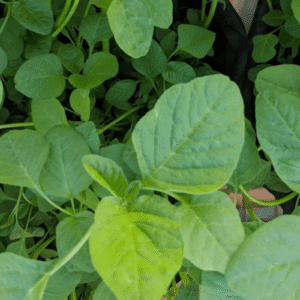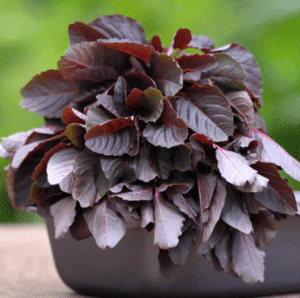
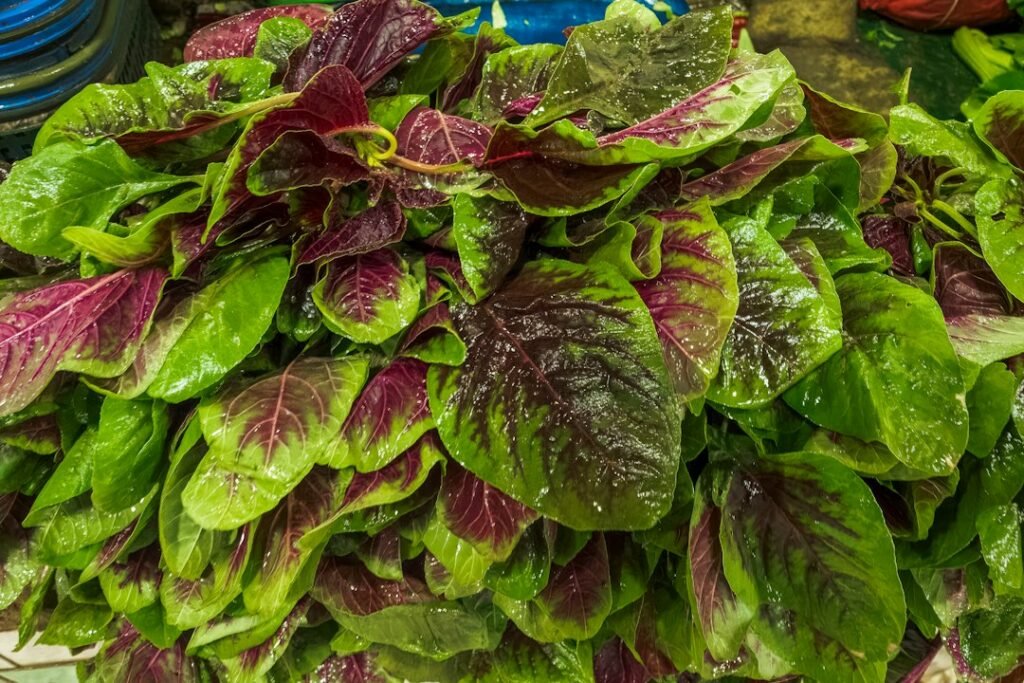
Red amaranth (lal saag, lal chaulai, cheera or thotakura in different parts of India) is one of the easiest leafy greens to grow in a pot: sow the tiny seeds thinly in a wide, shallow container of loose, compost-rich mix, keep it in full sun and evenly moist, and you can start cutting leaves in about four weeks. The catch is timing. Amaranth is a warm-season crop, so it grows fastest from late winter to the end of the monsoon and sulks in cold north Indian winters.
This guide covers when to sow red amaranth in your region, the pot and soil it needs, a step-by-step sowing method, cut-and-come-again harvesting, and how to fix the usual problems, especially early flowering (bolting) and leaf spots.
Quick answer: Use a pot or grow bag at least 15–20 cm deep and as wide as you can manage. Mix the seed with fine sand, scatter it over moist potting mix, cover with a few millimetres of soil and water gently. Seedlings appear in about a week in warm weather. Thin them to 10–15 cm apart, give at least 6 hours of sun, and harvest by pulling whole plants at around 30 days or by cutting the tops every 7–10 days.
Red amaranth at a glance
| Item | What works in pots |
|---|---|
| Botanical name | Mostly Amaranthus tricolor (leaf types grown in India) |
| Best sowing time | February–September in north and central India; most of the year in the south, avoiding heavy rain |
| Pot size | 15–20 cm deep; wide trough, tub or grow bag |
| Sunlight | Full sun, at least 6 hours; colour is deeper in bright light |
| Soil pH | About 5.5–7.5 |
| Sowing depth | 3–6 mm, or just covered with fine soil or sand |
| Germination | About 7 days in warm soil; slow or poor below about 10 °C |
| Spacing after thinning | 10–15 cm between plants |
| First harvest | Pulling: ~30 days. Cutting: first cut at 25–35 days, then every 7–10 days |
| Main problems | Bolting, leaf spot or blight in wet weather, leaf-webbing caterpillars |
When to sow red amaranth in India
Leaf amaranth is native to India and loves heat. University of Florida extension describes its best growing range as roughly 21–29 °C, with germination fast once the soil is above about 20 °C and slowing badly, or failing, when soil drops near 10 °C. Use that as your guide rather than a fixed calendar.
- North India (Delhi, Punjab, UP, Haryana): sow from mid-February to April for summer greens and again from late June to September. December and January are usually too cold for good growth on an open terrace.
- Central and western India (MP, Maharashtra, Gujarat, Rajasthan): February to September works well. In peak May heat, give a little afternoon shade and water more often.
- South India and coastal areas (Kerala, Tamil Nadu, Karnataka, Andhra, Goa): the Kerala government’s VFPCK package lists amaranth as a round-the-year crop. Just avoid sowing during heavy rain, when seed washes away and leaf diseases spread.
- East and north-east India: sow from March onwards; lal saag is a familiar pre-monsoon and monsoon green across eastern India.
One timing trap is specific to amaranth. Some traditional red varieties are short-day plants, so when sown in November or December they react to the short days by flowering early instead of making leaves. The Kerala variety list even notes that Kannara Local “flowers in Nov–Dec”. If you are sowing in late autumn in a mild region, choose a variety described as photo-insensitive, such as Arun.
Choose your seed: red, green and two-tone types
“Red amaranth” covers several varieties bred at Indian institutes. A few you may see on seed packets:
- Arun (Kerala Agricultural University): maroon-red leaves, photo-insensitive, suits both multi-cut and one-time harvest.
- Krishnasree: reddish-brown leaves with a fleshy stem, a multi-cut type.
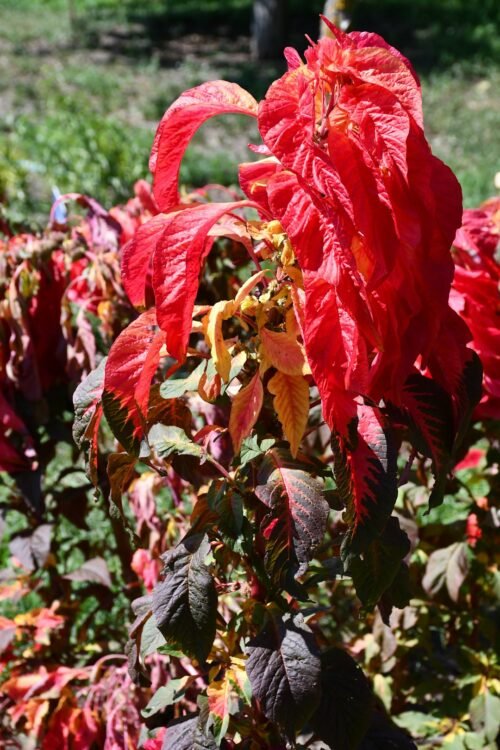
- Pusa Lal Chaulai (IARI, New Delhi): deep red upper leaf surface and purplish-red underside.
- Arka Arunima (ICAR-IIHR, Bengaluru): broad dark purple leaves; first picking about 30 days after sowing, then cuts at 10–12 day intervals.
- CO 5 (TNAU): two-coloured green and pink leaves with a rosette habit early on.
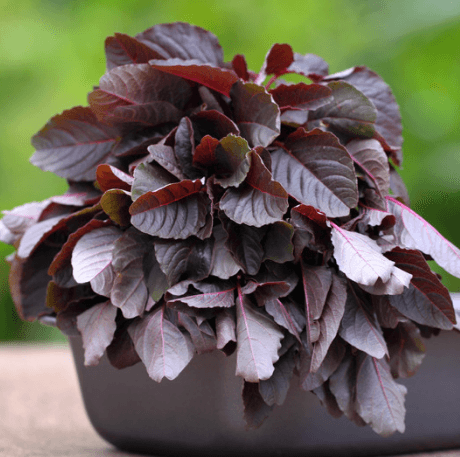
If you want a pure red bowl of greens, start with our Red Amaranth Seeds. Green amaranth is grown in exactly the same way, and a mixed tub of red and green looks lovely on a balcony. There is also a practical reason to mix them: the Kerala package suggests planting red types alongside the leaf-spot-resistant green variety CO 1 to slow the spread of leaf spot.
Red amaranth vs green amaranth: what changes?
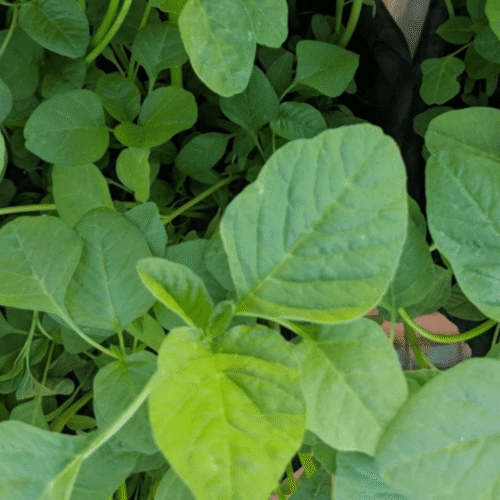
Very little in the pot. Both need the same sun, soil and water. Red types need bright sun to develop full colour; in shade, the leaves turn greener and duller. Green types are often a little more forgiving in partial shade. In the kitchen, many cooks use them interchangeably in dal, poriyal, thoran and stir-fries.
Pot, soil and sunlight for red amaranth
Pot or grow bag size
Amaranth is shallow-rooted, so width matters more than depth. A container 15–20 cm deep is enough for greens you will pull at 30 days. For a multi-cut crop that stays in the pot for two months or more, use 20–25 cm. Rectangular balcony troughs, old tubs, crates lined with a grow bag and 12×12 or 15×12 inch grow bags all work. Our grow bag size guide for vegetables explains how much soil each size holds. Whatever you use, it must have drainage holes.
Potting mix
Amaranth comes up well in loose, well-drained soil rich in organic matter. A simple pot mix:
- 40% garden soil or red soil
- 30% well-rotted compost or vermicompost
- 30% cocopeat, for moisture and a soft surface for tiny seeds (see how to use a cocopeat block)
Our DIY potting mix guide for vegetables gives other ratios if you don’t have garden soil. Avoid heavy clay that crusts after watering: Indian lecture notes on amaranth stress light hoeing to stop soil crust and keep the soil loose, and poor soil aeration is one of the listed causes of bolting.
Sunlight
Give red amaranth the sunniest spot you have, at least 6 hours of direct sun. A south- or west-facing balcony or open terrace is ideal. If your balcony is shaded, read how much sunlight balcony vegetables need before sowing. In very hot inland summers (40 °C plus), light afternoon shade or a green net helps the leaves stay tender.
How to grow red amaranth in pots: step by step
- Fill and settle the pot. Fill the container to about 2–3 cm below the rim and water it the day before sowing so the mix is evenly moist, not muddy.
- Mix seed with sand. Amaranth seed is tiny, about 1 mm across. Mix a pinch of seed with a spoonful of fine dry sand so you can spread it evenly. This is the same trick farmers use when broadcasting amaranth.
- Scatter thinly. Sprinkle the seed-sand mix over the surface. For a 45 cm trough, a small pinch of seed is plenty; crowded seedlings grow thin and weak.
- Cover lightly. Cover with 3–6 mm of fine soil, sifted compost or sand. Do not bury the seed deeply.
- Water gently. Use a fine rose can or a spray bottle so you don’t wash the seed into one corner. Keep the surface moist until seedlings appear.
- Watch for seedlings. In warm weather, seedlings usually appear within a week. In cooler weather it can take up to two weeks.
- Thin in two rounds. When seedlings have 2–3 true leaves, thin them to about 5 cm apart; eat the thinnings as microgreens. Two weeks later, thin again to 10–15 cm. See how to thin vegetable seedlings in pots for a gentle method.
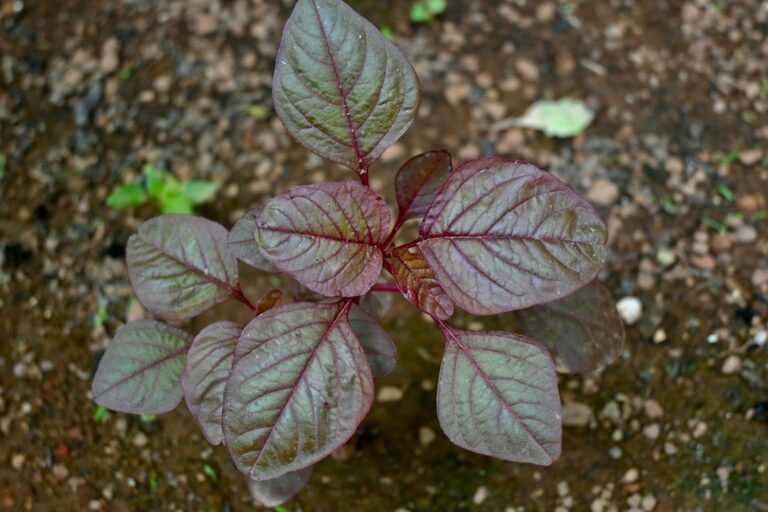
Transplanting instead of direct sowing: multi-cut varieties are often raised in a nursery tray and moved at 20–25 days old, when they have 4–5 leaves. In pots, direct sowing is simpler, but transplanting is useful if you want neat rows or need to fill gaps.
Watering and feeding
Watering
Leaf amaranth needs soil that stays evenly moist. Grain amaranth tolerates drought, but the leafy kind turns tough and bolts when it dries out. In pots, that usually means:
- Summer (March–June): daily, sometimes twice a day for small pots on a hot terrace.
- Monsoon: only when the top 2 cm of mix feels dry. Make sure water never stands in the pot; NC State notes amaranth is prone to root rot when kept too wet.
- Mild winter in the south: every 2–3 days, depending on sun.
Water at the base, not over the leaves. Both the Kerala package and Indian lecture notes link leaf spot and leaf blight to splashing water, especially in the rainy season.
Feeding
Amaranth grows fast and responds quickly to organic matter. For pots, keep it simple:
- Mix compost or vermicompost into the soil before sowing (already part of the mix above).
- After each cutting, scatter a handful of vermicompost on the surface and water it in, or use a diluted liquid feed such as seaweed fertilizer at label strength.
- Go easy on urea and other fast nitrogen. University of Florida extension notes that too much inorganic nitrogen can cause pale leaves and nitrate build-up in the plant, and NC State notes over-fertilising can dull the leaf colour of red types.
How to harvest red amaranth
You have two choices, and you can use both in one pot.
Method 1: pull whole plants
Indian farmers sell lal saag in small bundles with the roots on. In pots, pull the biggest plants at around 25–30 days, leaving the rest more space. Pull again 10–15 days later. This gives tender greens fast and suits short-lived sowings.
Method 2: cut and come again
For a longer harvest, let plants reach about 20–25 cm, then cut the top 10–15 cm, leaving a few leaves and side buds on the stem. New shoots grow from the leaf joints. Indian growing guides give the first cut at 25–35 days after sowing, then weekly to every 10 days depending on variety. Harvest early in the morning, when leaves are crisp, and cook or refrigerate them soon after; amaranth leaves wilt quickly at room temperature.
| Harvest method | When | Best for |
|---|---|---|
| Pull thinnings | 10–20 days | Microgreens and baby greens |
| Pull whole plants | 25–30 days, then 10–15 days later | Quick crop, small pots |
| Cut tops | First cut 25–35 days, then every 7–10 days | Longer harvest from wide pots and grow bags |
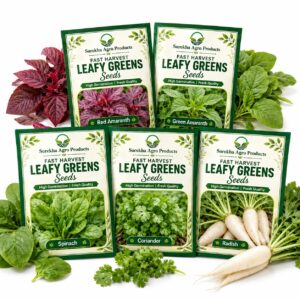
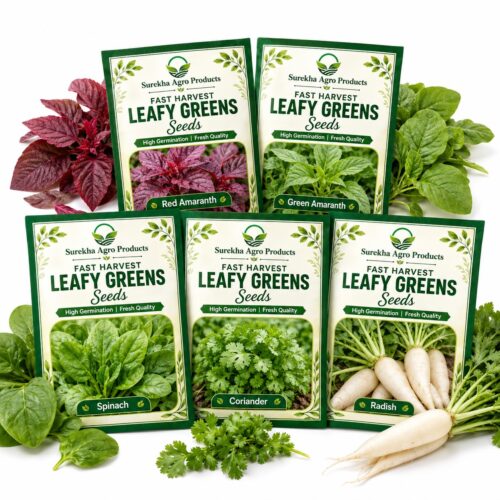
Keep the greens coming: one pot runs out of steam after a few cuts. Sow a new pot every 2–3 weeks through the warm season. Our succession sowing guide shows how to plan it, and our Fast Harvest Leafy Greens combo pairs red and green amaranth with spinach, coriander and radish for rotating pots.
Common red amaranth problems and fixes
| Problem | Likely cause | What to do |
|---|---|---|
| Plants flower early with few leaves (bolting) | Short-day variety sown in Nov–Dec, lack of nitrogen, extreme heat, compacted soil | Sow at the right season, choose photo-insensitive varieties, feed after cuts, loosen the surface, give afternoon shade in peak summer |
| White or pale irregular spots on leaves | Leaf spot or leaf blight, worst in warm, wet weather | Water at the base, thin crowded plants, remove spotted leaves, grow a green type such as CO 1 alongside in the rainy season |
| Leaves stuck together with webbing, caterpillars inside | Leaf webber | Pick off and destroy webbed leaves with the caterpillars; check plants every few days |
| Leaves green instead of red | Too little sun, or too much nitrogen | Move to full sun; cut back on fertiliser |
| Thin, floppy seedlings | Sown too thickly or too little light | Thin early; sow thinly next time; move to brighter light |
| Seedlings collapse at soil level, roots brown | Waterlogged mix | Improve drainage, water only when the surface starts to dry |
| Seeds didn’t come up | Cold soil, seed buried too deep, or washed away | Wait for warmer weather, cover only 3–6 mm, water with a fine spray |
On edible greens, try hand-picking and good spacing first. If you ever use a pesticide or fungicide, choose one labelled for leafy vegetables in India and follow its waiting period before harvest exactly.
Eating red amaranth: a note on oxalates
Red amaranth leaves are a traditional source of iron, calcium and vitamins, and Indian horticulture lecture notes list values for iron and calcium in the leaves. The same notes point out that leaf amaranth also contains oxalates and nitrates, and that calcium absorption from amaranth is poor. University of Florida extension notes that cooking removes much of the oxalate, and that eating large amounts raw is not advised for people prone to kidney stones. In practice: cook it, as most Indian recipes do, and if you have a kidney condition, ask your doctor how much leafy greens suit you.
Saving your own red amaranth seed
Leave one or two healthy plants uncut at the end of the season. They will send up flower spikes, and the seed is ready when the bracts turn brown and the seeds black. Cut the spikes, dry them in the sun on a sheet, rub them between your palms and winnow off the chaff. Leaf amaranths are mostly self-pollinated, but seed saved from a hybrid packet may not grow true to the parent, so expect some variation.
Frequently asked questions
How many days does red amaranth take to grow?
In warm weather, seeds germinate in about a week, and you can pull whole plants at around 25–30 days. For cut-and-come-again harvests, the first cut is usually 25–35 days after sowing, followed by more cuts every 7–10 days.
Can I grow red amaranth in winter?
In south India and coastal areas, yes, as long as nights stay mild and you choose a photo-insensitive variety. In north India, December and January are usually too cold: germination slows sharply when soil is near 10 °C. Sow from mid-February instead.
Is red amaranth the same as lal saag and lal chaulai?
Yes. Lal saag (Bengal and Odisha), lal chaulai (Hindi), cheera (Malayalam), thotakura (Telugu) and arai keerai (Tamil, for a small-leaved related type) are local names for leaf amaranths. Red-leaved types are usually sold as lal saag or red amaranth.
What size pot do I need for red amaranth?
A container 15–20 cm deep is enough for a quick crop; use 20–25 cm and as wide as possible for a multi-cut crop. Space plants 10–15 cm apart after thinning.
Why are my red amaranth leaves turning green?
Usually not enough sun. Red types need bright light to develop colour. Heavy nitrogen feeding can also make leaves greener and duller. Move the pot into full sun and feed lightly.
Why is my amaranth flowering so early?
Early flowering (bolting) is linked to sowing short-day varieties in November–December, nitrogen shortage, extreme heat and compacted soil. Harvest it now, then resow at the right time with a photo-insensitive variety and loose, compost-rich mix.
Is amaranth the same as rajgira?
They are the same genus but different crops. Rajgira or ramdana comes from grain amaranths such as Amaranthus hypochondriacus, grown for seed. Lal saag comes from leaf types, mostly Amaranthus tricolor, grown for leaves.
Conclusion
Red amaranth rewards a sunny pot, loose soil and steady water with fast, colourful greens, often ready to cut within a month. Sow it when the weather is warm, thin early, cut regularly and sow a fresh pot every few weeks for a steady supply. If you are planning a full leafy greens corner, pair it with methi and palak for the cooler months.
Written by the Surekha Agro Products plant care team. Last updated 28 November 2026.
Sources
- eAgri course HORT 281 (Vegetable production), Lecture 31: Package of practices for amaranthus, palak and gogu (varieties, climate, sowing, harvesting, bolting, leaf blight)
- VFPCK (Vegetable and Fruit Promotion Council Keralam): Amaranthus package of practices
- UF/IFAS Extension HS1407: Production Guide of Vegetable Amaranth for Florida
- NC State Extension Gardener Plant Toolbox: Amaranthus tricolor
- Connecticut Agricultural Experiment Station: How to Grow a Vegetable Amaranth
- ICAR Indian Farming 73(3), 2023, Raiger and Jajoriya: Grain amaranth: naturally gluten-free superfood grain (rajgira, grain species)