
Want fresh palak from your balcony instead of buying a large bunch that wilts in the fridge? Spinach is one of the quickest and most practical leafy vegetables to grow in containers during India’s cooler months. With a wide pot, loose soil, a few hours of sun and consistent moisture, even a small balcony can produce repeated harvests.
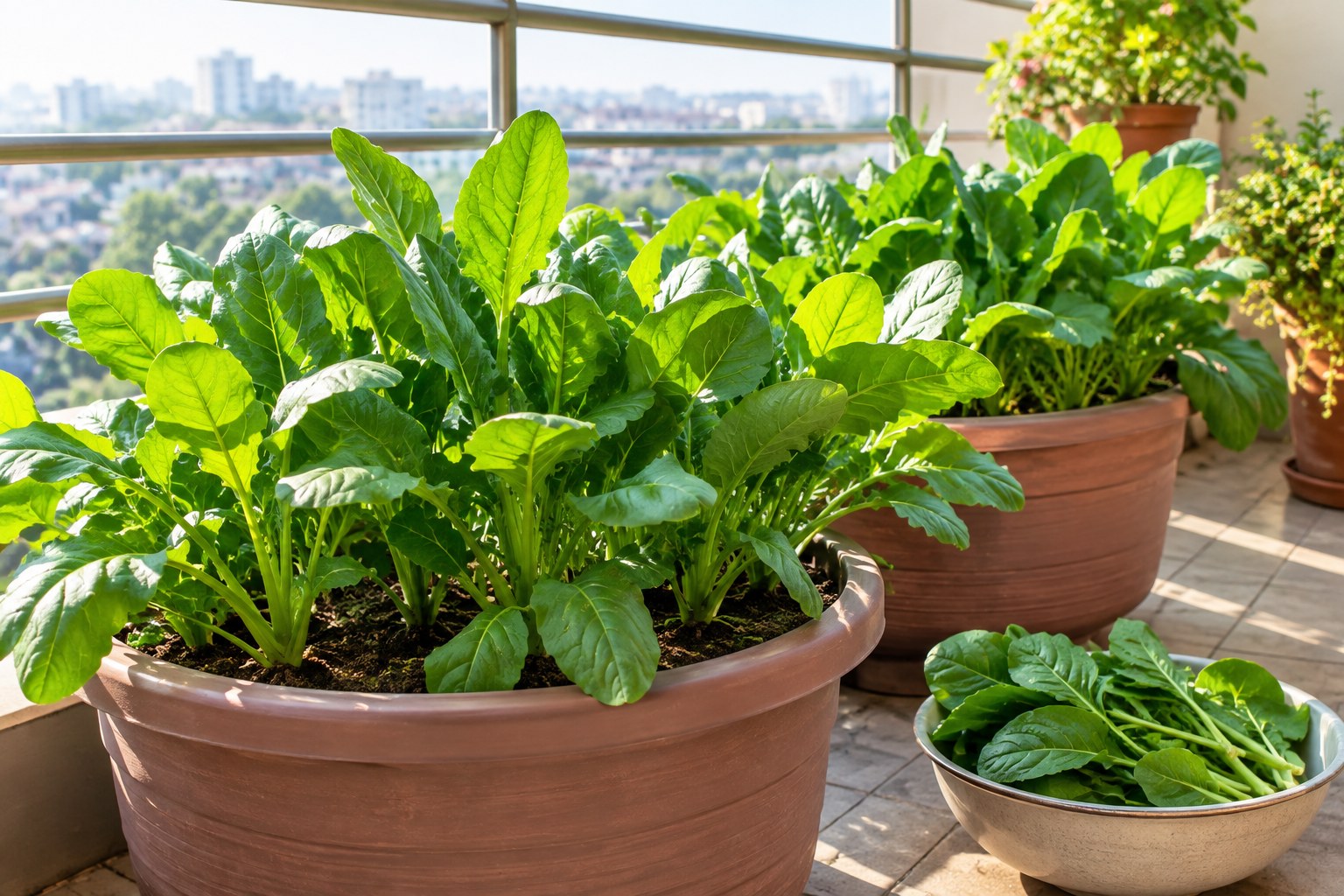
This guide explains how to grow spinach in pots in India from seed to harvest, including the best sowing time, pot size, soil mix, sunlight, watering, spacing, harvesting and common problems.
Quick guide: growing palak in pots
| Best sowing time | October–November is ideal across much of India; timing varies with local temperature |
| Container | Wide pot or grow bag, about 15–20 cm deep or more, with drainage holes |
| Sunlight | About 3–5 hours of direct or strong morning sun; protect from severe afternoon heat |
| Sowing depth | About 0.5–1 cm |
| Spacing | Thin seedlings to roughly 8–10 cm apart for larger leaves |
| Water | Keep evenly moist, never waterlogged |
| First harvest | Baby/outer leaves can often be picked in roughly 30–40 days, depending on variety and weather |
Why spinach is perfect for an Indian balcony garden
Palak does not need a deep container because its root system is relatively compact. That makes it useful for balconies, terraces, window-side growing areas and small kitchen gardens. It is also a cut-and-come-again crop: instead of pulling every plant at once, you can harvest mature outer leaves and allow the centre to continue producing.
If you are just starting a seasonal kitchen garden, see our winter vegetables to grow in pots in India. Spinach fits especially well into an October–November sowing plan.
Best time to sow spinach seeds in India
For most home gardeners, the easiest spinach crop is grown in cool to mild weather. October and November are excellent sowing months across much of India, while gardeners in warmer southern and coastal areas may get better results once intense heat eases. In cooler regions, the sowing window can extend further into winter.
Temperature matters more than the calendar. Hot conditions encourage spinach to bolt, meaning the plant shifts from producing tender leaves to sending up a flower stalk. If October is still very hot where you live, waiting for cooler weather can be better than sowing simply because the month has changed.
Choosing the right pot for palak
You do not need a very deep planter. A wide container around 15–20 cm deep or more gives spinach enough root room while allowing you to grow several plants together. Rectangular planters and grow bags work particularly well because usable surface area matters more than excessive depth.
Whatever container you choose, drainage holes are essential. Waterlogged soil can damage roots and encourage seedling problems.
Best soil mix for spinach in containers
Palak grows best in a loose, fertile medium that holds some moisture without staying soggy. For home containers, use a good-quality garden soil or potting base amended with mature compost or vermicompost plus a drainage-improving material such as cocopeat or coarse material appropriate to your mix.
Avoid compact clay-like soil in a small pot. After watering, excess water should drain rather than sit around the roots.
How to sow spinach seeds in a pot
- Fill the container with moist, well-draining potting mix, leaving a little space below the rim.
- Make shallow lines or small holes about 0.5–1 cm deep.
- Sow seeds with some separation rather than dumping them in one dense clump.
- Cover lightly with potting mix.
- Water gently so the seeds are not displaced.
- Keep the medium consistently moist during germination, but never saturated.
- Once seedlings are established, thin crowded plants so stronger plants have roughly 8–10 cm of space if you want larger leaves.
Do not worry about creating perfectly straight rows in a balcony planter. Good airflow and avoiding severe overcrowding are more important.
How much sunlight does spinach need?
Spinach appreciates good light but is more forgiving than many fruiting vegetables. A balcony receiving around 3–5 hours of useful sunlight, especially morning sun, can grow a worthwhile crop. In cool winter weather, more sun is usually beneficial.
If your balcony receives harsh afternoon heat early in the season, give the plants some protection. Too much heat can stress spinach and accelerate bolting.
How to water palak in pots
Spinach prefers consistent moisture. The goal is moist soil, not permanently wet soil. Check the top layer with your finger and water when it begins to lose moisture rather than following a rigid daily schedule.
Container size, sunlight, wind and local humidity all change how quickly the soil dries. During warm, breezy days a pot may need water more often; during cool or humid weather it may remain moist much longer. For the same reason, our Indian-weather watering guide recommends checking the growing medium instead of blindly watering by calendar.
Does spinach need fertilizer?
Leafy crops need adequate nutrition, especially nitrogen, but more fertilizer is not automatically better. Start with a fertile potting mix containing mature compost or vermicompost. If growth becomes pale or slows while light, temperature and watering are correct, a modest feeding suitable for edible leafy vegetables can help.
Avoid heavy fertilizer doses in a small container. Excess salts can stress roots, and lush weak growth can be more vulnerable to problems. If you are new to plant nutrition, our beginner’s guide to plant fertilizer explains the basic N-P-K concept.
How and when to harvest spinach
Under suitable conditions, you can often begin picking baby or outer leaves in roughly 30–40 days. Harvest time varies with variety, temperature, sunlight and how densely the plants are grown.
For repeat harvests, cut the larger outer leaves and leave the small central growing point intact. Use clean scissors and avoid removing nearly every leaf at once. Regular harvesting keeps tender leaves coming for longer.
How to get continuous palak instead of one big harvest
The easiest trick is succession sowing. Instead of sowing your entire seed packet on one day, sow a smaller batch and another batch about 10–15 days later. When the first container is being harvested, the next is already developing.
This method is especially useful for Indian families who want a steady supply of fresh leaves rather than a single oversized harvest.
Common spinach-growing problems in India
Seeds do not germinate
Possible causes include old seed, excessive heat, sowing too deep or allowing the surface to dry completely during germination. Sow shallowly and keep the medium evenly moist.
Seedlings fall over near the soil line
Overly wet soil, poor airflow and very dense sowing can encourage damping-off. Improve drainage and airflow and avoid keeping the pot saturated.
Leaves are small and pale
Check light, overcrowding and nutrition. Thin densely packed seedlings and make sure the plants receive useful daylight before adding fertilizer.
Leaves have holes
Inspect both sides of leaves for caterpillars or other chewing pests. Hand-picking is often practical in a small home garden. Avoid casually spraying edible leaves with strong pesticides.
Plant suddenly sends up a tall flower stalk
This is bolting, commonly encouraged by warmer conditions and plant stress. Harvest usable leaves promptly. As temperatures rise toward late winter or spring, it may be time to replace the crop rather than trying to force it to remain leafy.
Can you grow spinach organically at home?
Yes. Container spinach is particularly suitable for a low-input kitchen garden because you can begin with compost-rich soil, inspect a small number of plants by hand and manage watering closely. Good sanitation, spacing, drainage and regular inspection reduce the need for reactive treatments.
Growing spinach with other winter vegetables
Once your palak is established, you can expand the same balcony garden with radish, carrot, lettuce, beetroot, coriander and other cool-season crops. If coriander is next on your list, follow our step-by-step guide to growing coriander (dhaniya) in pots in India.
Frequently asked questions about growing spinach in India
Which month is best for growing palak in India?
October–November is an excellent starting window across much of India because spinach prefers cooler weather. Exact timing should be adjusted to local temperature; very warm regions may benefit from sowing later.
Can spinach grow in a small pot?
Yes. Spinach does not require a very deep container. A wide pot roughly 15–20 cm deep or more with good drainage can support several plants.
Can I grow palak on a balcony?
Yes. A balcony with several hours of useful sunlight is suitable. Morning sun is particularly convenient in warmer parts of India.
How many days does spinach take to grow?
Germination commonly occurs within about one to two weeks depending on conditions, and baby or outer leaves may be ready in roughly 30–40 days. Variety and weather can shift both timings.
Should spinach seeds be soaked before sowing?
Soaking is not essential for a successful crop. Fresh seed, shallow sowing, suitable temperatures and consistent moisture are more important. If you do soak seed, do not leave it submerged for an excessive period.
Does palak need full sun?
It grows well with good sunlight but can tolerate some partial shade. In Indian balconies, roughly 3–5 hours of useful sun can work well, while cool-season plants generally benefit from brighter conditions.
Can I regrow spinach after cutting?
Yes, if you harvest outer leaves and leave the central growing point intact. This allows additional leaves to develop until the plant becomes exhausted or warm weather triggers bolting.
Final takeaway
If you want to start an edible balcony garden this winter, palak is one of the most rewarding first crops. Use a wide draining container, sow shallowly, give the plants useful sunlight, keep the soil evenly moist and harvest outer leaves regularly. For a longer supply, sow a second batch after 10–15 days instead of planting everything at once.
Explore more practical Indian home-gardening guides and seeds at Surekha Agro Products.