
October is one of the most rewarding months to start a winter vegetable garden in India. As the monsoon retreats and temperatures begin to ease, many leafy greens, roots and cool-season vegetables become easier to grow on balconies, terraces and sunny windowsills.
If you have only a few pots, start small. Coriander, spinach, radish, carrot and lettuce can all fit into a compact home garden, while peas can climb vertically on a simple support. This India-focused guide explains what vegetables to sow in October, the containers they need and the mistakes that commonly reduce germination or harvest.
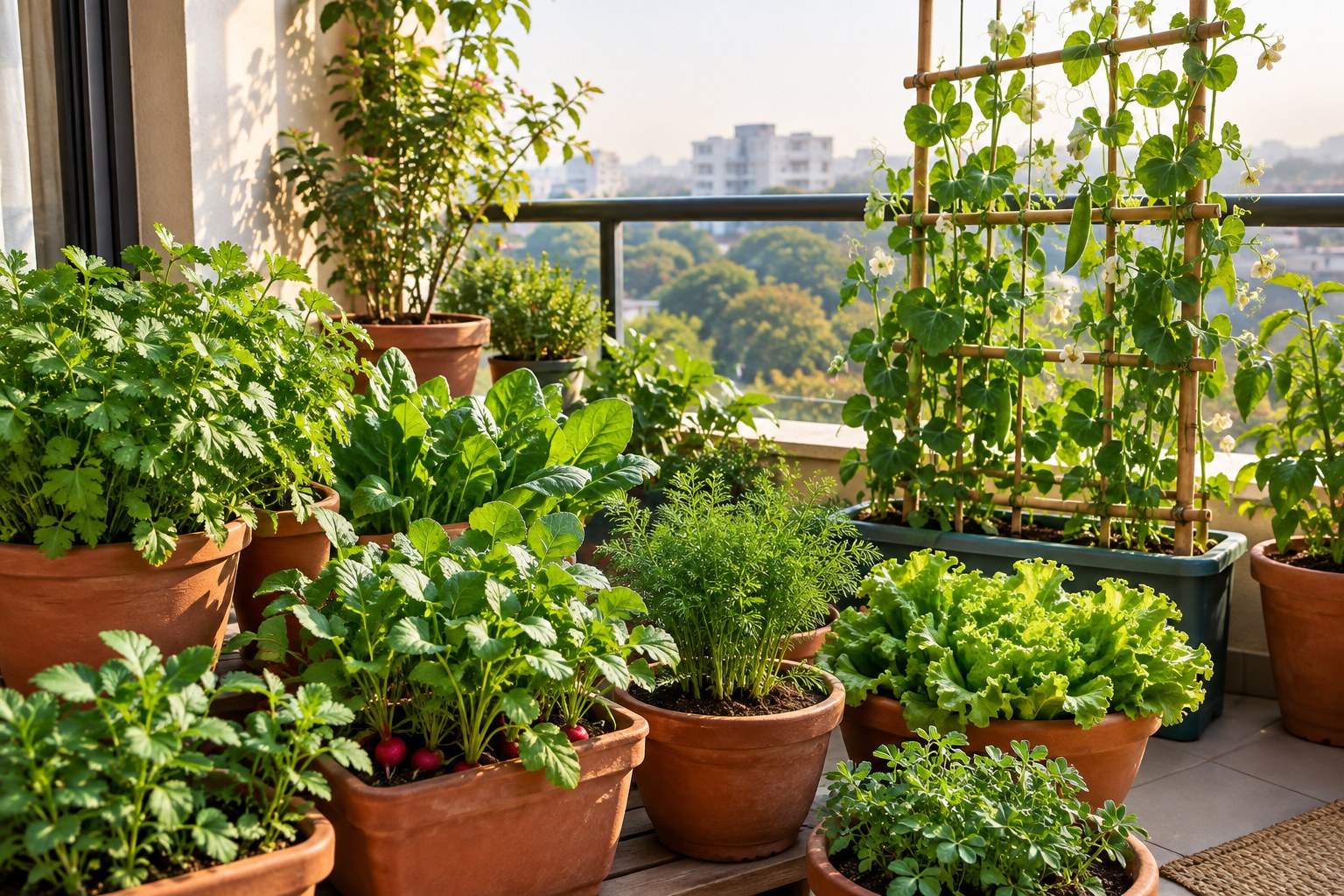
Quick list: vegetables to sow in October in India
| Vegetable | Best container | Sunlight | Beginner level |
|---|---|---|---|
| Coriander (Dhania) | Wide 6–8 inch deep pot | 4–6 hours | Easy |
| Spinach (Palak) | Shallow wide trough | 4–6 hours | Easy |
| Radish (Mooli) | 8–10 inch deep pot | 5–6+ hours | Easy |
| Carrot (Gajar) | 10–12 inch deep pot | 5–6+ hours | Moderate |
| Lettuce | 6–8 inch deep pot | 4–6 hours | Easy |
| Fenugreek (Methi) | Shallow tray or trough | 4–5 hours | Very easy |
| Green Peas (Matar) | 10–12 inch pot + support | 5–6+ hours | Easy |
| Beetroot | 10–12 inch deep pot | 5–6+ hours | Easy |
| Turnip (Shalgam) | 10 inch deep pot | 5–6+ hours | Easy |
| Spring Onion | 6–8 inch deep pot | 4–6 hours | Easy |
1. Coriander (Dhania)
Coriander is one of the most useful winter herbs for an Indian kitchen garden. Cool weather generally gives better leafy growth than intense summer heat. Use a broad container because you are growing many plants together rather than one large plant.
Gently split or crush whole coriander seed clusters before sowing without pulverising them. Sow shallowly, keep the medium evenly moist during germination and thin overcrowded seedlings. A balcony receiving morning sun is usually a good location.
2. Spinach (Palak)
Spinach is ideal for gardeners who want a quick leafy crop. It does not need a very deep container, so rectangular planters and grow bags work well. Sow seeds with enough spacing for airflow and harvest outer leaves progressively once plants establish.
Keep the potting mix moist but never permanently waterlogged. If you are new to container gardening, remember that watering should respond to the soil rather than a fixed calendar. Our watering guide for Indian weather explains the same moisture-checking principle in detail.
3. Radish (Mooli)
Radish is one of the easiest root vegetables to try in pots during cooler months. The important requirement is loose soil. Heavy, compacted soil can restrict root development even when the leaves look healthy.
Direct-sow radish where it will grow rather than repeatedly disturbing young roots. Once seedlings emerge, thin them so each root has space to expand.
4. Carrot (Gajar)
Carrots need a deeper container and a loose, stone-free growing medium. Short or compact varieties are particularly convenient for pots. Sow thinly because overcrowding produces small or misshapen roots.
Avoid adding excessive fresh manure or strong fertiliser around young carrots. Consistent moisture and an airy medium matter more than aggressive feeding.
5. Lettuce
Lettuce enjoys cooler conditions and can be grown in relatively shallow containers. It is especially useful for balconies that receive bright morning sun but are protected from harsh afternoon heat.
You can harvest individual outer leaves rather than uprooting the entire plant at once. This makes lettuce practical for small households that want a regular supply for sandwiches and salads.
6. Fenugreek (Methi)
Methi is among the easiest edible greens for beginners. It germinates readily and grows well in trays, window boxes and shallow planters. Sow fairly densely for leafy harvesting, but avoid such heavy crowding that airflow disappears.
Because the crop is compact, methi is a useful choice for apartment gardeners with limited balcony space.
7. Green Peas (Matar)
Peas make excellent use of vertical space. Give them a sunny location and install a small trellis, net or sticks early so the tendrils have something to climb.
Use a container with good drainage and avoid keeping roots continuously soggy. In warmer parts of India, wait for genuinely milder weather if daytime temperatures are still high.
8. Beetroot
Beetroot gives you two edible crops: tender young leaves and the swollen root. Use a reasonably deep pot filled with loose, well-drained medium. Thin seedlings after germination so roots have room to develop.
9. Turnip (Shalgam)
Turnips are another useful cool-season root crop for pots. Direct sow, maintain even moisture and provide good sunlight. Loose soil is essential for smoother, better-shaped roots.
10. Spring Onion
Spring onion is a space-efficient choice for balcony and terrace gardens. It can be grown relatively close together in a rectangular planter and harvested young. It is a good companion crop when you have only a small unused strip of container space.
Best potting mix for winter vegetables in containers
There is no single perfect recipe, but the goal is simple: the medium should hold enough moisture for seedlings while draining excess water quickly. A practical home mix can combine garden soil with mature compost or vermicompost and a lightening component such as cocopeat. The exact ratio should be adjusted to your local soil and rainfall.
Always use containers with drainage holes. If an old potting mix stays wet for days, improve drainage before sowing rather than compensating by watering less after roots are already stressed.
How much sunlight do winter vegetables need?
Most fruiting and root crops perform best with generous direct light, while leafy greens are often more forgiving of partial sun. Observe your balcony before choosing seeds. A south- or east-facing open balcony may support a broader range of crops than a deeply shaded apartment balcony.
If your home receives very little direct sunlight, indoor foliage plants may be a better use of the space. See our guide to low-light plants for Indian homes.
October sowing differs across India
India does not have one uniform winter. North Indian plains cool earlier and more strongly, while coastal and southern cities may remain warm. Eastern India can also stay humid after the monsoon. Treat October as a seasonal transition rather than a rigid national sowing date.
If your afternoons are still very hot, start heat-sensitive leafy crops in a location protected from harsh afternoon sun. In cooler regions, use the brightest available spot. Local temperature, rain and sunlight should always override a generic calendar.
7 common mistakes that reduce your winter harvest
- Sowing too deep: small seeds generally need only a light covering.
- Overwatering seedlings: constantly saturated media encourages root problems.
- Using dense garden soil alone: container roots need drainage and air.
- Skipping thinning: crowded carrots, radishes and beetroot cannot size up properly.
- Starting without enough sunlight: weak, stretched seedlings are often a light problem.
- Overfertilising: more fertiliser does not automatically mean more vegetables.
- Ignoring regional weather: sow according to actual local conditions, not just the calendar.
For broader plant nutrition principles, read our beginner’s guide to plant fertiliser. If seedlings or established plants begin declining, our guide to signs a plant is dying and how to respond can help you diagnose the basics.
A simple 5-pot winter kitchen garden for beginners
If you do not want to buy many containers, start with five: one wide pot of coriander, one trough of spinach or methi, one deeper pot of radish, one deep pot of carrots and one pot of peas with a vertical support. This combination gives you herbs, leafy greens, roots and a climber without taking over the balcony.
Once you understand how quickly your pots dry in your own home, expanding becomes much easier. The same principle applies when choosing houseplants: match the plant to the space first. Our first-plant selection guide explains that approach.
Frequently asked questions
Which vegetables can I sow in October in India?
Coriander, spinach, methi, radish, carrot, lettuce, peas, beetroot, turnip and spring onion are useful cool-season choices in many Indian regions. Exact timing varies with local temperature and climate.
Which winter vegetable is easiest to grow in pots?
Methi, coriander, spinach and radish are good beginner choices because they fit compact containers and do not require elaborate support structures.
Can I grow winter vegetables on an apartment balcony?
Yes. Prioritise crops suited to your available sunlight. Leafy greens and herbs are especially space-efficient, while peas can use vertical trellising.
What can I grow on a balcony with only 4 hours of sun?
Coriander, methi, lettuce and some leafy greens are generally more suitable than sun-demanding fruiting vegetables. Results still depend on light intensity, temperature and season.
Should I soak vegetable seeds before sowing?
Not every seed needs soaking. Large, hard seeds may benefit in some cases, but tiny seeds can become difficult to handle. Follow the requirements of the specific crop rather than soaking everything by default.
How often should I water vegetable pots in winter?
Check the growing medium rather than watering on a fixed schedule. Small seedlings need consistent moisture, but mature pots should not remain saturated. Cooler weather usually slows drying compared with peak summer.
Start your winter garden now
October is an excellent time to turn a sunny balcony or terrace into a productive kitchen garden. Begin with two or three crops you actually eat, learn how sunlight and moisture behave in your space, and expand from there.
Explore Surekha Agro Products for seeds, plants and practical gardening options for Indian homes.
[…] you are just starting a seasonal kitchen garden, see our winter vegetables to grow in pots in India. Spinach fits especially well into an October–November sowing […]
[…] If you are planning a complete seasonal kitchen garden, see our best winter vegetables to grow in pots in India. […]
[…] If you are planning a full seasonal kitchen garden, see our list of the best winter vegetables to grow in pots in India. […]
[…] If you are planning several crops together, read our best winter vegetables to grow in pots in India. […]
[…] If you are planning a complete seasonal kitchen garden, first read our best winter vegetables to grow in pots in India. […]
[…] India’s climates vary widely, so treat these windows as a starting point and adjust to your local temperatures. For more crops that share this season, see our list of the best winter vegetables to grow in pots in India. […]
[…] A sunny spot, a deep pot, compost-rich soil, a stake and steady watering are all a tomato plant needs. Sow in the season that suits your region, transplant sturdy seedlings at about four weeks and pick fruit as it colours. For more crops to grow alongside, see our list of the best winter vegetables to grow in pots in India. […]
[…] For a wider list of what else to sow this season, see our guide to the best winter vegetables to grow in pots in India. […]