
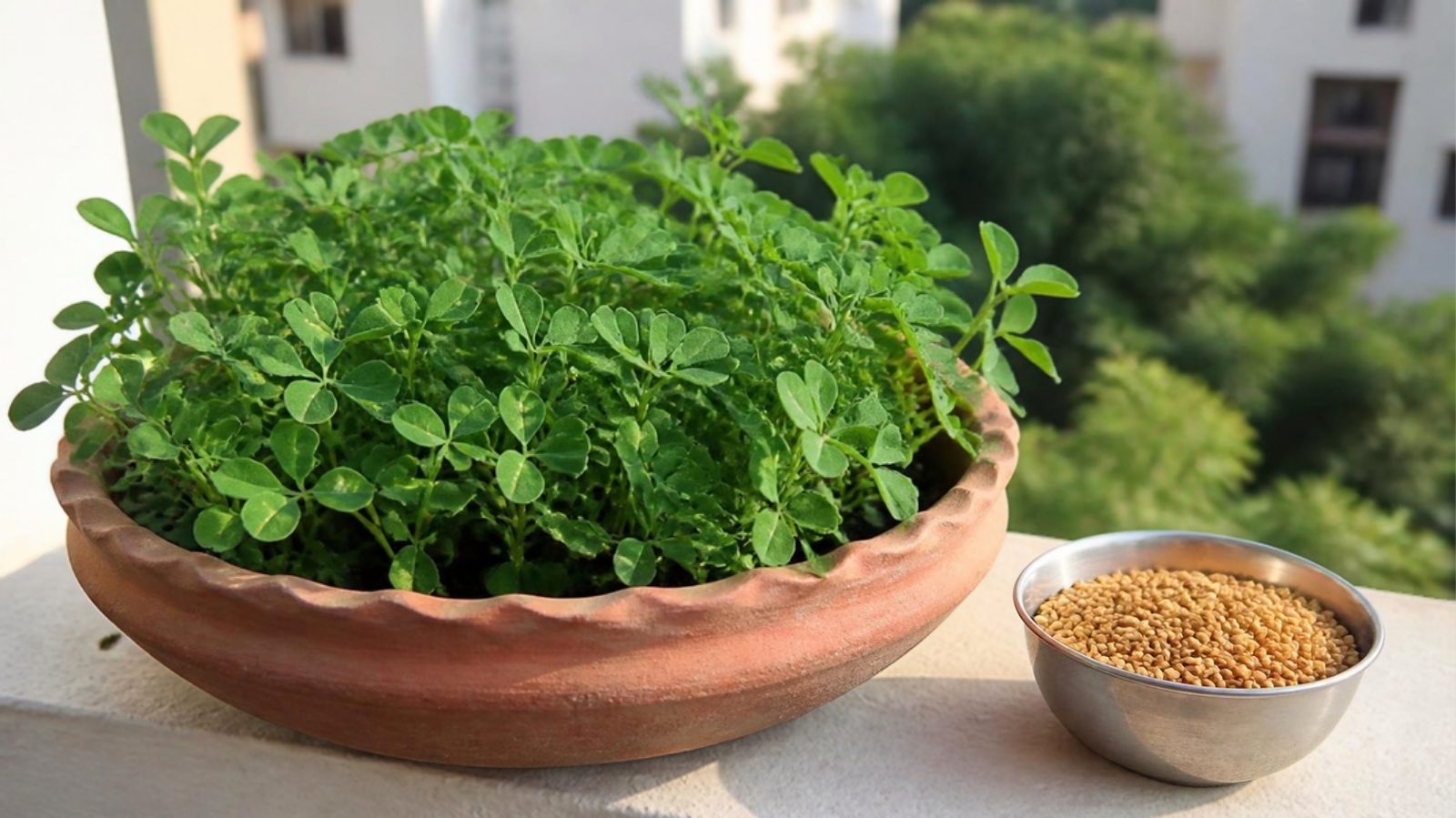
Wondering how to grow methi at home without a garden? Fenugreek is one of the easiest leafy greens for an Indian balcony, terrace or sunny windowsill. It needs only a shallow, wide pot, germinates quickly and gives you fresh leaves for paratha, dal and sabzi in a matter of weeks.
Quick answer: Fill a wide pot at least 15 cm deep with loose, well-draining soil. Scatter methi seeds, cover them with about 1 cm of soil and keep the surface evenly moist. Place the pot where it gets 4–6 hours of sun. In cool weather, the greens are usually ready to cut in roughly three to four weeks.
This guide covers the best sowing time for different parts of India, the right container and soil, step-by-step sowing, care, harvesting and the problems home gardeners run into most often.
Methi growing guide at a glance
| Requirement | Practical target |
|---|---|
| Best season | Cool months; broadly October–November sowing in most of India, with repeat sowings through winter |
| Container | Wide and shallow; 15–20 cm deep with drainage holes |
| Sunlight | About 4–6 hours of direct sun |
| Soil | Loose, well-draining and rich in organic matter |
| Sowing | Directly in the final pot; no transplanting |
| Water | Evenly moist, never waterlogged |
| First harvest of greens | Roughly 3–4 weeks after sowing in suitable weather |
When is the best time to grow methi in India?
Methi is a cool-season crop. The Vikaspedia package of practices for fenugreek describes it as a cool-season crop and advises against growing it where rain is heavy and continuous. For most home gardeners, that makes October and November the easiest months to start.
The Tamil Nadu Agricultural University (TNAU) Agritech Portal lists two sowing seasons for fenugreek: June–July and October–November. India’s climates differ widely, so use the table below as a starting point and adjust to your local weather.
| Region | Suggested sowing window in pots | What to watch |
|---|---|---|
| North and Central plains | October–November, with repeat sowings through winter | Growth slows in the coldest, foggiest weeks; give the sunniest spot you have |
| East India (West Bengal, Odisha, Bihar, Assam) | Late October–December, once the rains and humidity ease | Lingering humidity encourages fungal problems; avoid overwatering |
| West India (Maharashtra, Gujarat) | October–December | Warm afternoons dry shallow pots quickly |
| South India and coastal cities | October–November; June–July is also a listed season in Tamil Nadu | Choose the coolest months and give light afternoon shade in hot spells |
| Hill regions | Varies with altitude | Follow your state agricultural university’s sowing calendar |
If you are planning a full seasonal kitchen garden, see our list of the best winter vegetables to grow in pots in India.
Which type of methi should you grow?
Two types are common in Indian kitchens, and they behave differently in a pot.
| Type | What it is | Best for |
|---|---|---|
| Common methi (Trigonella foenum-graecum) | Quick-growing, upright plant with larger leaves | Fast harvests of fresh greens and beginners |
| Kasuri methi (Trigonella corniculata) | Slower, more spreading plant with smaller, strongly scented leaves | Repeated cuttings and drying for kasuri methi |
Vikaspedia notes that kasuri methi is a late type that prefers a relatively cooler climate and can give four to five cuttings of greens. A study in the Indian Journal of Agricultural Sciences identifies kasuri or “nagauri” methi as Trigonella corniculata, a separate species from common methi.
Can you use methi dana from the kitchen?
Often, yes. Whole methi seeds sold as a spice frequently sprout, which is why many home gardeners start with them. However, kitchen seeds are not tested for germination and may be old, so results vary. Packed sowing seeds give more predictable germination.
What you need to grow methi in pots
Container
Methi has shallow roots, so width matters more than depth. A pot, tray or grow bag that is 15–20 cm deep and as wide as your space allows works well. Rectangular planters fit neatly along balcony railings. Whatever you choose, make sure it has drainage holes.
Not sure what size to buy? Our guide to grow bag sizes for vegetables in India lists suitable depths for leafy greens.
Soil mix
TNAU recommends a rich, well-drained loamy soil for fenugreek, and Vikaspedia gives a favourable soil pH of 6–7. In a pot, you can get close to that with a simple mix:
- 2 parts garden soil
- 1 part well-rotted compost or vermicompost
- 1 part cocopeat or coarse sand for drainage
Break up clods and remove stones so the surface is fine and level before sowing.
Sunlight
Give methi about 4–6 hours of direct sun. It will grow in bright partial shade, but plants become thinner and slower. In warm coastal cities, morning sun with light afternoon shade keeps the leaves tender.
How to grow methi at home: step-by-step
- Soak the seeds (optional). Many gardeners soak methi seeds in water overnight to soften the seed coat. Drain them before sowing.
- Fill the pot. Fill the container with your soil mix, leaving 2–3 cm free at the top. Water lightly and let it drain.
- Sow thickly and evenly. Scatter seeds across the surface about 1–2 cm apart, or sow in shallow rows 8–10 cm apart. Dense sowing suits leaf harvests.
- Cover lightly. Spread about 0.5–1 cm of fine soil or compost over the seeds and press down gently.
- Water gently. Use a rose can or spray bottle so the seeds are not washed into clumps.
- Keep moist until sprouting. In mild weather, seedlings usually appear within a few days to a week.
- Thin if crowded. TNAU advises thinning fenugreek at 20–25 days and using the thinned seedlings as greens. In a pot, simply pull the most crowded plants and eat them.
Watering and feeding methi
Check the top 2 cm of soil with your finger. Water when it feels dry, and stop when water starts to drain from the bottom. Shallow pots on a sunny terrace may need water daily in warm weather and every two to three days in cooler weeks.
Methi is a legume, so it needs little feeding. If you mixed compost into the soil, a short crop grown for leaves usually needs nothing more. After each cutting, a thin top-dressing of compost helps regrowth. Avoid heavy doses of nitrogen fertilizer, which can make growth soft and more attractive to aphids.
How and when to harvest methi leaves
TNAU gives a crop duration of 20–25 days for greens, and Vikaspedia notes that young shoots of common methi are nipped off about one month after sowing. In pots, expect your first harvest in roughly three to four weeks, when plants are 10–15 cm tall.
You have two options:
- Cut and regrow: Snip stems with scissors, leaving about 5 cm of stem and a few leaves. Water and top-dress, and the plants will produce another flush. Common methi usually gives one or two further cuts; kasuri methi gives more.
- Pull whole plants: Uproot the plants with roots attached, as they are sold in the market, then re-sow the pot.
Harvest before plants flower, because leaves become more bitter and sparse afterwards. For a steady supply, sow a new pot every two weeks through the cool season.
Common methi problems and how to fix them
| Problem | Likely cause | What to do |
|---|---|---|
| Seeds do not sprout | Old seed, seeds buried too deep, or soil that dried out | Use fresh seed, cover with no more than 1 cm of soil and keep the surface moist |
| Seedlings collapse at soil level | Waterlogged soil and poor drainage | Water less often, improve drainage and re-sow in fresh mix |
| Thin, leggy plants | Too little light | Move the pot to a spot with more direct sun |
| Yellow lower leaves | Overwatering or exhausted soil | Let the top layer dry between waterings; top-dress with compost |
| White powdery coating on leaves | Powdery mildew | Remove affected leaves, improve air flow and avoid wetting foliage in the evening |
| Clusters of small insects on tips | Aphids | Wash off with a firm spray of water; harvest and eat clean growth promptly |
| Early flowering, bitter leaves | Heat or late harvesting | Sow in cooler months and cut earlier |
Regular cutting may also help keep plants healthy. Research from the ICAR-National Research Centre on Seed Spices, Ajmer found that trimming fenugreek foliage reduced downy mildew while also providing green leaves. The same study recorded more powdery mildew in early-sown crops and more downy mildew in late-sown ones.
What to grow alongside methi
Methi shares its season and container needs with several other quick greens, so one sunny ledge can supply much of your winter saag. Good companions include:
We do not currently stock methi seeds. If you want to fill the neighbouring pots, our Fast Harvest Leafy Green Vegetable Seeds Combo contains spinach, coriander, red amaranth, green amaranth and radish, all of which suit the same wide containers. You can also browse our winter vegetable seeds.
Frequently asked questions
How many days does methi take to grow at home?
Methi grown for leaves is usually ready in about three to four weeks in cool weather. TNAU lists 20–25 days for greens and 90–100 days if the crop is left to produce seed. Growth is slower in deep winter cold or in low light.
Can methi grow indoors without sunlight?
Not well. Methi needs several hours of direct sun for sturdy growth. A bright, sunny windowsill can work for a small tray, but plants in dim rooms become pale and leggy. A balcony or terrace is a better choice.
Does methi regrow after cutting?
Yes, if you leave about 5 cm of stem with a few leaves. Common methi generally gives one or two more cuts. Kasuri methi is better suited to repeated harvesting; Vikaspedia reports four to five cuttings for it.
Can I grow methi in summer?
You can try, but heat makes methi flower quickly and turns the leaves bitter. In hot months, grow it in light shade and harvest young, or treat it as a microgreen and cut it within about two weeks.
How much methi seed do I need for one pot?
For a wide pot about 30 cm across, one to two teaspoons of seed is usually enough for dense leaf production. Sow more thinly if you plan to take repeated cuttings.
Should I soak methi seeds before sowing?
Soaking overnight is optional. It softens the seed coat and many gardeners find it speeds up sprouting, but unsoaked seeds also germinate in moist soil.
Start your first pot this week
Methi asks for very little: a wide pot, loose soil, steady moisture and a few hours of sun. Sow one pot now and another in two weeks, and you can have fresh leaves through the cool season. Once that is growing, add palak and dhaniya beside it for a complete winter greens corner.
[…] can use the same strategy for several fast winter crops. Our guides to growing palak in pots, growing methi at home and growing coriander in pots can help you build a compact leafy-green […]