
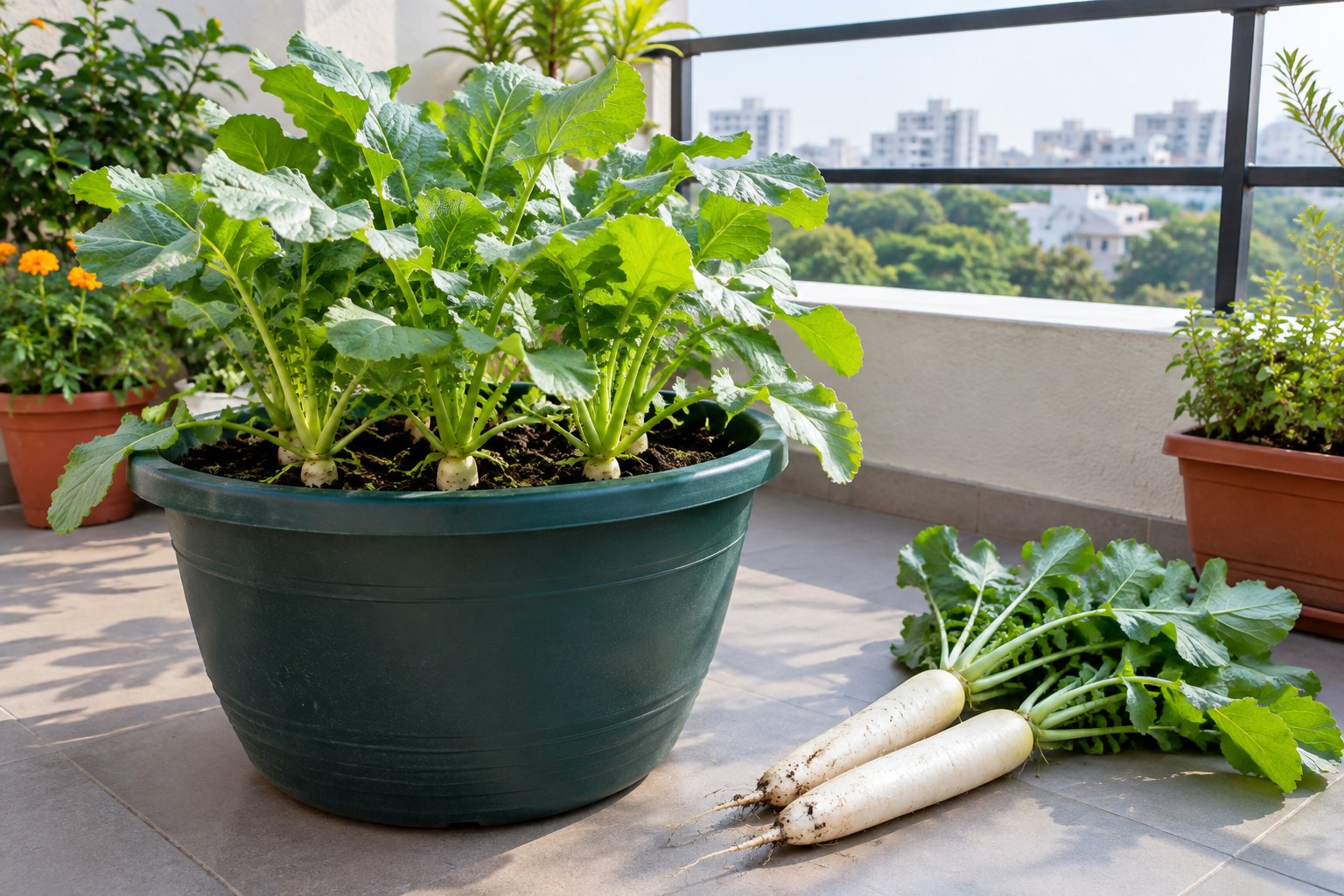
Want a winter vegetable that grows quickly, fits on a balcony and rewards beginners without months of waiting? Radish (mooli) is one of the best crops to start with. In suitable cool weather, many radish varieties can be ready within roughly 25–45 days, making them especially useful for Indian terrace and kitchen gardens.
This practical guide explains how to grow radish in pots in India—from choosing a deep container and sowing seeds directly to thinning, watering, feeding and harvesting crisp roots at the right time.
Radish growing guide at a glance
| Requirement | Practical target |
|---|---|
| Best season | Cool months; broadly October–February in many Indian regions, adjusted for local temperature and variety |
| Container | About 25–30 cm deep for long mooli; shallower round varieties can use slightly smaller pots |
| Sunlight | About 4–6 hours of direct sun |
| Sowing | Directly in the final container |
| Soil | Loose, stone-free and well-draining |
| Water | Keep evenly moist, never waterlogged |
| Typical harvest | About 25–45 days depending on variety, weather and care |
When is the best time to sow radish in India?
Radish is primarily a cool-season crop. For many Indian home gardeners, October through the winter months is the easiest window. In North India, sowing commonly continues through the cooler rabi period. Warmer coastal and southern locations should pay more attention to actual temperatures than a fixed calendar and start when daytime heat eases.
Because India has very different climates, do not treat a national sowing calendar as an exact rule. Very warm conditions can make roots more pungent, woody or pithy and can reduce root quality.
If you are planning a complete seasonal kitchen garden, see our best winter vegetables to grow in pots in India.
Which pot is best for growing mooli?
Root depth matters more than decorative pot shape. For long Indian white radish, choose a container roughly 25–30 cm deep with drainage holes. A wide rectangular planter or grow bag lets you grow several plants in one batch.
Round or short radish varieties need less vertical space, but long mooli can become short, bent or forked when the growing medium is shallow or compacted.
Best soil mix for radish in containers
Radish roots expand through the growing medium, so use a mix that stays loose rather than hardening into a dense block. The soil should drain excess water while retaining enough moisture for steady growth.
A practical home mix can combine sieved garden soil, mature compost or vermicompost, and a lightening material such as cocopeat. If your soil is heavy clay, improve its structure before sowing. Remove stones, hard lumps and undecomposed chunks that can obstruct the developing root.
Avoid filling the pot with excessive fresh manure or very nitrogen-heavy fertilizer. Too much nitrogen can encourage impressive leaves without equally good root development.
How to sow radish seeds in pots
Sow radish directly in its final container. Root crops generally do not benefit from transplanting because disturbing the young taproot can affect root shape.
- Fill the container with loose growing medium, leaving a little space below the rim.
- Moisten the mix gently before sowing.
- Make shallow holes or a row roughly 1–2 cm deep.
- Place seeds a few centimetres apart and cover lightly.
- Water with a gentle shower so the seeds are not displaced.
- After germination, thin crowded seedlings so the remaining roots have enough room to swell.
For many container varieties, final spacing around 5–10 cm is practical, but follow the packet instructions because long and round varieties differ.
How much sunlight does radish need?
Aim for around 4–6 hours of direct sunlight. A sunny balcony, terrace or kitchen garden usually works well during the Indian winter. If early October afternoons are still very hot in your city, gentler morning sun can be easier on young seedlings.
If you are new to matching plants with available light, our home plant light guide explains the basic difference between direct, indirect and low light.
How to water radish correctly
Consistency is important. Letting the container repeatedly become bone-dry and then soaking it heavily can stress the roots. At the same time, permanently wet soil encourages root problems.
Check the upper soil with your finger and water when it begins to lose moisture. Give enough water to moisten the root zone and let excess drain freely. During cool or humid weather, containers dry more slowly, so never water simply because a fixed number of days has passed.
For a more detailed method, read our watering guide for Indian weather; the principle of checking soil before watering is equally useful for container vegetables.
Should you fertilize radish?
Radish is a fast crop and usually does not need aggressive feeding when it starts in a fertile mix containing mature compost. Excess nitrogen can produce lots of foliage while root growth disappoints.
Prepare the container well before sowing. If plants later show genuine nutrient deficiency, use a mild balanced feed according to its label rather than repeatedly adding strong fertilizer. Our beginner fertilizer guide explains why more fertilizer is not automatically better.
Why thinning radish seedlings matters
It is tempting to keep every seedling, but overcrowding is one of the easiest ways to end up with thin roots. Once seedlings establish, remove weaker extras and leave enough space around the strongest plants.
If you sow a fresh small batch every 10–20 days during suitable weather, you can also avoid harvesting a huge quantity at once. This succession sowing approach provides a steadier supply of fresh mooli.
Common radish problems and how to fix them
Lots of leaves but no radish root
Common causes include overcrowding, excessive nitrogen, insufficient light or unsuitable warm weather. Thin the plants, avoid high-nitrogen feeding and make sure the container gets adequate sun.
Forked or twisted mooli
Compacted soil, stones, hard organic chunks and transplant disturbance can interfere with straight root development. Use a deep, finely prepared, loose medium and direct-sow the seeds.
Radish tastes too spicy or becomes pithy
Heat and late harvesting are frequent causes. Radish quality is generally best in cooler conditions, and mature roots should not be forgotten in the pot.
Seedlings collapse or roots rot
Constantly saturated growing medium and poor drainage are major warning signs. Ensure drainage holes remain open and avoid watering already-wet soil.
Small holes in radish leaves
Inspect both sides of the leaves for chewing insects. Minor leaf damage does not always mean the crop is lost. Keep the growing area clean, inspect regularly and use an appropriate garden pest-management method only when necessary.
When and how to harvest radish
Do not judge only by a calendar because varieties mature at different speeds. Many quick radishes are harvestable in roughly 25–45 days. Check the seed packet and inspect the shoulder of the root near soil level as harvest approaches.
Harvest promptly once the root reaches the expected size. Leaving mature radish in warm soil for too long can reduce crispness and make the texture pithy. Watering the container lightly beforehand can make pulling long roots easier.
Do not automatically throw away healthy radish leaves: tender mooli leaves are edible and are used in Indian cooking when properly washed and prepared.
Can you grow radish on a small apartment balcony?
Yes. Radish is particularly suitable for urban gardening because it grows quickly and does not need a permanent large structure or trellis. A deep rectangular planter can produce several roots in a compact footprint.
Pair radish with other cool-season container crops rather than sowing everything at once. For example, our guides explain how to grow palak in pots and how to grow coriander (dhaniya) in pots.
FAQ: Growing radish in pots in India
Which month is best for growing radish in India?
October onward is a convenient starting period in many regions as temperatures cool. The workable winter window varies by local climate and variety, so gardeners in warm coastal cities should use temperature and seed-packet guidance rather than relying only on the month.
How deep should a pot be for mooli?
For long Indian radish, aim for roughly 25–30 cm of usable soil depth. Short and round varieties can manage in somewhat shallower containers.
Can radish grow in a 10-inch pot?
Yes, many radish varieties can grow in a pot around 10 inches deep, provided drainage is good and the selected variety’s mature root fits the available depth.
How many hours of sunlight does radish need?
About 4–6 hours of direct sunlight is a useful target for container-grown radish.
Can I transplant radish seedlings?
Direct sowing is preferable. Radish develops a taproot, and transplant disturbance can lead to misshapen roots.
How long does mooli take to grow?
Fast varieties may be ready in roughly 25–35 days, while others can take around 40–45 days or longer depending on variety and conditions.
Why is my radish growing leaves but not a root?
Check for crowding, too much nitrogen, insufficient sunlight and excessive heat. Any combination of these can favour foliage over good root formation.
Final takeaway
For Indian beginners starting a winter kitchen garden, radish is difficult to beat: sow it directly, give the roots a deep loose medium, thin seedlings early, provide several hours of sun, maintain even moisture and harvest on time. The short crop cycle also makes it ideal for learning container gardening before moving to slower vegetables.
Explore Surekha Agro Products for home-gardening options and continue building your balcony or terrace kitchen garden one crop at a time.
[…] small salad radishes may be unsuitable for that crop. Source: RHS radish root-size guidance. Our mooli growing guide covers sowing and care after container […]