
Indoor plants can transform any home into a lush, breathing sanctuary — but only if you get one thing right: light.
You watered it. You repotted it. You even talked to it. Still, it sits—droopy, pale, and quietly judging you. The truth most plant owners discover too late: it’s probably not water, but light.
Light is the single most important factor in keeping indoor plants alive and thriving. Get it right, and your plants practically care for themselves. Get it wrong, and no amount of watering, fertilizing, or good intentions will save them.
This complete indoor plant light guide will walk you through everything — how to read the light in your home, where to place each plant for maximum growth, how seasons change everything, and the warning signs your plant is quietly begging for a better spot.
💧 Note: Light and watering go hand in hand. Once you’ve nailed your plant’s light situation, make sure you’re watering correctly too — especially in India’s unpredictable climate. Read: How to Water Indoor Plants Without Killing Them (Indian Weather Tips)
🔍 Reading the Room: How to Decode the Light in Your Home
Before you move a single pot, you need to understand what kind of light your rooms actually receive. Most people guess — and guess wrong.
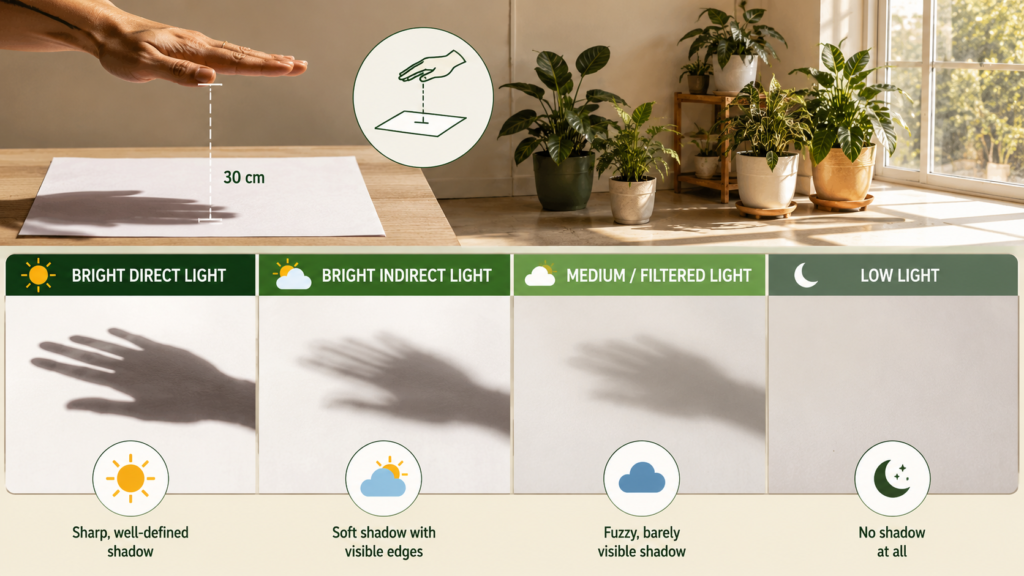
The Simple Shadow Test
Here’s a foolproof DIY method:
- Hold your hand about 30 cm above a white sheet of paper during peak daylight hours (10 AM–2 PM)
- Observe the shadow:
- Sharp, well-defined shadow → Bright direct light
- Soft shadow with visible edges → Bright indirect light
- Fuzzy, barely visible shadow → Medium/filtered light
- No shadow at all → Low light
Do this in every room where you plan to keep indoor plants. The results will surprise you.
Indian Homes Present Unique Challenges
If you live in a typical Indian apartment or house, you’ll often deal with:
- Window grilles and iron bars that break up and reduce light intensity
- Heavy curtains drawn against the afternoon heat, blocking prime light hours
- Narrow windows or small ventilators that limit light spread
- Deep overhangs or balconies above shading lower floors
All these reduce the light your indoor plants receive—sometimes by more than 70%.
🧭 Does the Direction Your Home Faces Change Everything? (Yes, Completely.)
The orientation of your windows is one of the most overlooked factors in indoor plant placement — and one of the most important.
| Window Direction | Light Type | Best For |
| East-facing | Gentle morning sun | Most tropical houseplants, ferns, pothos |
| West-facing | Warm afternoon sun | Succulents, aloe, flowering plants |
| South-facing | Brightest, longest light | Cacti, high-light plants, herbs |
| North-facing | Bright but no direct sun | Low-light plants, snake plants, ZZ plants |
In India, south-facing windows receive the most consistent light year-round. North-facing rooms get bright, diffused light — ideal for indoor plants that prefer indirect conditions. East-facing balconies are arguably the best spots in Indian homes for the most common houseplants.
☀️ How Much Light Do Indoor Plants Actually Need?
This is where most plant parents go wrong — they assume “near a window” is enough. It often isn’t.
Plants use light for photosynthesis — essentially, light is their food. Without adequate light, they can’t produce the energy they need to grow, push out new leaves, or even stay alive.
Two factors determine whether your indoor plants get “enough” light:
- Intensity — How bright is the light source?
- Duration — How many hours per day is the plant exposed?
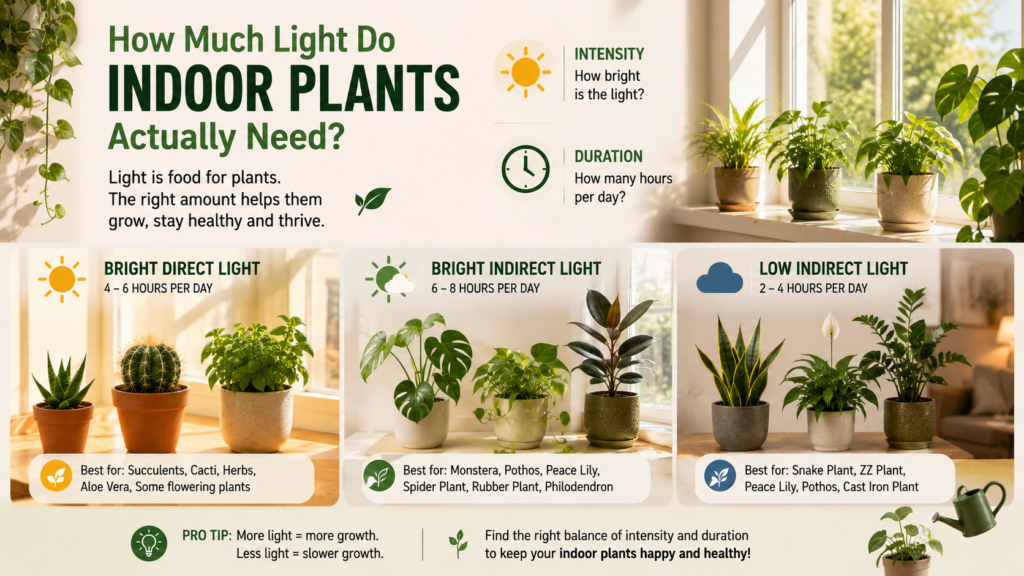
Most popular indoor plants need 6–8 hours of bright indirect light per day. Highlight plants (succulents, cacti, some herbs) need 4–6 hours of direct sun. Low-light survivors (pothos, snake plants, peace lilies) can get by with 2–4 hours of indirect light.
🌿 The Light Spectrum Decoded: From Sun-Lovers to Shade-Dwellers
Not all “good light” is the same. Here’s a breakdown of the four main light levels and what they mean for your indoor plants:
🔆 Bright Direct Light
Sunlight falls directly on the plant — you can feel the heat. This occurs within 30 cm of an unobstructed south or west-facing window.
Best for: Cacti, succulents, aloe vera, most herbs
💡 Bright Indirect Light
The space is very well-lit, but direct sun rays don’t hit the plant. Think: a few feet from a south-facing window, or right next to an east-facing window.
Best for: Monstera, pothos, peace lily, spider plant, rubber plant — most popular houseplants fall here
🌤️ Medium / Filtered Light
Light passes through a sheer curtain, or the plant sits in the interior of a well-lit room. Comfortable reading light without squinting.
Best for: Ferns, dracaena, Chinese evergreen, cast iron plant
🌑 Low Light
Dim corners, hallways, and rooms with small or blocked windows. No direct sun, minimal ambient light. Note: low light ≠ , no light. Every plant needs some.
Best for: ZZ plant, snake plant, pothos (survives), peace lily
Quick Reference Table
| Light Level | Where in Your Home | Example Plants |
| Bright Direct | Right at sunny window | Cactus, herbs, succulents |
| Bright Indirect | 1–2 feet from sunny window | Monstera, pothos, rubber plant |
| Medium | Interior of bright room | Ferns, dracaena |
| Low | Hallways, dim corners | Snake plant, ZZ plant |
💡 When the Sun Isn’t Enough: Can Artificial Light Really Help Your Plants?
The short answer: yes — but not all bulbs are equal.
Regular LED bulbs or fluorescent tube lights don’t provide the full spectrum of light plants need for photosynthesis. However, dedicated LED grow lights are highly effective and energy-efficient.
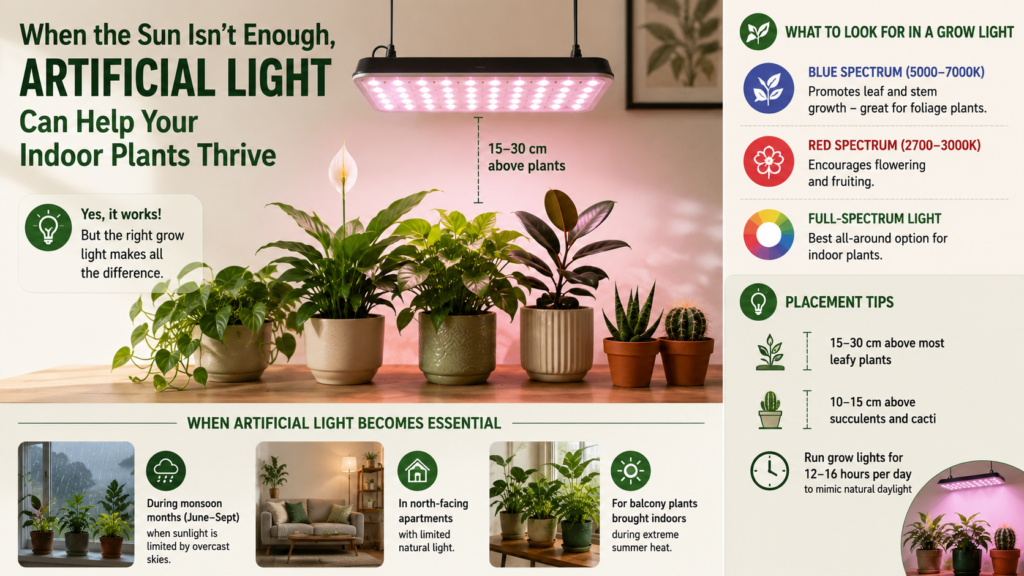
What to Look For in a Grow Light
- Blue spectrum (5000–7000K): Promotes leaf and stem growth — great for foliage plants
- Red spectrum (2700–3000K): Encourages flowering and fruiting
- Full-spectrum grow lights: Best all-around option for indoor plants
Placement Tips for Grow Lights
- Keep grow lights 15–30 cm above most leafy plants
- Succulents and cacti can handle lights 10–15 cm away
- Run grow lights for 12–16 hours per day to simulate natural daylight
Let’s highlight times when artificial light becomes especially important in Indian homes.
- During the monsoon months (June–September), when natural light is consistently blocked by overcast skies
- In north-facing apartments with limited natural light
- For balcony plants brought indoors during extreme summer heat
💡 Pro Tip: If your indoor plants are struggling despite adequate light, nutrition may be the missing piece. Strong, healthy roots help plants use available light more efficiently. A dose of Premium Potash Fertilizer strengthens root systems and improves overall plant resilience — especially useful when transitioning plants between light conditions.
🚨 Your Plant Is Sending SOS Signals — Are You Missing Them?
Indoor plants can’t speak, but they communicate loudly through their leaves, stems, and growth patterns. Learning to read these signs will save many plants.
🔅 Signs Your Plant Is Not Getting Enough Light
| Symptom | What It Means |
| Yellowing lower leaves | Insufficient light for photosynthesis |
| Long, stretched stems reaching toward windows (etiolation) | Desperate search for light |
| Leaves losing their colour or variegation | Not enough light to produce pigment |
| Soil staying wet for too long | Less evaporation due to low energy use |
| Slow or zero new growth | Plant in survival mode |
| Leaves smaller than normal | Energy conservation response |
☀️ Signs Your Plant Is Getting Too Much Light
| Symptom | What It Means |
| Brown, crispy leaf edges or tips | Sunscorch |
| Bleached or washed-out leaves | Chlorophyll breakdown from excess UV |
| Wilting even right after watering | Heat stress, not dehydration |
| Soil drying out extremely fast | Excess evaporation from heat |
| White or silver patches on leaves | Direct sun damage |
⚠️ Is your plant secretly struggling even though it looks fine? Light problems can develop gradually before they become obvious. Don’t wait for a crisis — check for the early warning signs: Your Plant Looks Fine… But Is It? 10 Signs Your Plant Is Dying or Thriving
🏠 Room-by-Room Blueprint: The Best Spot for Every Indoor Plant in Your Home
Now let’s get practical. Here’s exactly where to place your indoor plants in each room:
🛋️ Living Room
The living room typically has the largest windows — use them wisely.
✅ Do:
- Place high-light plants (rubber plant, fiddle leaf fig) within 1 metre of a south or west-facing window
- Use a monstera or pothos on a shelf 1–2 metres from the window
- Add a tall snake plant in a bright corner as a statement piece
❌ Don’t:
- Push plants against the back wall where no light reaches
- Place sun-loving indoor plants behind heavy furniture
🛏️ Bedroom
Bedrooms benefit from calming, air-purifying indoor plants—but most bedrooms receive limited light.
✅ Best choices: Snake plant, pothos, peace lily, ZZ plant
- Place on a bedside table near an east-facing window for gentle morning light
- Avoid anything that needs bright direct light — it won’t last
🍳 Kitchen
Kitchens are ideal for herbs and humidity-loving plants.
✅ Do:
- Grow basil, mint, or coriander on a sunny windowsill (south or east-facing)
- Place a spider plant or philodendron near the sink for humidity
❌ Don’t:
- Place delicate plants directly above a gas stove — heat and smoke cause damage
🚿 Bathroom
Bathrooms with windows are perfect for humidity-loving indoor plants.
✅ Best choices: Ferns, peace lily, spider plant
- No window? Opt for air plants or use a grow light — even a 10W grow bulb works in a small bathroom
🌿 Balcony / Entryway
Balconies are the prime real estate for indoor plants in Indian homes.
✅ Do:
- Use east or north-facing balconies for tropical houseplants
- Shade-cloth or a net curtain helps on south-facing balconies during peak summer
❌ Don’t:
- Leave moisture-sensitive succulents exposed during the monsoon without cover
📅 The Seasonal Shift: Why Your Perfect Plant Spot in Winter Fails in Summer
Here’s something most indoor plant guides ignore for Indian readers: the sun in India moves dramatically between seasons, and your plant placement must move with it.
How Indian Seasons Affect Indoor Plant Light
| Season | Light Behaviour | What To Do |
| Summer (March–May) | Intense, harsh direct sun; high UV | Move sensitive plants 30–60 cm away from windows |
| Monsoon (June–Sept) | Consistently overcast; 40–60% less natural light | Move plants closer to windows; consider grow lights |
| Post-monsoon (Oct–Nov) | Ideal, balanced natural light | Return plants to preferred positions |
| Winter (Dec–Feb) | Lower sun angle; shorter days | Shift plants to south-facing spots for maximum exposure |
The Dust Problem — A Very Indian Issue
In Indian cities, dust accumulates on leaves quickly — especially post-summer and pre-monsoon. A thin layer of dust on leaves can reduce light absorption by up to 30%. Make it a habit to wipe leaves gently with a damp cloth every 2–3 weeks.
🌱 Seasonal stress tip: Plants under stress from changing light conditions often show signs of nutrient deficiency — yellowing leaves, dull colour, slow growth. Epsom Salt for Plants is a simple, affordable way to replenish magnesium and sulfur — two nutrients critical for healthy, vibrant foliage. It works especially well during seasonal transitions.
🔄 Fine-Tuning for Maximum Growth: Small Adjustments, Big Results
Once your indoor plants are in a good spot, these small habits will make a noticeable difference:
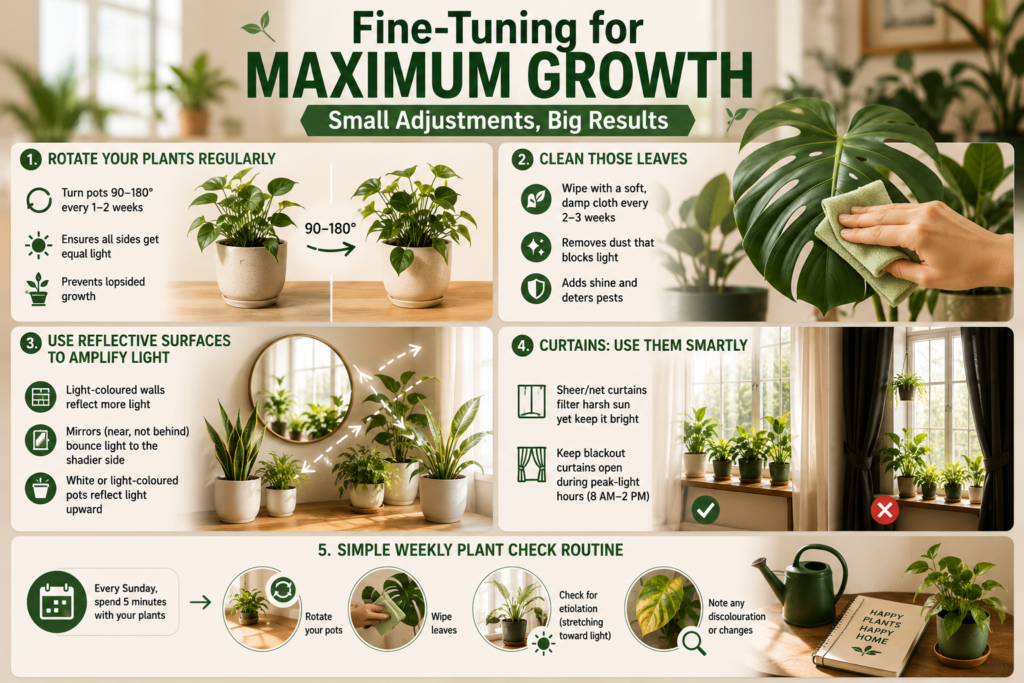
Rotate Your Plants Regularly
- Turn pots 90–180 degrees every 1–2 weeks
- This ensures all sides of the plant receive equal light, preventing lopsided growth
- Especially important for plants near a single window
Clean Those Leaves
- Wipe leaves with a soft, damp cloth every 2–3 weeks
- Removes dust that blocks light absorption
- Adds a natural shine and deters pests at the same time
Use Reflective Surfaces to Amplify Light
- Light-coloured walls reflect more ambient light into the room
- Mirrors placed near (not behind) plants can bounce light onto the shadier side
- White or light-coloured pots reflect light upward to lower leaves
Curtains Are Not the Enemy — Use Them Smartly
- Sheer/net curtains filter harsh afternoon sun while maintaining brightness — ideal for most houseplants
- Blackout curtains should be kept open during plant peak-light hours (8 AM–2 PM)
A Simple Weekly Plant Check Routine
Every Sunday, spend 5 minutes:
- Rotate your pots
- Wipe leaves
- Check for etiolation (stretching toward light)
- Note any discolouration
💧 Pair the right light with the right watering schedule — that’s where real plant success happens. Read: How to Water Indoor Plants Without Killing Them (Indian Weather Tips)
🌞 Natural vs. Artificial Light: Which One Should You Choose?
The honest answer: natural light is always best — but it isn’t always possible.
Maximising Natural Light in Indian Homes
- Trim outdoor plants or trees blocking the window light
- Clean your windows regularly (dirty glass reduces light by 10–20%)
- Avoid placing furniture between your plant and its light source
- Use glass or transparent shelving near windows so all plants receive light
When to Supplement with Artificial Grow Lights
Consider grow lights if:
- Your home has no windows on 2+ sides
- You’re growing plants on interior shelves or room dividers
- You’re going through monsoon, and light levels drop for weeks at a time
- You want to propagate plants or grow herbs indoors year-round
The Hybrid Approach That Works Best
Natural light during the day + supplemental grow light in the evening is an effective strategy for Indian homes with limited window space. Run grow lights for 4–6 hours in the evening after natural light fades.
✅ Conclusion: Light Is a Living Thing in Your Home
The light in your home changes by the hour, by the season, and by the direction your windows face. Understanding it is the single most transformative thing you can do for your indoor plants.
Start simple: do the shadow test today. Reassess where your plants are sitting. Move one plant that’s struggling. Watch what happens over the next two weeks.
Your plants are remarkably responsive. Give them the right light, and they’ll reward you with lush, steady growth that makes every room feel alive.
🌿 Looking for quality plant care products trusted by thousands of Indian plant parents?
Browse the full range of fertilizers, growth boosters, and plant nutrition essentials from Surekha Agro Products on Amazon — everything your indoor garden needs, delivered to your door.
❓ Frequently Asked Questions About Indoor Plant Light
Q1. How do I know if my indoor plant is getting enough light?
Check for these signs of healthy light levels: steady new leaf growth, vibrant colour (especially in variegated plants), firm upright stems, and evenly drying soil. If your plant is stretching, yellowing, or not growing, it likely needs more light.
Q2. Can indoor plants survive without natural light?
Some indoor plants — like ZZ plants, snake plants, and pothos — can survive on bright artificial light alone, though they grow more slowly. Dedicated full-spectrum LED grow lights are the best substitute for natural sunlight. Avoid relying on regular room lighting; it doesn’t provide enough of the right spectrum.
Q3. Which room in an Indian home gets the best light for plants?
Rooms with south-facing or east-facing windows receive the best light for most indoor plants in India. East-facing balconies are especially ideal — they get gentle morning sun without the harsh afternoon heat. North-facing rooms work well for low to medium-light plants.
Q4. How far should indoor plants be from a window?
For bright indirect light, place plants within 1–1.5 metres of a window. For direct light lovers, keep them right at the window. For low-light plants, place them up to 2–3 metres from a window, provided the room is reasonably well-lit.
Q5. Do indoor plants need light at night?
No — plants don’t need light at night. In fact, darkness is part of their natural cycle and helps regulate their biological processes. Leaving grow lights on 24 hours can actually stress some plants. Aim for 12–16 hours of light followed by 8–12 hours of darkness.
Q6. Why are my indoor plants’ leaves turning yellow near a window?
If a plant sits right against a window in direct summer sun, yellowing or bleaching can indicate too much light (sunscorch). Move it 30–60 cm back from the window and observe over two weeks. If yellowing continues on a plant away from direct sun, it likely needs more light, not less.
Q7. How does the monsoon season affect indoor plant light in India?
During India’s monsoon months (June–September), consistent cloud cover can reduce natural light by 40–60%. Many indoor plants slow down or show stress during this period. Move plants closer to windows and consider a supplemental grow light for high-light species. Also support plant health through this transition with Epsom Salt for Plants to maintain healthy foliage.
Q8. What is the best artificial light for growing indoor plants?
Full-spectrum LED grow lights are the best option — they’re energy-efficient, long-lasting, and provide both the blue and red wavelengths plants need. Look for lights rated 5000–6500K for foliage growth. Avoid using regular warm-white bulbs as a substitute; they don’t contain the right spectrum for plant growth.
☀️ Match Your Home’s Light With the Perfect Indoor Plants
Recommended products
-
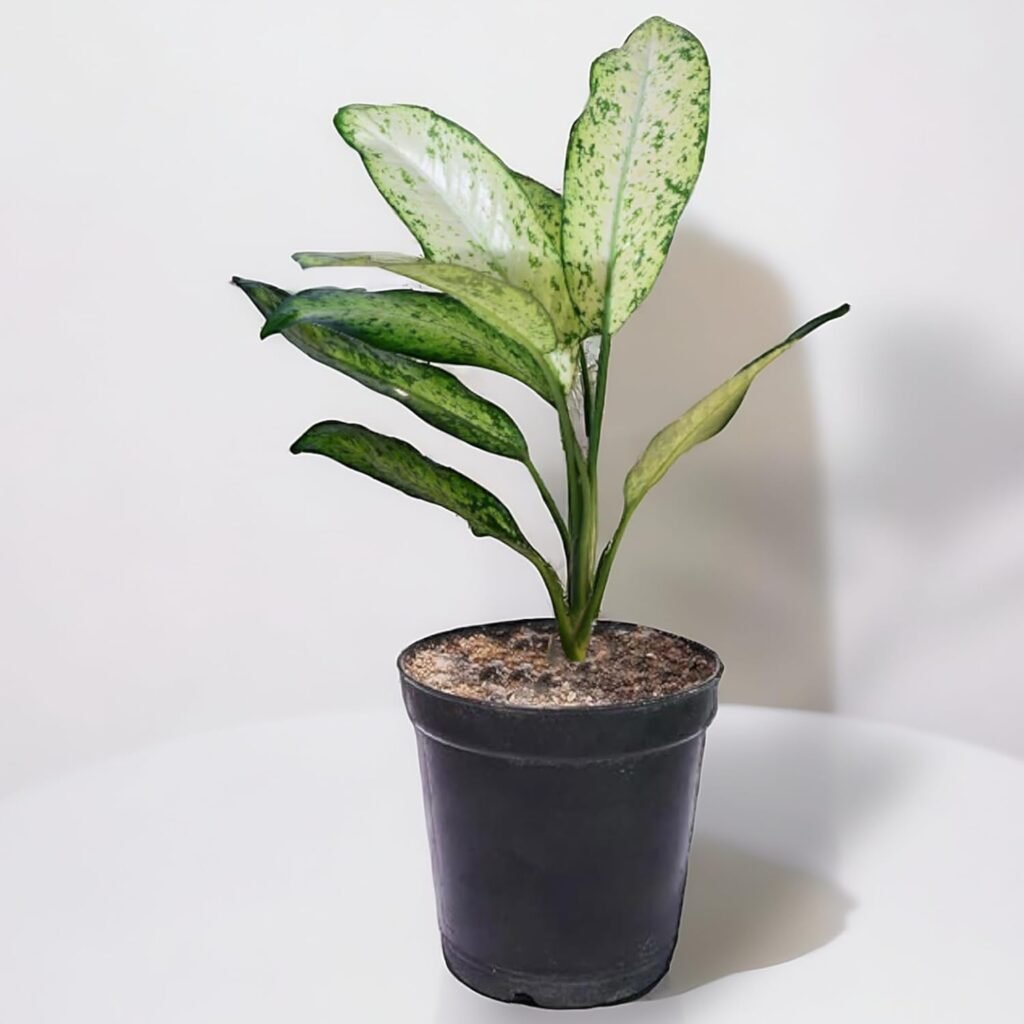
Surekha Green aglaonema plant
Original price was: ₹599.00.₹299.00Current price is: ₹299.00. -
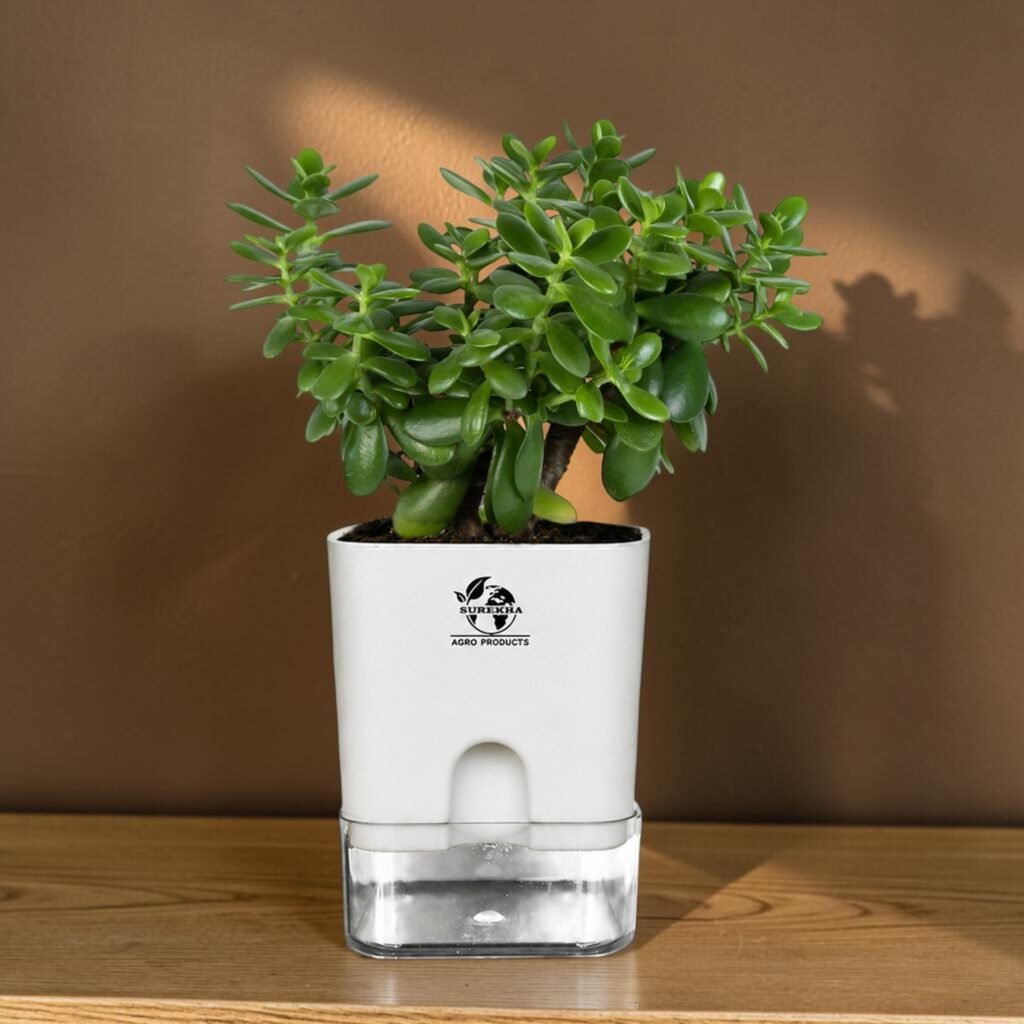
Surekha Jade Plant Indoor
Price range: ₹269.00 through ₹399.00 -
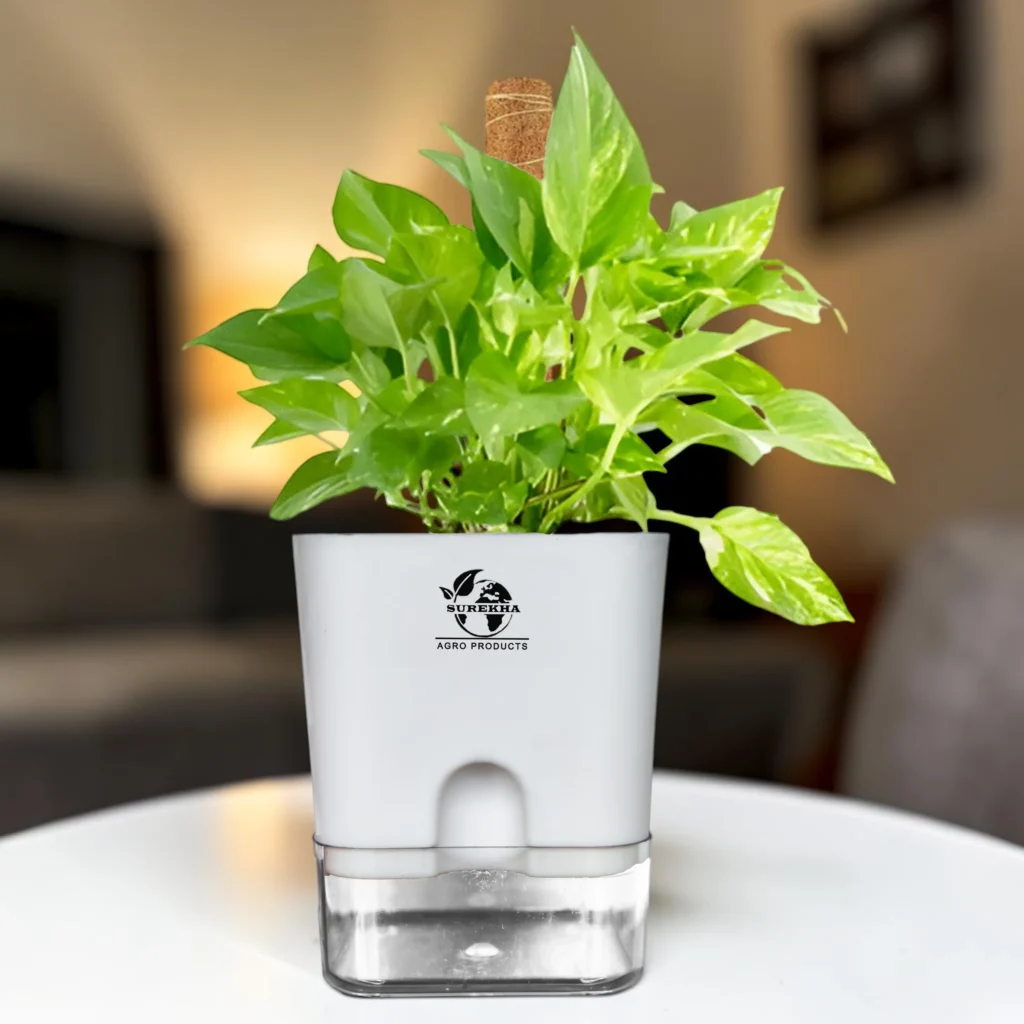
Surekha Money Plant for Indoor With Moss Stick
Price range: ₹269.00 through ₹399.00 -
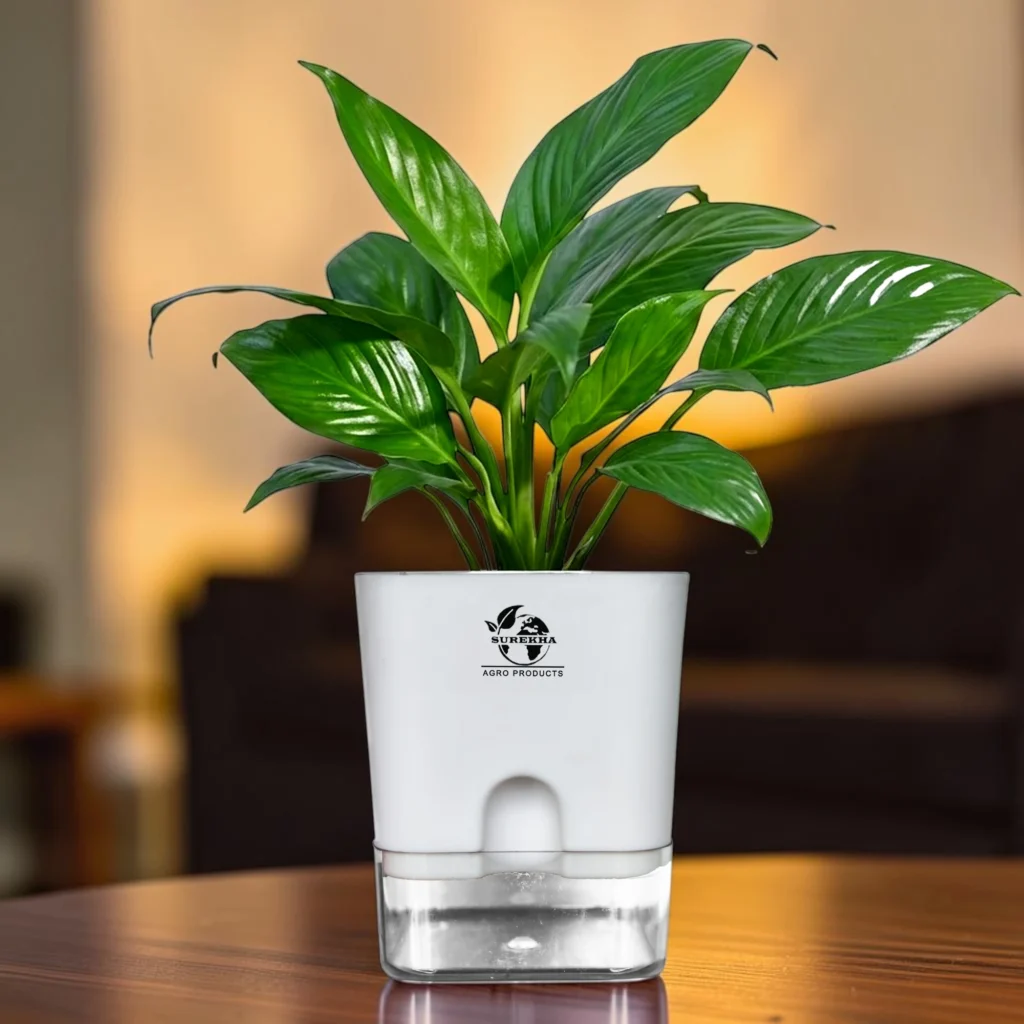
Surekha Peace Lily Live Indoor Plant
Price range: ₹189.00 through ₹399.00 -
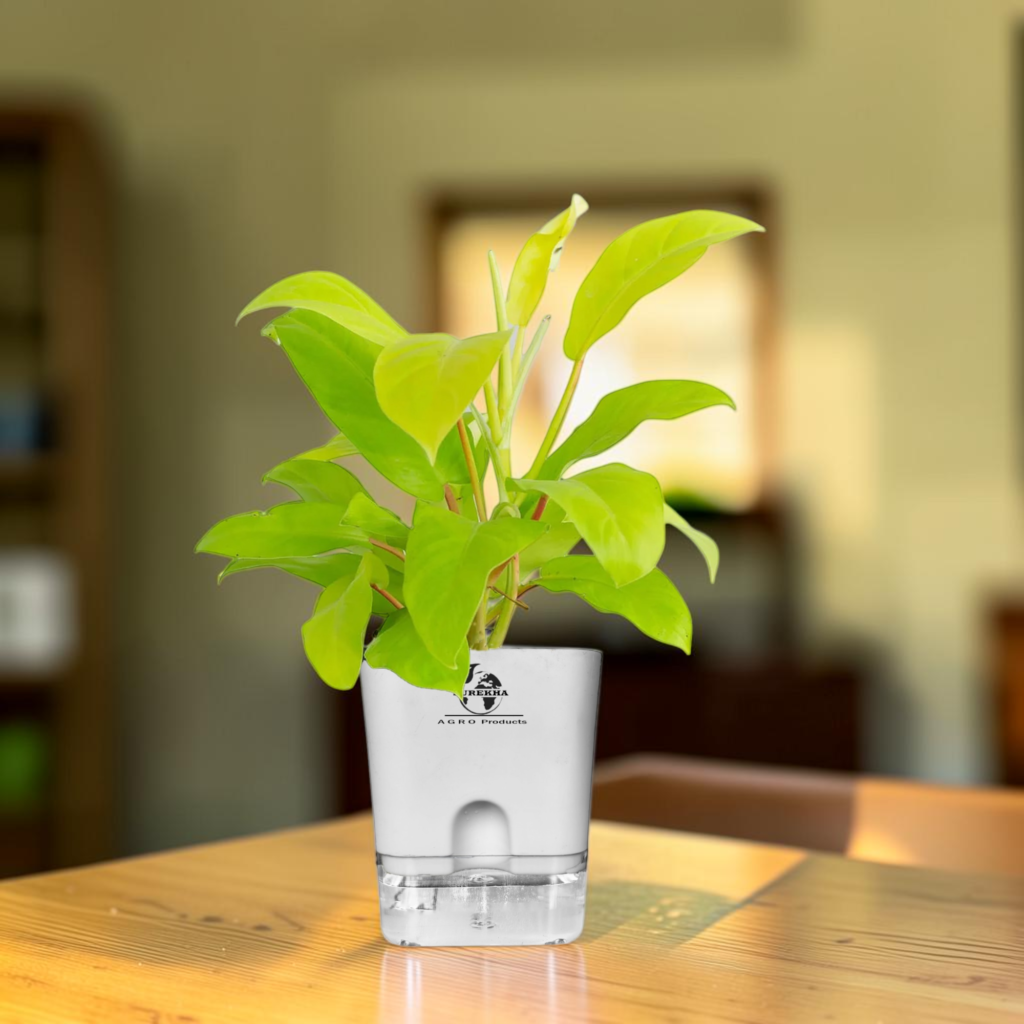
Surekha Philodendron Ceylon Live Plant
Price range: ₹299.00 through ₹399.00 -
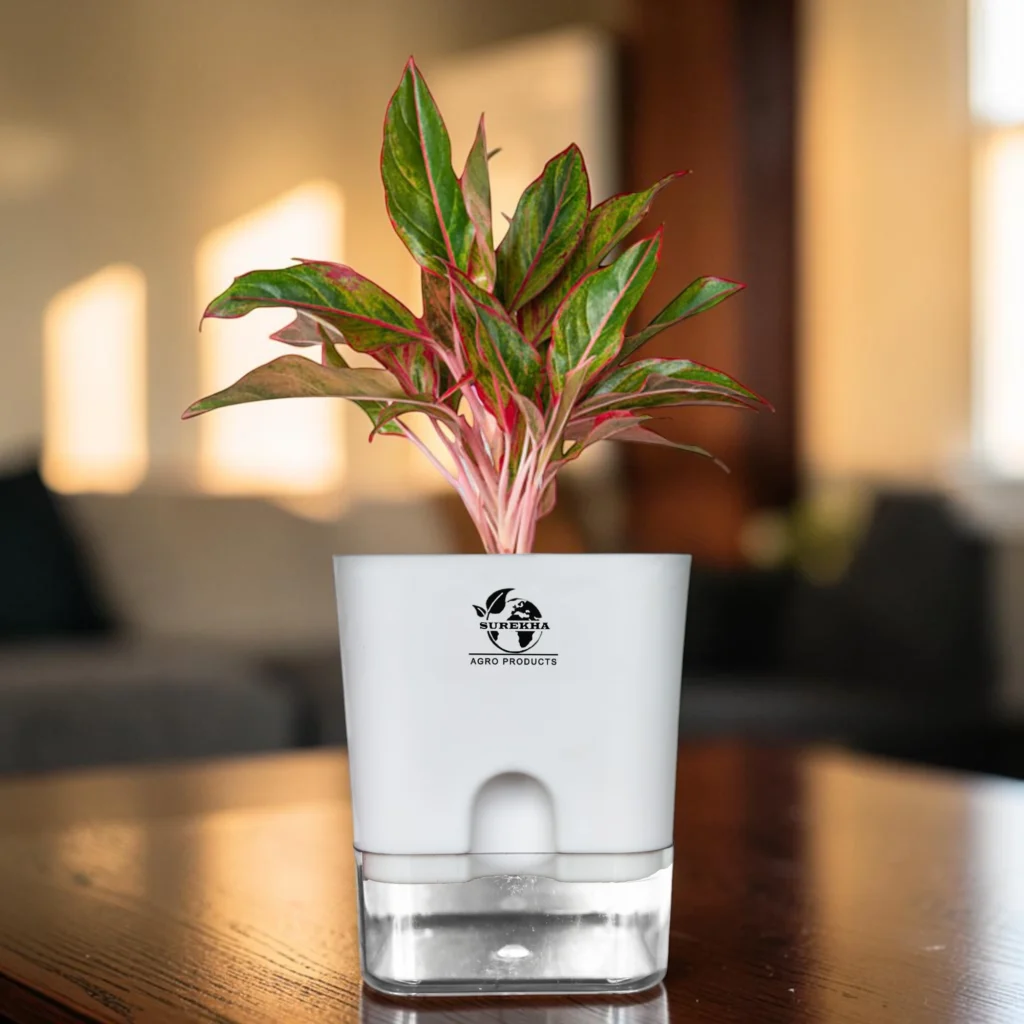
Surekha Red Aglaonema Live Plant
Price range: ₹269.00 through ₹399.00 -
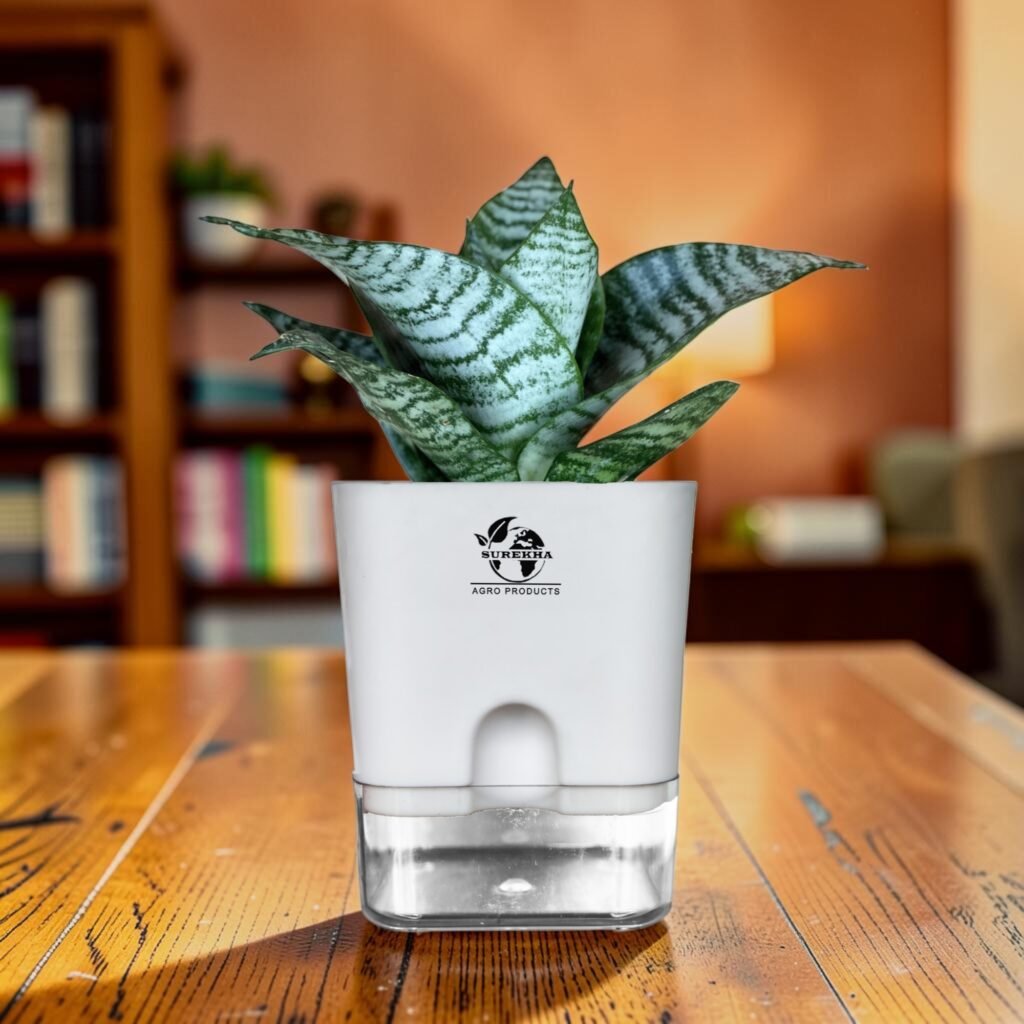
Surekha Sansevieria Green Snake Plant
Price range: ₹299.00 through ₹399.00 -
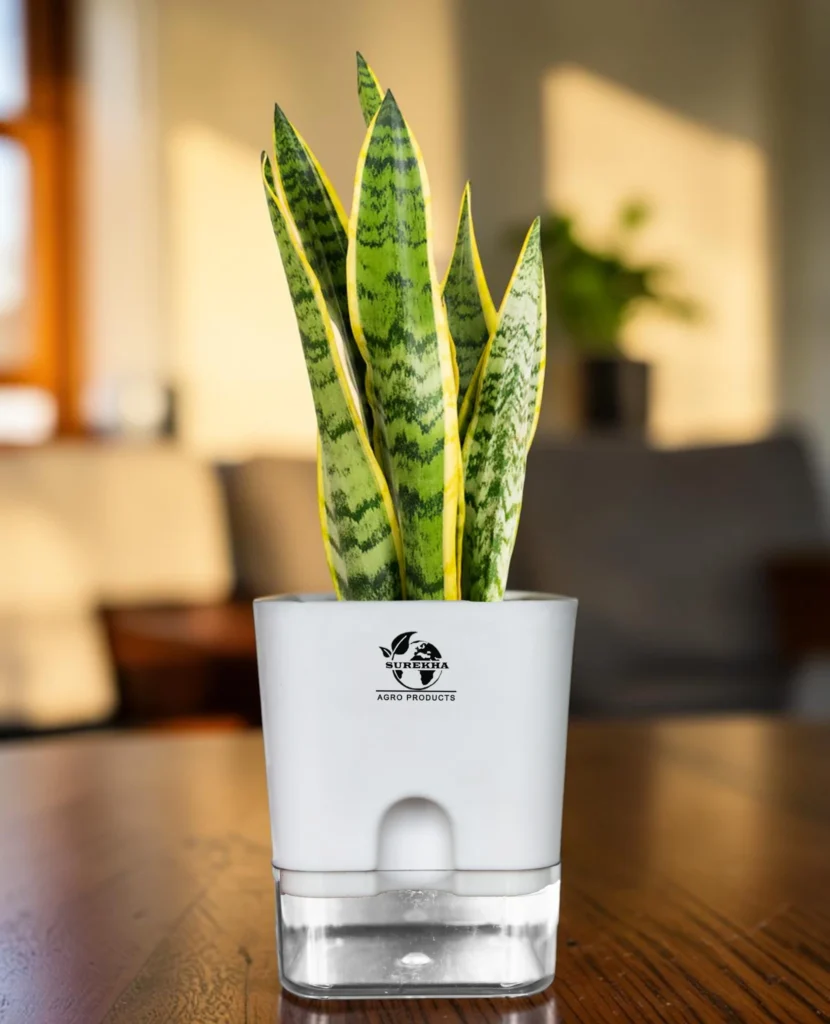
Surekha Sansevieria Laurentii Snake Plant
Price range: ₹249.00 through ₹399.00 -
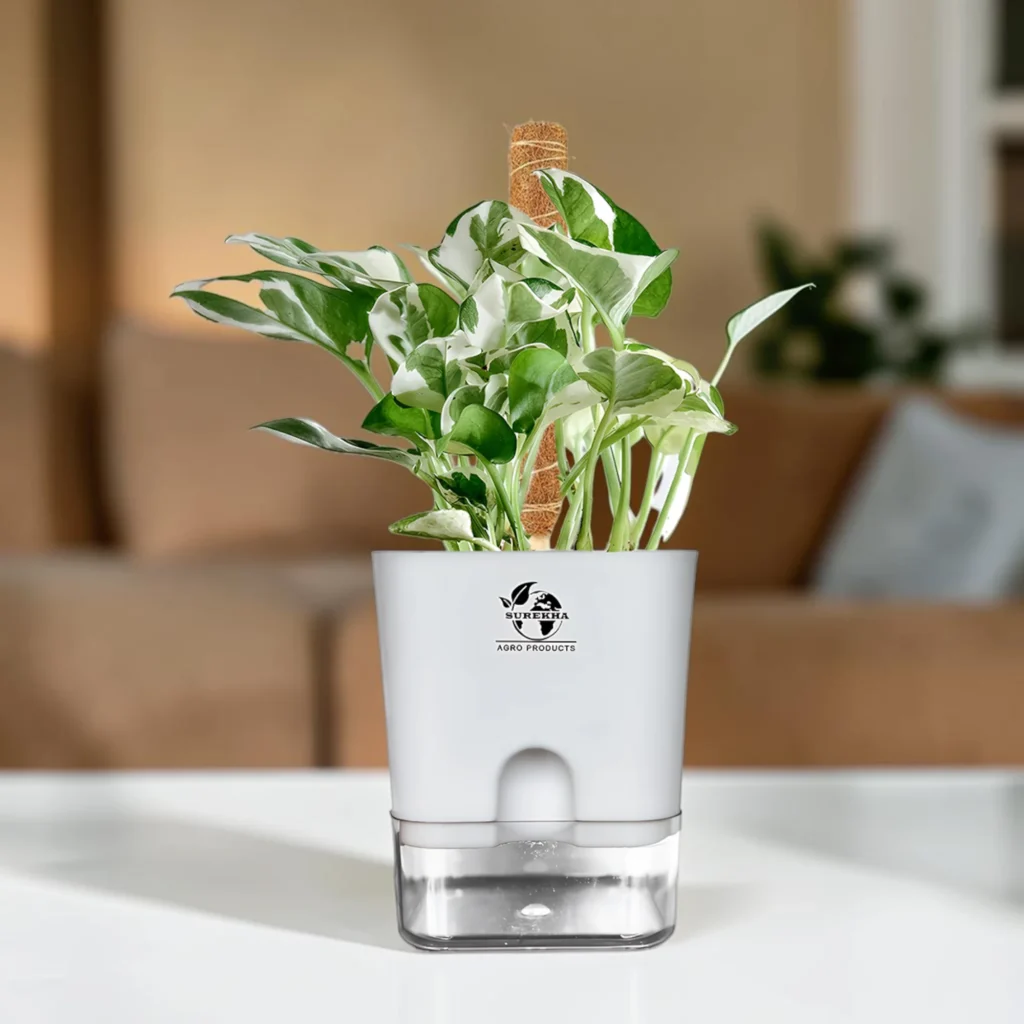
Surekha Variegated Money Plant Indoor
Price range: ₹299.00 through ₹399.00
Published by Surekha Agro Products | Trusted by Indian home gardeners 🌱