
Want fresh, crisp salad leaves from your own balcony? Lettuce is one of the most rewarding cool-season vegetables to grow in containers, even if you live in an Indian apartment with limited gardening space. The key is timing: lettuce prefers cooler weather, and October is an excellent month to begin in many parts of India.
This practical guide explains how to grow lettuce in pots in India, from choosing a container and sowing tiny seeds to watering, feeding and harvesting tender leaves. The recommendations are designed for balcony, terrace and kitchen gardeners rather than commercial farms.
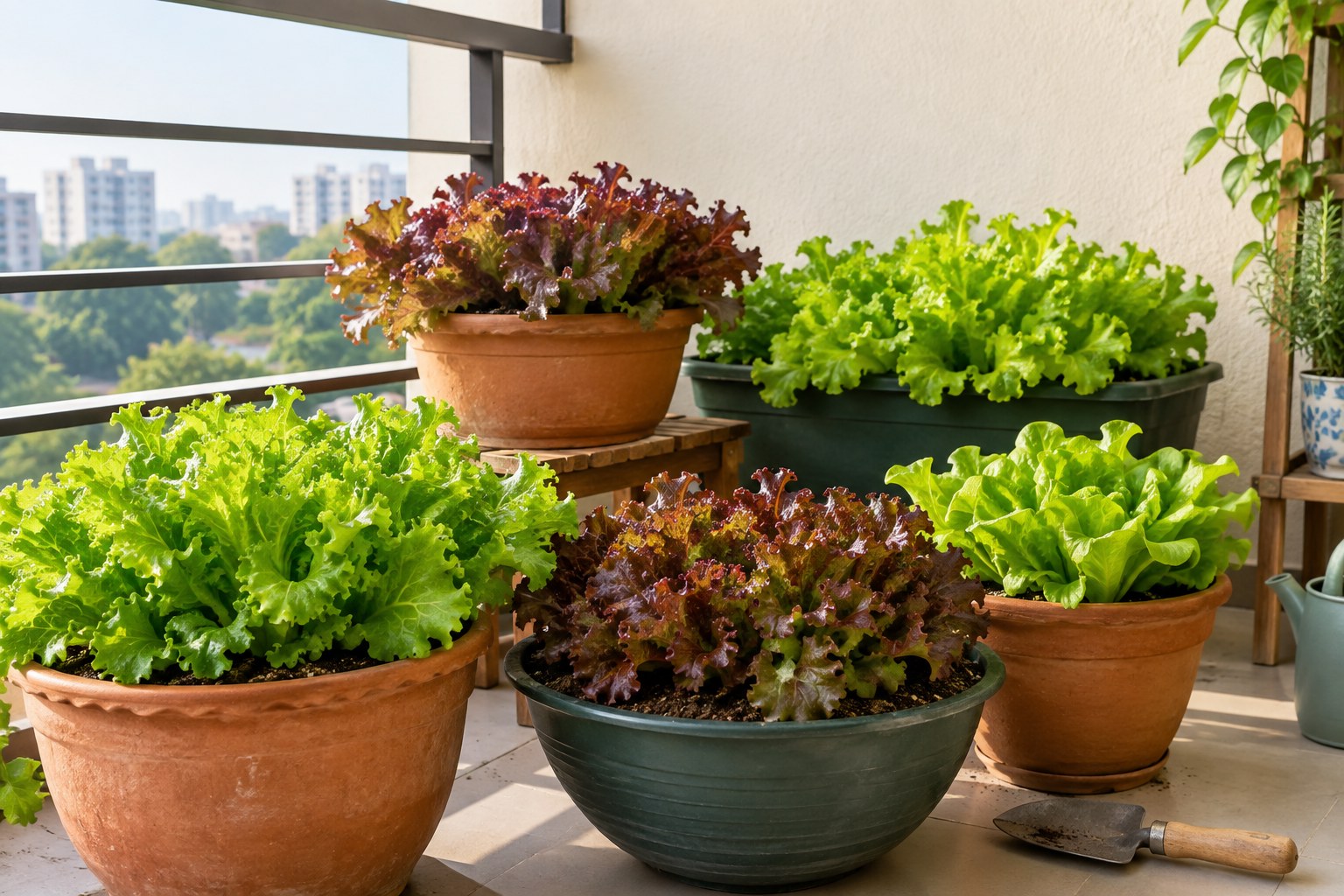
Quick lettuce growing guide for Indian homes
| Best season | Cool months; generally October–January/February depending on region |
| Sunlight | About 4–6 hours; protect from harsh heat |
| Container | Wide pot or grow bag, roughly 15–20 cm+ deep for leaf lettuce |
| Sowing depth | Very shallow; barely cover the seeds |
| Water | Keep evenly moist, never waterlogged |
| First harvest | Baby leaves earlier; mature outer leaves commonly around 30–50 days depending on variety and weather |
Best time to grow lettuce in India
Lettuce is a cool-season crop. In much of North and East India, October through the winter months is the easiest growing window. Western and southern plains generally do best during their cooler months too, while hill regions can have a longer season.
Do not follow the calendar blindly. If October afternoons are still very hot where you live, start the seeds in a bright but protected location and move the seedlings into gentler morning sun as temperatures moderate. Excess heat can reduce germination and make established lettuce bolt, or produce a flowering stalk, sooner.
If you are planning a complete seasonal kitchen garden, first read our best winter vegetables to grow in pots in India.
Which lettuce varieties are best for pots?
For beginners, loose-leaf lettuce is usually easier than trying to produce a perfect supermarket-style head. Leaf types allow you to harvest the outer leaves while the centre continues growing. Butterhead and compact varieties can also perform well in containers when temperatures remain cool.
If your goal is regular home salads, choose a variety described as loose-leaf, cut-and-come-again or suitable for containers. Growing two colours or leaf shapes together also makes a balcony container attractive without requiring extra space.
Choosing the right pot or grow bag
Lettuce roots do not require the extreme depth needed by carrots, but they do need reliable drainage and enough surface area. A wide container approximately 15–20 cm or deeper is suitable for many leaf-lettuce setups. Larger containers are easier to keep evenly moist than tiny pots.
Every container must have drainage holes. Water sitting around the root zone encourages root problems and fungal disease.
Unsure which container to use for the rest of your vegetables? See our grow bag size guide for vegetables in India.
Best potting mix for lettuce
Lettuce prefers a loose, fertile mix that holds some moisture but drains excess water. For home containers, combine good-quality garden soil with mature compost or vermicompost and a light material such as cocopeat. If your mix becomes sticky or compact after watering, improve aeration rather than adding more fertilizer.
Avoid fresh manure and excessive fertilizer. Lettuce is grown mainly for tender leaves, and steady moderate nutrition is better than sudden heavy feeding.
How to sow lettuce seeds in pots
- Fill the container with moist potting mix, leaving a little space below the rim.
- Level the surface gently without compressing it hard.
- Scatter the tiny seeds thinly or place them with adequate spacing.
- Press them gently onto the surface and cover only very lightly with fine mix or cocopeat.
- Mist with water so the seeds are not washed into one corner.
- Keep the surface consistently moist during germination, but not soggy.
Lettuce seeds are small, so sowing too deeply is a common beginner mistake. Once seedlings emerge, thin overcrowded plants. Good airflow reduces disease and gives each plant enough room to form usable leaves.
How much sunlight does lettuce need?
During cool Indian winter weather, lettuce can benefit from several hours of direct morning sun. A balcony receiving roughly 4–6 hours of useful light is often suitable. As temperatures rise, gentle morning sun with afternoon protection can help delay heat stress and bolting.
A dark indoor windowsill is usually not enough for strong vegetable growth. If you are unsure how to judge light in your home, use our home plant light and placement guide as a starting point.
How to water lettuce in containers
Lettuce leaves are tender and the plants prefer fairly consistent moisture. Check the mix with your finger instead of watering on a fixed timetable. Water when the upper layer starts losing moisture, then water thoroughly enough to wet the root zone and allow excess water to drain.
Small balcony pots can dry quickly on sunny or windy days, while large pots stay wet longer. During humid weather, overwatering can become a bigger risk than underwatering. Water near the soil rather than repeatedly soaking the foliage late in the evening.
For a more detailed method, read our Indian-weather watering guide; the same principle of checking the soil instead of blindly following a calendar is useful for container vegetables.
Fertilizing lettuce without overfeeding
If your potting mix contains mature compost or vermicompost, young lettuce usually does not need aggressive feeding. After growth is established, a light top-dressing of compost or a mild balanced feed can support continued leaf production.
Avoid repeatedly applying strong nitrogen fertilizer just because you want larger leaves. Excess fertilizer can stress roots and is unnecessary for a short-duration home crop. Our beginner fertilizer guide explains why more fertilizer does not automatically mean faster healthy growth.
How to harvest lettuce for repeated leaves
For loose-leaf varieties, harvest the larger outer leaves first and leave the central growing point intact. This lets the plant continue producing fresh leaves. Use clean scissors or gently pick individual leaves without damaging the crown.
Do not wait indefinitely for leaves to become enormous. Younger leaves are usually more tender. If a tall central stalk starts forming and the flavour becomes more bitter, the plant is beginning to bolt and is nearing the end of its best harvest period.
Succession sowing: the trick for continuous salads
Instead of sowing the entire packet on one day, start a smaller container every two or three weeks during suitable cool weather. When the first batch is reaching peak harvest, the next one will be developing. This simple succession-sowing method can give a household a much steadier supply.
You can use the same strategy for several fast winter crops. Our guides to growing palak in pots, growing methi at home and growing coriander in pots can help you build a compact leafy-green garden.
Common lettuce problems in Indian balconies
Seeds are not germinating
The weather may be too warm, the seeds may have been buried too deeply, or the surface may have dried during germination. Sow shallowly and keep the seed zone gently moist.
Seedlings are tall and weak
They are often stretching for light. Gradually move them to a brighter location with suitable morning sunlight.
Leaves are wilting every afternoon
Check both heat and soil moisture. A small pot in strong afternoon sun can heat up quickly even when it was watered that morning.
Leaves are yellowing
Do not immediately add fertilizer. First check drainage, overwatering, root crowding and light. Persistently wet soil can produce yellowing that extra fertilizer will not solve.
The plant suddenly grows tall
This is bolting. Warm temperatures and increasing day length can trigger flowering. Harvest usable leaves and start a fresh batch if cool growing weather remains.
Can you grow lettuce on a small Indian balcony?
Yes. Lettuce is particularly useful for small-space gardening because a wide rectangular planter can produce multiple plants without taking up much floor area. Combine it with quick leafy crops rather than crowding the same pot with large fruiting vegetables.
If you are just starting your winter garden, lettuce, palak, methi, coriander and radish provide a useful mix of quick harvests and beginner-friendly learning. For a root crop, see our radish in pots guide or the carrot container guide.
Frequently asked questions
Which month is best to sow lettuce seeds in India?
October is an excellent starting month in many regions as temperatures begin cooling. Depending on your local climate, the practical season can extend from roughly September/October into January or February. Temperature matters more than a single nationwide date.
Can lettuce grow in pots in India?
Yes. Lettuce adapts very well to containers, especially loose-leaf types. Use a wide pot with drainage, fertile loose soil and consistent moisture.
Does lettuce need full sun?
Lettuce needs good light, but it is a cool-season leafy vegetable. Several hours of morning sun are useful; during warmer weather, protection from intense afternoon heat can reduce stress and premature bolting.
How deep should a pot be for lettuce?
For many leaf-lettuce varieties, roughly 15–20 cm or more of usable soil depth can work well. Wider containers are especially useful because they allow several plants to be spaced apart.
How long does lettuce take to grow?
You can harvest baby leaves relatively early. Depending on variety, temperature and the harvest stage you want, useful leaf harvests commonly begin in roughly 30–50 days, while head types may take longer.
Can I regrow lettuce after cutting?
Loose-leaf lettuce can provide repeated harvests when you remove outer leaves and preserve the central growing point. Eventually the plant will bolt or lose quality, so succession sowing gives more reliable long-term supply.
Why does lettuce taste bitter?
Heat, plant maturity, water stress and bolting can make lettuce more bitter. Grow it during cooler weather, maintain even moisture and harvest leaves while tender.
Final takeaway
If you want an easy way to add home-grown salad greens to an Indian balcony or terrace, lettuce deserves a place in your winter garden. Sow shallowly, give it good morning light, keep the root zone evenly moist, harvest outer leaves regularly and start small new batches every few weeks.
Pair lettuce with palak, methi, coriander, radish and carrots and even a compact balcony can become a productive cool-season kitchen garden. Explore Surekha Agro Products for more practical gardening guides, plants and home-growing options for Indian gardeners.