
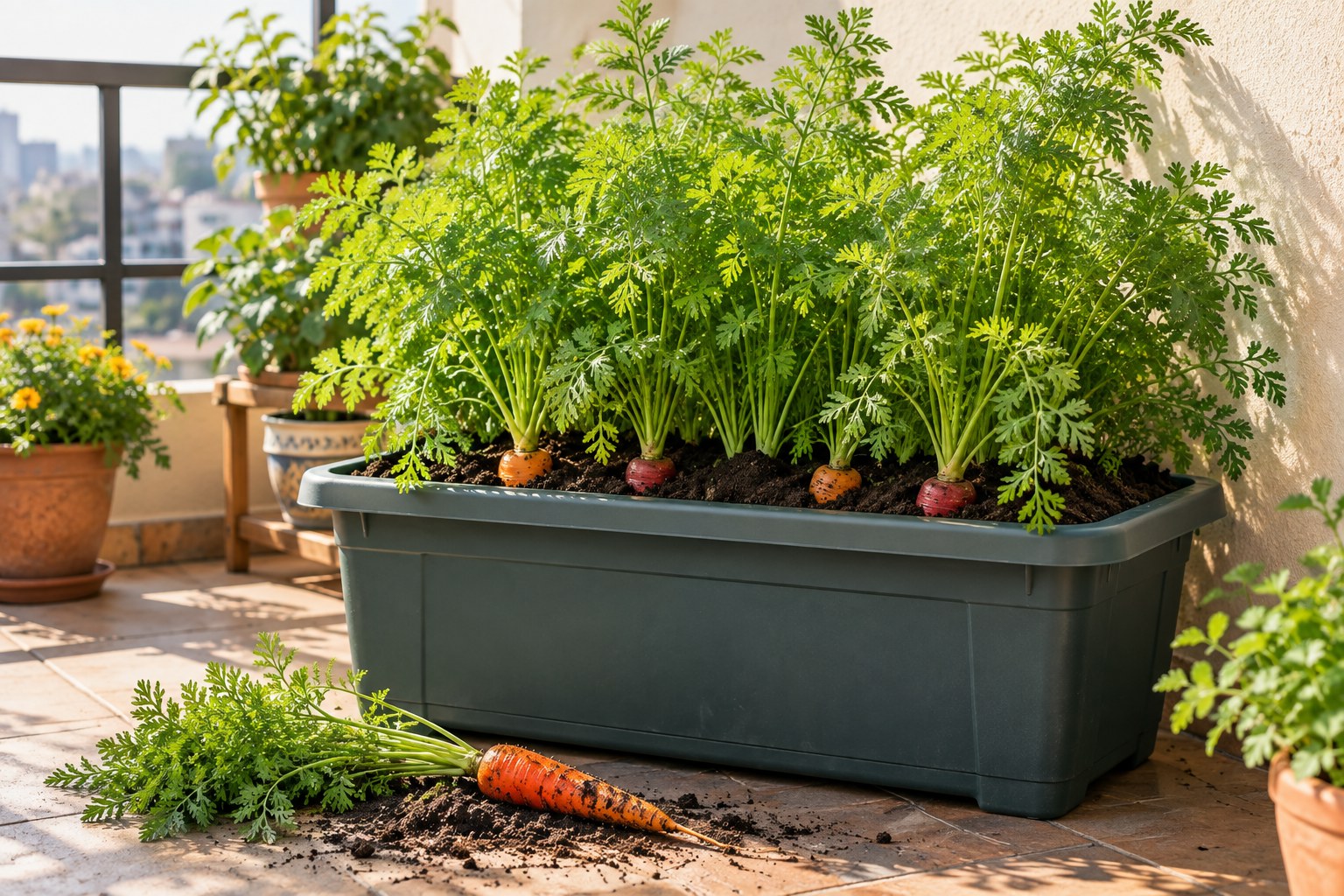
Growing carrots at home is easier than many beginners expect—as long as you give the roots enough depth and loose soil. If you are wondering how to grow carrots in pots in India, the cool season is the ideal time to start across much of the country. Carrots are especially rewarding for balcony and terrace gardeners because they need little horizontal space and can be grown in deep pots, containers or grow bags.
In this India-focused guide, you will learn when to sow carrot seeds, the right pot depth, soil mix, spacing, sunlight, watering, feeding and harvesting techniques for straight, sweet roots instead of short or forked carrots.
Carrot growing at a glance
| Growing factor | Practical recommendation |
|---|---|
| Best season | Cool season; broadly October to January for many Indian plains |
| Sowing method | Direct sow—avoid transplanting |
| Sowing depth | About 0.5–1 cm |
| Final spacing | About 5–8 cm between plants |
| Sunlight | Around 5–6 hours of good sunlight |
| Container | Deep pot/grow bag with drainage; match depth to variety |
| Harvest | Usually around 70–90 days, depending on variety and weather |
When is the best time to sow carrot seeds in India?
Carrots prefer cool weather. For many home gardeners in the Indian plains, October to January is a useful sowing window. The exact timing shifts with local climate: gardeners in warmer regions should wait for milder temperatures, while cooler hill regions can have different sowing windows.
Carrot root development performs best in cool conditions. Very warm weather can reduce quality, so October is a commercially relevant time for Indian home gardeners to begin a winter kitchen garden.
If you are planning several crops together, read our best winter vegetables to grow in pots in India.
Which pot size is best for carrots?
Depth matters more than a huge surface area. For long carrot varieties, choose a container roughly 35–40 cm deep. Shorter or round-rooted varieties can manage in shallower containers, but always check the expected mature root length before choosing your pot.
The container must have drainage holes. A waterlogged pot can damage roots, while a shallow or compact container limits root length. For a broader comparison, see our grow bag size guide for vegetables in India.
Best soil mix for carrots in containers
The secret to straight carrots is a loose, fine and well-draining growing medium. Heavy clay, stones, undecomposed organic chunks and compacted soil can obstruct the developing taproot and produce forked or misshapen carrots.
A practical container mix can combine sieved garden soil with mature compost or vermicompost and a drainage/aeration component such as cocopeat. The exact ratio is less important than the final structure: it should be fertile but crumbly, free of stones and easy for a young root to penetrate.
Avoid loading the pot with fresh manure or excessive nitrogen fertilizer. Too much nitrogen can encourage lush leaves instead of good root development.
How to sow carrot seeds in a pot
Carrots should normally be direct sown in their final container. Transplanting can disturb the taproot and increase the chance of deformed carrots.
- Fill the pot with loose growing medium and level the surface gently without compressing it hard.
- Make shallow lines or sow evenly across the surface.
- Place seeds about 0.5–1 cm deep and cover lightly with fine mix.
- Water with a gentle spray so the tiny seeds are not displaced.
- Keep the upper layer consistently moist while seeds germinate.
- After seedlings establish, thin them gradually to roughly 5–8 cm apart.
Carrot seeds are small, so some gardeners mix them with a little clean dry sand to distribute them more evenly.
Why thinning carrot seedlings matters
It is tempting to keep every seedling, but overcrowding means several roots compete for the same space. The result can be thin or poorly shaped carrots. Remove weaker seedlings once they are large enough to handle and leave adequate room around the strongest plants.
Do not pull aggressively if roots are tightly packed; snipping unwanted seedlings near soil level can reduce disturbance to neighbouring roots.
How much sunlight do carrots need?
Aim for around 5–6 hours of useful sunlight per day. Morning sun is particularly convenient for balcony gardens. A location with inadequate light may produce plenty of slow, weak foliage and disappointing roots.
If you are unsure how sunlight changes around your home, our home plant light guide explains the basic principles of observing light through the day.
How often should you water carrots in pots?
Carrot soil should remain evenly moist during germination and root development, but never permanently soggy. Because containers dry differently according to size, sunlight, wind, temperature and growing medium, avoid a rigid watering calendar.
Check the soil regularly and water gently when needed. Long dry spells followed by heavy watering can contribute to poor root quality or cracking. Consistent moisture is more useful than frequent shallow splashing.
For the underlying method, read our guide to checking soil before watering plants in Indian weather.
What fertilizer should you use for container carrots?
Start with a reasonably fertile medium containing mature compost. Carrots do not need aggressive feeding. Excessive nitrogen is a common mistake because it can produce impressive green tops without equally impressive roots.
If additional feeding is necessary, use a balanced approach and follow the product label rather than applying concentrated fertilizer by guesswork. Never place strong fertilizer directly against young seedlings.
Common carrot-growing problems and fixes
Forked or twisted carrots
Common causes include hard soil, stones, root disturbance, overcrowding or unsuitable fresh organic material. Use a fine, loose mix and direct sow.
Lots of leaves but small roots
Possible reasons include overcrowding, excessive nitrogen, insufficient light or harvesting too early. Thin seedlings and avoid overfeeding.
Carrots cracking
Large fluctuations in soil moisture can contribute. Aim for more even moisture instead of allowing the pot to become extremely dry and then soaking it heavily.
Seedlings not appearing evenly
Fine carrot seeds are easily buried too deeply or allowed to dry at the surface. Sow shallowly and maintain gentle, consistent moisture during germination.
Green carrot shoulders
If the top of a developing root becomes exposed, gently draw a little loose soil around it to cover the shoulder.
When and how to harvest carrots
Many home-garden carrot varieties are ready roughly 70–90 days after sowing, though variety, temperature and care affect the actual time. Do not judge only by the foliage.
Brush away a little soil near the shoulder and inspect the root width. When it has reached a useful size for the variety, loosen the surrounding soil and pull gently from the base of the foliage. Harvesting younger roots usually gives a tender result; leaving mature roots too long can reduce quality.
Succession sowing for a longer winter harvest
Instead of sowing your entire packet on one day, consider sowing smaller batches every three to four weeks while your local weather remains suitable. This spreads the harvest rather than producing every carrot at once.
You can apply the same kitchen-garden approach to quick crops such as radish in pots, palak in pots, coriander and methi.
Frequently asked questions
Can carrots grow in pots in India?
Yes. Carrots grow well in containers when the pot is deep enough for the chosen variety, the soil is loose and well drained, and the plants receive adequate cool-season sunlight.
Which month is best for growing carrots in India?
Across many Indian plains, October through January is a practical cool-season sowing window. Local temperature matters more than the calendar, so warmer and hill regions should adjust timing.
Can I transplant carrot seedlings?
Direct sowing is strongly preferred. Disturbing the young taproot during transplanting can produce forked or misshapen carrots.
How deep should a pot be for carrots?
Match container depth to the mature variety. Long carrots benefit from pots or grow bags around 35–40 cm deep; shorter varieties may need less.
How long do carrots take to grow from seed?
Many varieties need roughly 70–90 days to reach harvest size, although cultivar and growing conditions can shift this.
Why are my home-grown carrots small?
Overcrowding, compact soil, insufficient sunlight, excess nitrogen, inconsistent moisture or harvesting too early are common causes.
Can carrots grow on an apartment balcony?
Yes, provided the balcony receives enough sunlight and can accommodate a deep container with drainage. Carrots are a good choice where floor area is limited but vertical root depth is available.
Final takeaway
For successful carrot growing in pots in India, focus on four things: sow directly, use deep loose soil, thin seedlings properly and keep moisture reasonably consistent. Start during your local cool season and choose the container according to the mature carrot variety. With those basics right, even a modest balcony can produce a useful winter crop of fresh gajar.
Explore Surekha Agro Products for more practical Indian home-gardening guides, seeds and growing essentials.
[…] moist and pick the pods while they are young. If this is your first season, pair the pot with carrots in pots for a classic winter gajar-matar […]
[…] listed varieties and follow each crop’s packet directions. For crop-specific help, read our carrot growing guide or radish growing guide. The useful habit is to give each plant the space its eventual harvest […]