
Thin vegetable seedlings when their first true leaves appear and you can identify the healthiest plants. Keep seedlings at the spacing recommended for the crop and variety. In a crowded pot, use clean scissors to snip surplus seedlings at soil level rather than tugging at intertwined roots. Root crops, baby leaves and plants grown for full heads need different amounts of space.
If your October sowing has produced a thick carpet of green, successful germination is only the beginning. This guide helps you decide what to keep, how to remove excess plants and how to care for the seedlings left behind on an Indian balcony or terrace.
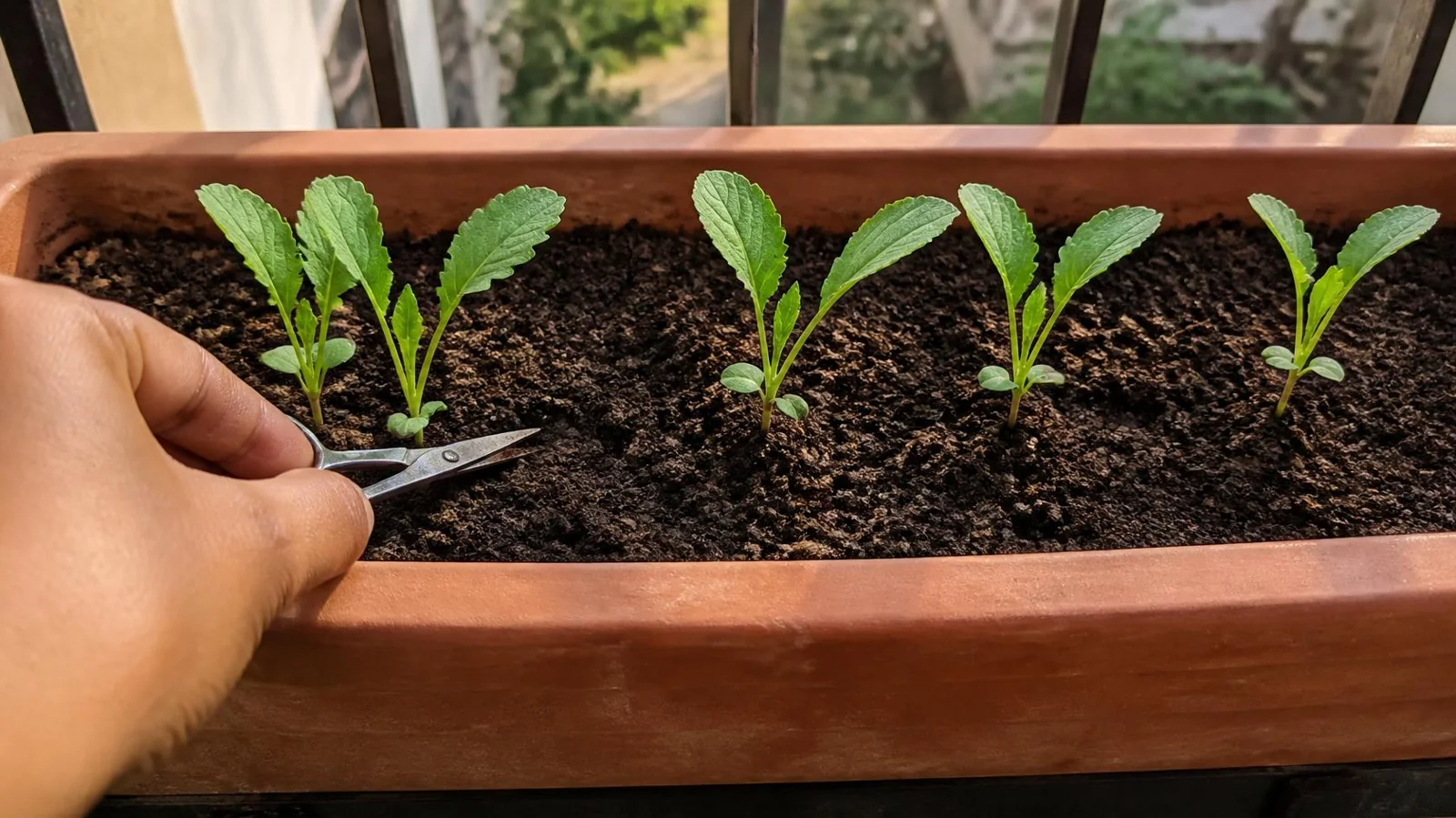
When should you thin seedlings?
The first leaves to emerge are seed leaves, or cotyledons. The leaves that follow are true leaves, which begin to resemble the adult plant. Use this stage as an inspection point rather than a fixed number of days after sowing. Choose an upright seedling with sound leaves, then compare its position with the packet’s final spacing. This approach follows the RHS guidance on thinning vegetables.
Start with obvious clusters where stems almost touch. Avoid waiting until a dense tangle makes it difficult to find individual plants. Where germination is still uneven, clear tight clusters first and reassess the gaps as later seedlings emerge.
Why fewer seedlings can make a better pot
Thinning reduces competition for light, moisture and nutrients. A packet may contain hundreds of seeds, but that does not mean one container can carry hundreds of mature plants. Decide whether you want roots, full plants or small leaves before choosing what to remove.
For example, a baby-leaf salad box can remain closer planted than a container of mature lettuce heads. University of Maryland’s salad-box guidance uses roughly 2.5–5 cm between salad plants and explains that wider spacing produces fewer, larger plants. That example applies to small salad greens, not every vegetable.
Spacing examples for common container crops
Measure from one stem to the next. These examples help you interpret a packet; cultivar-specific instructions take priority. In a wide pot, leave room across the container as well as along each row.
| Crop and goal | Example plant spacing | How to use it |
|---|---|---|
| Carrots for roots | 5 cm in TNAU’s plains guidance; 10 cm in its hills guidance | Match variety and local advice; leave the retained taproots undisturbed. |
| Radish for roots | 10 cm within rows, with 15 cm between rows in TNAU’s example | Do not give a long mooli variety the same space as tightly sown baby greens. |
| Small salad leaves | About 2.5–5 cm in the Maryland salad-box example | Suitable for small leaves; increase spacing for larger plants. |
| Lettuce heads or large leaf plants | Follow the specific seed packet | A head needs more room than a repeatedly cut baby-leaf crop. |
The root-crop examples come from Tamil Nadu Agricultural University’s carrot guide and radish guide. These are agricultural recommendations, so do not transfer their field fertilizer doses or irrigation intervals into a small balcony pot.
How to thin seedlings with scissors
- Set the target. Read the packet and mark approximate final positions with a ruler. Keep room around the pot edges.
- Check moisture. Work with lightly moist mix. If it is dry, water gently and let it settle; postpone work if the pot is saturated.
- Select a keeper. Choose a healthy plant near each target position. The tallest seedling is not automatically the strongest if it is very thin and stretched.
- Snip its neighbours. With clean small scissors, cut unwanted stems at the soil surface, below their seed leaves. Keep the blades clear of the retained stem.
- Lift away cut foliage. Remove loose clippings without digging into the mix or scraping the remaining seedlings.
- Check the whole container. Look across rows for crowding, not only along them. Note the date and take a photograph so you can compare growth later.
Maryland Extension describes both gentle pulling and cutting at the surface. Scissors are a practical choice when several plants share a tiny cluster. If an isolated surplus plant lifts easily, gentle pulling is another option; stop if neighbouring seedlings move with it.
Can you transplant the extras?
Some surplus lettuce seedlings can be moved while small if their roots separate easily. Prepare the receiving container first, support the root ball and keep it from drying during the move. Avoid treating every thinning as a transplant opportunity.
Carrots develop a taproot early and are best left where they were sown. University of Minnesota Extension warns that transplanting can damage or redirect carrot root growth. Snip excess carrot seedlings and protect the roots of the plants you keep.
Aftercare in Indian balcony conditions
Thinning is guided by plant development; aftercare should match the day’s weather. Do not copy an overseas sowing calendar into every Indian climate.
- Hot plains or a west-facing balcony: work in the cooler morning. Avoid combining thinning with a sudden move into intense midday sun.
- Humid coasts or rainy weeks: check drainage and protect the pot from repeated soaking. Open space between plants does not correct waterlogged mix.
- Cool hill gardens: handle seedlings during a mild part of the day and continue the protection appropriate for your crop.
Use a gentle watering rose if the mix needs moisture after handling. Check it again before the next watering rather than adding water automatically. You do not need to apply fertilizer simply because you have thinned the pot.
If seedlings collapse, check more than spacing
A crowded but upright cluster needs room. A seedling with a dark, narrowed or soft stem at soil level may have a disease problem such as damping off. Minnesota Extension identifies poor drainage, excessive moisture and contaminated containers or media as important risks. Remove affected plants, clean your tools and address moisture; thinning alone is not a cure.
Also inspect a stretching seedling’s light and a suddenly wilted plant’s moisture. Keeping fewer plants will not solve every problem. If the container is too shallow for your root crop, use the grow bag size guide to plan the next sowing.
Common questions about thinning seedlings
Do I have to thin every pot?
No. If the plants already meet their final spacing and harvest goal, there is nothing to remove. Check crowded clusters instead of thinning by habit.
Should I pull or cut crowded seedlings?
Cutting is useful where pulling would disturb nearby roots. Gently pulling an isolated extra is possible when it separates without moving the plants you intend to keep.
Will adding fertilizer replace thinning?
No. Feeding cannot create extra physical room for expanding leaves and roots. Correct the spacing before deciding whether the growing mix needs nutrition.
How can I reduce thinning next time?
Sow fewer seeds at marked positions, label the crop and keep a note of germination. Use the packet’s instructions rather than scattering the entire contents into one pot.
Plan your next sowing
Start with one manageable container and an identified crop. Browse the Surekha Agro winter vegetable seed combo, check the listed varieties and follow each crop’s packet directions. For crop-specific help, read our carrot growing guide or radish growing guide. The useful habit is to give each plant the space its eventual harvest needs.
[…] to one per cell. Snip the weaker seedling at soil level. Our guide to thinning vegetable seedlings explains why cutting beats […]
[…] age, thinning crowded seedlings and picking a container size are separate tasks. Use our seedling thinning guide and your seed packet’s crop instructions when those decisions […]