
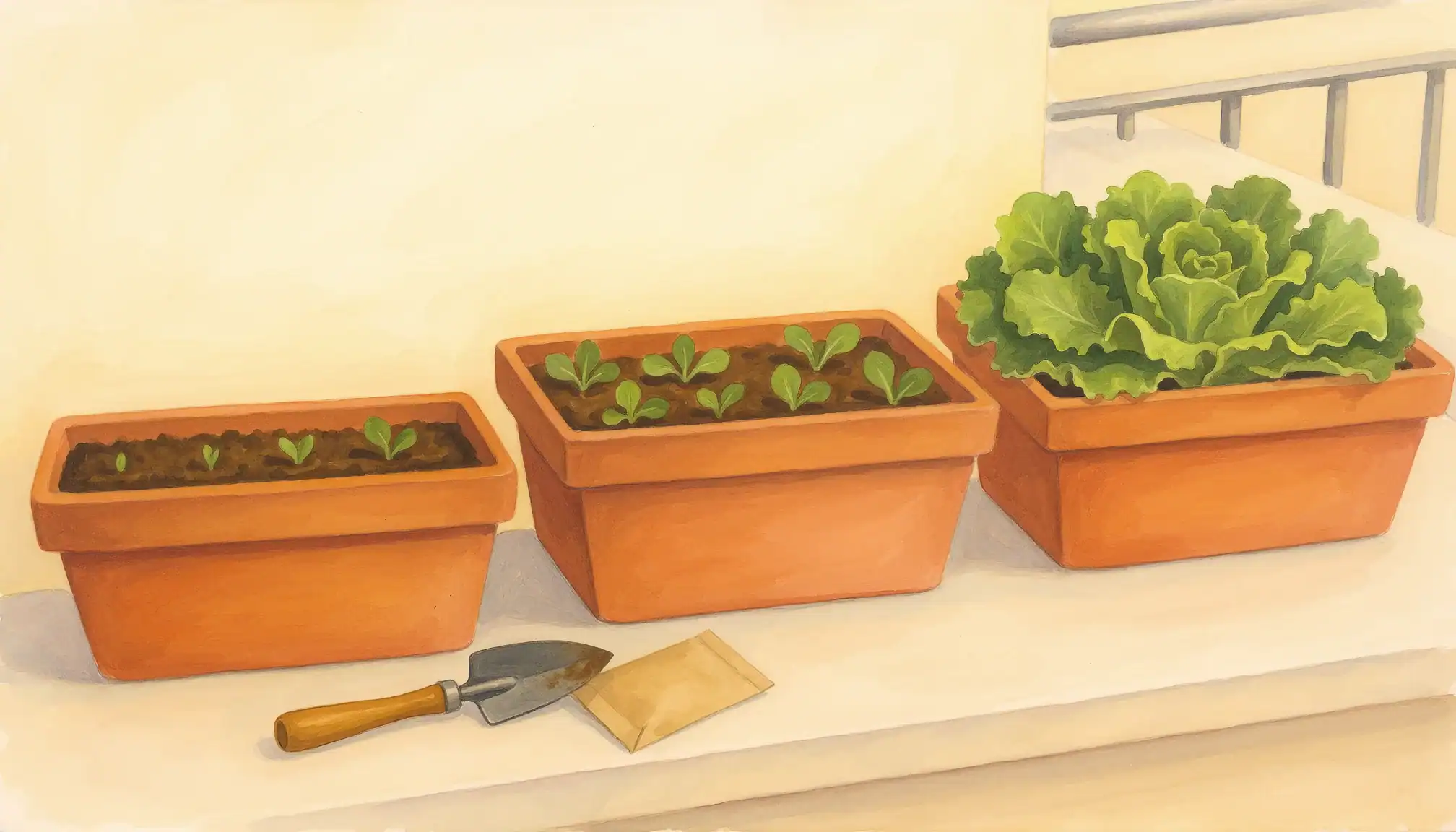
Succession sowing in pots means starting small batches of the same vegetable on different dates, so every plant is not ready at once. For an Indian balcony garden, start with one crop, keep space for later batches and use a two-week review reminder. Sow the next batch only when the earlier one is establishing well and the local growing season still suits the crop. This is a planning method, not a guarantee of a harvest every fortnight.
What is succession planting, and how does it work in pots?
Imagine sowing all your salad seeds on one Sunday. If the plants develop at a similar pace, the first picking may be followed by more leaves than you need, then a gap. Dividing the sowing between several dates gives you younger plants while the first batch is being used.
There are two useful versions: repeat a crop in separate batches, or put a different suitable crop into a container after the previous one finishes. University of Maryland Extension describes both approaches and recommends planning the space each crop will occupy. Its outdoor planting dates are for Maryland; the method transfers more readily than the calendar. Source: University of Maryland Extension.
For a small balcony, separate pots are easier to track than squeezing new seedlings between established plants. Give each batch its own growing space. If you only have one container, you can replace a finished crop, but you cannot create an overlapping supply without spare space.
Which vegetables suit small, repeated sowings?
Begin with something you already eat and can grow in the available season. The RHS identifies quick crops such as salads, spinach and carrots as candidates, and notes the usefulness of repeat sowing for coriander and other crops prone to flowering early. Its UK spring-and-summer timetable should not be used as an India-wide calendar. Source: RHS successional sowing advice.
| Crop | How to organise it | What to check before repeating |
|---|---|---|
| Loose-leaf lettuce | Keep younger plants in a separate pot while taking suitable leaves from the older batch. | Choose the cultivar and harvest stage first; a whole-head plan needs different space from a baby-leaf plan. |
| Coriander for leaves | Use small batches intended for the kitchen rather than sowing the entire packet. | Check establishment and local heat before starting another batch. Use our coriander growing guide for crop care. |
| Spinach or other suitable leafy greens | Record each batch separately, even if you harvest leaves more than once. | Confirm the actual species and variety on the packet; a shared common name does not make crops interchangeable. |
| Radish | Make a small direct sowing in its final container, then start a later batch elsewhere. | Allow depth for the chosen root shape. Long mooli and round radishes do not have the same space needs. |
For this first trial, avoid adding several new crop types at once. One familiar crop makes it easier to see whether the gap between sowings works. A tomato or brinjal plant that is already producing over an extended period needs a different replacement plan from a short batch of leaves.
Adapt the plan to your part of India
Check the seed packet and a local horticulture or Krishi Vigyan Kendra calendar before reserving future dates. Tamil Nadu Agricultural University, for example, lists different radish sowing seasons for hills and plains. Its coriander guidance describes a cool, comparatively dry, frost-free climate and regional sowing windows. These examples show why one national “sow every two weeks all year” rule is unsuitable. TNAU radish guidance; TNAU coriander guidance.
- North and central plains: when using a locally suitable cool-season window, review how much growing time remains before committing to later batches.
- Warm coastal and southern locations: use the actual cultivar’s temperature requirements. An October date alone does not establish that a cool-season crop will suit the balcony.
- Hill locations: check local cold and frost expectations. If growth is slowing, do not keep adding batches just to follow the diary.
- Wet or exposed balconies, including during regional monsoon spells: confirm that seedlings can establish without persistent saturation or physical damage before repeating the sowing.
A simple three-pot succession sowing plan
This is an illustrative starting plan for one suitable leafy crop, not a tested yield schedule. Label containers A, B and C. Use enough root space and surface area for the packet’s final spacing; choose containers with drainage. Our grow bag size guide helps with volume and depth, while the potting mix guide covers preparing the growing medium.
- Start pot A. Sow a small batch, label it with the crop and date, and record how many sowing positions you used. Follow the packet rather than guessing seed depth.
- Keep B and C available. Reserve space for them from the start. Three pot labels are not useful if all three pots are filled on day one.
- Review around two weeks later. Inspect A. If establishment is healthy and the season remains suitable, sow B. If A is struggling, investigate before using more seed.
- Review again after a further interval. Compare A and B before deciding whether to sow C. The reminder is a decision point, not an automatic instruction.
- Replace a finished batch thoughtfully. When A is no longer useful, clear it and assess the roots, growing mix and remaining season before starting another crop.
| Review date | Pot A | Pot B | Pot C |
|---|---|---|---|
| 18 October | Small first sowing | Space reserved | Space reserved |
| 1 November | Check establishment | Sow only if the checks pass | Space reserved |
| 15 November | Record actual development or picking | Check establishment | Sow only if the season and space still suit |
Do not read the table as “one pot ready every fourteen days”. Germination, leaf growth and useful picking duration can vary. The aim is to learn a manageable rhythm for your crop and balcony.
How often should you sow the next batch?
Use both the date and the plants. The RHS gives a broad range of one to four weeks, depending on conditions, and suggests using development of the previous sowing as a guide. Around four true leaves on a leafy crop is one practical checkpoint; the first seed leaves are not true leaves. Source: RHS timing guidance.
At each reminder, ask:
- Has the previous batch emerged and started making healthy new growth?
- Is there enough free, well-lit space for another full-size batch?
- Will this crop still have an appropriate growing window after germination?
- Are you using the current crop quickly enough to need another pot?
If the answers are uncertain, delay or reduce the next batch. If later batches catch up with earlier ones, increase the gap next time. Maryland Extension notes that changing temperatures can cause different plantings to mature closer together. Source: Maryland succession planting guidance.
Keep a sowing record that helps you decide
A photograph and five short notes are enough: sowing date, emergence date, first useful picking, final picking and what you would change. Record the cultivar too. A calendar entry reading “lettuce” is less useful if the next packet contains a different type.
For each pot, note whether the crop supplied too little, about enough or more than the household used. That gives you two separate adjustments: batch size controls how much you grow; the interval controls when the batches overlap. Change one of these at a time so you can interpret the result.
Keep final spacing even when reducing batch size. Sow fewer positions or use fewer pots; crowding plants is not a substitute for staggering their start dates. See our seedling thinning guide if more seedlings emerge than the container can support.
What if you still get gaps, gluts or weak seedlings?
Several pots are ready together
Compare the actual development dates rather than the intended plan. Next time, reduce the later batch or wait longer before starting it. Avoid adding a new sowing simply because there is seed left in the packet.
The second batch fails
Keep that failure separate from the first batch’s harvest record. Check seed handling, sowing depth, moisture and weather. Repeated sowing gives you several opportunities to establish plants, but repeating the same unsuitable conditions will not solve the problem.
Older and younger pots need different watering
Check pots individually. Container moisture needs vary with growth stage, weather and growing medium, so one watering timetable may not suit every batch. Source: University of Maryland container-growing guidance. Water according to the actual mix and drainage rather than the pot label’s date.
You run out of light or space
Pause the next batch instead of placing it behind a mature crop. Recheck your balcony’s usable sunlight. A smaller plan that fits is easier to maintain than a crowded sequence that only works on paper.
Start with one crop and a small packet allocation
For a lettuce trial, browse Surekha Agro lettuce seeds; for a dhaniya plan, see coriander seeds for home gardening. Check the current packet’s variety, sowing window and instructions before ordering. Allocate a small portion to the first pot and retain the rest for later decisions. Neither a packet count nor this example schedule promises a particular harvest.
Frequently asked questions
Is succession sowing the same as crop rotation?
No. Succession sowing concerns starting dates and replacing batches. Crop rotation concerns changing crop families in a growing space over time. Keeping dates staggered does not by itself address a recurring pest or disease problem.
Can I succession sow with only two pots?
Yes. Start the second pot later and keep a record of the gap. You may still have a break between crops, especially if the first pot finishes before the second becomes useful. Two pots make a good small trial, not a promise of continuous supply.
Should I sow every fourteen days even in winter?
No. Use the reminder to inspect growth, remaining season and household demand. If growth slows or the next batch lacks suitable conditions, wait or stop.
Does picking outer leaves replace the need for new sowings?
It changes the plan. If the crop and harvest method allow repeated picking, record how long the first batch stays useful before deciding on the next one. Repeated picking and repeated sowing are different decisions.
Can every vegetable use the same sowing interval?
No. Crop, cultivar, desired harvest stage and weather all affect the schedule. Start with one crop and adjust from your records instead of applying one interval to an entire seed collection.
Your first step: choose one locally suitable crop, label pot A and reserve the space for B. Put a review reminder in the diary, then let the plants help set the next sowing date.