
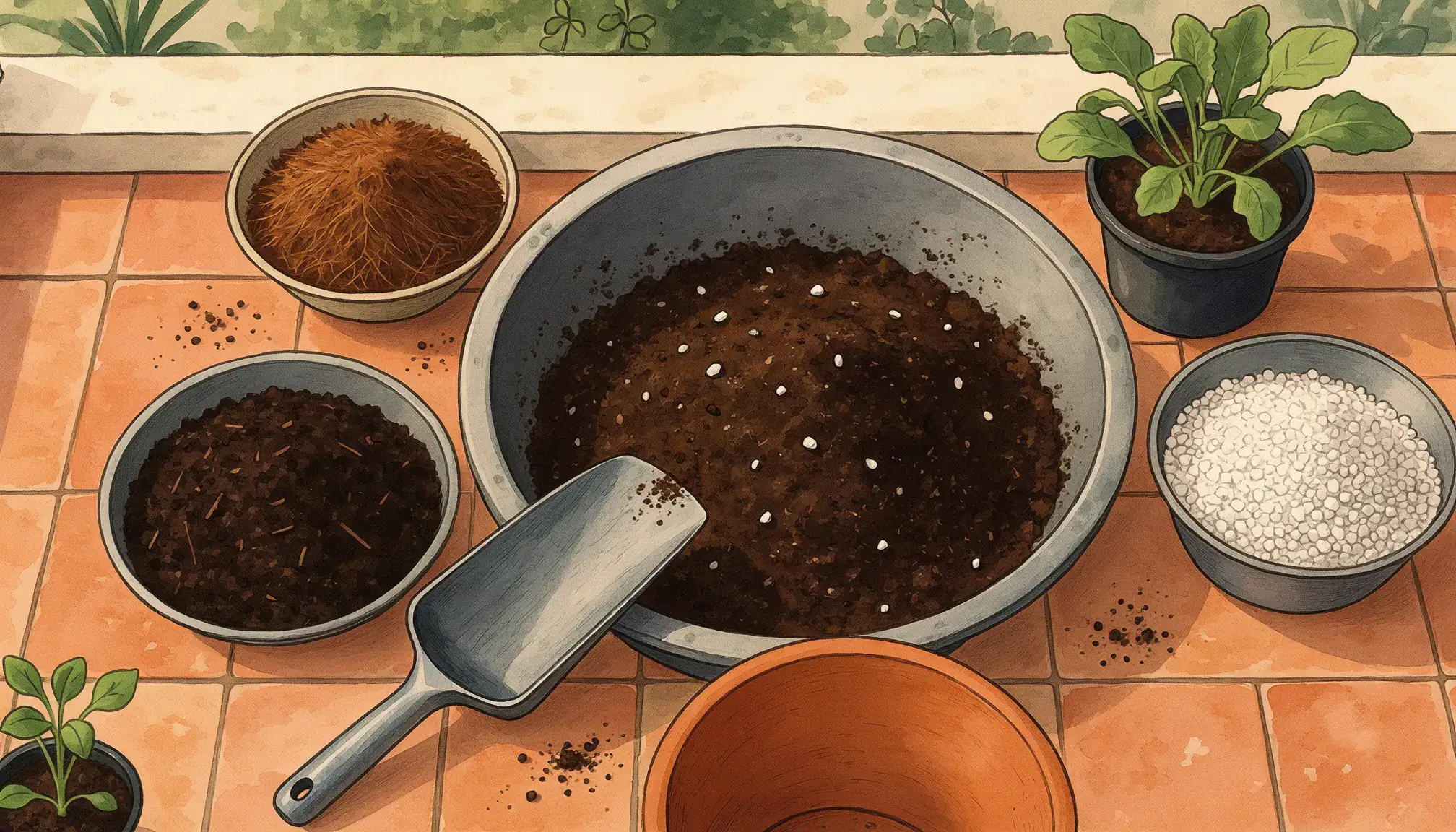
A practical DIY potting mix for vegetables is equal volumes of hydrated coconut coir, finished compost and horticultural perlite. Measure the coir after it expands, mix a small batch and try it in one container before filling your whole balcony garden. This starting recipe follows University of California Master Gardener guidance; it is not a guarantee for every crop, compost source or Indian climate.
For home gardeners, the useful goal is a mix you can prepare consistently and manage in your actual pots. This guide gives you a nine-litre batch, a shopping checklist, a simple observation routine and ways to avoid common mixing mistakes.
What should a vegetable potting mix contain?
Water retention, root-zone air and nutrient supply all matter. Penn State’s potting-media guidance describes blends that combine moisture-holding materials, perlite or vermiculite, and compost or fertiliser. A good purchasing decision starts with knowing which job each ingredient serves.
- Coconut coir or cocopeat: buy a horticultural product and read its preparation directions. A compressed brick needs preparation before you measure it for this recipe.
- Finished compost: choose a known, mature product. Ask the supplier what it contains. Avoid treating every bag labelled “manure,” “organic” or “compost” as an interchangeable ingredient.
- Horticultural perlite: buy material sold for growing media. It provides the mineral component in this version of the recipe. Follow handling directions and mix gently to limit airborne dust.
Do not empty fresh kitchen scraps or raw manure into a ready-to-plant container. University of Minnesota Extension stresses that compost must be fully finished and warns that excessive manure and compost applications can create nutrient and salt problems.
Can I use ordinary garden soil instead?
For a small balcony pot, avoid filling the entire container with soil dug from the garden. Maryland Extension explains that mineral soil can hold too much water in containers and describes lightweight soilless media as an alternative. A packaged product called “potting soil” may itself be a soilless blend: read the ingredients.
Indian soil-based systems also exist. TNAU’s roof-garden guidance includes a red-soil, sand and compost mixture for a particular rooftop setup. That example and the lightweight recipe below serve different situations. Choose one coherent method and consider the wet weight your balcony can support.
DIY potting mix recipe: a nine-litre starting batch
Use the same scoop for every component. “One part” means the same volume, not the same weight. Three litres of each ingredient gives a nominal nine-litre batch; settling and moisture mean the final usable volume can vary.
| Ingredient | Ratio by volume | Nine-litre batch | Before measuring |
|---|---|---|---|
| Hydrated coconut coir | 1 part | 3 litres | Expand and loosen it following the label |
| Finished compost | 1 part | 3 litres | Check maturity and remove large debris |
| Horticultural perlite | 1 part | 3 litres | Handle gently; follow the product directions |
The UC container-growing guide also permits vermiculite in its equal-parts recipe. This walkthrough uses perlite so that the first batch has one clear set of ingredients. Record any later substitution instead of assuming it will behave identically.
How much should I buy?
Work from the container’s usable fill volume. For example, a nominal six-litre batch uses two litres of each prepared component; a twelve-litre batch uses four litres of each. These are recipe calculations, not claims that a particular seed packet needs a particular pot.
Check container depth with our grow bag size guide. Allow room for an existing root ball and a watering gap below the rim. For coir bricks, compare the maker’s stated expanded volume with your requirement; do not assume every brick expands to the same size.
How to prepare and check your first pot
- Prepare a clean mixing area. Set out a tub, measuring scoop, water and your ingredients. Keep the batch separate from waste or unknown soil.
- Hydrate the coir first. Follow the pack instructions, break up the expanded material and then measure the required volume. The UC recipe specifically calls for soaking compressed coir before mixing.
- Measure each component. Fill the scoop consistently, without pressing one ingredient tightly while leaving another loose.
- Combine thoroughly. Turn material from the bottom and edges into the centre. Check several handfuls so that one end of the tub is not mostly compost and another mostly perlite.
- Fill one suitable container. Leave a watering gap at the top. Label the batch with its date, ingredient brands and proportions.
- Water and observe. Check that water reaches the mix and can exit through the pot’s drainage route. Review moisture below the surface later, rather than judging by the surface colour alone.
This is a home observation routine, not a laboratory drainage, pH or salinity test. If the pot remains unusually wet, check its outlets and watering before making a second batch. If you have persistent problems with unknown compost or irrigation water, seek local horticultural advice and an appropriate growing-media test.
Should I put stones at the bottom?
Use a container with a working drainage route. Maryland Extension advises against a gravel or broken-pot layer: it does not improve drainage and can worsen waterlogging. Keep outlets unobstructed. For a self-watering planter, follow its specific reservoir, overflow and growing-media instructions before using a homemade mix.
How should gardeners in India adjust the plan?
Start with the small batch, then adapt your care to what you observe. The following checks are a practical way to use the recipe across different conditions; they are not region-specific formula trials.
- Hot, dry weather in northern or inland locations: compare how the container feels in the morning and later in the day. Record drying before choosing a watering interval. Check nearby wall heat and wind exposure.
- Humid coastal locations or rainy spells: note whether rain reaches the pot and whether runoff can leave. Check moisture before adding more water.
- Cooler winter conditions in the plains or hills: reassess the routine you used during warmer weather. A fixed summer schedule is a poor starting assumption for a different season.
- Sheltered city balconies: record your own pot’s conditions. The city name does not reveal how much roof cover, sun or airflow it receives.
Keep the soil decision and light decision together: our balcony vegetable sunlight guide helps you choose the growing position. Change one part of the routine at a time so that your notes remain useful.
Four mistakes to avoid with homemade potting mix
- Adding every amendment you own. Start with the written recipe. Extra compost, manure, ash, lime and fertiliser make the batch harder to assess. Minnesota Extension’s nutrient warnings are a reason to avoid assuming “more” is always beneficial.
- Expecting the recipe to feed a whole crop indefinitely. Review the crop’s needs and the ingredient labels. Penn State’s container guide includes ongoing fertilisation as part of container care. Follow a suitable product’s directions instead of adding an invented handful-per-pot dose.
- Using one mix for every stage without checking. A recipe for a growing container is not automatically the best medium for a small seed-starting cell. Use a suitable seed-starting product when required by your method.
- Filling every pot before trying one. A modest trial limits wasted material and gives you a record to compare when you prepare the next batch.
Choose a small crop for your first container
Once the container, mix, light and sowing season are suitable, start with one crop. Follow our coriander guide or palak guide for crop-specific steps.
Ready to sow? Browse coriander seeds or spinach seeds, and check the variety and sowing instructions before buying. Select seeds for your available space and season. A seed purchase does not validate an untested growing mix.
Frequently asked questions
What is the ratio for DIY potting mix for vegetables?
This starting recipe uses one volume of hydrated coir, one of finished compost and one of horticultural perlite. Use the same measuring scoop throughout. Begin with a small trial rather than treating the ratio as universally optimal.
Can I grow vegetables in cocopeat alone?
Cocopeat alone is not the complete recipe described here. If you choose a coir-only system, you need a separate, appropriate plan for nutrients and watering. For a beginner’s mixed container medium, follow a coherent recipe or a suitable ready-made product.
Can I replace all the compost with vermicompost?
Do not assume different compost products are equivalent at the same proportion. Read the vermicompost label and ask its supplier for container-use guidance. Keep your original ingredient record when testing a change.
Is this recipe suitable for tomato plants?
It is a general vegetable-container starting mix. Tomatoes also need suitable container volume, support, light and ongoing care. Use our tomato-in-pots guide for those decisions.
Will making my own mix always save money?
No. Compare the total cost of the prepared litres you will use, including delivery and leftover ingredients. For one pot, a suitable ready-made mix may be simpler. DIY becomes useful when you can repeat a batch consistently and store the remaining materials properly.
Start with one measured batch: record what went into it, how the first pot drains and how the crop responds. Use those observations when deciding whether to make more.