Seaweed fertilizer is a liquid, powder or granule made from marine algae, usually brown seaweeds, that home gardeners dilute and pour into the soil or spray on leaves. It is best understood as a plant biostimulant: it can help roots, stress tolerance and nutrient uptake, but it is not a complete feed and does not replace compost or an NPK fertilizer.
That one distinction saves a lot of money and disappointment. Many packs sold online promise “bigger flowers” or “double harvest” from a few drops. The research is more modest and more interesting. This guide explains what seaweed extract for plants actually does, how to dilute and apply it in pots on an Indian balcony or terrace, when it is worth buying, and when another product will help your plant more.
Quick answer: is seaweed fertilizer worth using?
Yes, as a supplement for plants that are already in good potting mix and getting basic nutrition. Use it at the dilution on the label, during active growth, as a soil drench or a foliar spray in the cool part of the day. Do not use it to “rescue” a plant whose real problem is overwatering, poor light or a pot with no drainage hole. Those problems need fixing first.
Seaweed fertilizer at a glance
| Question | Short answer |
|---|---|
| What is it made from? | Mostly brown seaweeds such as Ascophyllum, Fucus and Laminaria; in India, red seaweed Kappaphycus alvarezii and brown Sargassum are also used |
| Fertilizer or biostimulant? | Mainly a biostimulant; nutrient content is usually low, so check the label |
| Forms sold in India | Liquid concentrate, soluble powder or flakes, granules mixed into soil |
| How to apply | Diluted in water as a soil drench, or as a fine foliar spray |
| Best time in India | Active growth: Oct–Feb for winter vegetables and flowers, Feb–Apr and after the monsoon for most others |
| Main benefit to expect | Better rooting and recovery from transplant, heat or salt stress; modest growth gains |
| Biggest mistake | Using it stronger than the label, or instead of real feeding |
What is seaweed fertilizer made of?
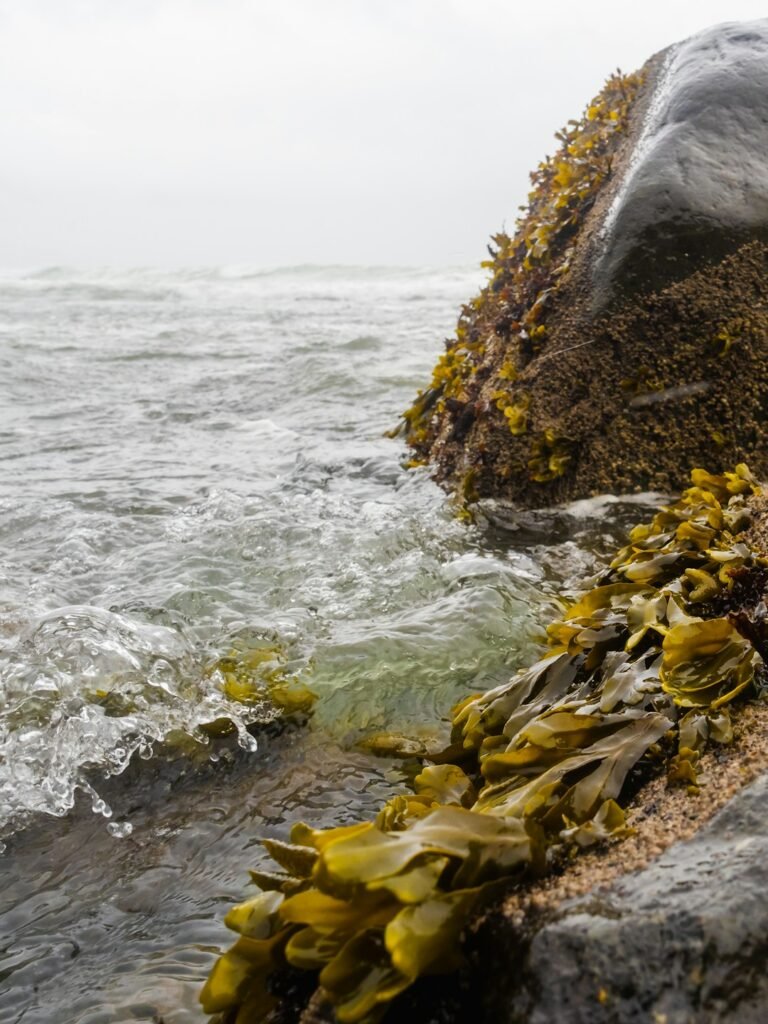
A University of Florida (UF/IFAS) extension paper on biostimulants names brown seaweeds of the genera Ascophyllum, Fucus and Laminaria as the ones most used in farming. Manufacturers turn them into soluble powders or liquids using alkali, acid or other extraction methods, and the paper notes that the biological activity of the final product depends strongly on both the raw seaweed and the process.
What ends up in the bottle is a mixture rather than one active ingredient:
- Polysaccharides such as alginates and laminarins, which UF/IFAS says can make up 30–40% of the dry weight and are linked to growth promotion and plant defence responses.
- Phenolic compounds and, depending on processing, small amounts of plant hormones such as cytokinins and auxins.
- Minerals from sea water, including potassium and trace elements, usually in small quantities.
- Gel-forming compounds that can help soil hold water.
A 2020 review in the journal Plants (EL Boukhari and colleagues) adds an important warning: the hormone content of commercial Ascophyllum products varied noticeably from product to product, depending on where and when the seaweed was harvested. Two packs with the same word “seaweed” on the front can behave differently.
Indian seaweed extracts: Kappaphycus and Sargassum
India has its own research on this. CSIR–Central Salt and Marine Chemicals Research Institute (CSMCRI), Bhavnagar, developed a technology that turns the red seaweed Kappaphycus alvarezii into a liquid biostimulant; the Office of the Principal Scientific Adviser lists it as commercialised through licensees, producing about 60 tonnes of liquid biofertilizer from 100 tonnes of fresh seaweed. A 2023 CSMCRI study in Frontiers in Plant Science tested homogenates of Kappaphycus and the brown seaweed Sargassum wightii as foliar sprays on maize at two doses. Both doses improved growth and yield, but the lower dose generally worked better, and the highest dose of the Sargassum product gave no gain over unsprayed plants. More is clearly not better.
Seaweed fertilizer benefits: what the research supports
The UF/IFAS paper says that biostimulants were long dismissed as “snake oil”, but that many studies now show crops responding with better productivity and tolerance to stress. For a home gardener, the realistic seaweed fertilizer benefits are:
- Stronger root growth. Root architecture and lateral root growth are among the most reported effects of biostimulants. This is why seaweed is popular for seedlings and fresh transplants.
- Better recovery from stress. Heat, drought and salty water are common on Indian terraces. Seaweed extracts are studied mainly for helping plants cope with these abiotic stresses.
- Improved nutrient uptake from the fertilizer and compost already in the pot, rather than supplying much nutrition itself.
- Soil and water benefits. UF/IFAS notes soil-conditioning, metal-chelating and water-holding properties; the 2020 review describes effects on soil microbes and enzyme activity in some trials.
- Possible defence responses. Some seaweed compounds trigger plant defence pathways in lab and field studies. This is not the same as treating a disease or pest, and no seaweed product should be used as a pesticide.
Things the research does not support: miracle flowering from one spray, curing yellow leaves caused by overwatering, or replacing nitrogen for leafy vegetables.
Seaweed vs other fertilizers for pots
Because seaweed is a supplement, it helps to see where it fits next to the products most balcony gardeners already use.
| Product | Main job | Use seaweed alongside it? |
|---|---|---|
| Compost or vermicompost | Slow, broad nutrition and better soil structure | Yes; compost is the base, seaweed the extra |
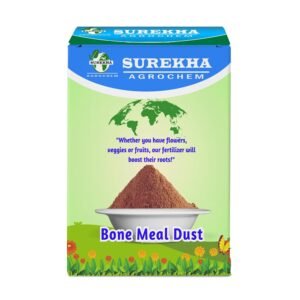
| Bone meal | Slow phosphorus and calcium for roots and flowering | Yes; mix bone meal into soil, use seaweed as a drench |
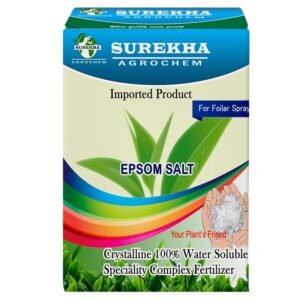
| Epsom salt | Magnesium (and sulphur) only, when a deficiency is likely | Yes, but not in the same tank unless the labels allow it |
| Water-soluble NPK | Fast nitrogen, phosphorus and potassium | Yes; seaweed does not replace it for heavy feeders |
| Seaweed extract | Biostimulant: roots, stress, uptake | — |
| Skip: raw beach seaweed in pots | Salty, unknown, may carry sand and debris | No; rinse well and compost it first if you use it at all |
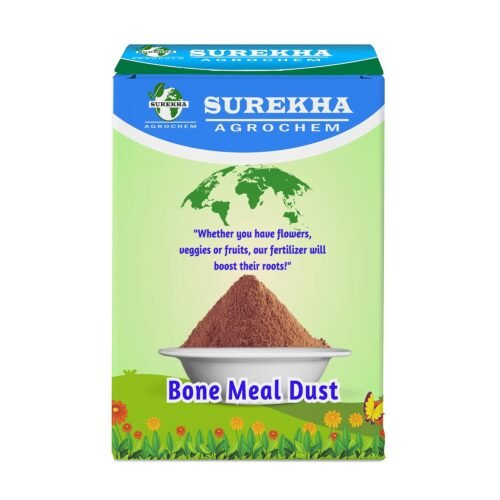
We do not sell a seaweed product ourselves at the moment. If your pots need a slow source of phosphorus for roots and flowers, our organic bone meal does a different job to seaweed, and our guide to using bone meal in pots explains the amounts. For the base of any container mix, start with our DIY potting mix for vegetables.
How to use seaweed fertilizer in pots: step by step
- Read the pack first. Concentration varies a lot between brands. Note the dilution, the interval between doses and whether it is meant for soil, leaves or both. If the pack gives no dilution or composition at all, choose another brand.
- Water the plant the day before. Never feed a pot that is bone dry or wilting in the afternoon sun.
- Measure, do not guess. Use a measuring cap or syringe and clean water. Mix only what you will use that day.
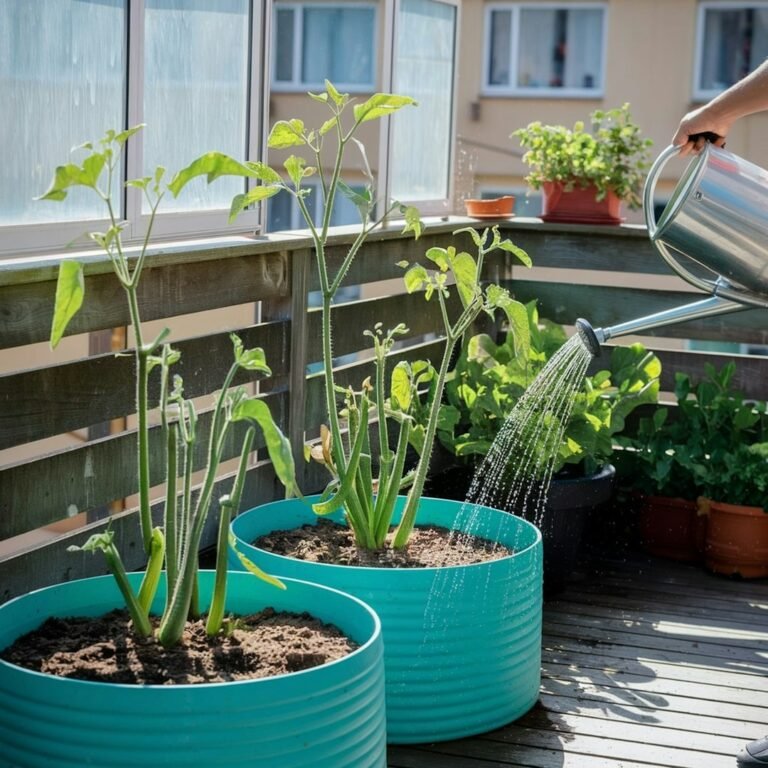
- Soil drench: pour the diluted solution evenly over the soil until a little drains out, as you would a normal watering.
- Foliar spray: use a fine mist on both sides of the leaves, early morning or after 5 pm, never in direct midday sun.
- Repeat only at the label interval during active growth, and stop when the plant is resting or growth slows in peak summer heat.
- Watch, then decide. Compare treated pots with one untreated pot of the same plant for a few weeks. That simple check tells you more than any advertisement.

Soil drench or foliar spray?
Both are used in research. The 2020 review notes that many studies apply seaweed extract as a foliar spray, which is why its effects on the soil itself are less studied. In pots, a drench is simpler and reaches the roots directly; a spray is handy for seedlings, leafy plants and when the soil is already wet. Do not do both on the same day.
How much and how often?
There is no single correct dose because products differ. Use the label rate and treat it as a maximum, not a starting point to double. The CSMCRI maize trial is a good reminder: the lower of the two doses tested usually gave the better yield. If you are unsure, start at the weaker end of the label range.
Which plants respond best?
- Seedlings and transplants: tomato, chilli, brinjal and capsicum seedlings moving from trays to pots. Pair it with good hardening off.
- Fruiting vegetables under stress: see our guides to growing tomatoes in pots and growing chilli in pots; seaweed is an add-on to their regular feeding plan.
- Flowering annuals in winter, such as marigold, petunia and calendula, during active growth.
- Indoor foliage plants: they grow slowly in Indian homes, so use seaweed rarely and at half strength, if at all. Our guide to fertilizer for indoor plants covers what they really need.
Seasonal guide for Indian gardens
- October to February (north and central India): the main season for winter vegetables and flowers. Use seaweed at transplanting and every label interval while plants grow steadily.
- March to May: heat stress on terraces is when a biostimulant is most often tried. Apply in the evening, water well, and add shade netting; seaweed cannot replace shade and water.
- Monsoon (June to September): frequent rain washes out sprays and keeps soil wet. Prefer a drench on a dry spell, skip foliar sprays on humid, still days, and pause for waterlogged pots.
- South India and coastal cities: growth continues most of the year, so follow the plant rather than the calendar: use it only when there is new growth.
Common problems and what to do
| What you see | Likely cause | What to do |
|---|---|---|
| Leaf edges brown after a spray | Too strong, or sprayed in hot sun | Rinse leaves with plain water, halve the rate, spray only in the evening |
| No visible difference after weeks | Normal; effects are often small, or the real limit is light or nutrients | Check sun hours, drainage and regular feeding first |
| Fishy or rotten smell from the soil | Over-application or solution left standing | Stop, flush the pot with clean water, mix fresh batches only |
| Fungus gnats or mould on the surface | Soil kept too wet | Let the top soil dry; see our fungus gnat guide |
| Yellow leaves continue | Seaweed is not a nitrogen source | Find the real cause: overwatering, nitrogen or magnesium shortage |

If yellowing appears between the veins of older leaves, magnesium shortage is one possible cause; our Epsom salt guide explains how to confirm it before using Epsom salt for plants.
Can you make seaweed fertilizer at home?
Gardeners near the coast sometimes soak beach seaweed in water to make a “tea”. It is possible, but there are real downsides for pots: salt on the seaweed builds up in a small volume of soil, you cannot know the strength, and a soaking bucket smells strongly and attracts flies. If you collect seaweed, check that local rules allow it, rinse it thoroughly in fresh water and add it to your compost heap rather than straight into pots. For most city gardeners a labelled product is simpler and safer.
Safety: children, pets and edible plants
- Store concentrates and powders out of reach. Pet Poison Helpline notes that while small ingestions of fertilizer may only cause mild stomach upset, larger ingestions can cause serious poisoning; call a vet if a pet eats any fertilizer product.
- Some products mix seaweed with other ingredients. Read the full label, especially on edible plants, and follow any waiting period stated before harvest.
- Wash vegetables and leafy greens before eating, whether or not you used a foliar spray.
How to choose a seaweed product
- A clear composition (seaweed species, percentage of extract, any added nutrients).
- A stated dilution rate and interval for home use.
- Manufacturer name, address, batch number and expiry date on the pack.
- Realistic claims. Be cautious of packs that promise to cure diseases or kill pests: that is not what a biostimulant is for.
FAQ
What is seaweed fertilizer used for?
Mainly to support root growth, recovery from transplanting and stress tolerance, and to help plants use the nutrients already in the soil. It works best as a supplement to compost and regular fertilizer.
Is seaweed extract a fertilizer or a biostimulant?
Most products are biostimulants. They contain some minerals, but the UF/IFAS extension paper groups seaweed extracts with humic substances and beneficial microbes as biostimulants rather than as main nutrient sources. Some packs add NPK, so read the label.
How often should I use seaweed fertilizer on potted plants?
Only as often as the label says, and only while the plant is actively growing. More frequent or stronger doses are not better; a CSMCRI trial found the lower dose generally performed better.
Can I use seaweed fertilizer on indoor plants?
Yes, but sparingly. Indoor plants in Indian homes grow slowly, so use it rarely and at the weaker end of the label rate, and fix light and watering first.
Is seaweed fertilizer good for tomatoes and chilli?
It can help seedlings establish and plants cope with heat, but tomatoes and chilli are heavy feeders that still need compost and a balanced fertilizer.
Can I mix seaweed extract with other fertilizers?
Only if both labels allow it. Otherwise apply them on different days, and never mix a seaweed product with pesticides unless the pesticide label specifically permits it.
Is homemade seaweed fertilizer safe for pots?
It is risky because of salt and unknown strength. Rinse beach seaweed well and compost it instead of applying it directly to potted plants.
Conclusion
Seaweed fertilizer is a useful, gentle supplement, not a magic feed. Use a labelled product at or below the label rate, apply it in the cool part of the day while plants are growing, and keep compost and regular nutrition as the foundation. Judge it by comparing pots, not by the claims on the bottle.
Written by the Surekha Agro Products plant care team. Last updated 25 November 2026.
Sources
- Albrecht, U. (2019). Plant Biostimulants: Definition and Overview of Categories and Effects, HS1330, UF/IFAS Extension.
- EL Boukhari, M. E. M. et al. (2020). Trends in Seaweed Extract Based Biostimulants: Manufacturing Process and Beneficial Effect on Soil-Plant Systems. Plants 9(3): 359.
- Vaghela, P. et al. (2023). Underpinning beneficial maize response to application of minimally processed homogenates of red and brown seaweeds. Frontiers in Plant Science 14. CSIR–CSMCRI, Bhavnagar.
- Office of the Principal Scientific Adviser, Government of India. Kappaphycus alvarezii seaweed-based organic plant bio stimulant for raising agricultural crop productivity (CSIR–CSMCRI technology).
- Pet Poison Helpline. Fertilizers.