If you’re wondering how to get rid of fungus gnats, start with the pot they’re breeding in. Let its surface dry as far as the plant can tolerate and place a yellow sticky card close to the mix to catch adults. Empty trapped water and remove decaying debris so the next generation has fewer places to develop.
What should you do first?
| What you see | What to check | First move |
|---|---|---|
| Thin dark flies rising from a pot | Moist mix and insects near the rim | Put a yellow card beside the mix and track new catches |
| Translucent larvae with dark heads under a potato slice | Whether this pot stays damp on top | Change how and when you water, and throw away the bait |
| Flies mainly around ripe fruit or an indoor bin | Where they gather when the pots are undisturbed | Check fruit and waste as possible breeding sites |
| Wilting plant in heavy, wet mix | Drainage, standing water and root condition | Check the roots before adding more water |
Are those tiny flies fungus gnats?
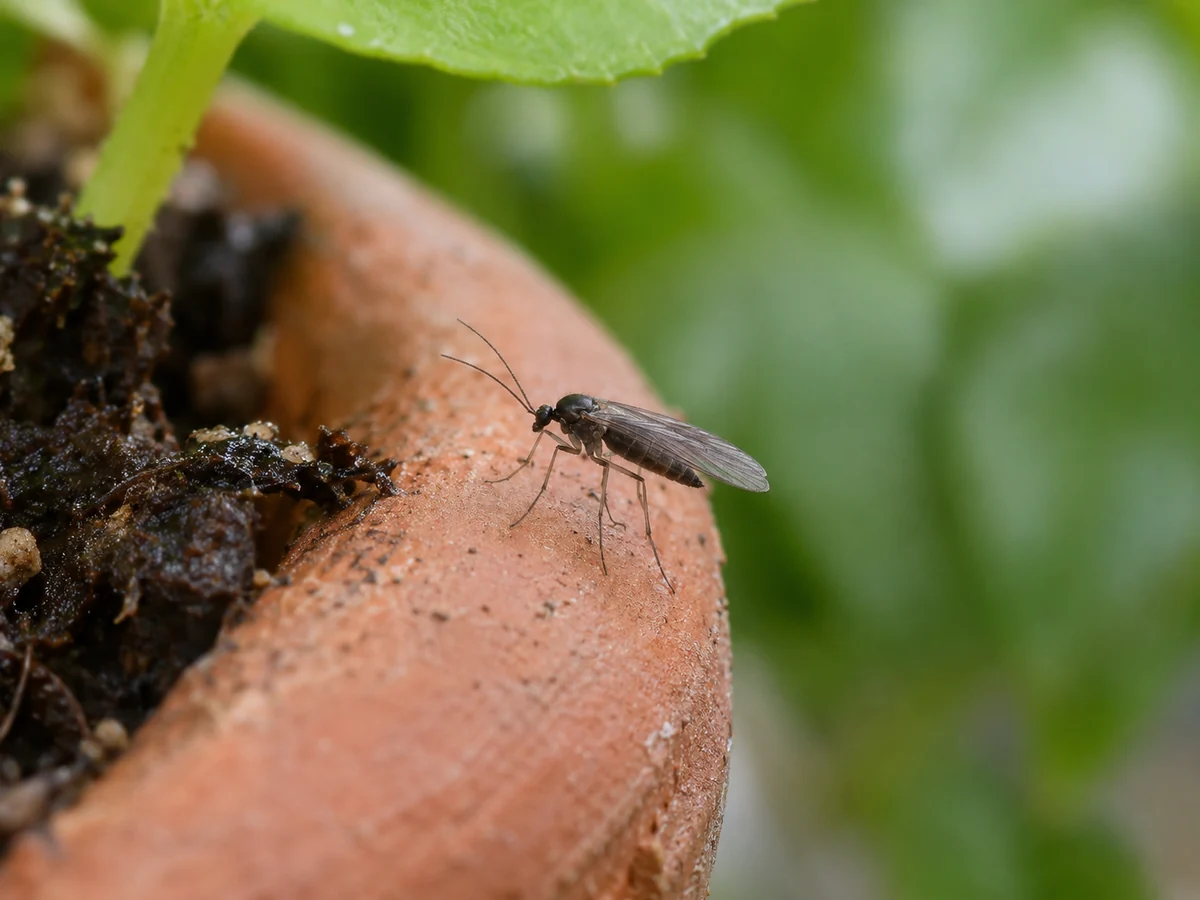
Watch the rim of the pot before watering. Then gently tap the outside. Adult fungus gnats are slender, with long antennae and clear to smoky wings. They often walk across the mix or lift off in short, weak flights. A fly on the window is a clue. Seeing several come from the same pot makes that pot worth checking. UC IPM’s identification guide.
Use the insect’s behaviour and location together. Rounder flies gathering on overripe fruit may be fruit flies. Pale specks that spring off the soil without flying can be springtails. Cottony patches anchored where leaves join the stem point to a different problem. Use the mealybug guide for that symptom. Cornell’s fungus gnat comparison and University of Minnesota Extension’s indoor insect guide.
How to find the pot with larvae
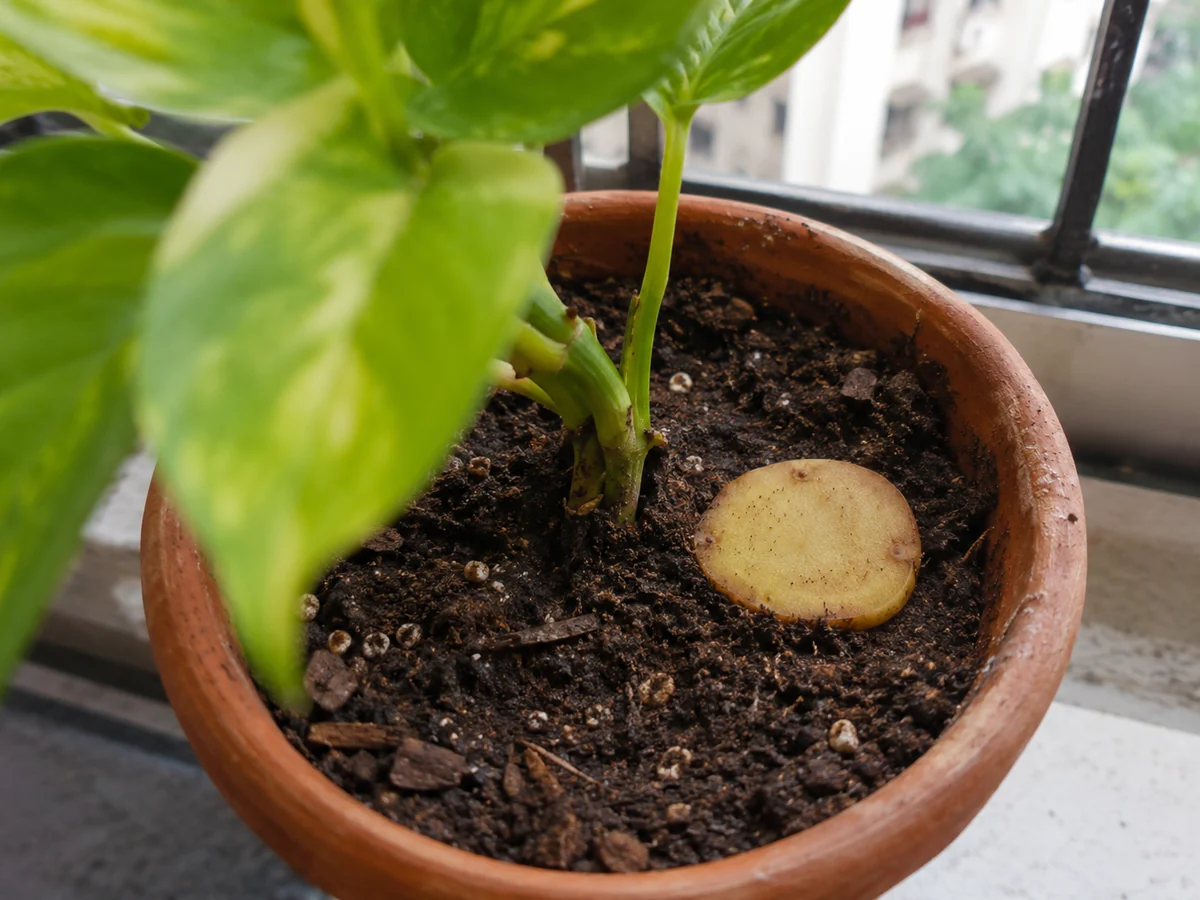
Choose the pots that stay damp longest. Put a thin piece of raw potato flat against the mix, with the cut face touching it. After a few days, lift it and check underneath with your phone’s close-up camera. Fungus gnat larvae look like tiny pale worms with dark heads. Discard the potato after checking it. If you find nothing and flies still emerge nearby, check the next pot. A slice tests the spot under it and gives you a place to start. Colorado State University Extension’s potato test.
Why do fungus gnats keep coming from the soil?
Adults lay eggs in damp potting mix. The larvae feed on fungi and decaying matter and can injure fine roots when numerous. The youngest plants have less root growth to spare, so take persistent flies around seed trays and fresh cuttings seriously. Adults can still emerge after you start drying the surface because other stages are already present. UC IPM’s life-cycle and damage notes.
How to get rid of fungus gnats in your pots
Start with a dry saucer or clean tray, a yellow sticky card and a way to keep track of catches. If several pots share a shelf, keep the cards and pots in the same positions while you compare them.
- Empty standing water. Lift the nursery pot from its decorative outer pot and tip out any pooled water. Check the holes for compacted debris and put the pot back only after excess water drains. Where a balcony pot catches rain repeatedly, move it under cover with similar light.
- Clear the surface. Pick off fallen leaves and any kitchen scraps from the mix. Check underneath the debris for pockets that stay wet. Keep unused potting mix closed and off a persistently damp floor.
- Check before watering. Test the mix before a scheduled watering. If the surface feels dry but the pot is still heavy and damp just below it, hold off if that plant tolerates it. When it does need water, let the excess drain. Use the plant’s normal moisture needs as your limit. Watering indoor plants through Indian seasons.
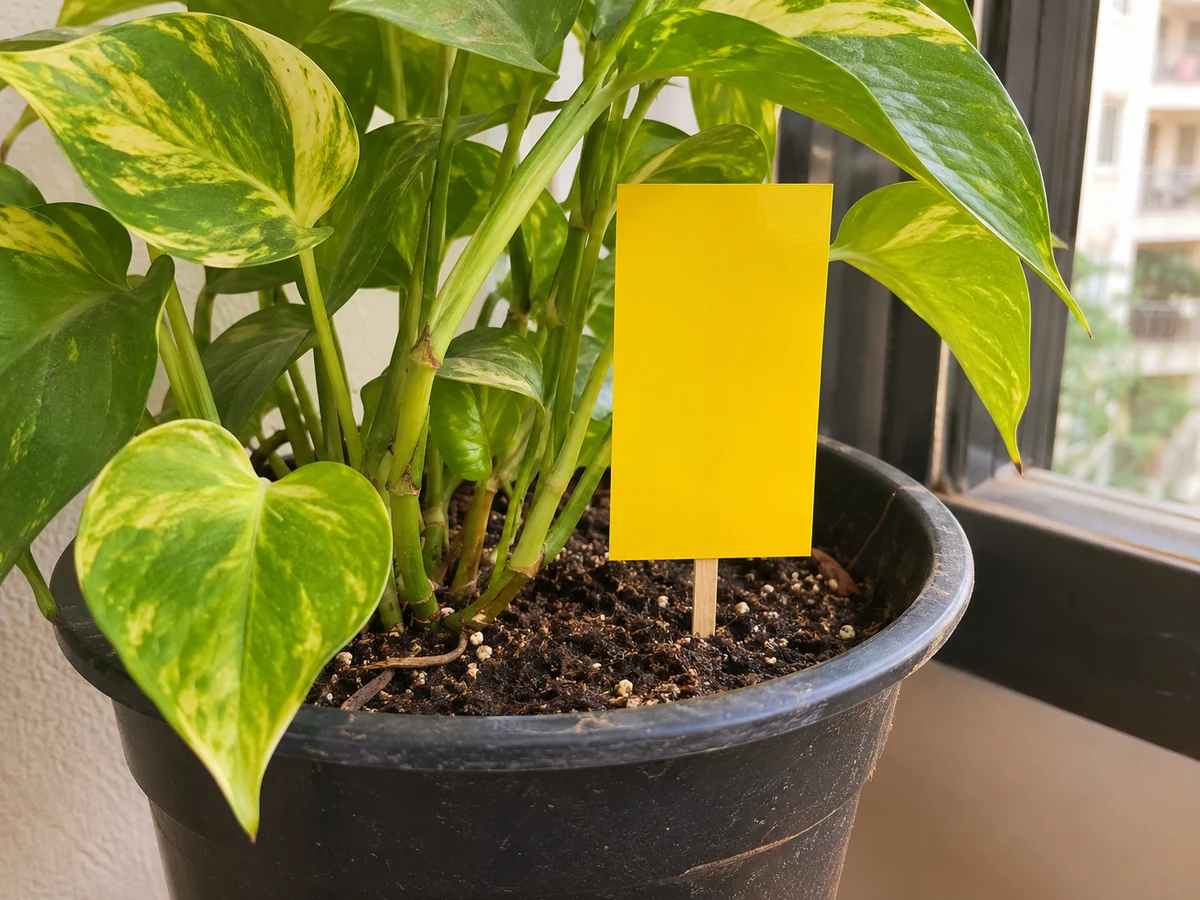
- Set a low card. Place the yellow card just above the mix on a stake, where leaves, children and pets won’t brush against it. Write the pot name and date on the backing or stake. Replace the card when it gets dirty or crowded. Check each card over comparable intervals so you can see whether fewer adults are emerging. UC IPM’s trapping advice.
How much should you let the pot dry?
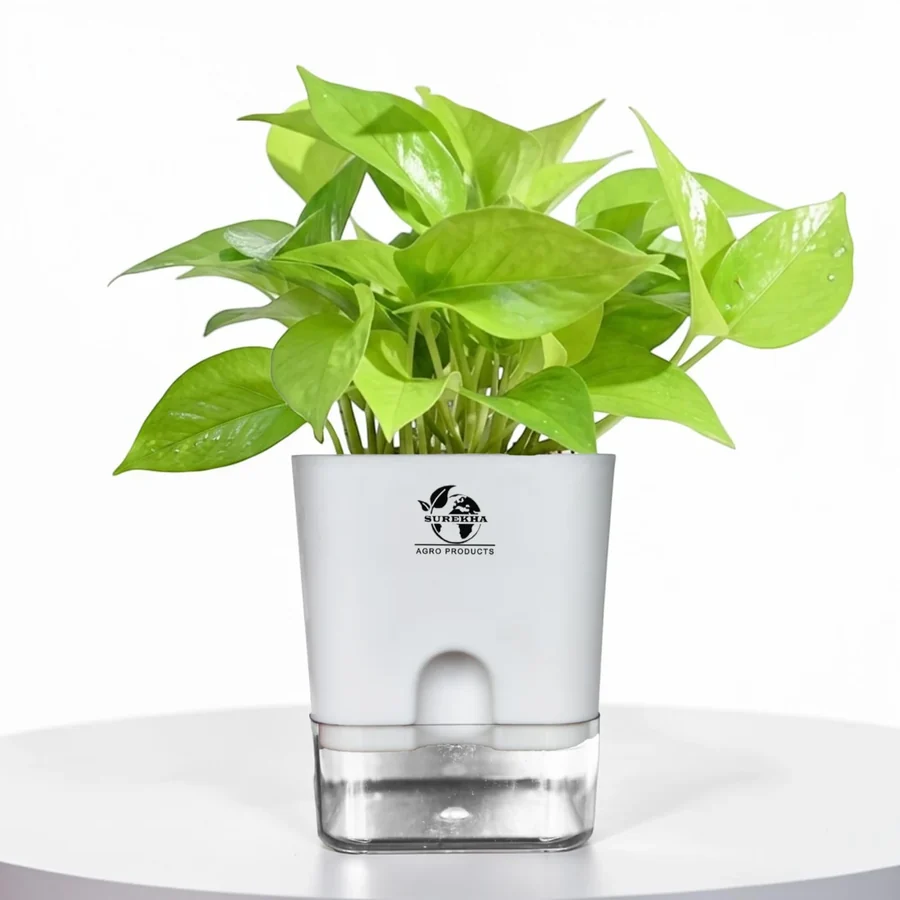
Established money plant. Use the surface and the weight of the pot together. In a self-watering setup, check the mix before topping up the reservoir. If it’s still wet day after day, let the level fall and recheck the mix before refilling. Make sure any separate cover pot or drip tray is empty. Use the money plant care guide to adjust for light and the size of the pot.
Peace lily and shallow seed trays. A peace lily can wilt if you deliberately dry the root ball, and a shallow seed cell has little spare moisture. For both, avoid standing water and check often enough to keep roots from drying. If a seed tray has both larvae and failing seedlings, check the affected cells early and ask a nursery or extension adviser to confirm the cause. For a mature peace lily, ease off repeated top-ups while keeping the plant within its normal moisture range.
In a humid coastal flat or during a wet monsoon spell, pots may spend longer between waterings. On a hot, breezy balcony a small pot may dry much sooner. Check after a wet stretch or a move indoors and adjust to the mix you actually have.
What if the flies keep coming back?
New catches are falling. Continue checking the same pots. Give larvae and pupae already in the mix time to emerge, and look for a sustained decline over repeated checks.
New catches stay high. Look for the pot you missed, including a damp propagation tray, an outer planter holding runoff, or an open, wet bag of mix. If the mix has collapsed into a dense, wet mass or roots are soft and dark, inspect the drainage and root ball. Use a clean container and fresh, suitable mix if repotting is warranted. Handle young roots gently. How to repot an indoor plant.
Larvae persist despite correcting moisture. For a potted plant that cannot tolerate a drier surface, ask a local horticulture adviser about a larval treatment. UC IPM describes Bacillus thuringiensis subsp. israelensis (Bti) for larvae. Verify that the specific product’s Indian label covers the pest, plant or crop, and use in potted media before applying it. Follow any stated harvest interval on edibles. A mosquito-only label or a Bt product intended for caterpillars does not establish that use. Avoid adding household-cleaning solutions to the mix. UC IPM’s biological control notes.
Fungus gnat questions
Do fungus gnats bite?
Houseplant fungus gnats don’t bite people. A biting insect prompts a different identification, especially if it also appears far from the pots. Cornell IPM.
How long do fungus gnats take to clear?
Expect a trend over several checks as existing stages finish developing. Warm conditions and persistently wet mix can stretch the problem across overlapping generations. Compare fresh catches rather than setting a date by which the last fly must disappear. Colorado State University Extension.
Will bottom watering get rid of them?
It can help keep the surface drier if you let the pot drain afterwards. Check the top of the mix and empty the tray after watering so the method doesn’t leave the whole pot constantly wet. Cornell guidance on watering.
Do you have to repot every plant?
Start with the pots that repeatedly produce flies. Reserve repotting for problems such as compacted mix that stays wet after you change your watering, or roots that need inspection. Nearby plants can be monitored in place while you narrow down the source.
Can a new bag of potting mix bring gnats in?
Gnats can move with moist growing media or new plants. Store spare mix closed, and check new pots before you set them against your existing plants. Cornell IPM on how fungus gnats spread.
Written by the Surekha Agro Products plant care team. Last updated 15 November 2026.