To get rid of mealybugs on potted plants, move the pot away from your other plants, lift off every visible insect with a cotton bud or a strong rinse of water, spot-treat stubborn ones, and check the same hiding places again every week until no new white tufts appear. Mealybugs hide in leaf joints and lay eggs in cottony sacs, so one cleaning rarely finishes the job.
You might first notice it on a money plant: a scrap of what looks like cotton tucked against a leaf stalk, then another tuft on the next leaf. This guide shows you how to confirm it is mealybugs, which treatments work (and which home remedies to skip), how to handle common Indian plants such as hibiscus, tulsi and lemon, and how to stop the pests coming back.
Mealybug treatment at a glance
| Situation | What to do first | Repeat |
|---|---|---|
| A few tufts on one plant | Isolate the pot, remove insects with a cotton bud or tweezers | Check weekly |
| Insects scattered on a sturdy plant | Rinse with a firm stream of water over a sink | Every few days, as needed |
| Stubborn insects on an ornamental plant | Dab with isopropyl alcohol (70% or weaker) after a patch test | Weekly until clear |
| Colonies keep spreading | A labelled insecticidal soap, horticultural oil or neem product, applied directly on the insects | As the label directs |
| Tulsi, chilli or other edible pots | Physical removal first; use only products whose Indian label covers the crop | Follow the label and pre-harvest interval |
| Heavy infestation on a cheap, replaceable plant | Bag and discard the plant and its potting mix | Watch the neighbouring pots |
What do mealybugs look like? How to tell them from other white fluff
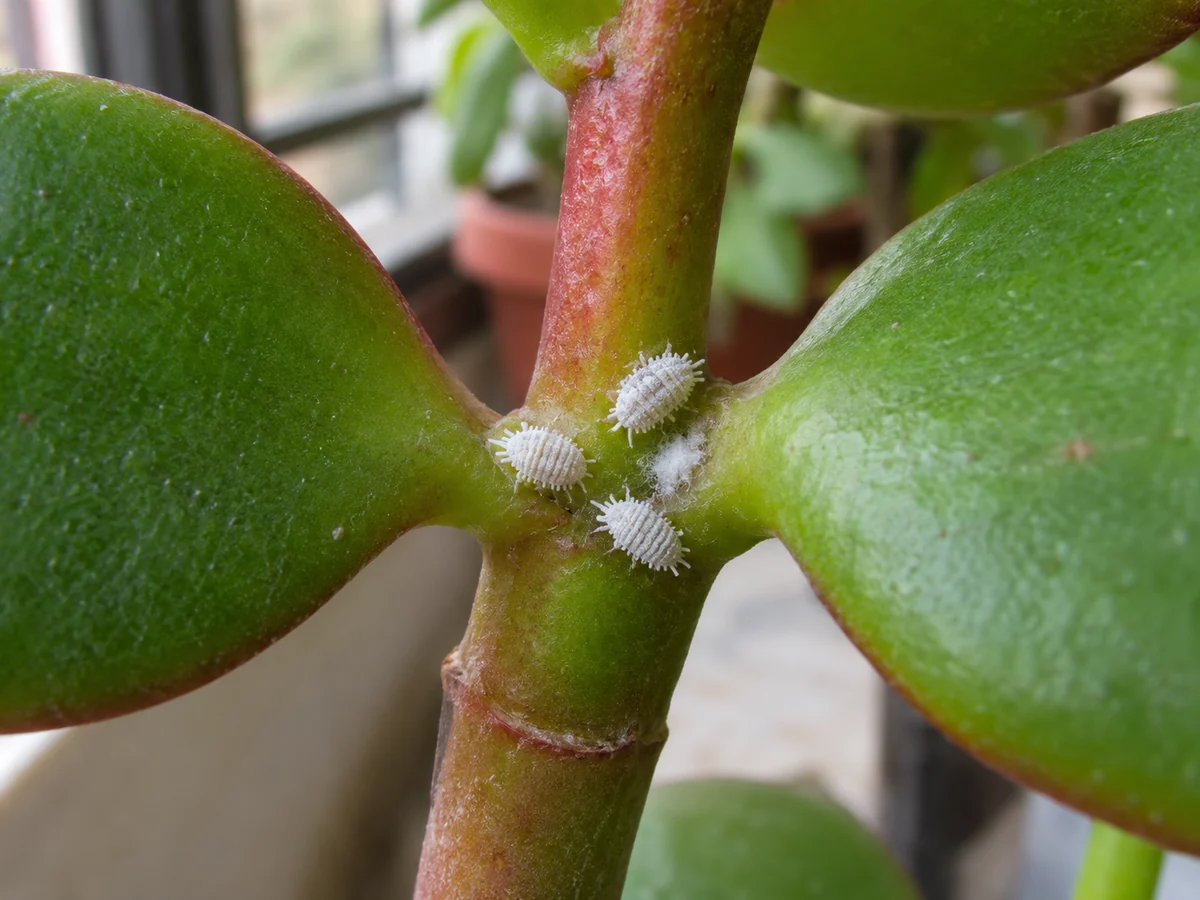
Use your phone camera on close-up or a hand lens. Mealybugs are small, soft insects with oval, segmented bodies covered in white wax. Some have a short fringe of wax threads around the edge. They hide in leaf joints, under leaves, in tight new growth and on stems near the soil. Sticky drops (honeydew) on lower leaves or the shelf, black sooty mould and ants are other clues. Stickiness can come from several pests, so follow it upwards and look for the insects themselves (University of Maryland Extension).
- Raised cottony tufts with oval insects inside or beside them: mealybugs. The tufts are often egg sacs.
- Flat white rings on exposed leaves: usually dried water or fertiliser marks. Wipe one with a damp cloth; if nothing moves underneath and the joints are clean, see our leaf-cleaning guide.
- Firm brown or tan bumps stuck to the stem: more likely scale insects. Compare them with photos of scale insects.
Why mealybugs appear and why they spread so fast
Most infestations arrive on a new plant or creep across from a neighbouring pot. UC IPM notes that adult females of most species lay 100 to 200 or more eggs in cottony sacs over 10 to 20 days. The newly hatched young are tiny, crawl to fresh spots and then settle and cover themselves in wax. Warm weather favours them, which is why Indian homes and balconies see them year-round. Heavy feeding on sap weakens a plant, slows growth and can cause leaf drop (UC IPM, Mealybugs).
Step 1: Isolate the plant and inspect it closely
Set the plant on its own saucer in a spot with similar light, with its leaves clear of other pots. On a balcony, choose a place out of harsh afternoon sun with room to reach around the pot.
Start where you saw the first tuft and work along each stem. On money plant, turn over the leaves and trace each stalk back to the vine, including parts pressed against a moss stick. On jade, look between paired leaves and into the forks near the tips. On peace lily, check low down where the stalks bunch together. Finish with the pot rim, the underside of the pot and the saucer (University of Minnesota Extension).
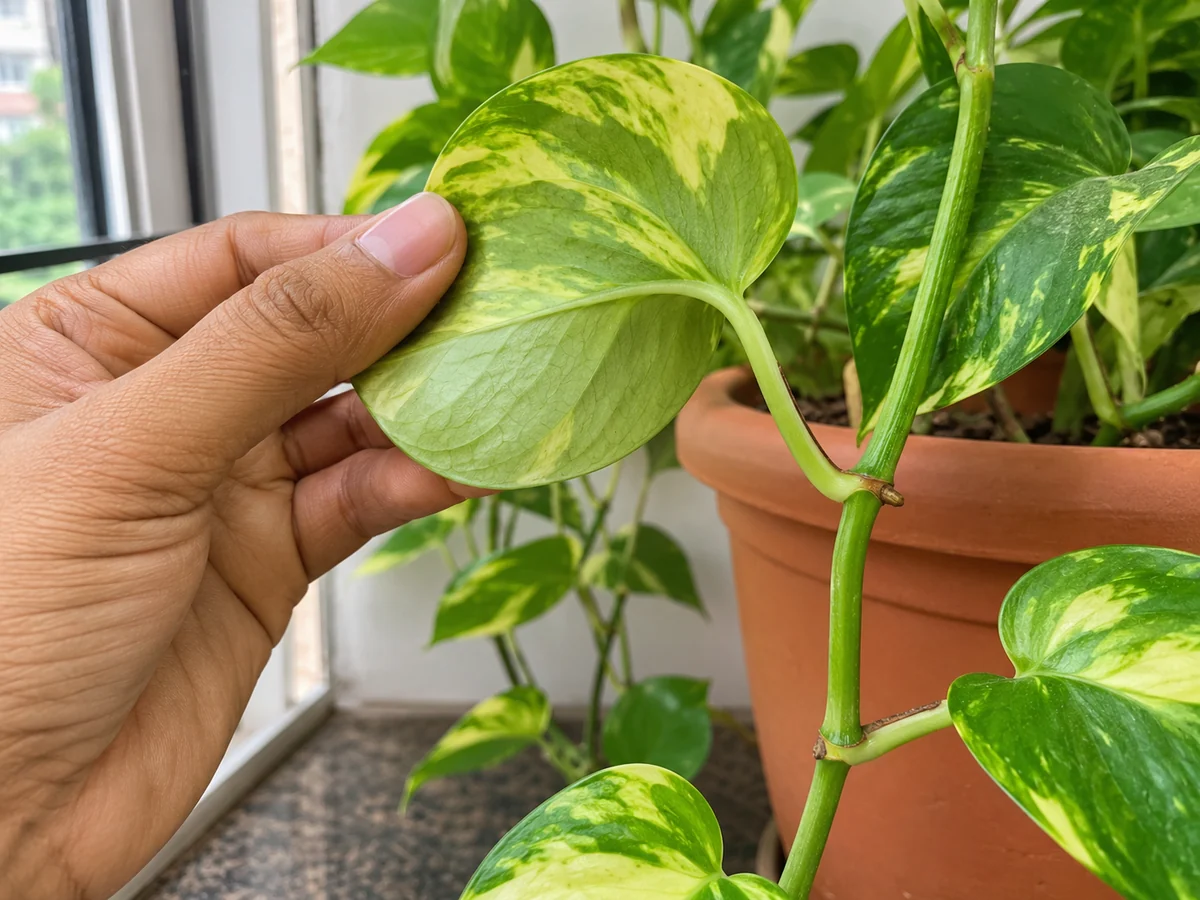
How to get rid of mealybugs on potted plants: step by step
Keep cotton buds or fine tweezers, a damp paper towel and a waste bag ready. Work at a sink or a washable surface away from your other plants.
- Remove what you can see. Lift insects and waxy clumps off with a cotton bud or tweezers, supporting soft stems with your free hand. Bag the waste and wipe the saucer and work surface.
- Rinse sturdy plants. If insects are scattered, direct a firm stream of water under the leaves and into the joints, with the pot tilted so water runs into the sink. UC IPM says repeating this every few days can bring numbers down on sturdy plants. Let the pot drain before it goes back on its saucer.
- Prune the worst shoots. If most insects sit on one shoot you can spare, cut it off with clean snips and bag it.
- Spot-treat stubborn insects. On ornamental plants, test isopropyl alcohol at 70% or weaker on a small patch and wait one to two days for leaf burn. If the leaf stays sound, touch a lightly dampened cotton bud to each insect. Keep it off the potting mix.
- Recheck in a week. Eggs hidden in sacs will hatch after your first clean-up, so repeat the inspection weekly.
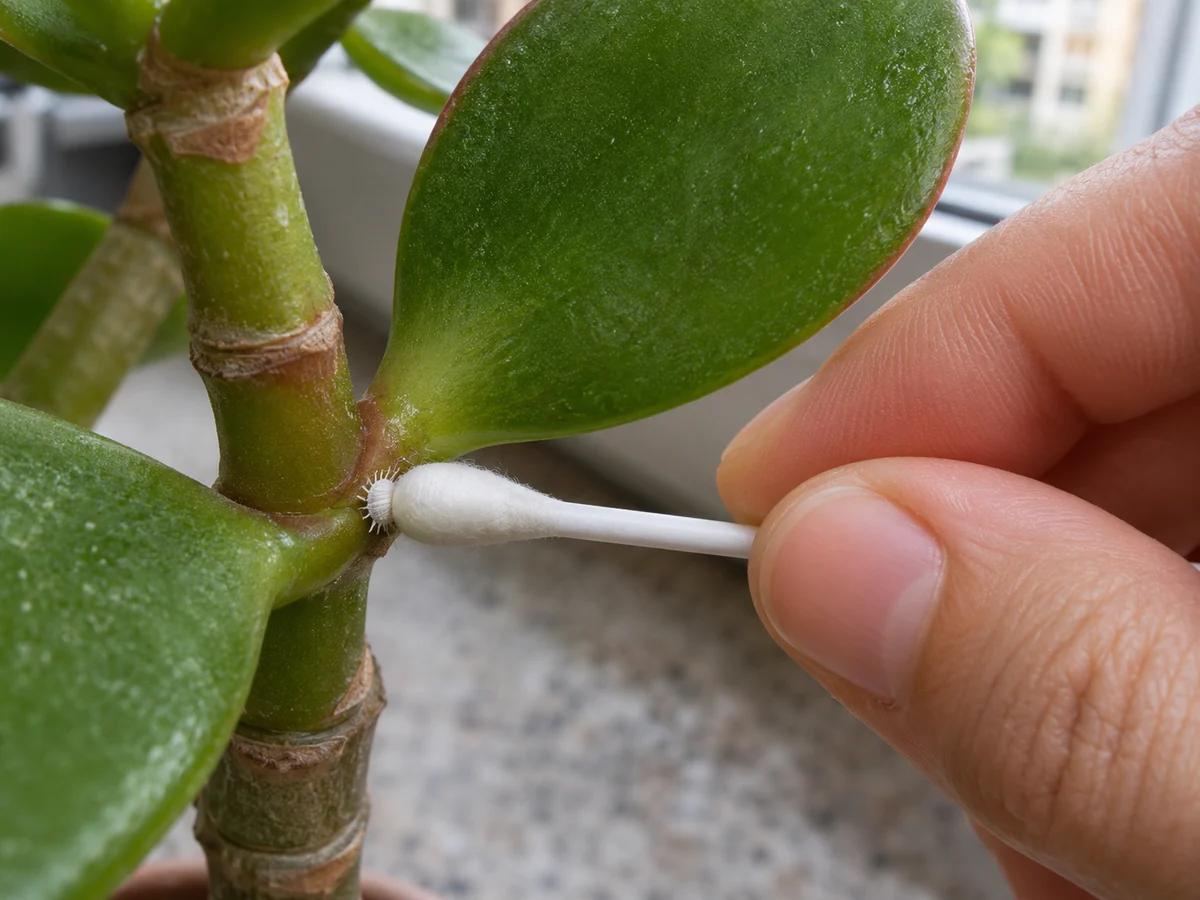
Mealybug treatment: rubbing alcohol, insecticidal soap and neem oil
The wax coat on adult mealybugs and their habit of hiding make sprays less effective than people expect. According to UC IPM, insecticidal soaps, horticultural oils and neem oil can give some suppression when they hit the insects directly, especially young ones with less wax. Whatever you choose, test it on part of the plant first.
How to use rubbing alcohol on mealybugs
Use isopropyl alcohol at 70% or weaker, dabbed onto individual insects with a cotton bud. Patch-test first, because some leaves burn. It is a spot treatment for ornamental plants, not something to pour over the pot.
Neem oil for mealybugs
Neem oil is widely sold in India and can suppress mealybugs, mainly the younger crawlers. Buy a product whose label lists the use, mix it exactly as the label says, and spray so it reaches the insects in the joints and under the leaves. Patch-test first and apply in the evening, not in strong sun. On tulsi, chilli or any plant you will eat, use it only if the label covers that crop and observe its waiting period before harvest. Expect to repeat at the interval the label gives.
Insecticidal soap
A commercial insecticidal soap is made and tested to kill soft-bodied insects while limiting leaf damage. It works only on contact, so it must wet the insects themselves (Colorado State University Extension).
Home remedies for mealybugs: what to try and what to skip
| Remedy | Verdict | Why |
|---|---|---|
| Picking off by hand or cotton bud | Try | Safe on every plant, including edibles; the core of any treatment |
| Firm water spray | Try | Works on sturdy plants when repeated every few days |
| Pruning infested shoots | Try | Removes whole colonies and their egg sacs at once |
| Rubbing alcohol on a cotton bud | Try, with a patch test | Effective on individual insects; can burn some leaves |
| Dishwashing liquid or detergent sprays | Skip | Not formulated or tested as insecticides; detergents can injure plants and soil |
| Homemade mixes of kerosene, phenyl or other household liquids | Skip | No tested dose; high risk of burning leaves and roots |
| Extra fertiliser to “make the plant stronger” | Skip during an infestation | UC IPM warns that excess nitrogen pushes soft new growth that mealybugs favour |
Mealybugs on common Indian plants
Hibiscus, croton and ixora
The pink hibiscus mealybug is a serious pest in tropical and subtropical regions. It attacks hibiscus, croton, ixora and many other plants, and causes twisted, bunchy shoot tips with small crinkled leaves (UF/IFAS Extension, Pink Hibiscus Mealybug). If the new tips of your gudhal look stunted and bunched, check them closely and cut off badly affected tips. See our hibiscus care guide and croton care guide for regrowth care.
Money plant, jade and peace lily
These indoor favourites hide mealybugs in their joints: along money plant vines, between jade leaf pairs and at the base of peace lily stalks. Rinsing and cotton-bud removal usually work well on them. Jade leaves can be sensitive, so always patch-test alcohol first.
Tulsi, chilli and other edible pots
Start with hand removal, rinsing and pruning. Only use a pest-control product if its Indian label covers that crop and pest, and follow the pre-harvest interval. When a flowering pot is involved, follow the label precautions for blooms and pollinators.
Lemon and other citrus
UC IPM lists citrus and hibiscus among the plants most often infested. On potted lemon, check the undersides of leaves, the twig forks and the fruit stalks, and wash off honeydew so sooty mould does not spread.
Why do mealybugs keep coming back?
Check during watering and inspect the whole plant about a week after the first clean-up. Return to the original joints, then the new growth and the neighbouring pots. A weekly close-up photo of the same spot makes progress easy to judge. Treat the plant as clear only after repeated checks show no live insects or fresh tufts (University of Maryland Extension).
- Fresh tufts keep forming on one stem. Look behind leaf stalks, ties and moss sticks for missed insects and egg sacs. If colonies keep spreading on an easily replaced plant, bagging the plant and its mix can protect the rest of your collection (UC IPM).
- The plant is declining and there is white wax near the drain holes. These may be root mealybugs. Slide the plant out over a tray and check the root ball. If you find wax and insects on the roots, keep the pot separate, catch its runoff and do not reuse the mix. Leaf treatments cannot reach them (UC IPM, root mealybugs).
- Ants keep climbing the pot. Ants feed on honeydew and protect mealybugs from their enemies. Follow the trail up, remove the insects and stop leaves touching other pots.
- You see a “big mealybug” moving fast on a balcony plant. It may be the larva of the mealybug destroyer, a ladybird beetle whose young are covered in white wax. It eats mealybugs, so leave it alone and avoid broad-spectrum sprays outdoors (UC IPM).
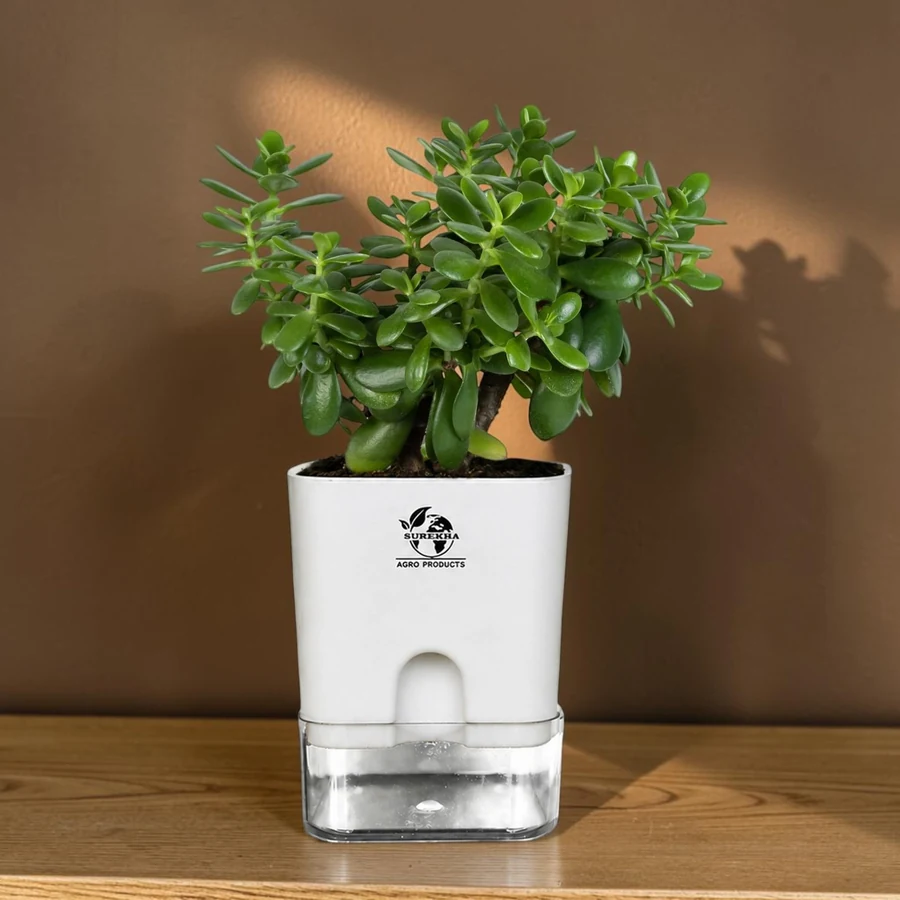
How to prevent mealybugs on new and existing plants
- Check every new plant before it joins the others: undersides of leaves, joints, the pot rim and the drainage holes.
- Keep new arrivals on their own saucer for one to two weeks and inspect them again at watering (University of Minnesota Extension).
- Leave a little space between pots so leaves do not touch.
- Do a two-minute joint check on each plant every time you water.
- Feed moderately. Avoid heavy nitrogen feeding that pushes soft, crowded growth.
- Clean saucers, pot rims and moss sticks when you repot.
Helping the plant recover after mealybugs
Once weekly checks stay clean, move the plant back to its usual spot. Trim leaves that are badly yellowed or sticky with sooty mould, and wipe the rest. Water normally, following our watering guide for Indian homes, and go back to the plant’s usual feeding only when fresh, clean growth appears. Recovery takes weeks, so judge it by the new leaves. For plant-specific care, see our jade care, money plant care and peace lily care guides.
Frequently asked questions
What causes mealybugs on houseplants?
Most infestations come in on a new plant or spread from a neighbouring pot. They thrive in warm conditions, hide in tight leaf joints and crowded new growth, and ants can protect them.
Can mealybugs kill a plant?
A heavy infestation left untreated can weaken a plant badly, slow its growth and cause leaf drop. Small infestations caught early are usually manageable with weekly checks.
Are mealybugs harmful to humans or pets?
No. Mealybugs feed on plant sap. The concern is the plant, not people. Keep any treatment product away from children and pets.
Does rubbing alcohol kill mealybugs?
Dabbing isopropyl alcohol (70% or weaker) on individual insects can kill them. Patch-test a leaf first, wait one to two days, and keep it off the potting mix.
Is neem oil good for mealybugs?
It can suppress them, mainly the young ones, when it reaches the insects directly. Use a labelled product, patch-test, spray in the evening and, on edible plants, follow the label’s crop list and pre-harvest interval.
How long does it take to get rid of mealybugs?
Expect several weeks. Eggs hidden in cottony sacs keep hatching after the first clean-up, so repeat the inspection and removal weekly until repeated checks find nothing.
How do I know the mealybugs are gone?
When weekly checks over several weeks show no live insects, no fresh cottony tufts and no new honeydew, and the neighbouring pots are clear too.
Conclusion
Getting rid of mealybugs on potted plants is about persistence more than strong chemicals: isolate the pot, remove every insect you can see, spot-treat the stubborn ones, skip detergent sprays and recheck weekly until the white tufts stop coming back. Check every new plant before it joins your collection, and most infestations will stay small.
Written by the Surekha Agro Products plant care team. Last updated 14 November 2026.
Sources
- UC Statewide IPM Program: Mealybugs (Home and Landscape) and Ground (root) mealybugs
- University of Maryland Extension: Mealybugs on indoor plants
- University of Minnesota Extension: Managing insects on indoor plants
- Colorado State University Extension: Insect control: insecticidal soap
- UF/IFAS Extension: Pink hibiscus mealybug, Maconellicoccus hirsutus