Your hibiscus has a fresh bud one morning and a fallen flower the next. Before reaching for a bloom booster, look at the whole plant: is it making new shoots, does the pot drain, and how much sun actually reaches its leaves? Those observations are a better starting point than adding another product.
For hibiscus plant care in India, give tropical gudhal a sunny, sheltered position, a moist but well-drained root zone and care that follows its growth. Check the potting mix before watering, protect it from frost and adjust feeding when growth slows. A single short-lived flower is normal; repeated bud loss deserves a closer look.
Know which hibiscus you are growing
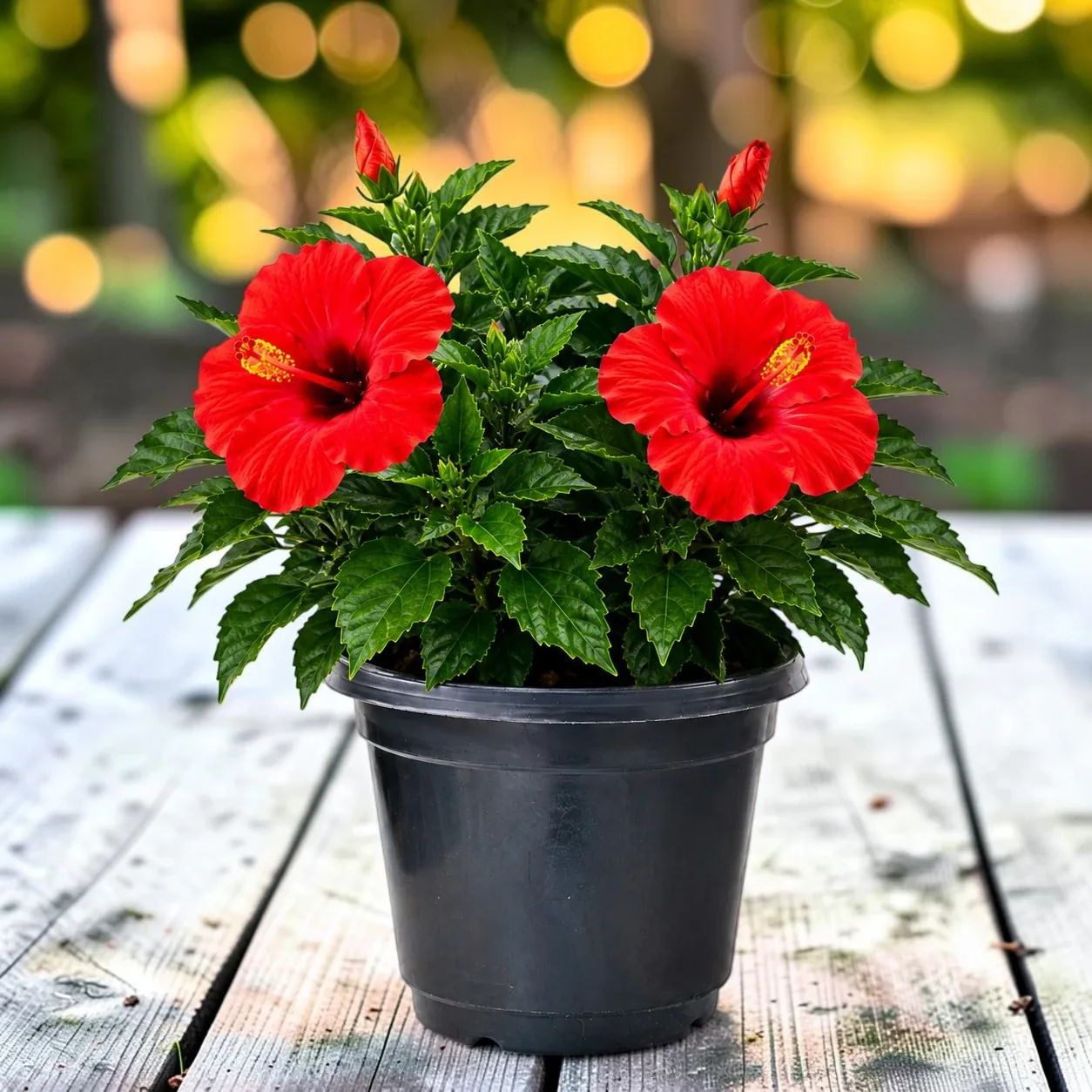
This guide covers tropical hibiscus, Hibiscus rosa-sinensis, commonly grown as gudhal or China rose. It is different from the hardy hibiscus discussed in many cold-climate garden articles. NC State Extension describes it as a tropical evergreen shrub that needs protection from frost.
Start with the plant label or seller’s listing. Flower colour alone is not enough to identify a named cultivar or decide its cold tolerance. The instructions for cutting a hardy perennial down to the ground should not become your automatic winter routine for a potted tropical hibiscus.
Find a sunny corner that is comfortable to maintain
Outdoors, choose a position with sun and some shelter from strong wind. NC State lists full sun to partial shade. A plant arriving from a shaded nursery should move towards stronger light gradually rather than going straight onto the hottest part of a terrace. For an indoor or glass-covered position, the RHS recommends bright, filtered light; heat against glass is a different situation from an open-air garden.
Watch your proposed spot through the day. An east-facing balcony may offer useful morning sun, but a nearby wall or tree can change that completely. Leave room to reach the mix and inspect the undersides of leaves. If foliage stays active but flowering disappoints, review the light before assuming a fertiliser shortage.
Keep the roots moist without leaving the pot waterlogged
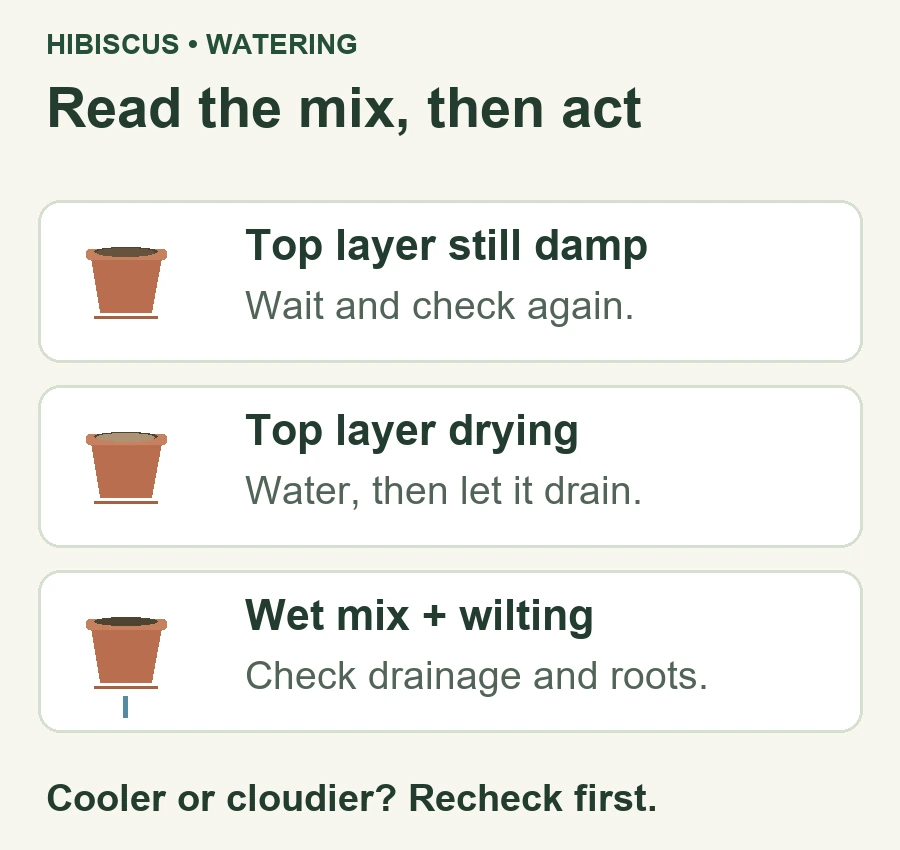
Hibiscus is not watered like a drought-tolerant succulent. Illinois Extension emphasises rich, moist soil and warns against letting tropical hibiscus dry out. In a pot, the useful habit is to check the mix instead of choosing a permanent interval.
- Feel beneath the surface. Move aside mulch or decorative stones so you reach the potting mix itself.
- When watering is needed, wet the root zone thoroughly. Let excess water escape through the drainage holes.
- Look underneath. Empty trapped water from a saucer or cover pot. A wet, wilting plant needs a drainage and root check before another soak.
A small pot in warm wind may need attention sooner than a large pot under cloudy skies. Our watering guide explains why the growing medium matters more than a calendar. In cooler, slower growth, the RHS advises reducing water and waiting until the top layer of mix is dry.
Choose a draining container, then give roots room as they grow
Use a pot with open drainage holes and a potting medium that holds moisture while allowing excess water to leave. Avoid a large, permanently wet volume of heavy garden soil around a small root ball. When roots become crowded or the plant is unstable, inspect the root ball and move up sensibly rather than jumping into the biggest pot available. Our repotting guide covers the handling steps.
Adjust to your part of India as nights cool
November does not mean the same conditions in Delhi, Bengaluru and Chennai. Use your local night forecast and the plant’s growth rather than transferring a British or American month-by-month schedule directly to an Indian balcony.
| Conditions around the pot | Useful adjustment |
|---|---|
| Northern plains with cold nights | Arrange a bright, sheltered place before cold spells. Protect tropical hibiscus from frost. |
| Hill homes and frost-prone areas | Plan indoor or protected growing space early; an exposed balcony is not winter protection. |
| Mild southern or coastal weather | Continue observing active growth and moisture. Do not stop watering or feeding solely because the calendar says winter. |
| Rainy or persistently cloudy spells | Check drainage and mix moisture before adding more water; keep the pot out of standing runoff. |
University of Maryland Extension advises a bright location for indoor overwintering. A move indoors can cause some leaf loss and slower growth; reduce watering and withhold fertiliser until new growth appears. That guidance is relevant to a cold, slowing plant, not a blanket instruction for every warm Indian home.
Short-lived flowers, bud drop and the right time to prune
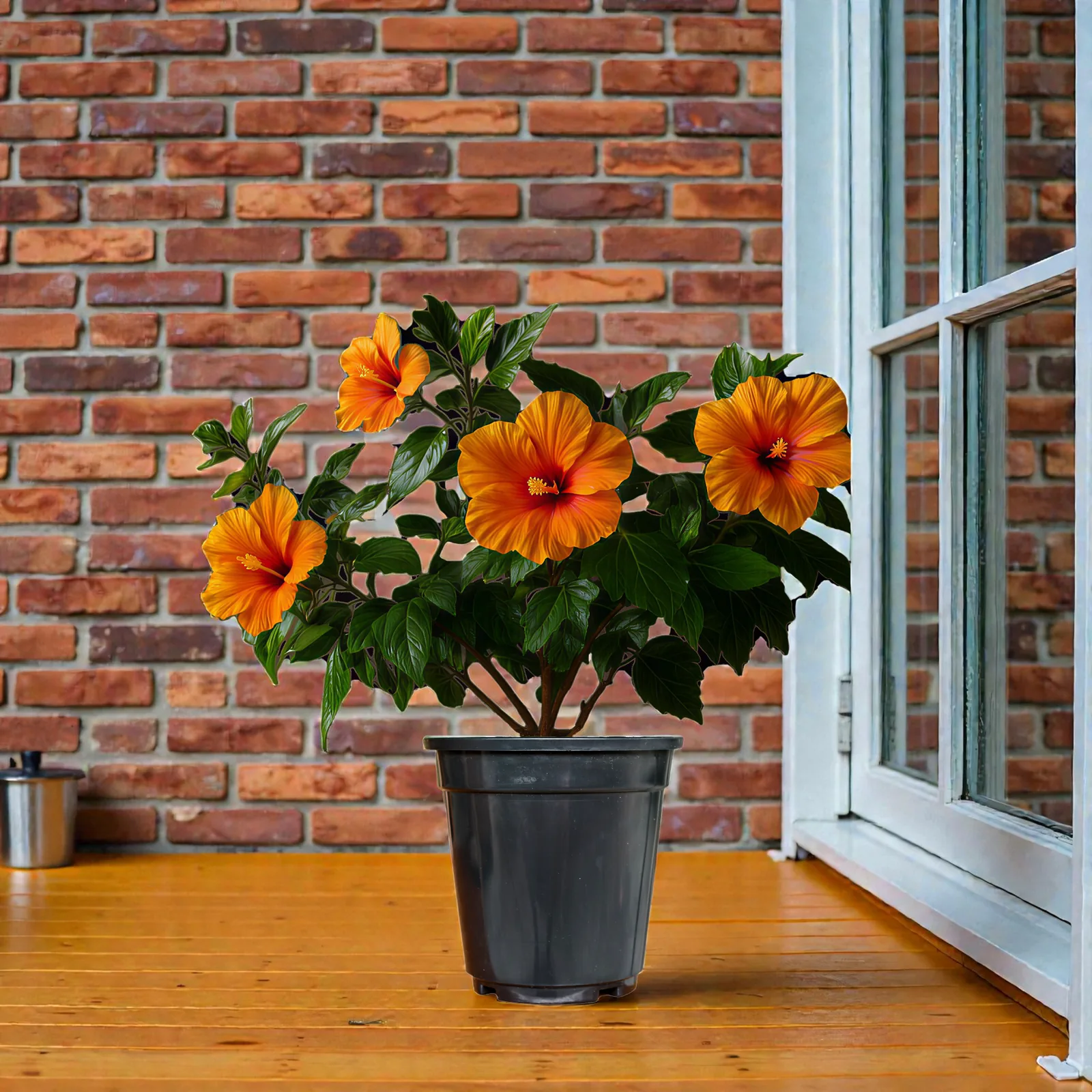
Individual tropical hibiscus flowers are brief: the RHS describes blooms lasting a day or two. Judge the plant by its continuing growth and new buds, not by whether yesterday’s flower remains open.
Unopened buds repeatedly falling are a different observation. Think back to a recent move, a drying episode or a change in weather, and inspect the plant for pests. NC State notes that environmental changes can cause leaf and bud drop. Avoid making several large care changes at once; first correct the clearest problem you can verify.
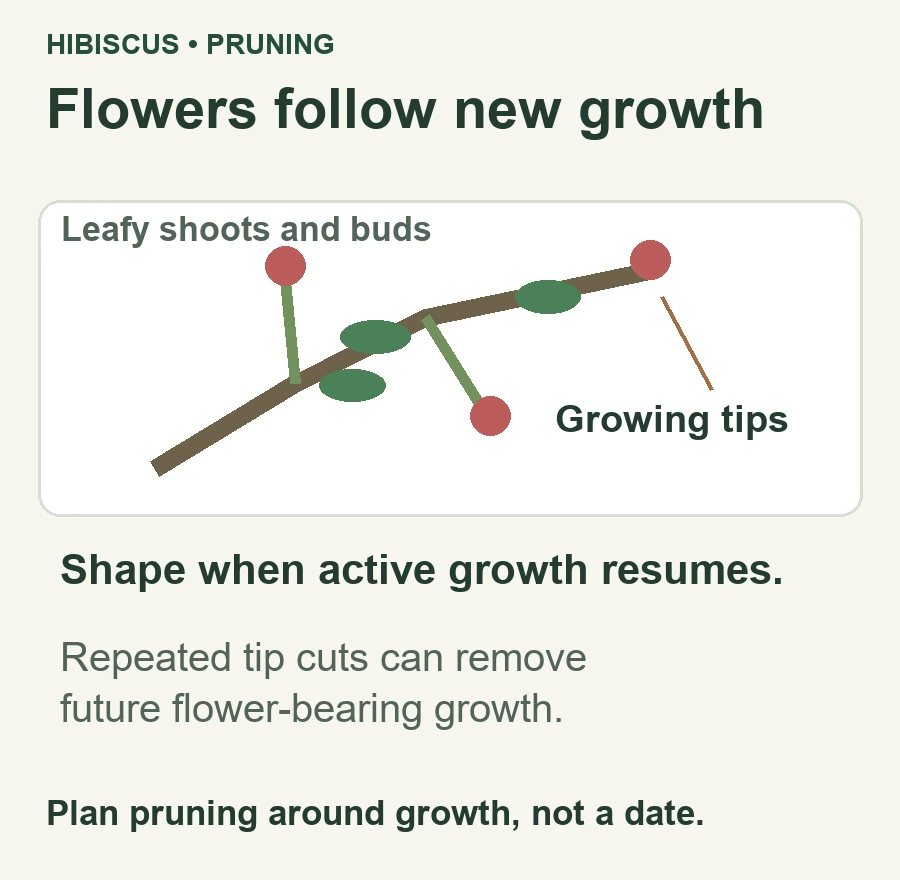
Flowers form on new growth. Shape a tropical hibiscus when active growth is resuming and conditions support recovery. Repeatedly clipping every fresh tip can remove future flowering growth. NC State’s early-spring pruning advice is a useful principle for seasonal growth, but the right local timing depends on cold, rain and how your plant is growing.
Feed a growing plant and inspect before treating
Use a fertiliser intended for container flowering plants and follow its label for the dilution and interval. Illinois Extension includes monthly feeding in its general tropical-hibiscus care; RHS guidance uses a different regimen under protected growing conditions. Those schedules are not interchangeable with every product. Do not stack a liquid feed, granules and homemade boosters on the same assumption that more will create more flowers.
Look beneath leaves and around young shoots when you water. Maryland Extension identifies spider mites and scale as problems on overwintered hibiscus. Sticky residue, webbing or visible insects call for identification before treatment. Any pesticide must be labelled for the plant and use; spraying a healthy flower every few days is not a substitute for inspection.
Choose a hibiscus for the space you can offer
The current Surekha Hibiscus Plant Live listing describes a plant supplied in a five-inch black pot with drainage holes. Check the live listing for the available option and current specifications. Its nursery container is a starting home; choose its longer-term position with access, light and future growth in mind.
Give your gudhal a steady place and a routine you can read from the pot. When something changes, check light, moisture and new growth before adding another remedy.