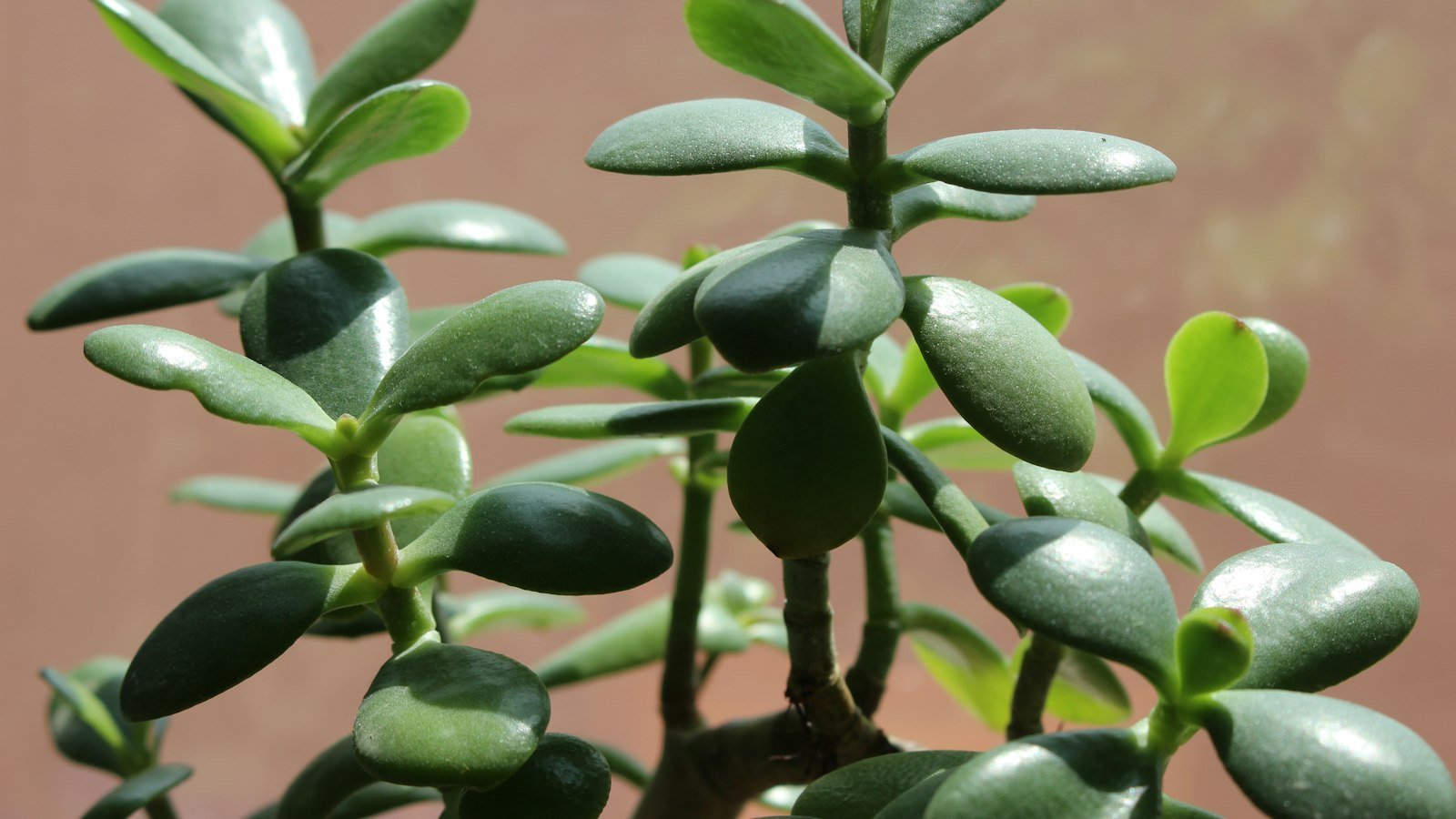
A jade plant looks like a miniature tree, with thick, glossy, coin-shaped leaves on a sturdy trunk. It is one of the most popular gift and “lucky” plants in India, and with the right care it can live for decades. Most jade plants that fail in Indian homes are not killed by neglect but by too much water or too little light.
Quick answer: Jade plant care comes down to three things: give it bright light with a few hours of direct sun, let the soil dry out completely before watering deeply, and grow it in a fast-draining succulent mix in a pot with a drainage hole. Water even less in the monsoon and winter, feed lightly only while it is growing, and keep it away from pets, because it is toxic to cats and dogs.
This guide covers light, watering through the Indian seasons, soil and repotting, feeding, pruning, propagation, flowering, common problems and how to tell a jade plant from the “money plant” most Indian homes already have.
Jade plant care at a glance
| Need | What works best |
|---|---|
| Botanical name | Crassula ovata (sometimes still sold under the older name Crassula argentea) |
| Light | Four or more hours of direct sun is ideal; survives in bright, indirect light |
| Water | Let the soil dry out, then water deeply; much less in winter |
| Soil | Fast-draining succulent or cactus mix with extra perlite or coarse sand |
| Pot | Heavy, wide pot with a drainage hole; repot every two to three years |
| Feeding | About every two months while actively growing; none in winter |
| Common pest | Mealybugs |
| Pets | Toxic to cats, dogs and horses |
What is a jade plant?
The jade plant, Crassula ovata, is a succulent shrub from South Africa. According to the University of Wisconsin–Madison Extension, it stores water in its leaves, stems and roots, grows slowly, copes well with the restricted root space of a pot and tolerates neglect. These traits make it an easy houseplant. In the wild it becomes a rounded shrub up to about 6 feet (1.8 m) tall, with a thick, gnarled trunk that makes even young plants look old.
The North Carolina State University Extension Plant Toolbox lists its common names as jade tree, baby jade, Chinese rubber plant, lucky plant and money plant, among others.
Jade plant or money plant: which one do you have?
In India, “money plant” usually means pothos, a climbing vine with heart-shaped leaves. The jade plant is sometimes called a money plant too, but it is a completely different plant: an upright succulent with thick, oval leaves. The two need opposite care. Pothos likes regular watering, while jade needs its soil to dry out. If you grow both, see our money plant care guide for the vine.
Light: the most important part of jade plant care
The UW–Madison Extension says jade does best with four or more hours of direct sun, but will survive in bright, indirect light. A plant that gets too little light grows deep green leaves on long, drooping stems. A well-lit plant stays compact, and its leaf edges often turn red.
- Best spot: A sunny window, balcony or terrace that gets morning sun.
- Harsh summer sun: In April–June, afternoon sun on a west- or south-facing balcony can scorch the leaves. Give light shade in the hottest hours.
- Move it gradually: The UW–Madison Extension advises getting indoor jade plants used to stronger outdoor light gradually to prevent sunburn. Increase sun exposure over a week or two rather than all at once.
- Dim rooms: A jade plant will not thrive in a dark corner. If your room has little light, choose a plant from our list of low-light indoor plants instead.
How to water a jade plant in India
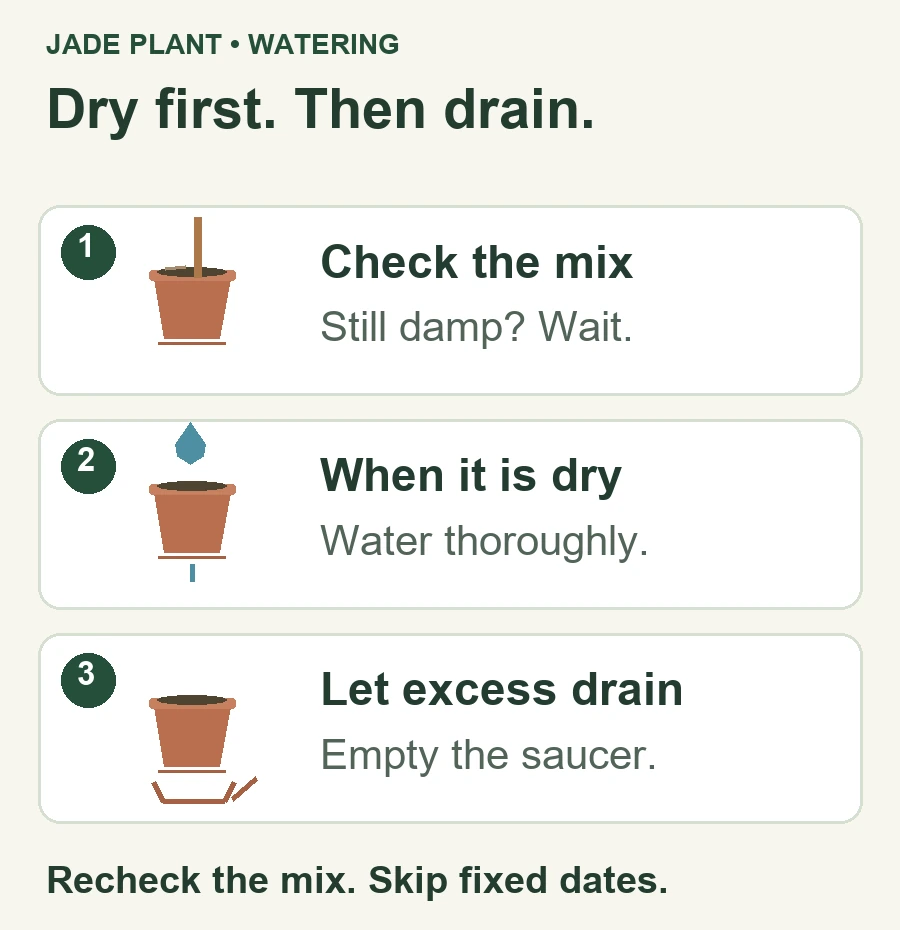
Jade plants do best when the soil dries out between deep waterings. The UW–Madison Extension warns that overwatering makes the leaves drop and the stem rot, but that drought can also cause stunting, spotted leaves and leaf drop. The aim is a full soak, then a dry spell.
- Push a finger or a wooden stick into the soil. Water only when the mix is dry most of the way down.
- Water slowly until it runs out of the drainage hole.
- Empty the saucer after 15–20 minutes. Never leave the pot standing in water.
| Season | What to expect | Watering approach |
|---|---|---|
| Spring and summer (March–June) | Warm, bright and dry; soil dries fastest | Water deeply whenever the soil is dry; check every few days |
| Monsoon (July–September) | Humid, cloudy; soil stays wet much longer | Water far less; keep pots out of the rain and check drainage |
| Winter (November–February) | Cooler; the plant slows down | Keep the soil on the dry side; water sparingly |
The UW–Madison Extension notes that jade is semi-dormant in winter and watering should be restricted, and NC State similarly advises reducing water from autumn to late winter. In the warmer south of India, where winters are mild, watering slows down less, but the rule stays the same: dry soil first, then water. Our guide on how to water indoor plants explains how to judge soil moisture.
If your jade plant came in a self-watering pot
Self-watering pots keep the soil steadily moist, which suits many leafy plants but not succulents. Our guide on using self-watering pots explains that continuously moist systems are unsuitable for cacti and succulents. For a jade plant, leave the reservoir empty and water from the top only when the soil is dry. When the plant outgrows its pot, move it into a regular pot with a drainage hole.
Soil, pot and repotting
The UW–Madison Extension recommends a well-drained, high-porosity mix made for succulents or cacti. You can also improve ordinary potting mix by adding extra perlite or coarse sand. Garden soil on its own stays too wet and heavy.
- Pot: Choose a heavy, wide pot, such as terracotta, with a drainage hole. Jade plants become top-heavy as they grow.
- When to repot: Jade can live for many years with crowded roots, but UW–Madison suggests repotting every two to three years, or when the plant becomes top-heavy and tips over. The best time is when new growth starts.
- After repotting: Water sparingly until the plant settles in.
For a step-by-step method, see our guide on how to repot an indoor plant.
Temperature and winter care
Jade tolerates a wide range of temperature and humidity, which is why it does well across most of India. The UW–Madison Extension notes it may survive a light frost but is killed by freezing. In the northern plains, bring outdoor plants inside or under shelter on the coldest nights of December and January. Keep the soil dry during cold spells, since cold, wet soil is a common cause of root rot.
Feeding
Jade plants need very little fertiliser. The UW–Madison Extension suggests feeding about every two months during active growth, or using a more dilute fertiliser more often. Do not feed in winter, when the plant is semi-dormant, or straight after repotting. Overfeeding produces soft, weak growth.
Pruning and shaping
Pruning keeps a jade plant compact and helps the trunk thicken so it can carry its heavy branches. The UW–Madison Extension recommends pruning in spring by cutting stems back to a side branch. The cuts heal in a few days, and new growth appears within a few weeks. Because it responds so well to pruning, jade is a popular plant for beginners trying bonsai.
How to propagate a jade plant
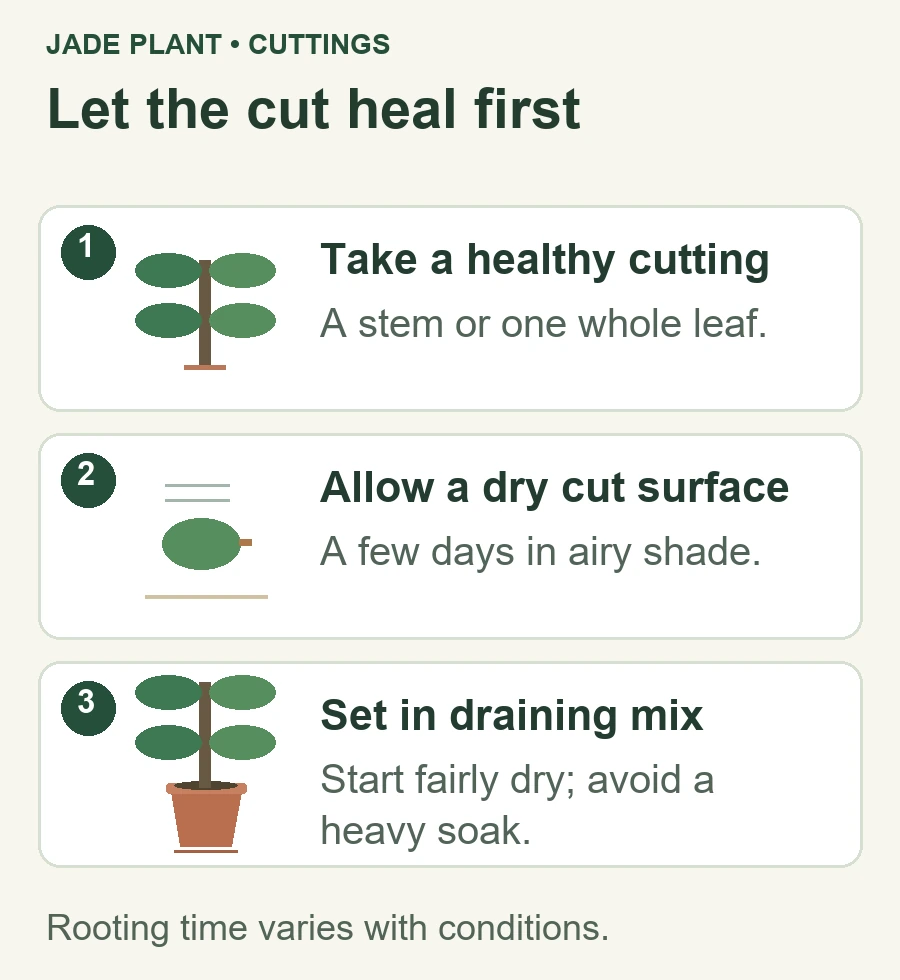
Jade is one of the easiest plants to multiply. Both UW–Madison and NC State describe propagation by stem or leaf cuttings.
- Take a cutting. Cut a healthy stem a few inches long, or gently twist off a whole, plump leaf.
- Let it dry. Leave the cutting in a shaded, airy place for a few days until the cut surface has healed over. This makes rot much less likely.
- Plant it. Insert the cut end into fairly dry, well-drained mix. Do not water heavily.
- Wait for roots. UW–Madison notes that cuttings root most easily in summer, although jade can be propagated at any time of year.
A rooted jade cutting in a small pot also makes a thoughtful, low-cost gift.
Does a jade plant flower?
It can, but not often indoors. NC State notes that jade does not usually bloom in home environments. When it does flower, it produces clusters of small, star-shaped white or pink flowers. According to the UW–Madison Extension, flowering is triggered by long nights. Its advice for encouraging blooms is to keep the plant cool (around 13°C at night), withhold water in autumn and keep it away from artificial light in the evening, so that the natural shortening days can trigger flower buds.
In India, these conditions are most likely during the cool winter of the northern plains and the hills. Even then, flowering is never guaranteed, and a jade plant that does not flower is still perfectly healthy.
Common jade plant problems and fixes
| Problem | Likely cause | What to do |
|---|---|---|
| Leaves dropping, stem soft or blackened at the base | Overwatering and root or stem rot | Stop watering, check the roots, cut away rotten parts and repot in dry, fast-draining mix |
| Wrinkled, thin or shrivelled leaves | Long drought | Water deeply, then go back to the soak-and-dry routine |
| Long, drooping stems with dark green leaves | Too little light | Move gradually to a brighter spot and prune leggy stems in spring |
| Brown or bleached patches on leaves | Sunburn after a sudden move into strong sun | Shade from harsh afternoon sun; damaged leaves fall and new ones grow |
| White, cottony clusters in leaf joints | Mealybugs | Wipe off with a cotton bud dipped in rubbing alcohol and repeat for several days |
| Fine webbing and speckled leaves | Spider mites | Isolate the plant, rinse the leaves and check every few days |
| A few lower leaves yellowing and falling | Natural ageing | Normal, as long as new growth is healthy |
The UW–Madison Extension names mealybugs as the most common pest and warns that some insecticides can damage the succulent leaves, so try manual removal first. NC State adds that aphids, scale and spider mites can occasionally be a problem. If your plant looks unwell and you are not sure why, our guide to signs a plant is dying and how to save it can help.
Is a jade plant safe for pets?
No. The ASPCA lists the jade plant as toxic to dogs, cats and horses, with signs including vomiting, depression and loss of coordination. Keep it out of reach of pets, and contact a veterinarian if one chews the plant.
Jade plant and Vastu
The jade plant is widely gifted in India as a symbol of prosperity and good luck, and its common names “lucky plant” and “money tree” reflect that tradition. Many families keep it near the entrance or in the living room for Vastu reasons. These beliefs vary between practitioners and have not been scientifically tested, so choose a spot that also gives the plant the bright light it needs. A healthy, well-lit jade will always look better than a struggling one in a dim corner.
Bring home a jade plant
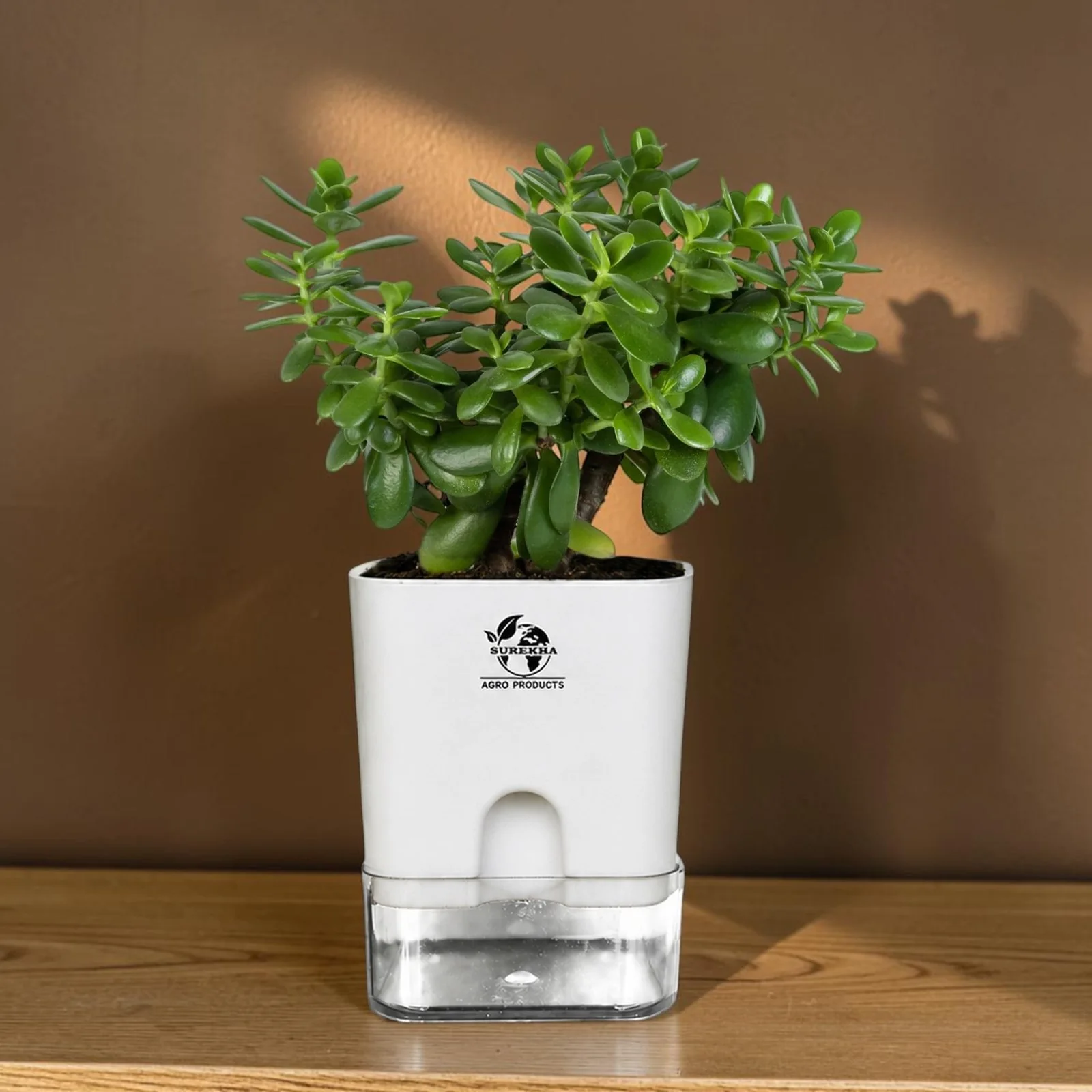
Our Surekha Jade Plant Indoor is a compact plant that suits a desk, window sill or entrance. Jade is also part of our Lucky Plants Combo with lucky bamboo and variegated money plant, and our Good Luck Indoor Plants Bundle. For other plants that cope with dry spells, see our guide to the best drought-tolerant plants in India, and for another sun-loving succulent, read our adenium care guide.
Frequently asked questions
How often should I water a jade plant in India?
There is no fixed schedule. Water deeply only when the soil has dried out. In summer that may be every week or two; in the monsoon and winter it can be much less often. Always check the soil first.
Can a jade plant grow indoors?
Yes, if it gets bright light. A spot near a sunny window that receives a few hours of direct sun is ideal. In a dim room it becomes leggy and weak.
Why are my jade plant leaves falling off?
The most common cause is overwatering. Sudden changes in light or temperature, long drought and pests can also cause leaf drop. A few old lower leaves falling naturally is normal.
Why are my jade plant leaves turning red?
Red edges are usually a sign of strong light and are normal on a healthy plant. Check that the leaves are still firm and plump.
Can I grow a jade plant from a single leaf?
Yes. Let a healthy leaf dry for a few days, then rest or insert its base in fairly dry, well-drained mix. Leaf cuttings take longer than stem cuttings to become a sizeable plant.
Is the jade plant the same as the money plant?
No. In India “money plant” usually refers to pothos, a climbing vine. Jade is an upright succulent that is sometimes also called a money plant or money tree.
Is a jade plant poisonous?
It is toxic to cats, dogs and horses, according to the ASPCA. Keep it where pets cannot chew it.
Your jade plant care routine
Put your jade plant where it gets bright light and some direct sun, water it deeply only when the soil is dry, cut back watering in the monsoon and winter, and use a fast-draining mix in a pot with a drainage hole. Follow that simple routine and your jade can grow into a sturdy, tree-like plant that lasts for many years.