You chose the croton for those red, yellow and green leaves. Then you brought it home, found a lovely corner beside the sofa, and a few leaves started landing on the floor. Before buying a fertiliser or moving it outside, look at that corner in daylight. A croton’s place in the room matters as much as its place in your decor.
For croton plant care in India, start with bright filtered light, steady warmth and a pot that drains. Water when the top layer of mix dries, and check recent changes if leaves fall. The colourful houseplant is Codiaeum variegatum, a tropical shrub grown mainly for its foliage. NC State’s plant guide describes its need for bright light and well-drained roots.
Where should you keep a croton?
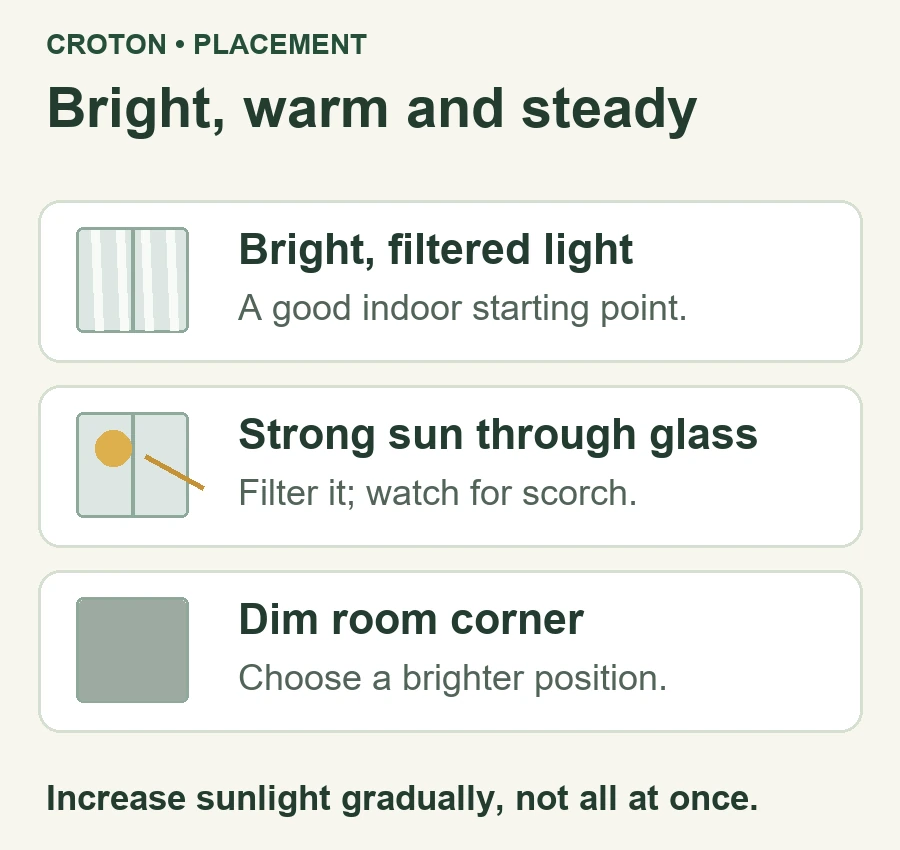
For an indoor plant, try a bright window with filtered light. Check where the leaves actually sit: a sunny window across the room does little for a plant hidden behind furniture. A sheer curtain can soften strong rays through glass. Avoid a dark display corner and the direct blast from an air conditioner.
Outdoor advice can sound different. Illinois Extension describes strong colour in sunny outdoor plantings, while the RHS houseplant guide recommends bright indirect light and warns about hot sun through glass. These are different growing situations. A croton already accustomed to a bright veranda may handle more sun than one arriving from a sheltered nursery.
Increase exposure gradually. If you want to use a balcony, begin in a bright sheltered position and watch the foliage as you introduce gentle morning sun. Don’t use a sudden move into afternoon heat as a cure for dull colour.
How often should you water a croton?
Use the mix to decide. Feel the top layer before reaching for the watering can. When it is drying, water the root zone thoroughly and allow excess to drain. If it remains damp, check again later. Empty trapped water from a saucer or decorative outer pot. The RHS croton guide recommends allowing the surface to dry and tipping away excess water.
A small pot on a warm, breezy balcony and a larger pot in a cool room will not dry at the same speed. Write down what you find at your first few checks; this is more useful than adopting someone else’s twice-weekly routine.
If a croton wilts while the mix is still wet, pause before adding more. Check drainage and root condition. Our indoor plant watering guide helps you work through the pot and its surroundings.
Let your local weather set the routine
A November balcony in Delhi and one in Kochi can ask very different things of a croton. The RHS advises keeping this tropical plant above 15°C; cold draughts and temperature swings can trigger leaf loss. Treat a cool-night forecast as a prompt to choose a warm, bright shelter, rather than waiting for frost.
| Your conditions | Useful adjustment | Check next |
|---|---|---|
| North Indian or hill-location cool nights | Choose bright indoor shelter away from cold glass and draughts. | Whether the mix now stays damp longer. |
| Warm coastal or southern conditions | Keep a suitable bright position; respond to actual drying. | Heat, exposure and fresh growth. |
| Rain reaching the balcony pot | Let drainage work and count rain as watering. | Water trapped inside the outer container. |
| Dry air from heating or air conditioning | Move out of the direct airflow. | Leaf condition and room conditions. |
Keep the pot away from drying airflow. Let slower growth and slower drying guide winter watering; a calendar month alone is not a reason to leave the roots dry.
Why is your croton dropping leaves?
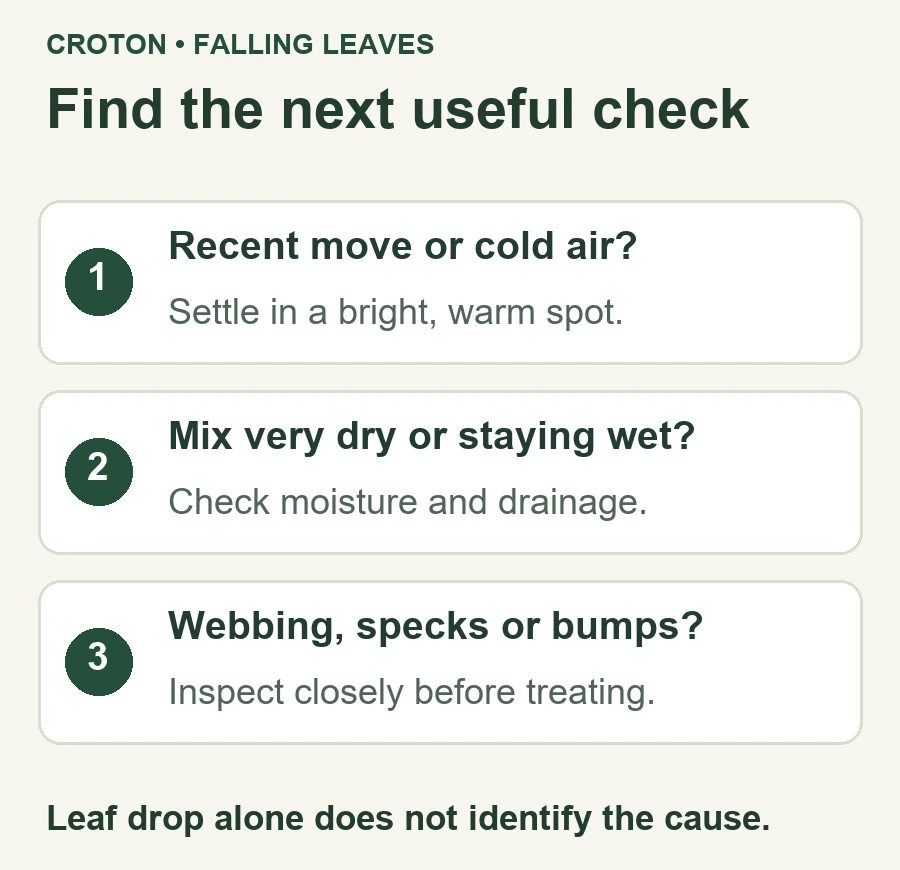
Start by asking what changed: delivery, a new window, a cold spell, repotting or an altered watering routine. Note the change before making another. A photograph from the same angle can help you compare the amount of foliage over time without relying on memory.
Check the mix next. A very dry root ball and a persistently wet one need different responses. Also inspect leaf undersides and stems. Crotons are susceptible to spider mites; fine webbing and pale feeding specks deserve a closer look. University of Minnesota Extension explains the signs of mite feeding. Webbing or leaf fall alone is not enough to choose a treatment.
Learn your croton’s normal colours and leaf shape
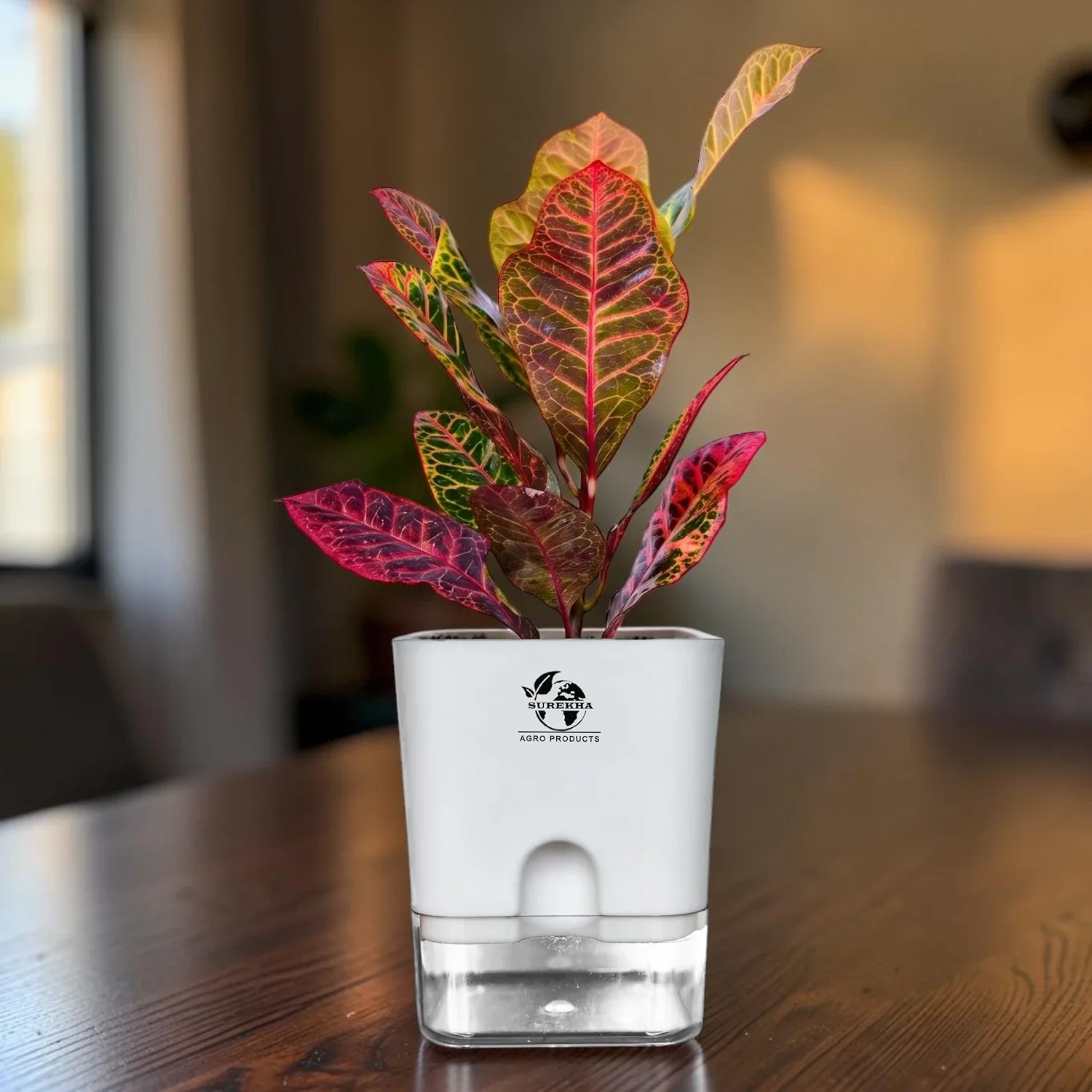
A yellow marking is not automatically yellowing from poor care. Croton cultivars have different patterns, and colours can change as leaves age. Petra is known for bold coloured veins on broad leaves; Mammy has narrower, twisted foliage. Wisconsin Horticulture’s croton guide describes these differences.
Compare new damage with the plant’s established pattern. A Mammy’s naturally twisted leaves are a poor reference for deciding whether a broad-leaved croton has suddenly curled. Look for changes on your own plant, rather than trying to make every leaf match a catalog picture.
Keep feeding, cleaning and repotting simple
Feed according to a suitable houseplant fertiliser’s label when the plant is actively growing. Don’t add extra fertiliser to fix unexplained leaf fall. Plants growing slowly in low light need less feeding; Clemson Extension also cautions against excess fertiliser. Wipe dusty leaves gently with a damp soft cloth.
Repot when crowded roots justify it, using a slightly larger draining container and a suitable, airy houseplant mix. Handle the root ball gently: Illinois notes that root disturbance can cause leaf drop. If you’re new to the job, follow our beginner repotting guide. Wear gloves when pruning or handling broken stems because the sap can irritate skin, and keep the plant away from children and pets that may chew it.
Choose the corner before choosing the plant
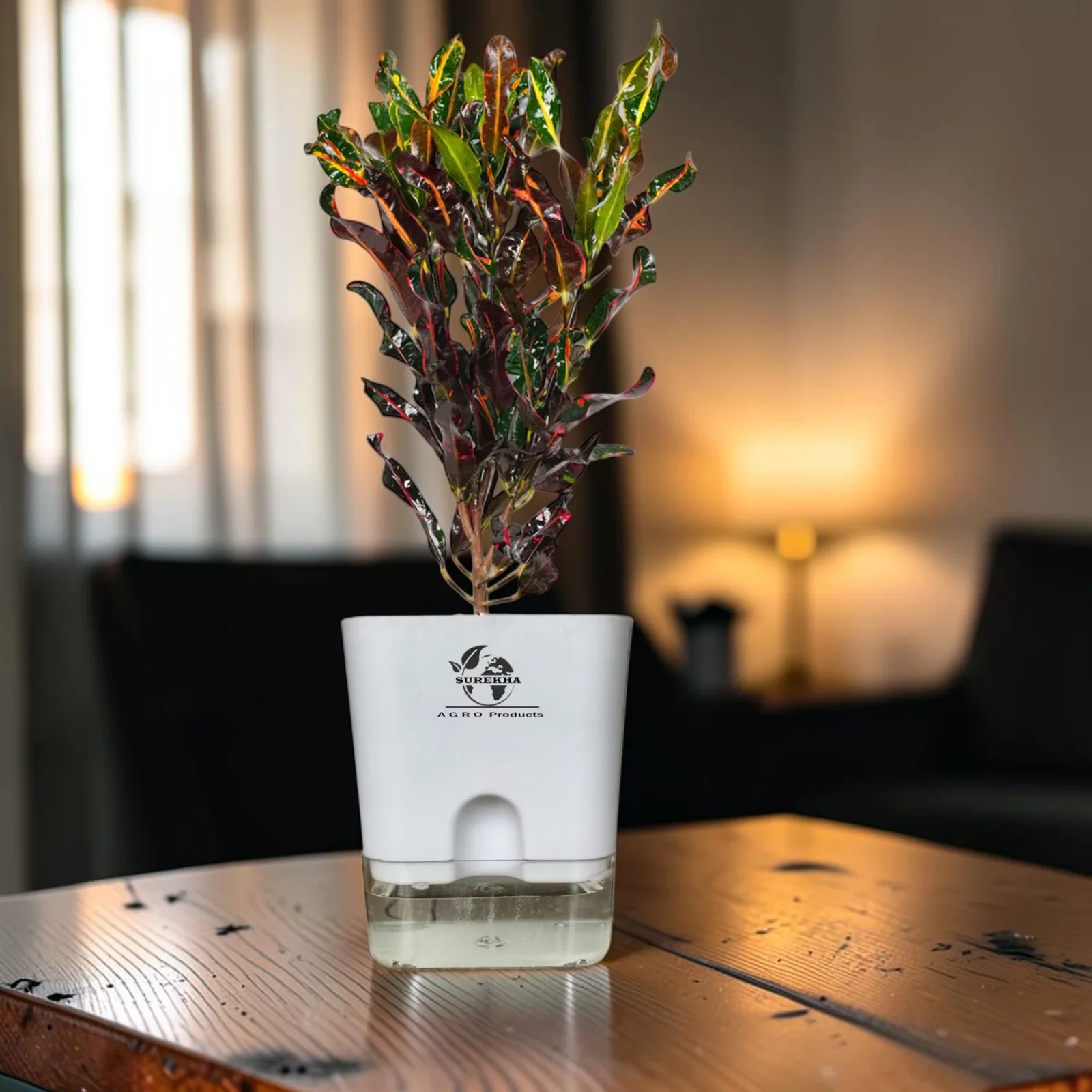
If you have a bright, warm place ready, the Surekha Croton Petra Plant offers the broad, colourful foliage featured here. Check the current listing for product details. If your intended spot is dim or directly under an AC vent, arrange a better position first.
When you bring it home, take a starting photo, check the mix and settle on one suitable location. Those observations give you something practical to return to whenever the croton’s colours or leaves make you wonder what to do next.