To use Epsom salt for plants, first establish that the plant needs magnesium and that magnesium sulphate is the recommended correction. Then follow a recommendation for that crop, potting medium and application method. Epsom salt supplies magnesium and sulphur; it is not a complete fertiliser, a routine tonic for every pot or a reliable cure for yellow leaves.
For Indian balcony and terrace gardeners, the useful question is often “Does this pot need it?” before “How many spoonfuls?” A chilli plant with wet roots, a money plant in poor light and a genuinely magnesium-deficient plant can all look unwell, but they need different care.
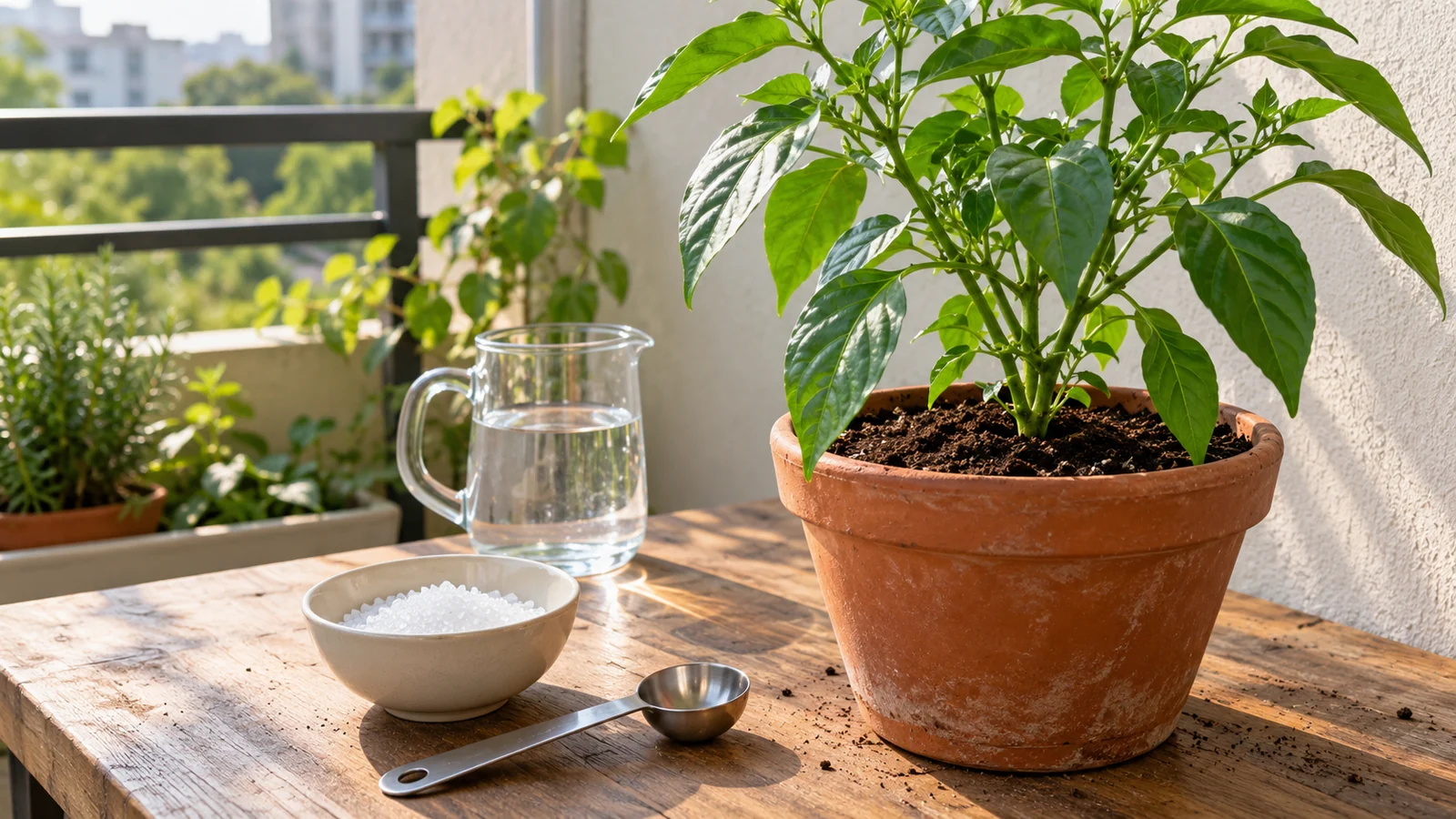
What does Epsom salt do for plants?
Epsom salt is magnesium sulphate. Magnesium and sulphur are plant nutrients, but adding them helps only when supply is inadequate or a specific nutrient-management plan calls for them. It does not provide the nitrogen, phosphorus and potassium that a complete feeding programme may need. See the University of Maryland’s explanation of plant nutrients and fertilisers.
More is not automatically better. The Washington State University review of Epsom-salt garden claims distinguishes treatment of particular deficiencies from unsupported promises of better growth in every garden. It also notes that nutrient imbalances, including excess potassium, can contribute to magnesium problems. Adding another product without examining the existing feed can miss the cause.
| Situation | Useful next step | Use it now? |
|---|---|---|
| A suitable test or qualified diagnosis identifies low magnesium | Obtain a crop- and medium-specific correction, including concentration and volume | Only if magnesium sulphate is recommended |
| Leaves are yellow, but the cause is unknown | Check roots, watering, light and the existing nutrient programme | No automatic application |
| A healthy plant is already receiving suitable complete nutrition | Continue care and monitor growth | No routine extra dose is established |
| White deposits or burnt leaf tips appear after repeated feeding | Investigate mineral or fertiliser accumulation and drainage | Pause extra supplements |
Check yellow leaves before adding magnesium
Start with the pattern. Are older leaves affected first, or is new growth pale? Is the pot heavy and persistently wet? Did symptoms follow a change in location, fertiliser or watering water? Photograph the whole plant and both sides of affected leaves, and record what has already gone into the pot.
Yellowing has several possible causes, including nutrient shortages, overwatering, root disease and normal ageing. The Penn State plant-health diagnostic guide explains why leaf colour needs to be considered with growing conditions rather than treated as a diagnosis by itself.
For a houseplant example, use our money plant yellow-leaf checklist to work through basic care. For container vegetables, check that the potting mix and drainage suit the crop before changing supplements.
How to use Epsom salt when a correction is recommended
1. Get advice that matches a container
Tell the adviser or testing laboratory the crop, pot size, growing medium, fertiliser history and water source. A garden-soil result and a soilless potting-media test are not interchangeable. Ask which sample and test method are appropriate. UMass guidance on testing growing media shows that nutrient and soluble-salt results depend on the medium and testing method.
2. Confirm the product and application method
Check that the product is plain magnesium sulphate intended for the proposed plant use. Avoid substituting fragranced bath mixtures or products with unexplained additives. Read the current pack instructions, and resolve any disagreement with the plant-specific recommendation before applying it.
Ask whether the recommendation is a root application or a leaf spray. Do not transfer a rate from one method to the other. Leaf spraying deserves particular caution: the WSU review reports that Epsom-salt sprays can scorch foliage. An online “greening spray” recipe is not a reason to spray a stressed plant.
3. Confirm both concentration and the amount per pot
A useful instruction tells you the quantity of product, quantity of water, amount of prepared solution to apply and whether a repeat is needed. “One spoon per litre” alone does not tell you how much reaches a small pot versus a large grow bag. Spoon sizes and crystal packing also vary.
Use the measurement units in the recommendation and suitable measuring equipment. For a recommended solution, dissolve the measured product as directed. Do not increase the concentration because a plant looks very yellow, and do not add an unmeasured handful of crystals to the pot.
4. Keep a record and reassess
Record the date, product quantity, dilution and volume applied to each pot. Keep the rest of the nutrient programme visible in the same record so that supplements do not quietly stack up. Assess subsequent growth with your adviser; do not assume every damaged old leaf will become normal or repeat the dose automatically.
Why no universal dose here? The appropriate correction depends on the deficiency, medium, existing nutrients and application method. A blanket weekly or monthly recipe for all Indian pots would leave out those decisions.
Adjust the care checks to your Indian growing conditions
A city name does not tell you whether a pot lacks magnesium. Local weather does, however, affect the checks you should make before applying any soluble supplement.
| Growing situation | Check before feeding | Practical response |
|---|---|---|
| Hot, dry terrace or a small pot that dries quickly | Moisture, drainage and existing mineral deposits | Correct watering problems first; avoid concentrating supplements in a stressed pot |
| Humid coastal balcony or a rainy spell | Whether the root zone remains wet and drainage holes are clear | Investigate wet-root stress before treating yellow leaves as a nutrient shortage |
| Cool northern winter or a low-light indoor corner | Whether the plant is actively growing and receiving suitable light | Base feeding decisions on growth and crop needs, not a fixed calendar reminder |
| Warm plateau garden with active vegetables | Crop nutrition, water source and what the existing fertiliser supplies | Use the crop’s feeding plan; add magnesium only when the diagnosis supports it |
These are management checks, not claims about magnesium levels across Indian regions. For a fruiting container crop, our chilli growing guide covers the wider light, watering and container-care routine.
What Epsom salt will not reliably fix
Blossom-end rot: adding Epsom salt does not prevent this disorder. The University of Minnesota’s garden-remedy guidance explains the calcium-related problem and warns that excess magnesium can interfere with calcium uptake. Review consistent watering and root health instead of reaching for more magnesium.
Guaranteed flowers, bigger harvests or pest control: these are not dependable outcomes of adding Epsom salt. A supplement does not replace suitable light, crop nutrition or identifying a pest. Do not increase the dose in an attempt to force buds or fruit.
What if you have already added too much?
Pause extra supplements and review the total feeding history. White crust can come from water minerals or fertiliser salts; it does not identify which nutrient is excessive. University of Maryland guidance on mineral and fertiliser deposits describes salt-related root stress and the importance of drainage.
Get advice before attempting a remedy. Where excess salts are the problem and drainage is good, leaching with suitable water may be recommended; a badly affected medium may need replacement. Repeatedly flooding a pot with blocked drainage or unhealthy wet roots is not a safe substitute for diagnosis.
Common questions
Can I use Epsom salt on every indoor plant?
No. Different plants and potting mixes have different needs. A healthy plant receiving appropriate nutrition does not automatically need an additional magnesium supplement.
How often should I apply Epsom salt?
Follow the repeat interval, if any, in the specific recommendation. Do not turn a one-time correction into a permanent weekly or monthly habit.
Should I spray leaves or water the pot?
Use only the method specified for your plant and product. The two methods need different instructions; leaf sprays can damage foliage.
Can Epsom salt replace normal plant fertiliser?
No. It supplies a limited set of nutrients. Build a suitable overall feeding plan rather than treating one supplement as complete nutrition.
Choose a supplement only when your plant needs it
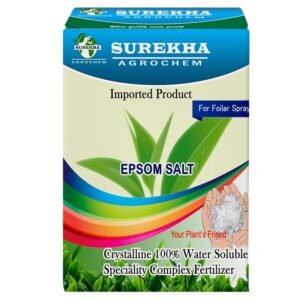
If your diagnosis recommends magnesium sulphate, you can review the composition and pack options on Surekha Agro Products’ Epsom salt product page. Confirm the current label instructions against the crop- and medium-specific recommendation before use. If no magnesium correction is needed, continue with appropriate watering, light and balanced nutrition.