Rubber plant benefits are mostly practical: a rubber plant (Ficus elastica) gives an Indian home a tall, glossy, tree-like plant that copes with ordinary indoor conditions, grows quickly, is easy to keep dust-free and is simple to multiply from cuttings. Its air-cleaning power in a real room is small, and its milky sap needs some care around pets and children. This guide separates what the plant really does from what is only claimed, explains the Vastu beliefs people ask about, and shows how to keep the plant healthy so those benefits last.
Quick answer: A rubber plant is good for most homes if you have a bright spot with filtered light. Its real benefits are looks, toughness, fast growth and easy propagation. It does not noticeably purify room air on its own, and it does not release extra oxygen at night. Keep it away from pets and small children who chew leaves, because its sap can irritate skin and stomach.
Rubber plant benefits at a glance
| Benefit | What it means at home | How solid is it? |
|---|---|---|
| Statement plant for an empty corner | Large leathery leaves on an upright stem fill floor space in a living room or hall | Strong: this is why it is grown indoors |
| Copes with normal indoor air | Prefers humidity but tolerates the dry air of fan- and AC-cooled rooms | Strong (Clemson Extension) |
| Beginner-friendly | Forgives an occasional missed watering; main risks are overwatering and cold draughts | Strong (Clemson Extension) |
| Fast growth you can shape | Prune for a bushy plant or leave it for a tall, narrow tree form | Strong (NC State Extension) |
| Easy to keep clean | Big, smooth leaves wipe clean with a damp cloth in a minute | Strong |
| New plants for free | Roots from stem or tip cuttings and air layering | Strong (Clemson Extension) |
| Cleaner indoor air | Any effect in a ventilated room is too small to notice | Weak (see the air section below) |
| Wealth and good luck (Vastu) | A cultural belief linked to its round, coin-like leaves | Belief, not measurable |
What is a rubber plant?
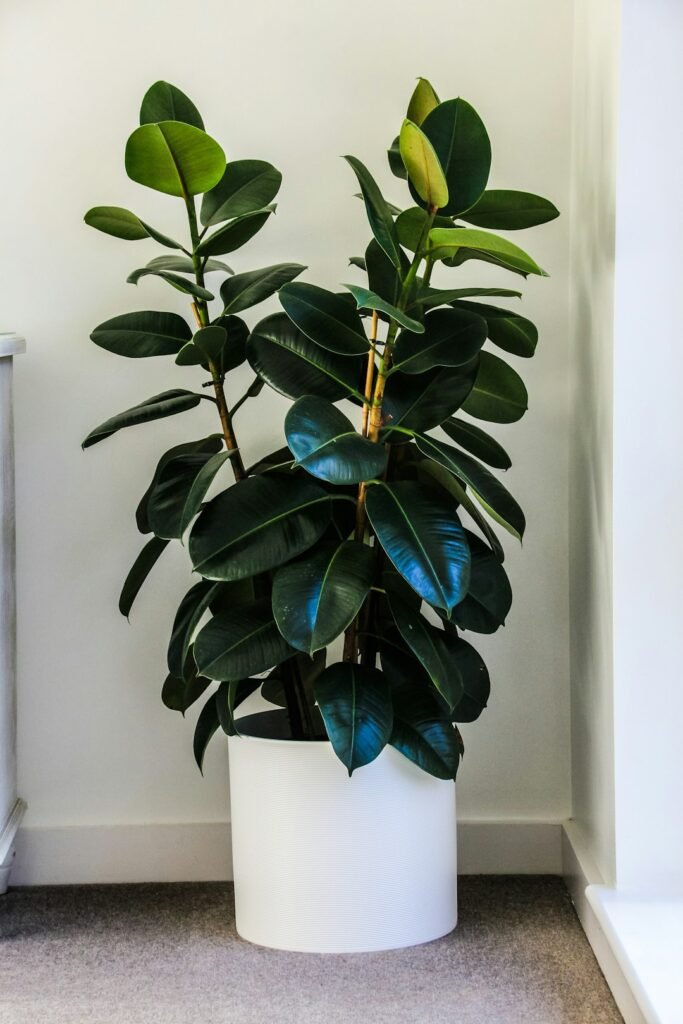
The rubber plant, also called the Indian rubber plant or rubber fig, is Ficus elastica, a member of the mulberry and fig family. North Carolina State Extension lists its natural range as Nepal to China and western Malesia, and notes that in the wild it can become a huge tree with aerial roots. Indoors it usually stays between about 2 and 10 feet, depending on how you prune it.
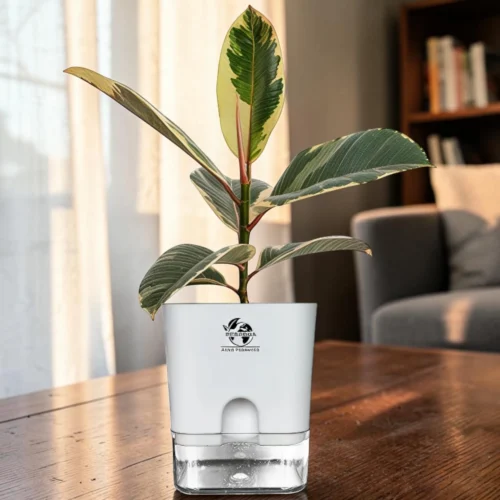
The name comes from its milky sap, which NC State notes was once drained to make rubber. Today almost all natural rubber comes from a different tree, so the houseplant is grown only for its leaves: stiff, glossy, oval and up to around a foot long, in dark green, deep burgundy or cream-and-pink patterns.
8 real benefits of a rubber plant at home
1. It turns an empty corner into a focal point
Few indoor plants give as much visual weight for the money. One upright rubber plant beside a sofa, TV unit or staircase landing reads almost like a small indoor tree. Because the leaves are big and few, it looks tidy rather than busy, which suits compact Indian flats as well as larger homes. Give it space, though: NC State calls it a plant that can become heavy and is best for larger spaces once mature.
2. It copes with ordinary indoor conditions
Clemson University’s Home and Garden Information Center describes rubber plants as easy to grow and excellent for beginners. They prefer humid air but tolerate the drier air common indoors, and they like warm to average room temperatures. That makes the plant a good match for many Indian homes, where rooms are warm for most of the year.
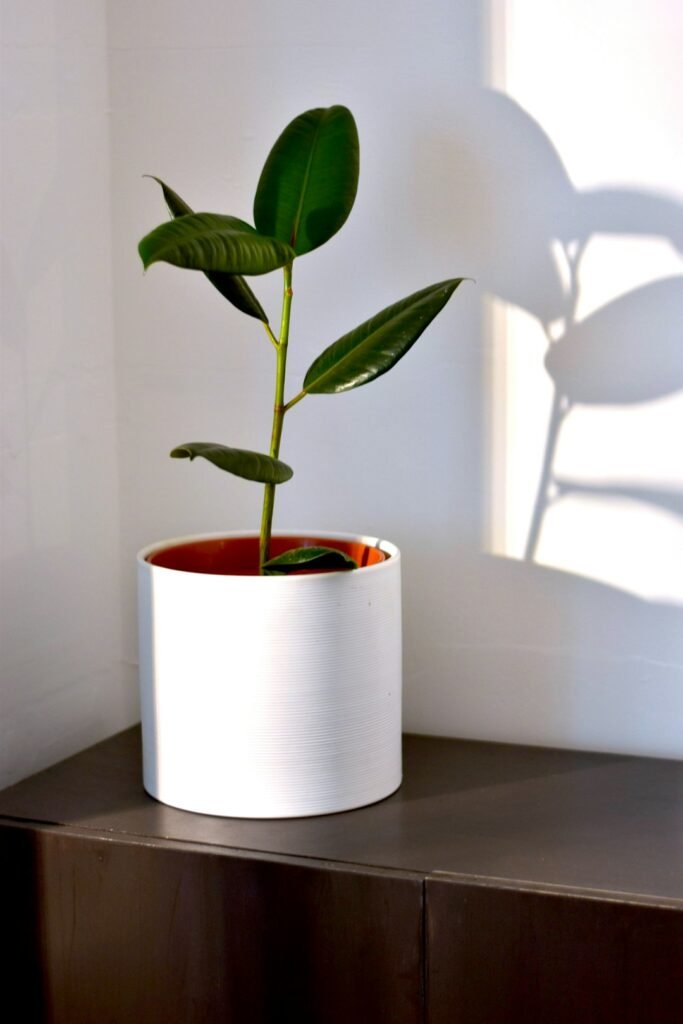
The one condition it does ask for is light. Clemson says rubber plants prefer bright light, adapt to lower light, and grow best with morning sun from an east window. In a dim corner the plant survives but stretches, drops lower leaves and loses its full look.
3. It forgives the odd missed watering
The thick, leathery leaves hold water, so skipping one watering during a busy week rarely harms it. The far more common problem is the opposite: watering on a fixed schedule while the mix is still wet. Clemson links root rot to soil that drains slowly or to watering too often. A simple finger test before each watering protects the plant better than any calendar.
4. It grows fast and can be shaped
NC State rates its growth as rapid. You can use that in two ways. Pinch or prune the main stem and it branches into a fuller, bushier plant. Leave it alone and it grows into a tall, narrow column that fits a tight corner. Pruning is best done in spring, before the main growing season.
5. Big leaves are easy to keep dust-free
Indian homes collect dust fast, especially near roads and during dry winter months. Fine-leaved plants are tedious to clean, but a rubber plant needs one wipe per leaf with a soft, damp cloth, as NC State recommends. Clean leaves look better and let more light reach the leaf surface. For a gentle routine that works on any houseplant, see our guide on how to clean indoor plant leaves.
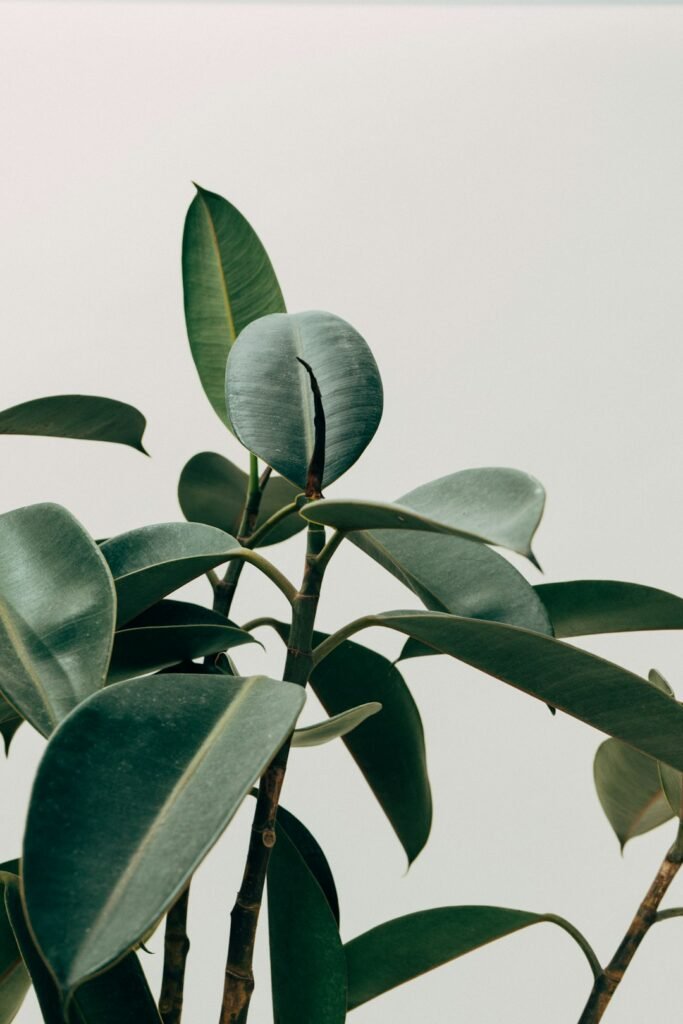
A new leaf emerges rolled inside a thin sheath at the tip of the stem. The sheath falls away as the leaf opens; that is normal growth, not damage.
6. One plant can become many
Clemson notes that rubber plants can be propagated from stem or tip cuttings or by air layering. When you prune a leggy plant, the top piece can become a new plant for another room or a gift. Wear gloves while cutting, because the stem bleeds white sap.
7. There is a colour for every room
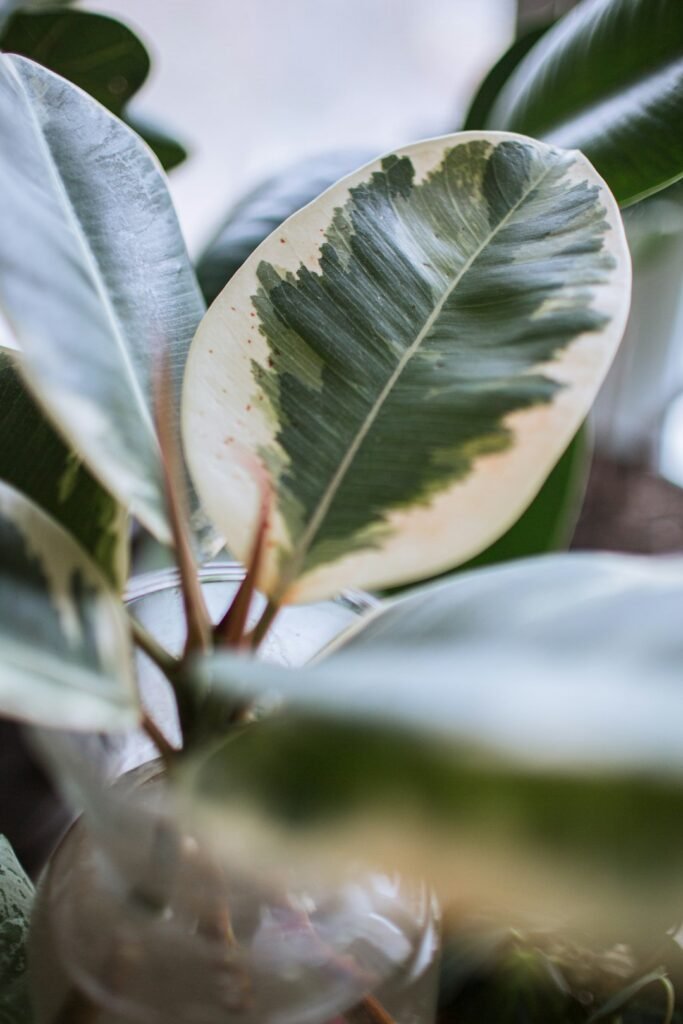
Rubber plants come in many leaf colours. NC State and Clemson list cultivars such as ‘Decora’ and ‘Robusta’ (deep green), ‘Burgundy’ and ‘Abidjan’ (very dark, almost black-red), ‘Tineke’ (green with cream), and ‘Tricolor’ and ‘Red Ruby’ types with pink tones. Dark types suit bright, modern rooms; variegated types light up a plain wall but need more light to keep their pattern.
8. It is a calming, low-effort hobby
Watering, wiping a leaf and noticing a new one unroll take a few minutes a week. Many people find that small routine relaxing. Treat this as a personal benefit rather than a medical one: a rubber plant is a pleasant companion, not a treatment for stress or sleep problems.
Does a rubber plant purify air or give more oxygen?
This is the claim people search most, so here is the honest version. The well-known 1989 NASA study tested plants in small sealed chambers. Its list included a different fig, the weeping fig (Ficus benjamina), but not Ficus elastica. In 2019, Cummings and Waring reviewed 12 chamber studies and calculated that you would need roughly 10 to 1,000 potted plants per square metre of floor to match the air cleaning that normal ventilation already gives a typical building.
So a rubber plant will not noticeably clean the air in a real, ventilated room. Like other green plants it takes in carbon dioxide and releases oxygen in daylight, and at night it respires like any plant. It is not a night-time oxygen source. If cleaner air is the goal, open windows when outdoor air is good, and use an air purifier or exhaust fan when it is not. Our article on which plant gives more oxygen explains the science in more detail.
Rubber plant Vastu: where to keep it
In Vastu Shastra and Feng Shui traditions, plants with round, soft-edged leaves are often seen as positive, and the rubber plant’s broad, coin-shaped leaves have linked it with wealth and prosperity. Practitioners commonly suggest the south-east corner of the living room, a zone they associate with money, for a rubber plant. Some also suggest keeping it in the north or east. These are cultural beliefs, not measurable effects, and different practitioners give different advice.
A practical way to respect both the tradition and the plant:
- Pick the Vastu zone you prefer. If south-east matters to you, start there.
- Check the light. The spot should get bright, filtered daylight for most of the day. A dark corner will undo any intended benefit because the plant will decline.
- Avoid harsh afternoon sun through glass. West- and south-facing windows can scorch leaves in Indian summers; a sheer curtain helps.
- Keep it healthy. Most people who follow Vastu agree that a drooping or dying plant should be revived or replaced, so care matters more than direction.
For other plants commonly placed by direction, see our hub on Vastu plants for home and our picks of plants for the home entrance.
Is a rubber plant good for home? Who should think twice
For most households, yes. The main caution is the sap. Clemson notes that the sticky white sap may irritate skin or the stomach if eaten and advises keeping the plant away from pets or young children who tend to chew plants. NC State flags Ficus elastica as a problem for cats, dogs and horses. The RHS advises wearing gloves when pruning figs because the sap may irritate skin or aggravate allergies.
- Cats and dogs that chew leaves: choose a high shelf or a room they cannot enter, or pick a pet-safer plant. If your pet eats part of the plant and seems unwell, call your vet.
- Toddlers: place the pot where little hands cannot pull leaves.
- Latex allergy: wear gloves when pruning or taking cuttings, and wash hands afterwards.
- Very small rooms: a mature plant gets big; plan for regular pruning.
Rubber plant indoor or outdoor in India?
A rubber plant can grow outdoors as a large tree in warm parts of India, but as a home plant it does best indoors or on a shaded balcony. Clemson suggests avoiding temperatures below 55°F (about 13°C), sudden temperature drops and cold draughts. Use this seasonal guide:
| Season / region | What to watch | What to do |
|---|---|---|
| Summer (Mar–Jun), plains | Hot afternoon sun through glass, faster drying | Filtered light only; check the mix every 3–4 days |
| Monsoon (Jun–Sep) | Wet mix for days, low light on cloudy weeks | Water less; empty saucers; move closer to a window |
| Winter, North India (Dec–Feb) | Nights near or below 13°C, cold window glass | Bring balcony plants inside; keep away from cold draughts; water sparingly |
| Coastal cities (Mumbai, Chennai, Kolkata) | Warm and humid most of the year | Good conditions; focus on drainage and light |
| Hill stations | Cold nights for much of the year | Keep indoors in the warmest bright room |
Simple care so the benefits last
You do not need a complicated routine. These five habits cover most of what a rubber plant needs. For the full guide, read our rubber plant care guide for Indian homes.
- Light first: bright, filtered light; an east window is ideal.
- Water by touch: water thoroughly when the top of the mix feels dry, let excess drain, and empty the saucer. In a self-watering pot, refill the reservoir only after it has run dry.
- Well-drained mix: a quick-draining houseplant mix in a pot with drainage holes.
- Feed lightly in the growing season: a diluted houseplant fertiliser during spring and summer, less in low light and none in winter.
- Stay put: NC State notes rubber plants prefer to remain in one place, so avoid moving them around often.
Common rubber plant problems
| What you see | Likely cause | Fix |
|---|---|---|
| One or two lower leaves yellow and drop | Normal ageing (NC State) | No action needed if new growth is healthy |
| Many leaves yellowing, soil wet | Overwatering, poor drainage | Let the mix dry; check drainage holes; repot if roots smell sour |
| Sudden leaf drop | Cold draught, temperature drop, too little light | Move away from AC vents and cold windows; give more light |
| Tall, bare, leggy stem | Low light | Move to brighter light; prune in spring to branch |
| White cottony spots on stems | Mealybugs | See how to get rid of mealybugs |
| Fine webbing, speckled leaves | Spider mites | See how to get rid of spider mites |
| Variegated leaves turning plain green | Not enough light | Move to a brighter spot with filtered light |
Red or variegated: which rubber plant to choose?
Choose by light and taste. Dark burgundy plants tolerate a little less light and look striking against pale walls. Variegated plants brighten a room but need a well-lit position to keep their cream and pink tones. Our rubber plants are sent in self-watering pots with a clear reservoir, which makes the touch-and-refill habit easy for beginners.
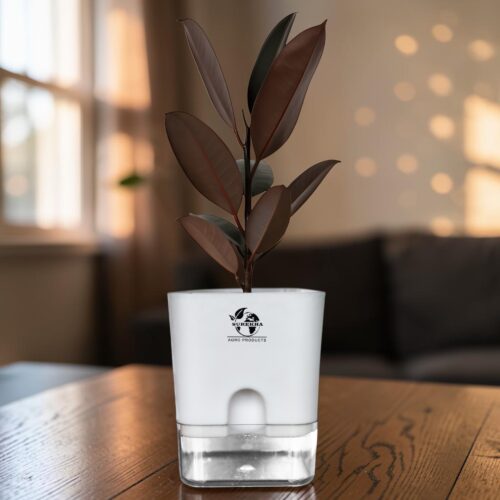
If you want contrast on a side table, the Decorative Plant Duo pairs a red rubber plant with a Calathea Triostar. If you like large-leaved figs, the fiddle leaf fig is a close relative with a fussier temperament.
Frequently asked questions
Is rubber plant good for home?
Yes, for most homes with a bright spot. It is easy to grow, tolerates dry indoor air and makes a strong decorative feature. Keep it out of reach of pets and small children who chew plants, because the sap can irritate skin and stomach.
Where to keep rubber plant as per Vastu?
Vastu practitioners most often suggest the south-east corner of the living room, which they link with wealth; some also suggest north or east. This is a cultural belief. Whatever the direction, choose a spot with bright, filtered daylight so the plant stays healthy.
Does rubber plant give oxygen at night?
No. Like other green plants, it releases oxygen during daylight photosynthesis and respires at night. Studies also show potted plants have only a tiny effect on air quality in real, ventilated rooms.
Is rubber plant an indoor or outdoor plant?
Both. In warm regions it can grow outdoors into a large tree, but in homes it is grown as an indoor or shaded-balcony plant. Bring it inside when nights drop towards 13°C.
Do rubber plants need sunlight?
They need bright light but not harsh direct sun. Gentle morning sun from an east window is ideal; filter strong afternoon sun with a sheer curtain.
Is rubber plant toxic to cats and dogs?
It can be a problem. NC State Extension flags Ficus elastica as a problem for cats and dogs, and its sap can irritate the mouth and stomach. Place it out of reach and contact your vet if a pet eats it and shows symptoms.
How do I propagate a rubber plant?
Take a stem or tip cutting in spring or early summer, let the sap stop flowing, and root it in water or moist mix. Air layering works well on larger plants. Wear gloves to avoid sap on your skin.
The bottom line
The real rubber plant benefits are a bold look, tolerance of ordinary indoor conditions, fast growth, easy cleaning and easy propagation. Air purification and Vastu luck are better treated as small effects and cultural beliefs. Give it bright, filtered light, water only when the mix dries, keep it away from leaf-chewing pets, and it will repay you for years.
Written by the Surekha Agro Products plant care team. Last updated 23 November 2026.
Sources
- North Carolina Extension Gardener Plant Toolbox: Ficus elastica
- Clemson Cooperative Extension HGIC 1510: Rubber Plant
- Royal Horticultural Society: How to grow ornamental figs
- Wolverton, Johnson and Bounds (1989), Interior Landscape Plants for Indoor Air Pollution Abatement, NASA
- Cummings and Waring (2019), Potted plants do not improve indoor air quality, Journal of Exposure Science and Environmental Epidemiology