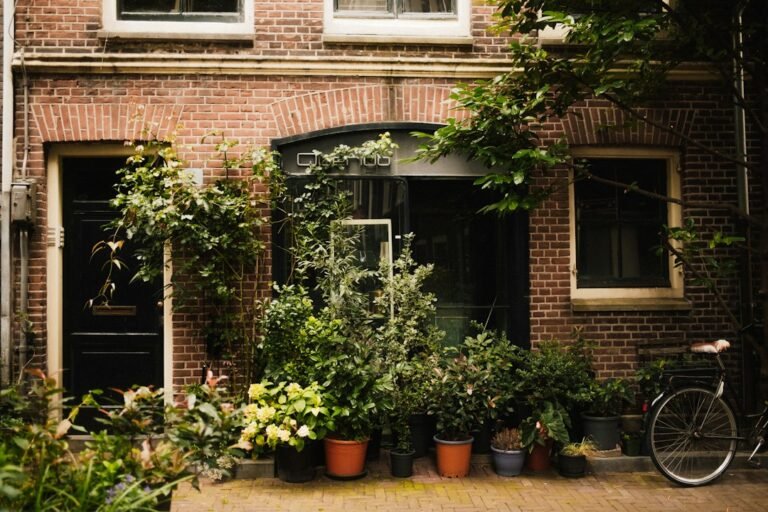
Which plant is good for home entrance? For most Indian homes, a snake plant is the safest first choice for the main door, because it copes with dim corridors, irregular watering and heat. Money plant, jade plant and tulsi are the next most popular picks, and the right one depends mainly on how much light your entrance gets.
The door is the first thing guests see and the place you pass every day, so a plant there gets noticed quickly when it struggles. This guide matches plants to the kind of entrance you actually have: a dark apartment landing, a semi-shaded verandah or a sunny gate. It also covers the Vastu beliefs many families follow, pet safety, and a simple care routine.
Quick answer: best plants for the main door
Start by checking the light. Stand at your door at noon. If you can comfortably read a newspaper without switching on a light, the spot has bright indirect light. If you cannot, it is a low-light entrance. If the sun falls directly on the spot for three hours or more, it is a sunny entrance.
- Low-light flat entrance or lift lobby: snake plant, money plant, aglaonema.
- Bright verandah or covered porch: jade plant, areca palm, peace lily, lucky bamboo.
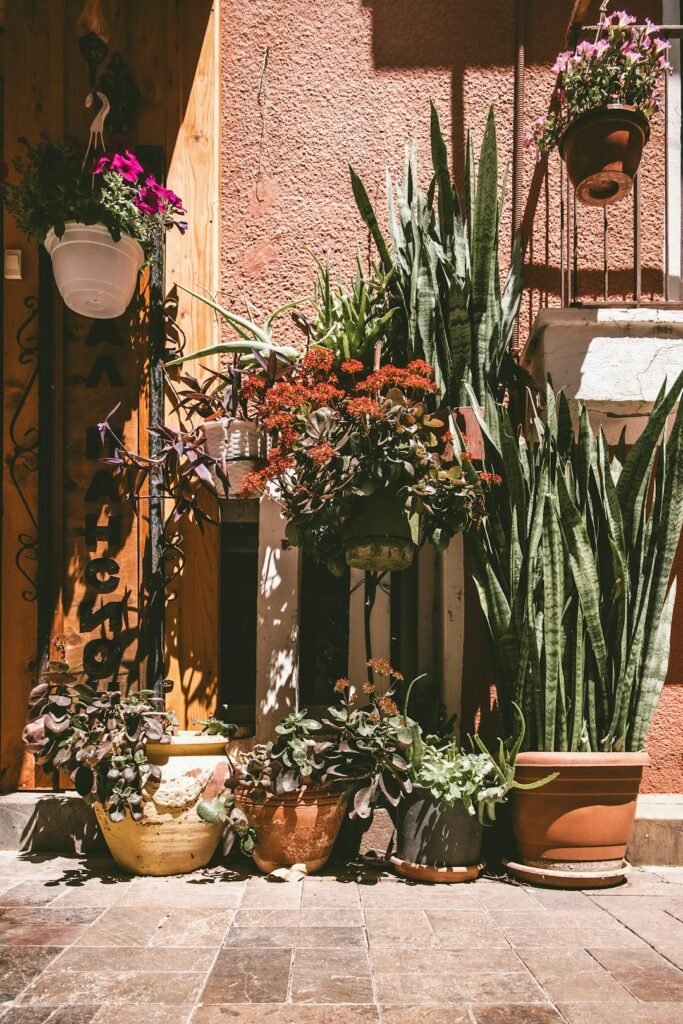
- Sunny gate, steps or open courtyard: tulsi, madhu kamini, hibiscus, jade plant.
Plants for home entrance at a glance
| Plant | Entrance light it handles | Watering at the door | Pet safe? | Why people choose it |
|---|---|---|---|---|
| Snake plant (Sansevieria) | Low to bright, some direct sun | Every 2 to 4 weeks | No (ASPCA: toxic) | Upright, tidy, very forgiving |
| Money plant (pothos) | Low to bright indirect | When the top 2 to 3 cm is dry | No (ASPCA: toxic) | Trailing green, linked to prosperity |
| Jade plant | Bright, ideally some direct sun | When the mix is fully dry | No (ASPCA: toxic) | Coin-shaped leaves, a “lucky” plant |
| Tulsi | Full sun, 4+ hours | Every 1 to 2 days in summer | Tulsi is not on the ASPCA list; sweet basil is listed non-toxic | Religious and household tradition |
| Areca palm | Bright indirect | When the top layer is dry | Yes (ASPCA: non-toxic) | Soft, tall look for wide entrances |
| Lucky bamboo | Bright indirect, no harsh sun | Top up water weekly | No (ASPCA lists Dracaena as toxic) | Compact, popular gift plant |
| Peace lily | Medium to bright indirect | When leaves just begin to soften | No (ASPCA: toxic) | White flowers in shade |
| Aglaonema | Low to medium | When the top layer is dry | Keep out of reach of pets | Coloured leaves without sun |
| Madhu kamini | Full sun outdoors | Every 1 to 3 days in summer | Not on the ASPCA list | Fragrant white flowers at the gate |
9 plants that are good for the home entrance
1. Snake plant: best for dark apartment entrances
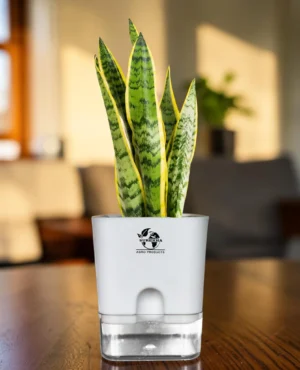
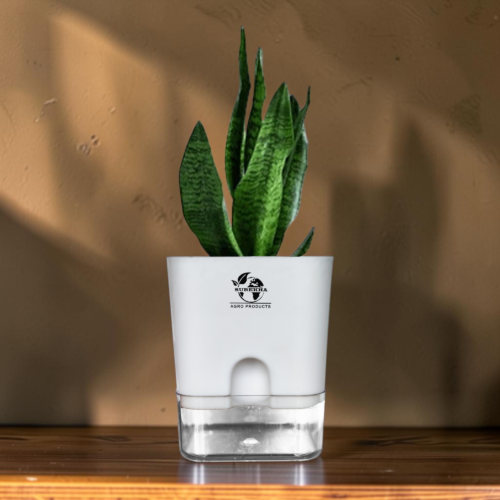
Snake plant is the plant we would suggest first for a flat door that opens onto a corridor. Its stiff, upright leaves fit narrow spaces beside a door frame, it stores water in its leaves, and it keeps looking neat even when light is poor. The main way people lose it at the door is by overwatering, especially in the monsoon when the corridor stays humid. Water only when the potting mix is dry right through, which may be every 2 weeks in April and May and once a month in December and January.
If you want a little brightness at a dull entrance, the yellow-edged Golden Hahnii is a compact rosette that suits a shoe-rack top or a small stand. Read our snake plant care guide for India for repotting and soil details.
2. Money plant: best for trailing green near the door
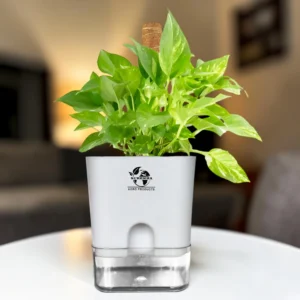
Money plant (golden pothos) is the plant most Indian families already associate with the entrance. It grows in low to bright indirect light, can trail from a wall shelf or climb a moss stick, and roots easily from cuttings. At the door, keep it out of afternoon sun, which scorches its leaves, and wipe dust off the leaves every couple of weeks because corridors collect a lot of it. Our money plant benefits article explains which claims about this plant hold up and which do not.
3. Jade plant: best for a bright porch or window beside the door
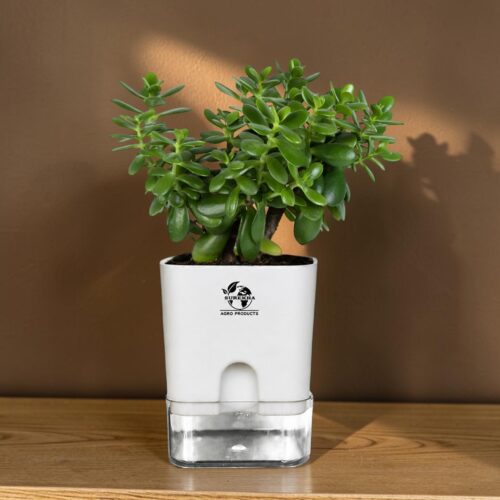
Jade plant is a slow-growing succulent with thick, rounded leaves, often called a “good luck” or “money tree” plant. University of Wisconsin–Madison Extension notes that jade does best with four or more hours of direct sun and will only survive in bright indirect light. So jade suits an entrance with a window, an open porch or a sunny step, not a closed corridor. Water when the mix is completely dry and use a pot with a drainage hole. For more, see jade plant benefits and Vastu beliefs.
4. Tulsi: best for a sunny gate, courtyard or step
Tulsi at the entrance is a long household tradition in many parts of India. It needs sun to stay bushy, so it belongs outside the door, at a gate or in a courtyard, rather than inside a dark landing. TNAU Agritech describes tulsi as a hardy plant suited to tropical and subtropical climates that grows on most soils except saline, alkaline or waterlogged ones. In pots, that means a free-draining mix and a hole at the bottom. Pinch the flower spikes when they appear to keep more leaves coming.
5. Areca palm: best for wide entrances and foyers
If your entrance has room, an areca palm adds height and a soft, feathery look. It needs bright indirect light and steady moisture, and dislikes both a dark corner and a sun-baked step. It is also one of the few entrance plants that ASPCA lists as non-toxic to dogs and cats. Our areca palm care guide covers brown tips and repotting.
6. Lucky bamboo: best for a small table or shelf by the door
Lucky bamboo is not a true bamboo; it is a Dracaena. It fits on a key table or console near the door and grows in water or soil. Keep it out of direct sun, change or top up the water regularly, and use filtered or stored tap water if your supply is very hard. See lucky bamboo care in India.
7. Peace lily: best for flowers in a shaded entrance
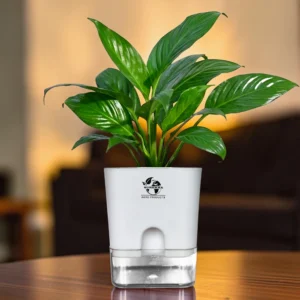
Peace lily is one of the few plants that flowers in medium indirect light, which makes it useful for a covered verandah. It droops visibly when thirsty and recovers after watering, so it tells you when it needs attention. It is toxic to cats and dogs, so skip it if your pets wander near the door. See peace lily care in India.
8. Aglaonema: best for colour without sun
Red and pink aglaonema varieties add colour to a low-light landing where flowering plants fail. Water when the top layer of mix is dry and avoid cold draughts in north Indian winters. Read aglaonema plant care for more.
9. Madhu kamini: best for fragrance at an outdoor gate
For an independent house with a sunny gate, madhu kamini (orange jasmine) gives glossy leaves and sweet-scented white flowers, and can be trimmed into a neat shrub in a large pot. It needs full sun to flower well. See our madhu kamini plant care guide.
How to choose the right entrance plant: 5 steps
- Measure the light. Use the newspaper test above, or note how many hours direct sun reaches the spot. Match the plant to the light, not the other way round.
- Measure the space. Leave the door swing and walking path clear. A narrow landing suits an upright snake plant; a trailing money plant suits a wall shelf.
- Check who passes by. If children or pets play near the door, choose areca palm, or put toxic plants on a raised stand.
- Pick the right pot. Use a pot with a drainage hole or a self-watering pot with a reservoir, and a saucer so water does not stain the floor.
- Plan for weather. Outside doors face heat in May, driving rain in July and cold nights in north India in January. Choose a plant that can take what your door faces, or plan to move it.
Entrance plants and Vastu: what people believe
Many families choose entrance plants according to Vastu Shastra. These are cultural and religious beliefs, not scientific findings, and different practitioners give different advice. The ideas most commonly repeated are:
- Tulsi near the entrance or in the courtyard, often on the north or east side, is widely treated as auspicious.
- Healthy, green plants with rounded leaves (money plant, jade) are believed to invite prosperity; dry or dying plants at the door are considered a bad sign.
- Thorny plants such as cactus are often advised against at the main entrance, and plants with milky sap are avoided by some families.
- Plants should not block the main door.
If you follow Vastu, the practical overlap is simple: a healthy plant that suits the light, kept clean and not blocking the door. A struggling plant is a poor choice by either standard. For what snake plant can and cannot do in a home, see snake plant benefits.
Indoor vs outdoor entrance: seasonal care across India
Summer (March to June)
Outdoor doors in north and central India can get very hot. Move jade and tulsi out of the harshest afternoon sun if leaves start to scorch, and check pots daily. Indoor landings stay cooler, but water snake plant a little more often than in winter.
Monsoon (June to September)
Rain splash and humid corridors cause most root rot at the door. Lift pots onto feet or a stand so they never sit in water, empty saucers after rain, and cut watering for snake plant and jade sharply. In Kerala, coastal Karnataka and the Northeast, move succulents under cover.
Winter (November to February)
Growth slows. Water less, stop feeding, and keep tropical plants such as aglaonema and peace lily away from cold draughts under the door in Delhi, Punjab and Uttar Pradesh. In south India most entrance plants keep growing slowly through winter.
Common entrance plant problems and fixes
| Problem | Likely cause at the door | What to do |
|---|---|---|
| Soft, mushy base (snake plant, jade) | Overwatering, saucer full of water | Stop watering, remove rotten parts, repot in dry, gritty mix |
| Pale, stretched growth | Too little light | Move closer to light, or switch to a low-light plant |
| Brown, crispy leaf patches | Afternoon sun or hot wind | Shift to bright shade |
| Dusty, dull leaves | Corridor and road dust | Wipe with a damp cloth every 2 weeks |
| White cottony spots | Mealybugs | See our mealybug guide |
| Yellow leaves on money plant | Watering too often or too rarely | See money plant yellow leaves |
Pet and child safety at the door
The entrance is where dogs wait and toddlers play, so this matters more here than in a bedroom. According to the ASPCA, snake plant (mother-in-law’s tongue), golden pothos, jade plant, peace lily and Dracaena species (which include lucky bamboo) are toxic to dogs and cats. Areca palm is listed as non-toxic, as is sweet basil, a close relative of tulsi (tulsi itself is not on the list). If you have pets that chew leaves, choose areca palm for the floor and put other plants on a stand or wall shelf out of reach. If you think a pet has eaten part of a toxic plant, call your vet.
What about “air purifying” entrance plants?
You will often read that entrance plants clean the air coming into your home. The 1989 NASA study tested plants in small sealed chambers. A 2019 review by Cummings and Waring in the Journal of Exposure Science & Environmental Epidemiology concluded that, in real rooms, normal ventilation removes pollutants far faster than a few potted plants. Choose an entrance plant because it looks good and suits the spot, not to purify air.
How we send entrance plants
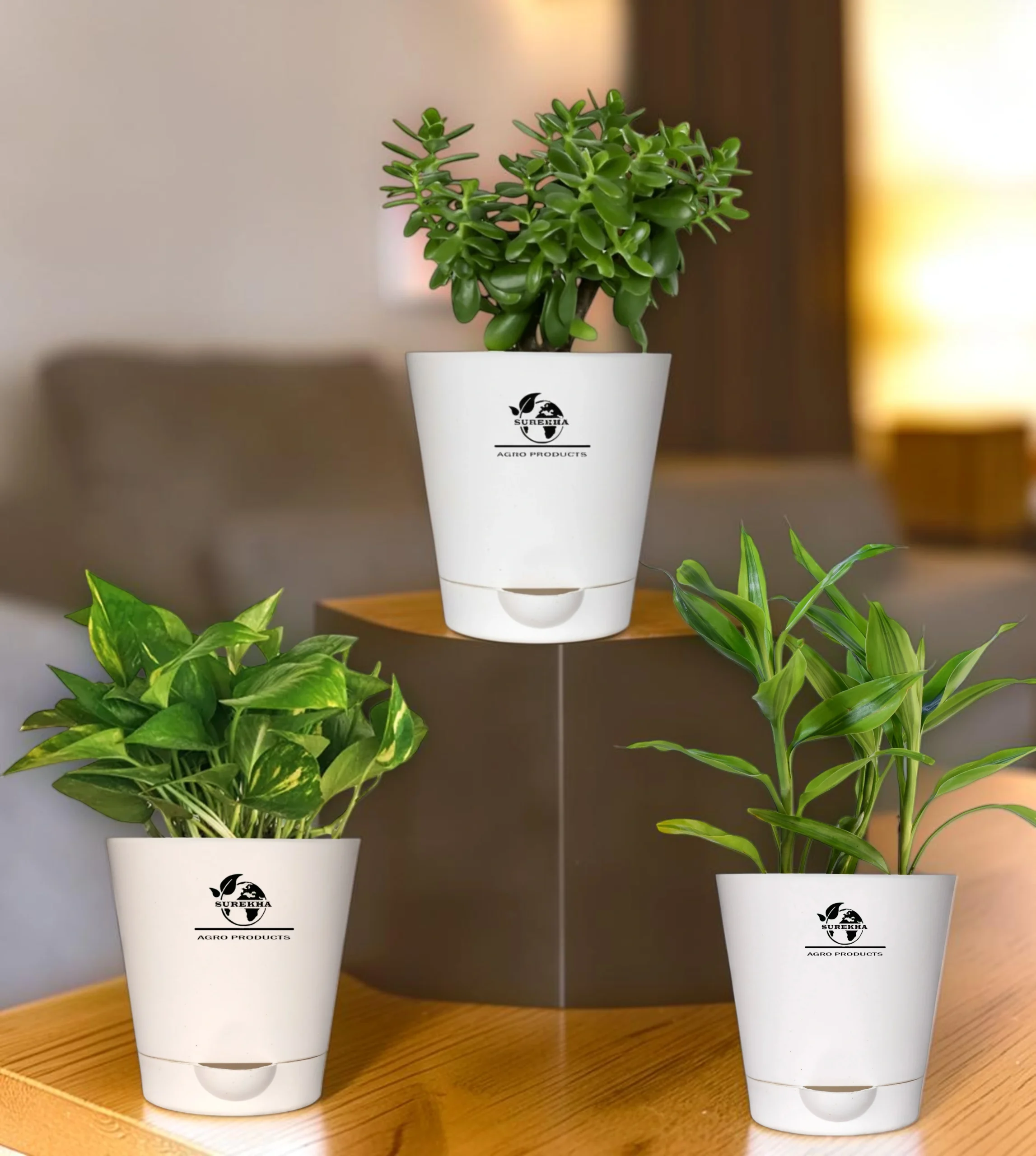
Our snake plant, jade plant and Lucky Plants Combo listings come in self-watering pots with a clear water reservoir at the base. At a door, that reservoir helps when you are away for a few days. For succulents such as snake plant and jade, keep the reservoir mostly empty and water only when the mix is dry; read how to use self-watering pots before you fill it.
Frequently asked questions
Which plant is good for home entrance as per Vastu?
Tulsi, money plant and jade plant are the plants most often suggested in Vastu for the entrance, along with healthy green foliage plants in general. These are traditional beliefs rather than scientific findings. Whatever you choose, keep it healthy and do not let it block the door.
Which plant is best for the main door inside a flat?
A snake plant is the most reliable choice for a flat door that opens onto a dim corridor, because it handles low light and infrequent watering. Money plant and aglaonema are good alternatives.
Can I keep a money plant at the main entrance?
Yes. Money plant grows well in low to bright indirect light, so most covered entrances suit it. Keep it out of afternoon sun, water when the top few centimetres of soil are dry, and keep it away from pets that chew leaves.
Which plants should not be kept at the home entrance?
From a care point of view, avoid sun-loving plants in a dark corridor and shade plants on a sun-baked step. Many people who follow Vastu also avoid cactus and other thorny plants at the main door. Avoid toxic plants at floor level if pets or small children use the entrance.
Is tulsi good at the entrance?
Yes, if the spot gets at least four hours of sun. Tulsi kept in a dark landing gets thin and weak. Place it outside the door, at a gate or in a courtyard instead.
How often should I water plants at the entrance?
It depends on the plant and the season. Snake plant and jade need water only when the mix is fully dry, roughly every 2 to 4 weeks. Tulsi and madhu kamini in sun may need water every day or two in summer. Always check the soil with a finger before watering.
Conclusion
The best plant for your home entrance is the one that suits its light. For a dark flat door, choose a snake plant; for a bright porch, jade or areca palm; for a sunny gate, tulsi or madhu kamini. Add Vastu preferences if they matter to your family, keep pets in mind, and give the plant a pot that drains well.
Written by the Surekha Agro Products plant care team. Last updated 16 November 2026.
Sources
- University of Wisconsin–Madison Extension, Jade Plant, Crassula ovata.
- TNAU Agritech Portal, Medicinal Crops: Tulsi.
- ASPCA Animal Poison Control: Mother-in-Law’s Tongue, Golden Pothos, Jade Plant, Peace Lily, Ribbon Plant (Dracaena), Areca Palm, Basil.
- Wolverton, Johnson and Bounds (1989), A Study of Interior Landscape Plants for Indoor Air Pollution Abatement, NASA.
- Cummings and Waring (2019), Potted plants do not improve indoor air quality, Journal of Exposure Science & Environmental Epidemiology.