People search for jade plant benefits for two different reasons. Some want to know whether a jade plant (Crassula ovata) is worth buying as an easy, long-lived houseplant. Others have heard it brings money and good luck and want to know if that is true. This guide covers both, and keeps them separate: the practical benefits you can count on, the cultural beliefs many Indian families hold, and the popular claims (like “it gives oxygen all night”) that need a reality check.
Quick answer
The real benefits of a jade plant at home are practical: it is a slow-growing succulent that stores water in its leaves, stems and roots, so it forgives missed waterings, suits small pots and warm, dry Indian homes, can live for many years, and is very easy to multiply from cuttings. In Vastu and Feng Shui it is regarded as a symbol of prosperity, which is a cultural belief rather than something science can test. Its effect on indoor air is very small, and it is toxic to cats and dogs, so keep it out of their reach.
Jade plant benefits at a glance
| Benefit or claim | What is true | How strong is it? |
|---|---|---|
| Low maintenance | Stores water in leaves, stems and roots; tolerates neglect and missed waterings | Well supported by extension services |
| Long-lived, tree-like plant | Slowly forms a thick, woody trunk; can be trained like a bonsai | Well supported |
| Easy to propagate and gift | Roots readily from stem or leaf cuttings | Well supported |
| Suits Indian homes | Likes warm, dry indoor air and a few hours of sun; dislikes waterlogging | Well supported, with monsoon care |
| Calming, feel-good effect | Caring for indoor plants has been linked to lower stress in small studies | Modest evidence for plants in general |
| Wealth and good luck | A Vastu / Feng Shui belief; it is often called “money plant” or “lucky plant” | Cultural belief, not testable |
| Purifies air / gives oxygen at night | Any effect of one pot on room air is tiny compared with normal ventilation | Weak; do not buy it for this |
What is a jade plant?
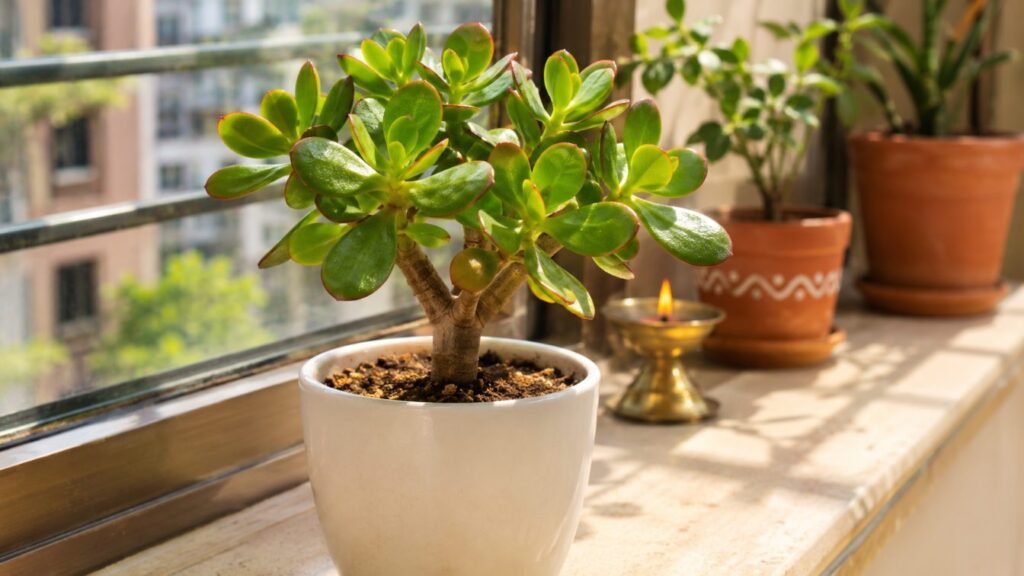
Jade plant is a succulent shrub from South Africa in the stonecrop family, Crassulaceae. The name Crassula means “thick”, and ovata means “egg-shaped”, which describes its plump, oval leaves. It has also been sold under older names such as Crassula argentea, and goes by common names like friendship plant, lucky plant, money tree and, confusingly for Indian buyers, “money plant”. It is not the same as the trailing pothos that most Indian homes call money plant (see our money plant care guide for that one).
In the wild it grows into a rounded shrub up to about 6 feet tall on dry, rocky hillsides. In a pot it stays much smaller and grows slowly, which is a large part of its appeal.
7 practical benefits of a jade plant at home
1. It forgives missed waterings
The single biggest benefit of a jade plant is how little it asks of you. University of Wisconsin–Madison Extension describes it as an easy-to-grow succulent that stores water in its leaves, stems and roots and tolerates neglect. If you travel for a week, forget a watering during exams, or live in a flat where the plant sits out of sight, a jade plant usually copes far better than leafy plants like peace lily or calathea.
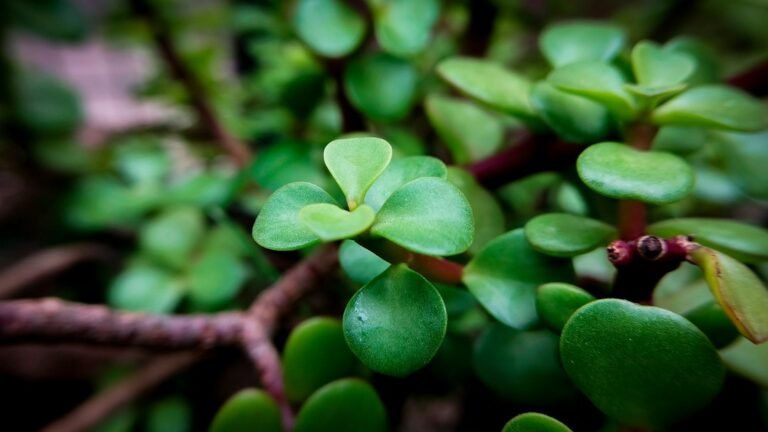
The flip side matters just as much: too much water is what usually kills it. Overwatering makes leaves drop and stems rot, so the “benefit” only holds if you let the mix dry out between deep waterings.
2. It is happy in warm, dry Indian homes
Many houseplants sulk in dry air from fans and coolers. Jade plant is the opposite: it likes the warm, dry conditions found in most homes and grows well with restricted root space in a container. That makes it a good fit for a sunny windowsill in Delhi, a balcony ledge in Pune or a west-facing room in Hyderabad, provided it gets enough light.
3. It lives for years and turns into a “little tree”
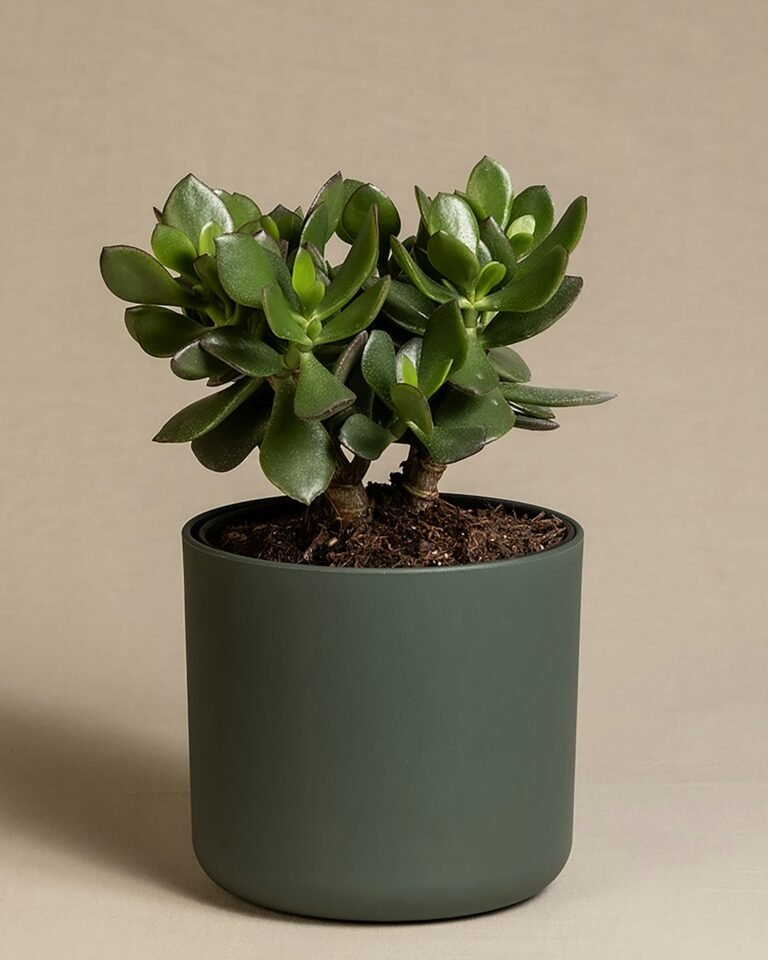
Young stems are green and succulent but slowly turn brown and woody, and older plants develop a gnarled trunk that looks much older than it is. With spring pruning, the trunk thickens and the plant can be shaped into a miniature tree or a succulent bonsai. A single small jade plant can stay with a family for many years, which is one reason it is so often given as a housewarming or Diwali gift.
4. One plant can become many
Jade plant is especially easy to propagate from stem or leaf cuttings. Let a cutting dry for a few days so the cut end seals, then set it in a fairly dry, well-drained mix. That means one healthy plant can supply gifts for friends and family, or fill a row of small pots on your own balcony, at almost no cost.
5. It handles small pots and small spaces
Jade plants can grow for years while slightly root-bound, so they do not need a big container or frequent repotting. Repotting every two to three years, or when the plant becomes top-heavy and starts tipping, is usually enough. That suits study tables, kitchen windows and narrow balcony railings where space is tight.
6. It can flower
Mature jade plants can produce clusters of small white or pink, star-shaped flowers in response to long nights, especially after a cool, dry spell. In most Indian homes flowering is not guaranteed, and NC State Extension notes it does not usually bloom indoors, but a plant kept in strong light on a terrace through the cooler months has a better chance. Treat flowers as a bonus, not a promise.
7. Looking after it can be calming
A small Korean study published in the Journal of Physiological Anthropology found that young adults felt more comfortable and soothed after transplanting an indoor plant than after a computer task, with lower diastolic blood pressure. That study was about indoor plants in general, not jade specifically, and it was small, but it supports what many plant owners already feel: a few minutes of plant care is a pleasant break from screens.
Jade plant benefits in Vastu and Feng Shui (cultural beliefs)
A large share of searches for jade plant benefits in India are really about luck. In Vastu Shastra and Feng Shui traditions, the jade plant’s round, coin-like leaves are associated with wealth and growth, which is why it is often called a “money tree” or “lucky plant” and placed near entrances, cash counters or work desks. Popular advice usually suggests keeping it healthy and in a bright spot, and many people prefer to place it near the entrance or in the south-east part of the home.
These are beliefs and traditions, not scientific findings. A jade plant will not change your finances. What it can do is give you a healthy, attractive plant that you enjoy looking after, and if keeping one by the door makes your home feel more welcoming, that is a reasonable reason to have it. A practical tip that fits both views: choose the spot for light first. A jade plant in a dark corner becomes leggy and weak, which helps nobody’s Vastu.
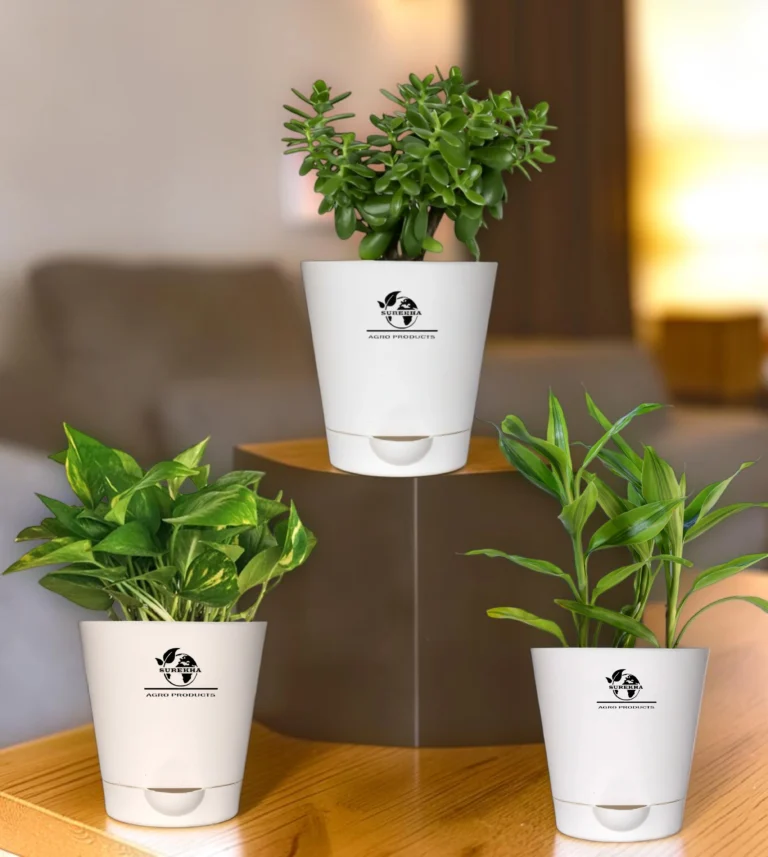
If you are giving plants for Diwali or a griha pravesh, the Lucky Plants Combo brings together the three plants most often linked with prosperity in Indian homes. Read our guide to lucky bamboo care to keep the bamboo healthy alongside it.
Does a jade plant purify air or give oxygen at night?
This is the most common claim, and the honest answer is: not in a way you would notice.
- The NASA study. The 1989 NASA “A Study of Interior Landscape Plants for Indoor Air Pollution Abatement” work tested plants in small sealed chambers. Jade plant was not one of the headline plants, and sealed-chamber results do not translate directly to a ventilated home.
- Later research. Cummings and Waring (2019) reviewed 12 chamber studies and 196 results. They estimated that you would need 10 to 1,000 potted plants per square metre of floor to match the air-cleaning effect that normal outdoor air exchange already provides. One jade plant on a shelf will not measurably clean a room.
- The night-oxygen idea. Jade belongs to the Crassulaceae, the family that gave “crassulacean acid metabolism” (CAM) its name. CAM plants save water by taking in carbon dioxide mainly at night. That is a real and interesting adaptation, but the amount of gas a single small pot exchanges is tiny relative to the air in a bedroom. It is not a reason to keep one for better sleep or breathing.
If cleaner indoor air is your goal, ventilation, cross-breeze, and reducing smoke and dust sources do far more. Keep a jade plant for its looks, toughness and meaning, not as an air purifier. We take the same honest approach in our snake plant benefits article.
Is a jade plant safe for pets and children?
This is the one real drawback. The ASPCA lists jade plant (Crassula argentea, an older name for the same plant) as toxic to dogs, cats and horses, with signs such as vomiting, depression and incoordination. NC State Extension also tags it as a problem for dogs and cats.
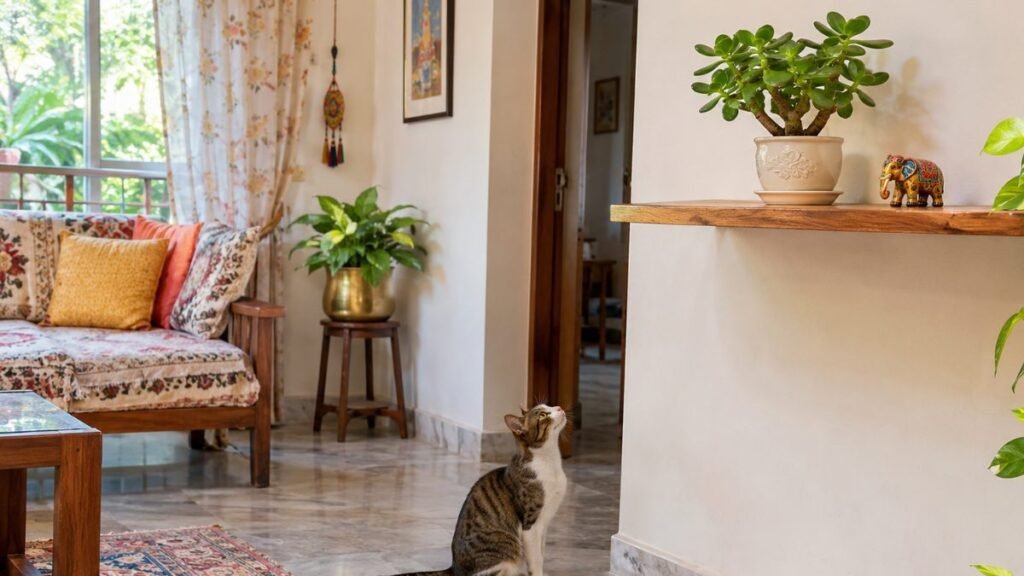
- Place it on a high shelf, a wall-mounted planter or a balcony railing your pets cannot reach.
- Pick up fallen leaves, since puppies and kittens may chew them.
- If you suspect your pet has eaten part of the plant, contact your veterinarian promptly.
- Teach small children that garden plants are not for tasting, and keep the pot out of crawling reach.
How to get the most from a jade plant in India
A jade plant only delivers its benefits if it stays healthy. These steps cover the basics; for full detail see our jade plant care guide for India.
- Give it light. Aim for four or more hours of direct sun, such as an east- or south-facing window or a bright balcony. In low light the leaves turn deep green and the stems droop and stretch.
- Use a fast-draining mix. A cactus or succulent mix works, or add extra perlite or coarse sand to ordinary potting mix. Always use a pot with a drainage hole.
- Water deeply, then wait. Water thoroughly, let excess drain away, and water again only when the mix has dried out. Never leave the pot standing in water.
- Feed lightly in the growing season. Fertilise roughly every two months during active growth, or use a diluted fertiliser more often. Skip feeding in the cool months.
- Prune in spring. Cut stems back to a side branch to keep the plant compact and encourage a sturdy trunk. Root the cuttings to make new plants.
- Check for mealybugs. White, cottony insects are the most common pest. Wipe them off with a cotton bud dipped in rubbing alcohol and repeat over several days.
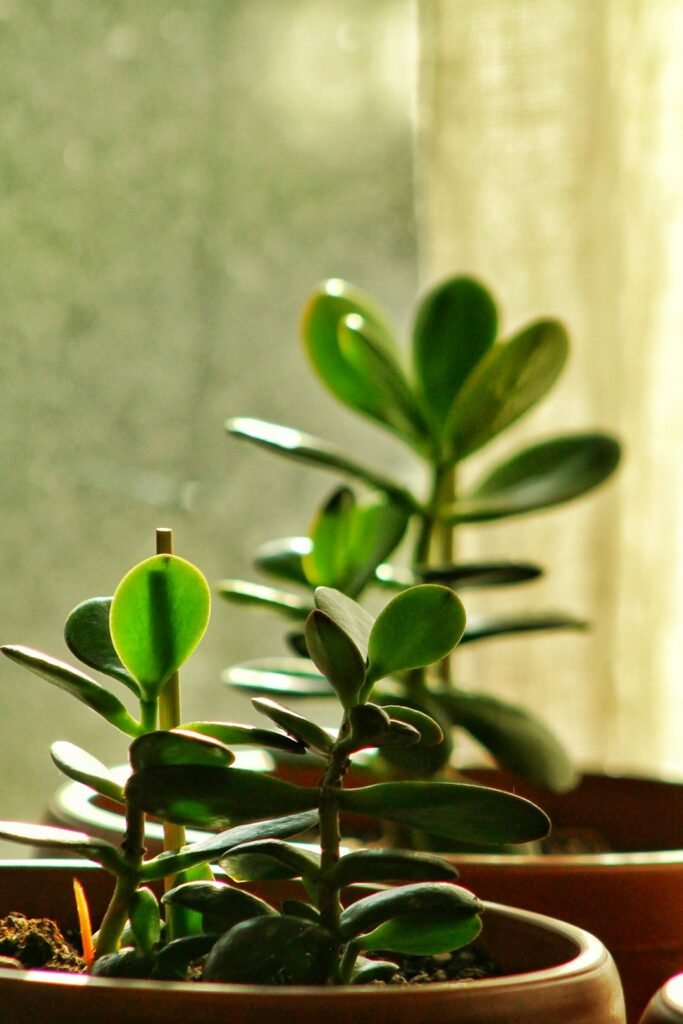
Our guides on watering indoor plants and repotting your first indoor plant walk through these steps in more detail.
Seasonal care across India
| Season | What to do |
|---|---|
| Summer (March–June) | Active growth. Water when the mix is dry; in hot north and central India, shade from harsh afternoon sun on open terraces to avoid scorched leaves. |
| Monsoon (June–September) | The riskiest season. Move pots out of the rain, water much less, and check that the drainage hole is not blocked. Soggy mix plus humidity leads to rot. |
| Post-monsoon (October–November) | Good time for pruning in the south and for taking cuttings. Resume normal watering as the mix dries. |
| Winter (December–February) | Semi-dormant. Keep the mix on the dry side. In north India, protect from frost and bring pots indoors on cold nights; cool, dry nights may encourage flowers. |
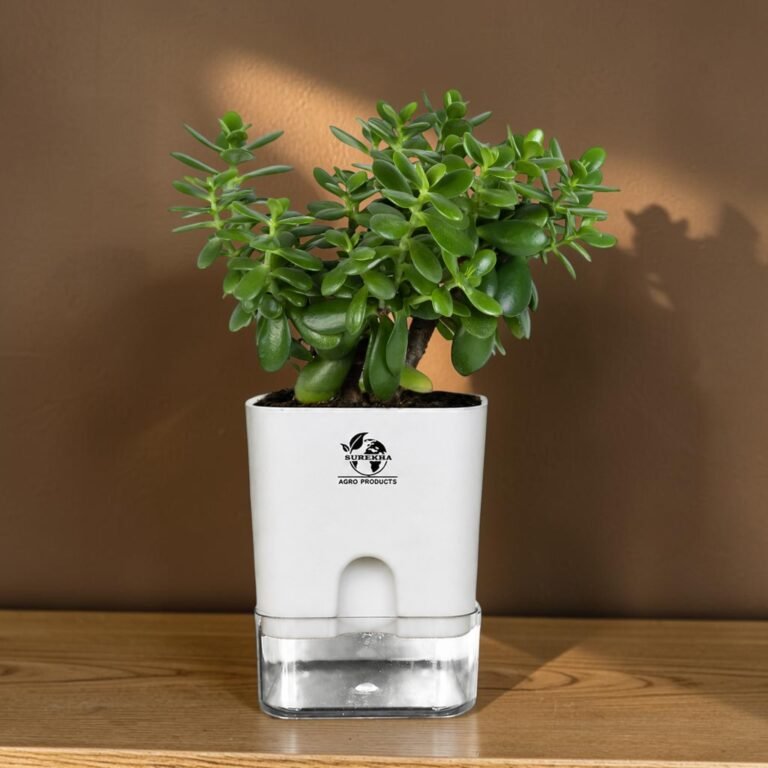
If you are buying your first one, the Surekha Jade Plant arrives potted and ready for a bright window. Because jade dislikes constantly wet roots, do not keep its self-watering reservoir topped up all the time; fill it, let it empty fully, and wait for the mix to dry before refilling.
Common jade plant problems that cancel the benefits
| What you see | Likely cause | What to do |
|---|---|---|
| Leaves dropping, stem soft or black at the base | Overwatering or poor drainage | Stop watering, check roots, cut away rot, repot in dry succulent mix; root healthy cuttings as backup |
| Wrinkled, thin leaves | Too dry for too long | Water deeply and let it drain; leaves usually plump up within days |
| Long, floppy stems with gaps between leaves | Too little light | Move to a brighter spot gradually, then prune back in spring |
| Brown, crispy patches on top leaves | Sudden move into strong sun | Acclimatise over 1–2 weeks; damaged leaves will drop and be replaced |
| White cottony clumps | Mealybugs | Wipe with alcohol on a cotton bud; repeat until clear; avoid harsh sprays on the leaves |
Frequently asked questions
What are the benefits of keeping a jade plant at home?
It is very low maintenance, tolerates missed waterings, suits warm and dry homes, lives for many years, can be shaped into a small tree and is easy to multiply from cuttings. Many families also keep it as a symbol of prosperity in line with Vastu and Feng Shui beliefs.
Is a jade plant lucky according to Vastu?
In Vastu and Feng Shui traditions, the jade plant is considered a symbol of wealth and good fortune because of its round, coin-like leaves. This is a cultural belief rather than a scientific fact. If you follow it, choose a spot that also gives the plant plenty of light so it stays healthy.
Does a jade plant give oxygen at night?
Jade belongs to the plant family that uses CAM photosynthesis, which involves taking in carbon dioxide mostly at night to save water. But a single potted plant exchanges so little gas compared with the air in a room that it will not noticeably change oxygen levels or air quality.
Can I keep a jade plant in the bedroom?
Yes, if the bedroom has a bright window with a few hours of direct sun. In a dim bedroom it will stretch and weaken. Keep it out of reach if you have cats or dogs, since it is toxic to them.
Is jade plant the same as money plant?
No. Jade plant (Crassula ovata) is a succulent with thick oval leaves and is sometimes called a money tree. The trailing vine most Indian homes call money plant is pothos (Epipremnum aureum), a different plant with different care needs.
Is jade plant poisonous to cats and dogs?
Yes. The ASPCA lists it as toxic to dogs, cats and horses, with possible vomiting, depression and incoordination. Keep it out of reach and contact a vet if your pet chews it.
How long does a jade plant live?
With good light and careful watering, a jade plant can live for many years and slowly develop a thick, woody trunk. Old plants are often passed between generations or propagated from cuttings to keep the same plant going.
Conclusion
The most reliable jade plant benefits are the everyday ones: a tough, attractive succulent that forgives busy schedules, fits small spaces and can be shared through cuttings for years. Its place in Vastu and Feng Shui gives it extra meaning for many Indian families, and that is a fine reason to keep one, as long as you see it as a tradition rather than a guarantee. Skip the air-purifier and night-oxygen claims, keep it away from pets, and give it bright light and well-drained soil. For more easy options, see our list of best indoor plants for beginners and drought-tolerant plants for India.
Sources
- University of Wisconsin–Madison Extension, Jade Plant, Crassula ovata (revised April 2025)
- NC State Extension Gardener Plant Toolbox, Crassula ovata
- ASPCA Animal Poison Control, Jade Plant
- Wolverton et al. (1989), A Study of Interior Landscape Plants for Indoor Air Pollution Abatement, NASA
- Cummings and Waring (2019), Potted plants do not improve indoor air quality: a review and analysis of reported VOC removal efficiencies, Journal of Exposure Science & Environmental Epidemiology
- Lee et al. (2015), Interaction with indoor plants may reduce psychological and physiological stress, Journal of Physiological Anthropology
- Bräutigam et al. (2017), On the Evolutionary Origin of CAM Photosynthesis, Plant Physiology