A rubber plant looks made for that empty living-room corner. The first thing to check is how much daylight reaches its leaves there. Rubber plant care in Indian homes starts with bright, filtered light, a pot that drains well and watering after the mix has begun to dry. Once those basics fit your home, the routine becomes much easier.
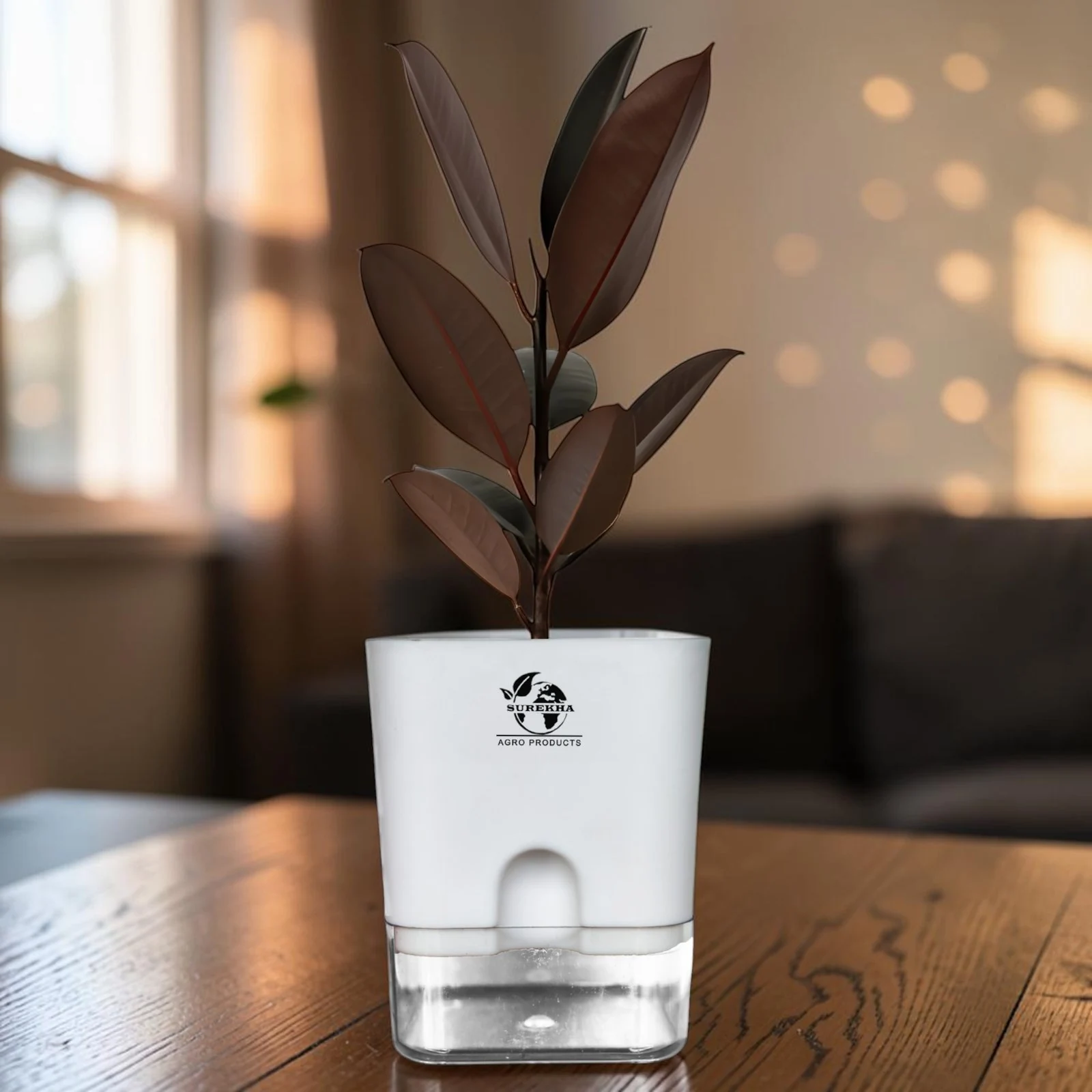
The rubber plant, Ficus elastica, earns its place through broad, glossy leaves and an upright shape. It can eventually become a substantial indoor plant, so give it room to grow rather than squeezing it between furniture. North Carolina Extension describes its distinctive leathery foliage and tree-like habit in its rubber plant profile.
Find a bright corner that works for the plant
Stand where you want to keep the pot and look towards the nearest window. Is daylight reaching that position, or does a deep balcony roof, curtain or neighbouring building block it for most of the day? A room can look bright while the plant’s corner remains shaded.
Clemson Extension recommends bright light for rubber plants and notes that morning light from an east-facing window can work well. Keep an eye on strong direct sun through exposed windows, especially during a hot afternoon. Start with filtered light and give the plant a stable position away from cold draughts. Source: Clemson rubber plant guide.
Leave space around the leaves and keep the pot clear of a door that regularly swings into it. An AC outlet blowing straight at the foliage is another reason to adjust the position. These small placement decisions make daily care more convenient too: you should be able to reach the mix and lift the pot or insert when needed.
Dark leaves or patterned leaves?
Both can make a striking indoor feature. Variegated plants have differently coloured patches on their leaves and generally need more light than green-leaved forms. The RHS ornamental fig guide recommends bright indirect light for these plants. Cream markings are a normal part of a variegated leaf; judge a change against that plant’s usual pattern.
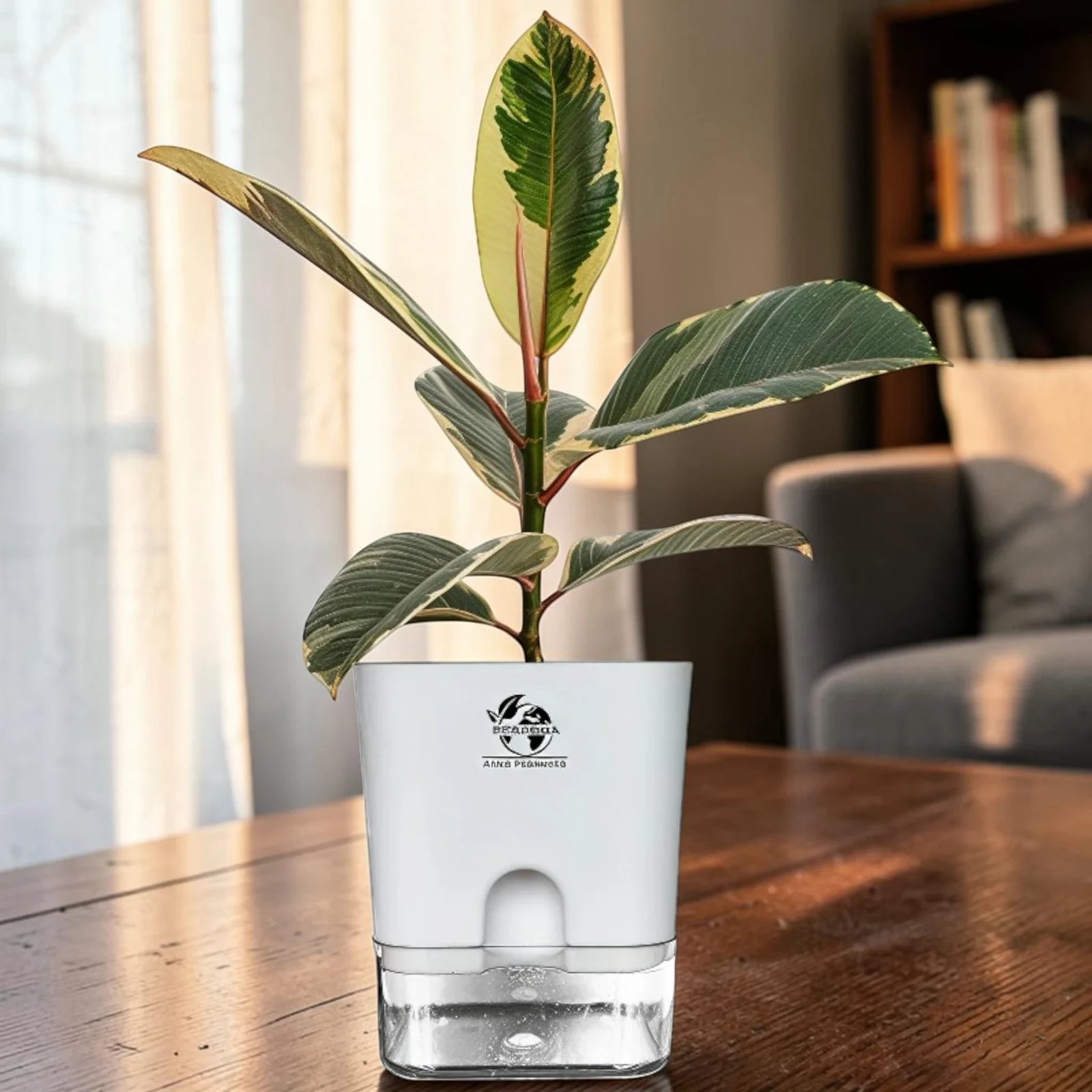
If you are choosing between them, view the current red rubber plant and variegated rubber plant listings for the plant and pot offered. Choose the leaf style you enjoy, then match its position to the available light. The catalog photographs show product appearance; individual live plants naturally vary.
Let the pot tell you when to water
Before reaching for the watering can, feel the mix. If it is still moist near the surface, give it more time. For a conventional pot with drainage holes, water thoroughly when needed and let the excess escape. Empty water trapped in a saucer or decorative outer pot. Clemson’s watering guidance recommends allowing the mix to dry slightly between waterings.
- 1 · Check
Mix still moist? Wait. - 2 · Water when ready
Mix has dried slightly? Water thoroughly. - 3 · Let it drain
Empty trapped excess water.
The interval will change with your room, weather, pot and mix. A small pot beside a bright window can behave differently from a large one in a shaded room. Check what is happening in yours rather than transferring a friend’s weekly routine.
If your planter has a reservoir, first understand how its insert, wick and overflow work. A reservoir does not make constant wetness suitable for every plant or mix. Our self-watering pot guide explains the setup and refill checks for that type of container.
Keep the leaves clean and the routine simple
Dust is easy to miss on a dark leaf. Support the leaf gently and wipe it with a soft damp cloth. North Carolina Extension recommends this simple cleaning method; it also lists mealybugs, scale and spider mites among possible pests. Look at leaf undersides and stem joints while you clean. Source: NC State Extension.
During active growth, use a suitable houseplant fertiliser according to its label, taking account of feed already in the mix. The RHS rubber plant profile ties feeding to the growing period. Slower growth in a dim or cool room is a reason to reassess conditions before adding more feed.
As the plant becomes taller, think about its eventual space. A stable, slightly larger pot may be needed when roots have outgrown the current one. The RHS describes modest increases in container size in its repotting guidance. Make pruning a planned job when the plant is growing well. Wear gloves when cutting stems: the milky sap can irritate skin. Keep the plant away from pets and young children likely to chew it. Source: Clemson handling guidance.
Adjust to your home as the seasons change
In a cool northern winter, check for cold air around windows and balcony doors at night. Growth and drying may slow, so inspect moisture before repeating your summer watering routine.
During a cloudy, humid or rainy spell, notice whether the usual position has become dimmer and the pot stays moist for longer. A sheltered balcony still needs protection from repeated soaking rain.
In a hot, dry room or an air-conditioned home, watch strong afternoon rays, hot glass and direct air blasts. Adjust the spot to protect the foliage while keeping useful daylight. These are ways to apply the plant’s light, warmth and drainage needs to Indian homes; the plant’s actual growth is more useful than a single nationwide care calendar.
When a leaf changes, check the conditions first
A fallen leaf is a clue to investigate. Look at the whole plant, moisture and recent changes before choosing an action.
| What you notice | A useful first check |
|---|---|
| Several yellowing leaves and persistently wet mix | Check drainage, trapped water and how often water is being added. |
| Leaves dropping after a cold spell | Check night-time draughts and temperature changes. |
| Weak or small new growth | Review light before increasing fertiliser. |
| One older lower leaf yellowing | Look for continuing leaf loss; occasional lower-leaf ageing can be normal. |
The RHS problem guide and NC State profile describe these possible causes. The same visible symptom can have different explanations, so the first check is a starting point rather than a diagnosis from a photograph.
Two quick questions before you choose a spot
Can a rubber plant live in a bedroom?
Yes, if the available light, space and temperature suit it. Judge the window position and practical access to the pot, rather than choosing by room name alone.
Should I keep it indoors or on a balcony?
A bright indoor position is a useful starting choice. On a balcony, consider direct afternoon sun, wind, rain and winter cold. Introduce a change in exposure gradually and watch the plant’s response. A sheltered position that worked in October may need another look when the weather changes.
A rubber plant can become a favourite part of a room through its leaves alone. Give it a suitable spot, learn how its pot dries and make changes for a clear reason. That is a routine you can build around the home you actually have.