To work out how to get rid of spider mites on indoor plants, confirm them under the leaves, separate the affected pot, and rinse the foliage thoroughly. Check again after washing and repeat when live mites remain. Choose any further treatment by its label and your plant’s condition.
What should you check first?
| What you notice | Next check | First action |
|---|---|---|
| Fine pale specks spreading across a leaf | Turn it over and inspect with a hand lens | Compare several affected leaves before choosing treatment |
| Delicate threads around leaf stalks or growing tips | Look for tiny moving specks near the threads | Separate the pot while you inspect |
| White cottony clumps at stem joints | Check for waxy insects inside the clumps | Use the mealybug identification guide |
| A brown edge or a yellow leaf without visible pests | Check moisture, light and recent changes as well | Avoid treating a symptom as proof of mites |
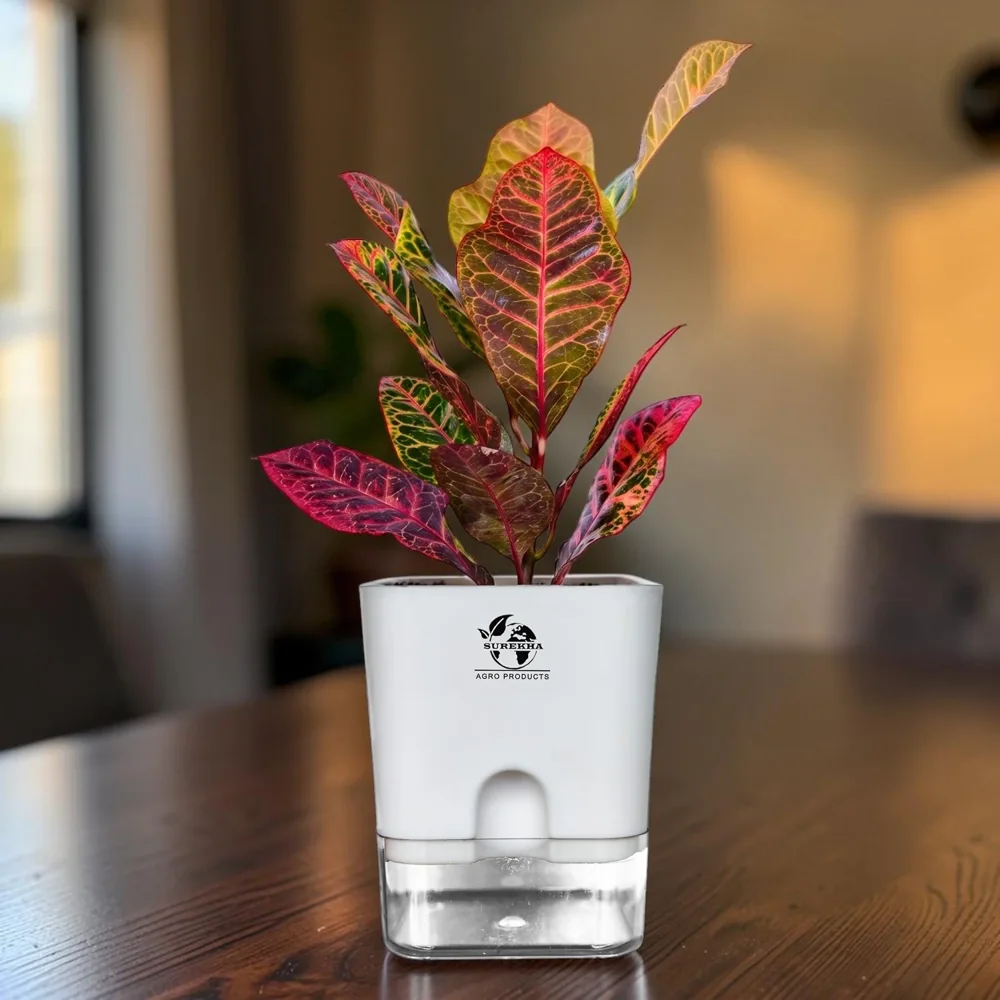
Spider mites are small plant-feeding relatives of spiders. Feeding leaves many tiny pale marks, often called stippling. A heavy infestation can leave foliage dull or bronzed. On a naturally variegated plant such as croton, compare the same leaf over time rather than judging the yellow colour alone. University of Minnesota Extension’s identification photos show the feeding pattern. Our croton care guide also helps you check light and watering when colour or leaf fall changes.
Confirm spider mites before washing the plant
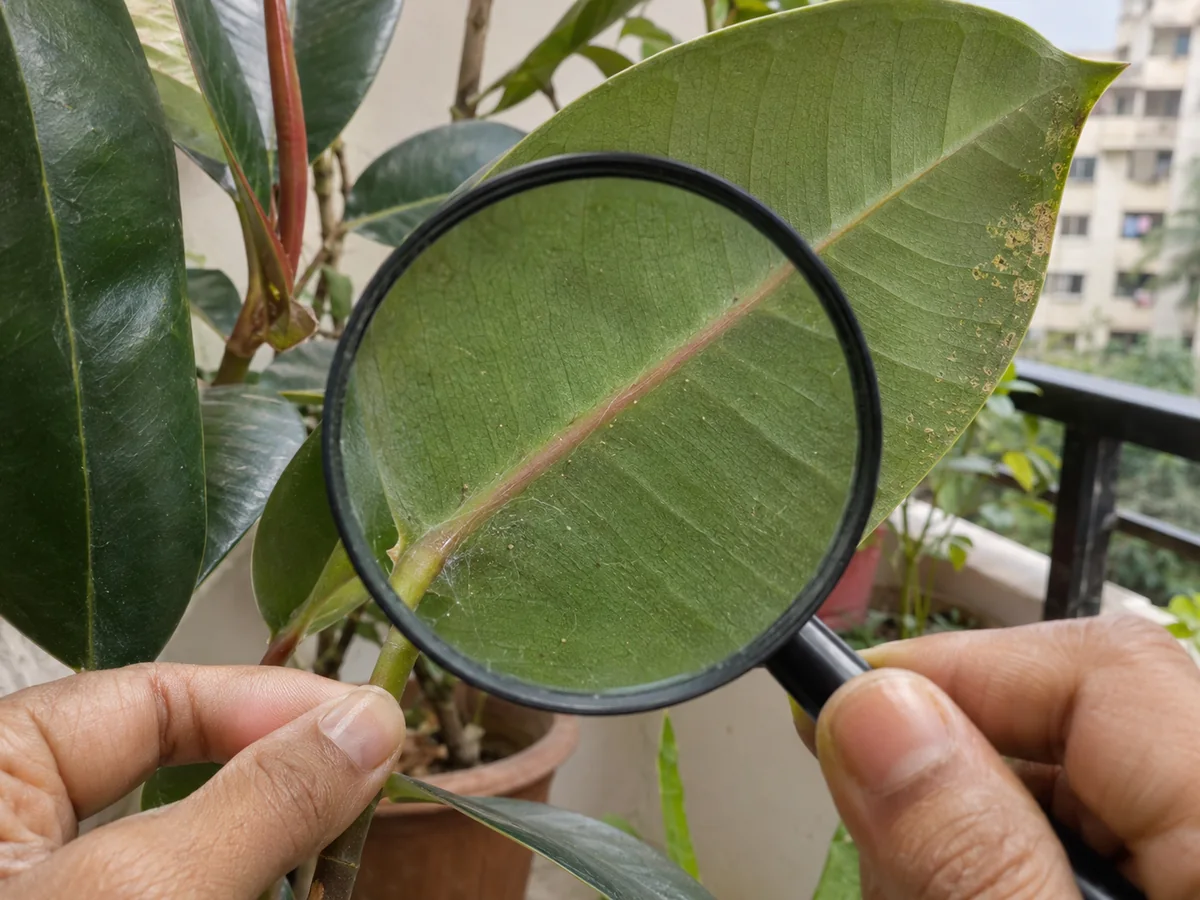
Bring the pot into good light and use a hand lens if you have one. Look beneath several affected leaves, along veins and near leaf stalks. Fine webbing, pale feeding marks and tiny crawling mites together give a stronger indication than any one sign. Mites can be present before obvious webs develop. The University of California IPM guide recommends checking the underside and using white paper to make movement easier to see.
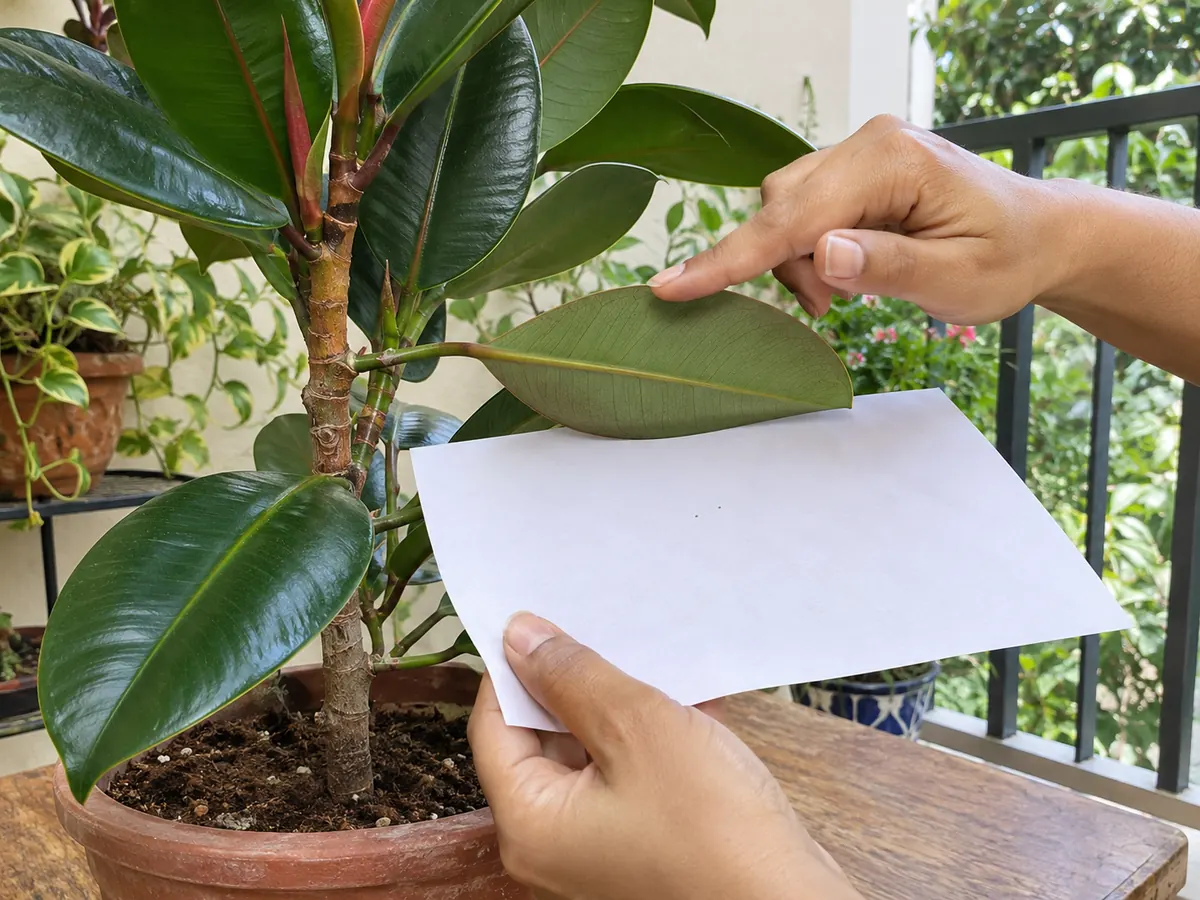
- Choose a leaf to test. Pick one with fresh speckling. Hold plain white paper underneath the leafy stem.
- Tap over the paper. Tap the stem gently, keeping the sheet close enough to catch what falls. Watch the specks with a hand lens. Dust stays still, while living mites crawl.
- Check another part of the plant. Repeat on a second affected shoot. If you cannot make out what is moving, take a close photo through the lens or seek help identifying a sample before adding a spray.
The paper test is a way to find small moving creatures. Identification still matters. Some mites are predators, and fine webbing can also come from an ordinary spider. University of Maryland Extension compares mite webbing, shed skins and feeding damage. Cottony deposits call for a different check. See our mealybug guide if that matches what you find.
How to get rid of spider mites with a first cleaning
Set out fresh water, a clean soft cloth, a hand lens, a loose cover for the potting mix and a place where runoff can drain. Put the affected plant apart from the rest, with its leaves clear of neighbouring plants. Inspect the pots that were touching it. Colorado State Extension explains how mites move between houseplants and why nearby plants need checking.
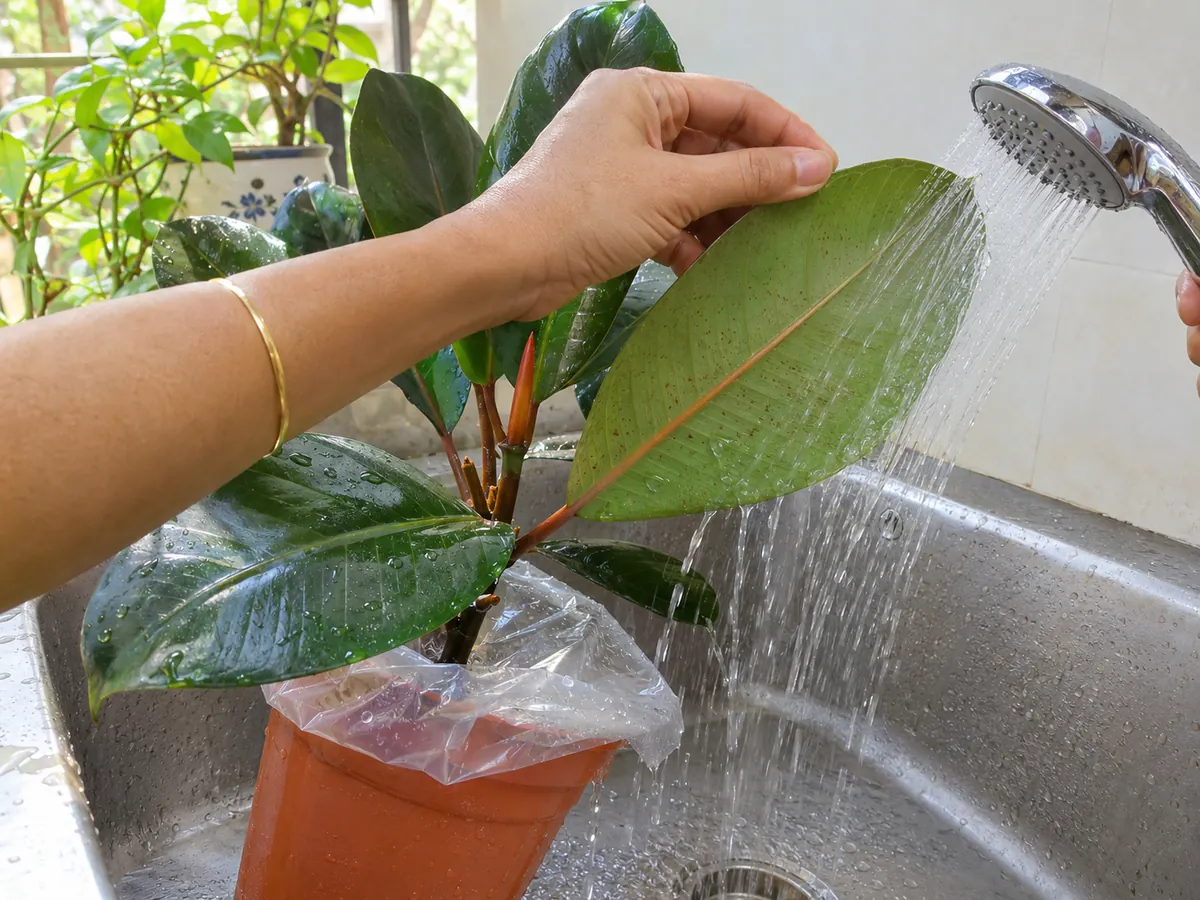
- Move it to a wash area. A utility sink, shower or sheltered balcony with drainage makes it easier to reach the foliage. Support the pot securely. Loosely cover the mix so washing the leaves does not repeatedly soak the root ball.
- Rinse the undersides. Lift leaves and direct water across the underside, leaf stalks and shoots. Use enough flow to dislodge pests, adjusting it so the leaf does not bend sharply or tear. Turn the pot to reach the far side.
- Wipe accessible broad leaves. Support each leaf underneath and use a damp soft cloth to remove remaining debris. Rinse or replace the cloth as it becomes dirty. Our leaf cleaning guide shows how to support foliage while cleaning.
- Drain and reinspect. Let excess water escape, remove the loose cover and check the saucer. Keep the plant separate in suitable light. Record where you found mites so you can inspect those same areas next time.
Iowa State Extension’s houseplant control guidance supports washing foliage to remove mites. Work carefully with tender new leaves. On a small plant, removing one badly affected leaf may make inspection easier, but keep enough functioning foliage to support recovery.
Check again and decide whether more treatment is needed
A first wash can reduce the population while leaving mites in missed places. Mississippi State Extension describes repeated washing at 3–5-day intervals as a practical option for small houseplants. Use that interval for a follow-up inspection and wash when mites remain. Check leaf undersides, the previously affected shoots and nearby pots. This interval is for water washing. Any pesticide has its own application directions. Mississippi State’s houseplant pest guide.
Judge progress by what you can observe. Fewer crawling mites and an absence of fresh webbing are encouraging. Keep comparing the same leaves and watch newly developing foliage. If live mites persist despite careful repeated cleaning, or the plant keeps losing leaves, ask a local nursery or plant clinic to confirm the pest and help you select the next step.
Some horticultural oils and insecticidal soaps can control mites when they contact them, but plant sensitivity, heat and the application site matter. Check that the actual product label covers spider mites, the plant and the intended indoor or outdoor use. Follow its dilution, repeat interval and precautions. Test the labelled product on a small portion first as directed and check for injury before treating the whole plant. The UC IPM houseplant guide treats labelled oils or insecticidal soaps as a later option after washing. Homemade detergent mixtures can injure leaves, as noted by Minnesota Extension.
Adjust the routine for your Indian home
- A warm, dry window or terrace. Check the pot for drying and give the plant the light its species needs. A stressed plant benefits from correcting its position and watering while you remove the mites. Move a newly washed shade plant into bright shelter if the balcony is hot.
- An air-conditioned room. Check whether the plant sits directly in the airflow. Move it clear of the vent and inspect the shelf beside it. An indoor location can stay dry even during humid weather outdoors.
- A humid or rainy balcony. Let foliage dry with gentle airflow after washing and keep the mix draining. Repeated misting can encourage leaf disease, according to Mississippi State Extension. Base your next action on the pest check and the plant’s condition.
A rubber plant’s broad leaves are relatively easy to support and inspect. On areca, work along individual leaflets and check where they join the frond. Calathea leaves need a gentler touch, especially as they unfurl. Return each plant to an appropriate care routine after washing. Our areca palm and Calathea care guides explain those differences.
Keep new introductions under observation
Check new plants separately before putting them into the collection, including leaf undersides and growing tips. The Colorado State Extension recommends at least three weeks of separation for new indoor plants. Wash your hands and clean tools after handling an affected plant, then check the rest of the collection. Keep a note of inspections and treatments so you can see whether the problem is spreading.
Questions about spider mites on indoor plants
Will the spotted parts turn green again?
Existing feeding damage can remain visible. Watch for live mites, fresh damage and the condition of new leaves. A marked leaf on its own is a poor reason to keep applying treatments.
Can I fix the problem by misting?
Fine mist and a thorough rinse do different jobs. A rinse physically removes pests. A change in room humidity still needs to be followed by inspection, and prolonged wet foliage can create other problems.
Does one web mean the plant has spider mites?
Inspect the leaf underneath it. Look for stippling and tiny crawling mites. An isolated web with an ordinary spider and no feeding damage calls for observation before treatment.
Should I repot immediately?
Start by checking the leaves, where spider mites feed. Repotting adds disturbance and does not clean the foliage. Assess the roots separately if the pot also stays wet, smells sour or the plant wilts despite moist mix.
When is it reasonable to discard the plant?
A severely infested, declining plant that you cannot keep separate may threaten the rest of the collection. Bag it before carrying it past other pots. Iowa State Extension includes disposal among the options for a heavy infestation. Seek identification first if you are unsure what caused the decline.
At the next check, inspect the same shoots before deciding whether to wash again or seek help. Written by the Surekha Agro Products plant care team. Last updated 18 November 2026.
Sources
- University of Minnesota Extension, Twospotted Spider Mites
- University of California IPM, Spider Mites
- University of Maryland Extension, Mites in Home Gardens
- Colorado State Extension, Managing Houseplant Pests
- Iowa State Extension, Spider Mites
- Mississippi State Extension, Insect Pests of Houseplants
- University of California IPM, Houseplant Problems