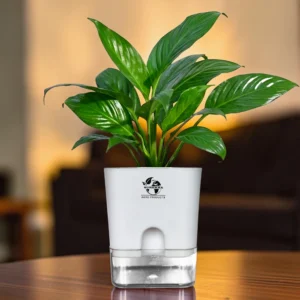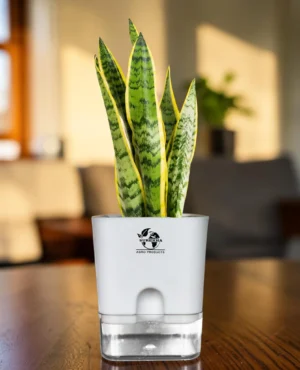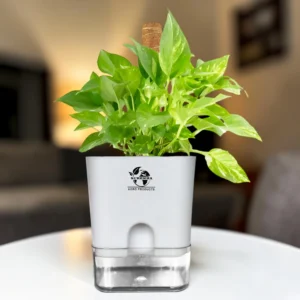
The fiddle-leaf fig in the room photograph is almost as tall as the sofa. The one you’ve just brought home fits on a side table. That smaller plant has its own appeal: you can follow each new leaf and find out how it responds to your home before it needs much floor space. Its first job is to settle in, rather than catch up with a decorating picture.
Good fiddle leaf fig care starts with bright indirect light, warmth and a root zone that can drain. Let the upper potting mix dry before watering again, and adjust care as growth and weather change. Ficus lyrata is a tropical foliage tree, with the broad, violin-like leaves described by NC State Extension.
Give the whole plant a bright position
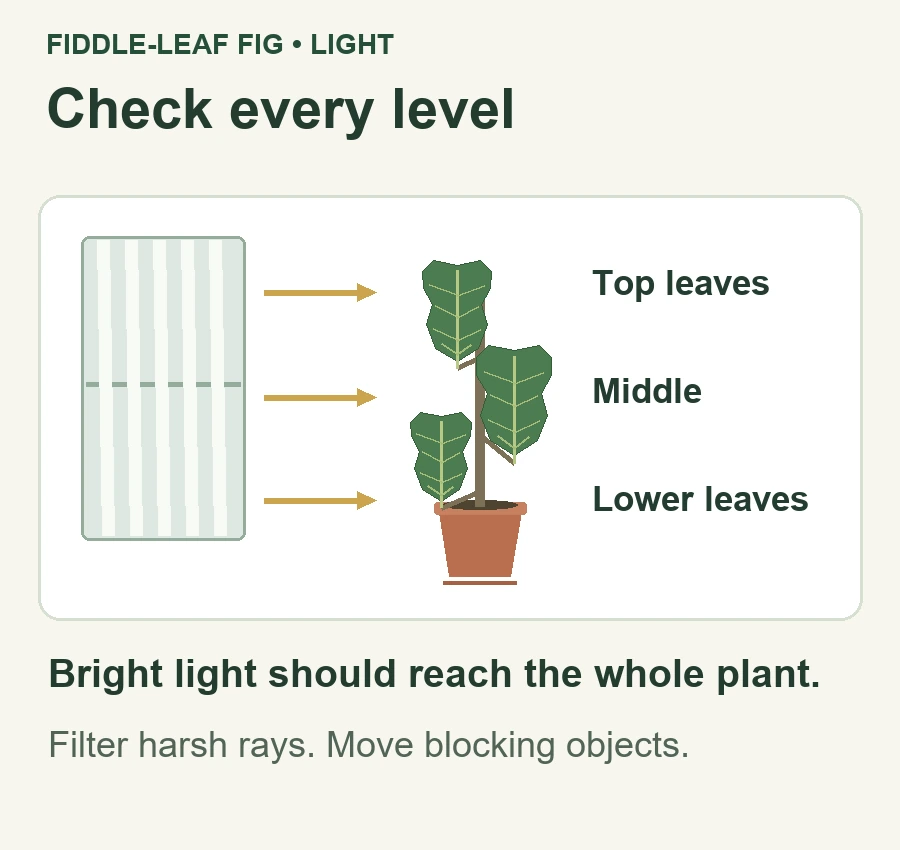
Choose a place where natural light reaches the leaves through the day. If a high window lights only the top of a small plant, a stable stand can bring the lower leaves into the light too. Move an obstructing curtain, chair or stack of books before assuming the plant needs feeding. New York Botanical Garden’s guide makes this useful distinction between a bright room and light reaching every branch.
Bright indirect light is a good indoor starting point. Soften harsh rays with a sheer curtain, especially beside hot afternoon glass. Avoid shuttling a plant from a dim room to a blazing balcony. If you change exposure, do it gradually and watch its response. The RHS ornamental fig guide also recommends bright light and an even environment.
Water the roots you have, in the pot you have
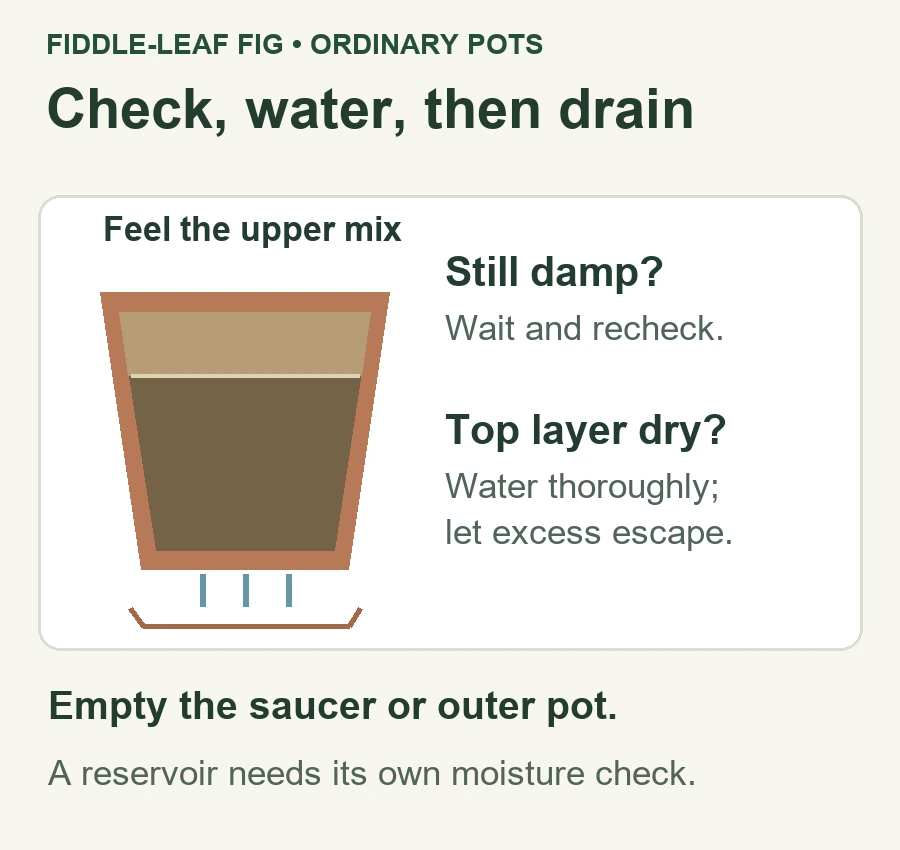
For an ordinary draining pot, feel below the surface before watering. UC Cooperative Extension’s fiddle-leaf guide uses the upper two inches, roughly 5 cm, drying as a watering check. In a small or shallow pot, judge that in relation to the root ball: don’t wait for the entire container to become bone dry.
When water is needed, wet the mix thoroughly and let extra water leave through the drainage holes. Empty the saucer or outer container. If the mix is still damp, wait. A wilting plant in wet mix needs a drainage and root check before another soak.
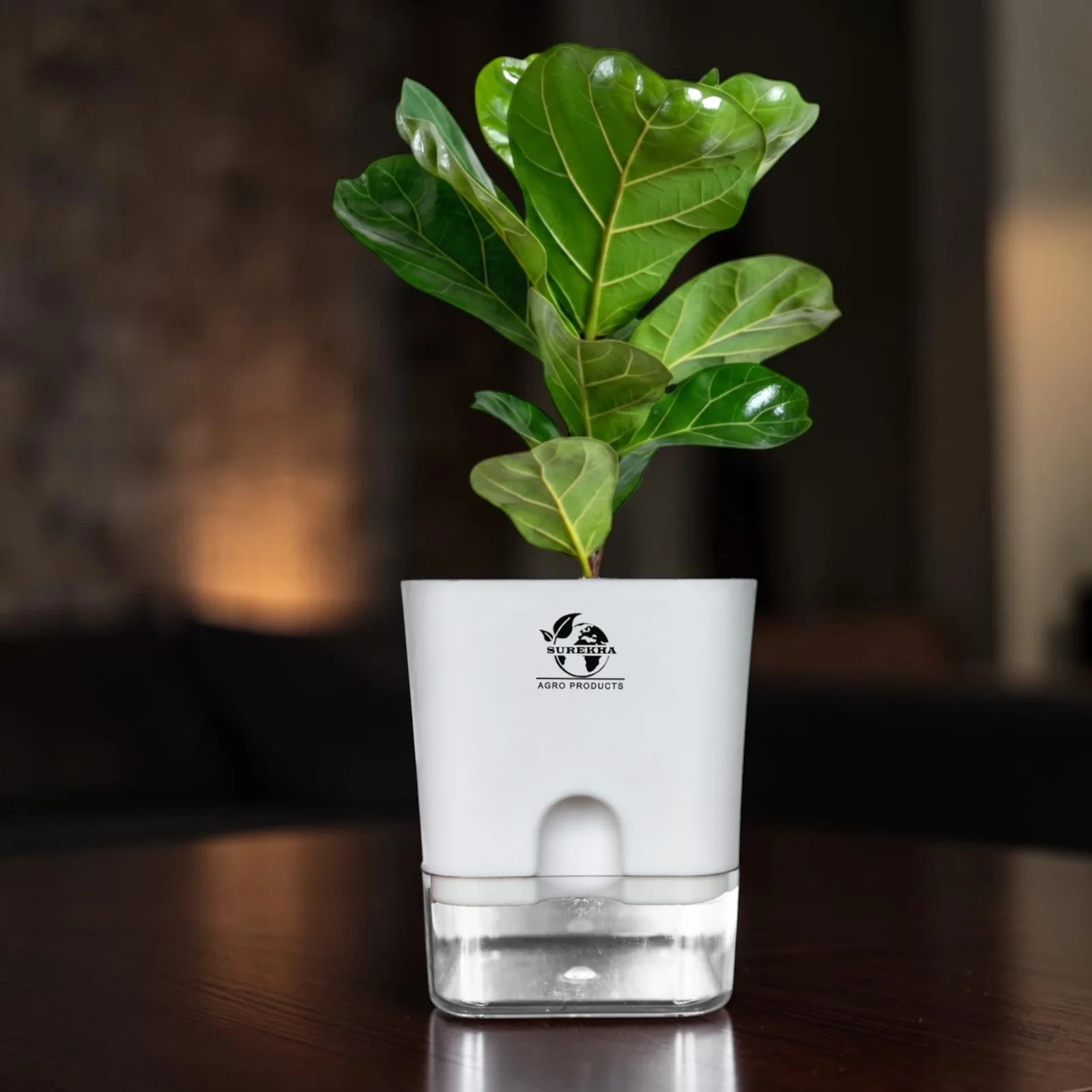
With a wick-fed self-watering pot, check both the upper planter and the reservoir. Don’t repeatedly top up a reservoir simply because a week has passed while the mix remains wet. Use the pot’s setup instructions and our self-watering pot guide to understand the connection between the wick, water and roots. A reservoir changes the delivery system; the plant’s light, temperature and water use still matter.
Adjust for the Indian season outside your window
In North India and hill locations, cool nights can make an exposed veranda unsuitable even while afternoons feel pleasant. NC State recommends temperatures above about 13°C for this tropical plant. A bright indoor place away from cold draughts gives you more control. Keep leaves clear of cold windowpanes and direct heater airflow.
In warm coastal or southern homes, November may bring little slowdown. Continue checking the mix and actual growth. During rainy or cloudy spells, a sheltered pot can stay wet longer; an open balcony may receive water without your watering can. In an air-conditioned room, check the plant’s position relative to the vent. Regional labels help you anticipate a change, but the conditions at your own pot decide the response.
Make leaf care gentle and useful
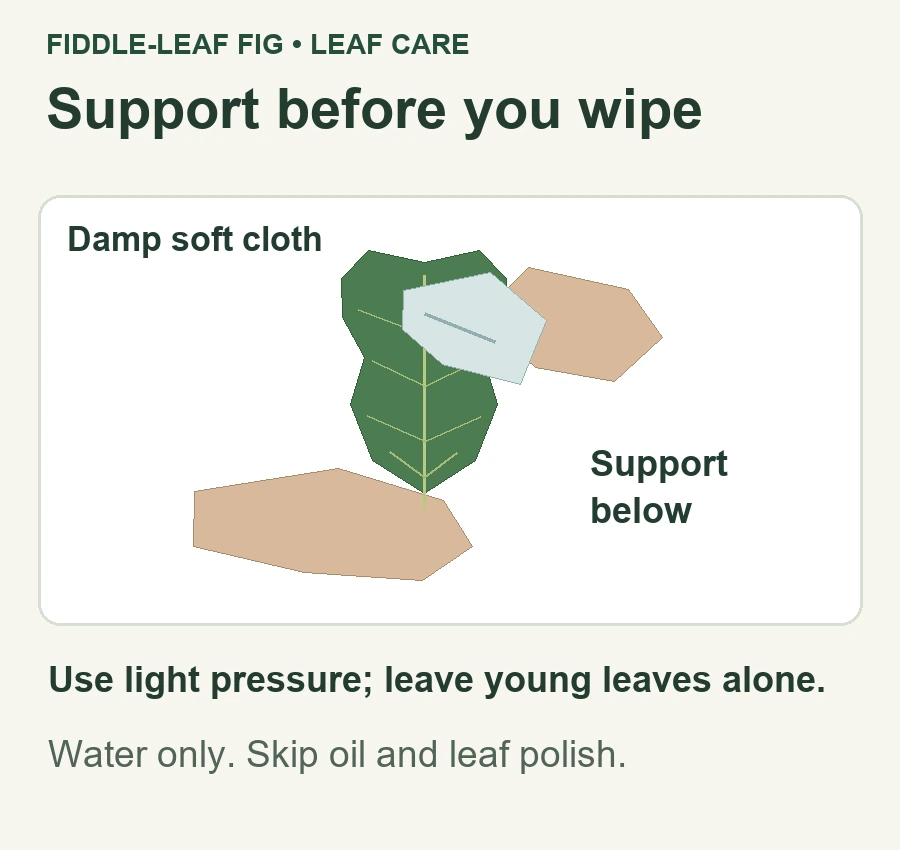
Those broad leaves catch dust as well as attention. Support a mature leaf from underneath and wipe lightly with a soft cloth dampened with water. Use a clean part of the cloth as you move between leaves. Leave a tender, unfolding leaf alone instead of trying to polish it into shape.
NYBG recommends gentle support while cleaning and avoiding oils or polishes that build up on the surface. Use the moment to look underneath and along the stem. For a fuller routine, see our guide to cleaning indoor plant leaves.
Give growth time before reaching for a bigger pot
A small fiddle-leaf fig does not need an immediate pot upgrade just because you hope it will grow tall. Look for roots filling the container and a clear need for extra space. Move to a modestly larger draining pot when the plant is growing well, using a suitable well-draining houseplant mix. The RHS recommends small increases in container size; its UK spring timing translates more usefully into a warm period of active growth for your location.
Feeding advice varies between sources. UC’s guide favours restrained feeding and warns about excess. Choose a suitable houseplant fertiliser and follow its label while the plant is actively growing. A quiet spell is a reason to review light and root conditions, rather than increase the dose. Pruning for a particular shape can wait until the plant is established and growing strongly. Wear gloves around cut stems because the sap can irritate skin, and keep the plant away from children and pets that may chew it.
When a leaf changes, choose the next check
A single brown patch cannot tell you everything about the roots. NC State lists several possible problems, including water stress, excessive sun, temperature changes and pests. Compare what has changed in the plant’s surroundings before choosing a treatment.
| What you notice | Check next |
|---|---|
| Several leaves fall after a move | Changed light, draughts, temperature and the mix’s moisture. |
| A brown area or crisp edge | Recent sun exposure, watering history, airflow and whether damage is spreading. |
| Webbing, sticky patches or bumps | Leaf undersides and stems for pests; identify what is present before treating. |
| Little new growth | Light reaching the plant, season, root condition and recent disturbance. |
Take a dated photo and note your findings. Old damage is a useful reference; watch the condition of the remaining foliage and new growth as you make a focused change. If patches spread or decline continues despite reasonable conditions, seek a closer assessment rather than combining several sprays and feeds.
Start small, with room to learn
The current Surekha Fiddle Leaf Fig Plant listing describes a young plant in a wick-based self-watering pot with a clear reservoir. Check the listing for current specifications and choose its position before it arrives. Water use will vary with your home; a fixed number of refill-free days is not a care target.
Keep your first notes simple: where it sits, what the mix feels like and how the leaves look. That gives you a practical starting point for enjoying the plant as it grows, without setting it a deadline to become a floor-standing tree.