The best indoor plants for living room spaces in India are the ones that match the light your room actually gets: snake plant, aglaonema, money plant and peace lily for dim corners; areca palm, rubber plant and Song of India for a bright spot near a window; and a fiddle leaf fig only if you can give it strong, steady light. Pick by light first, then by size and pets.
Quick answer: stand in your living room at noon and look at the spot you want to fill. If you could read a newspaper there without switching on a light but no sun falls on it, choose a low-light plant such as snake plant or aglaonema. If it is a few steps from an east or south window, a medium-light plant such as areca palm or rubber plant will grow better. Keep every plant out of direct afternoon sun coming through west-facing glass, and water only when the top few centimetres of soil are dry.
Most lists online show beautiful rooms and then name twenty plants. This guide does the opposite: it starts with the corner you have, then narrows the choice to eight plants that are easy to find in India and that we also grow and ship. For where to place plants around the rest of the house, see our light guide for indoor plants in your home.
Best indoor plants for living room at a glance
| Plant | Light it needs | Size in a living room | Watering (most of the year) | Safe around cats and dogs? |
|---|---|---|---|---|
| Snake plant (Sansevieria) | Low to bright indirect | Floor or table, 30 cm to 1 m | Let soil dry fully; less in winter | No (saponins) |
| Aglaonema (Chinese evergreen) | Low to medium | Table or low floor pot | When top 3–4 cm is dry | Keep out of reach |
| Money plant (pothos) | Low to bright indirect | Shelf, hanging or moss stick | When top 3–4 cm is dry | No (calcium oxalate) |
| Peace lily | Low to medium | Table or floor, 40–60 cm | When the surface just starts to dry | No (calcium oxalate) |
| Areca palm | Bright indirect | Floor, can pass 1.5 m | When top 2–3 cm is dry | Yes (ASPCA non-toxic) |
| Rubber plant | Medium to bright indirect | Floor, grows tall | When top 3–5 cm is dry | Keep out of reach (milky sap) |
| Song of India (Dracaena reflexa) | Bright indirect | Floor or large table pot | When top few cm are dry | Keep out of reach |
| Fiddle leaf fig | Bright, steady light | Floor, statement size | When top 4–5 cm is dry | No (toxic if eaten) |
The watering column is a starting point, not a schedule. A plant in a cool, dim room in a Delhi winter may need water once in three weeks; the same plant beside a bright window in a Chennai summer may need it every week. Your finger in the soil is a better guide than the calendar.
How to choose plants for your living room: read the light first
The University of Minnesota Extension sorts houseplants into three light groups, and the same logic works in Indian homes because we are also in the northern hemisphere, where south-facing windows get the most light.
- Low light: a north window or a fairly dark corner, roughly bright enough to read a newspaper. Plants here grow slowly and use less water.
- Medium light: near an east window, or near a west window but out of its direct sun.
- High light: a south or south-west window with plenty of sky. Most flowering plants need this.
Three things change the picture in a typical Indian flat. A balcony or chajja above the window can cut light by half, even on the south side. Tinted or reflective glass reduces light further. And afternoon sun through west glass in April–June is strong enough to scorch leaves that sit right against it, so move plants a metre or two back in summer.
A simple 3-step light check
- Check at noon and at 4 pm. Note whether sunlight touches the spot, and for how long.
- Try the shadow test. Hold your hand 30 cm above the spot. A sharp shadow means bright light; a soft, blurry shadow means medium; almost no shadow means low.
- Match the plant to the weakest season. A corner that is bright in May may be dim in December. Choose for the darker months.
- Summer (March–June): plants dry out faster, especially near windows. Check soil twice a week, pull plants back from hot west glass, and keep them out of direct cooler or AC air.
- Monsoon (July–September): light drops and humidity rises, so water less. Overwatering in these months is the most common cause of yellow leaves and fungus gnats; see how to get rid of fungus gnats.
- Winter (November–February): growth slows, most of all in north India. Water less, stop feeding, and move plants a little closer to the window. Do not repot unless the plant is root-bound or rotting.
- All year: wipe dust off leaves once or twice a month with a soft damp cloth, and turn each pot a quarter turn every month so the plant grows evenly.
- University of Minnesota Extension, Lighting for indoor plants
- NC State Extension Plant Toolbox: Dracaena trifasciata (snake plant), Epipremnum aureum (pothos), Spathiphyllum (peace lily), Dypsis lutescens (areca palm), Ficus elastica (rubber plant), Ficus lyrata (fiddle leaf fig), Zamioculcas zamiifolia (ZZ plant)
- ASPCA Animal Poison Control: areca palm, spider plant, peace lily, golden pothos, mother-in-law’s tongue (snake plant)
- Cummings, B.E. & Waring, M.S. (2019). Potted plants do not improve indoor air quality: a review and analysis of reported VOC removal efficiencies. Journal of Exposure Science & Environmental Epidemiology.
Low-light living room plants for dark corners
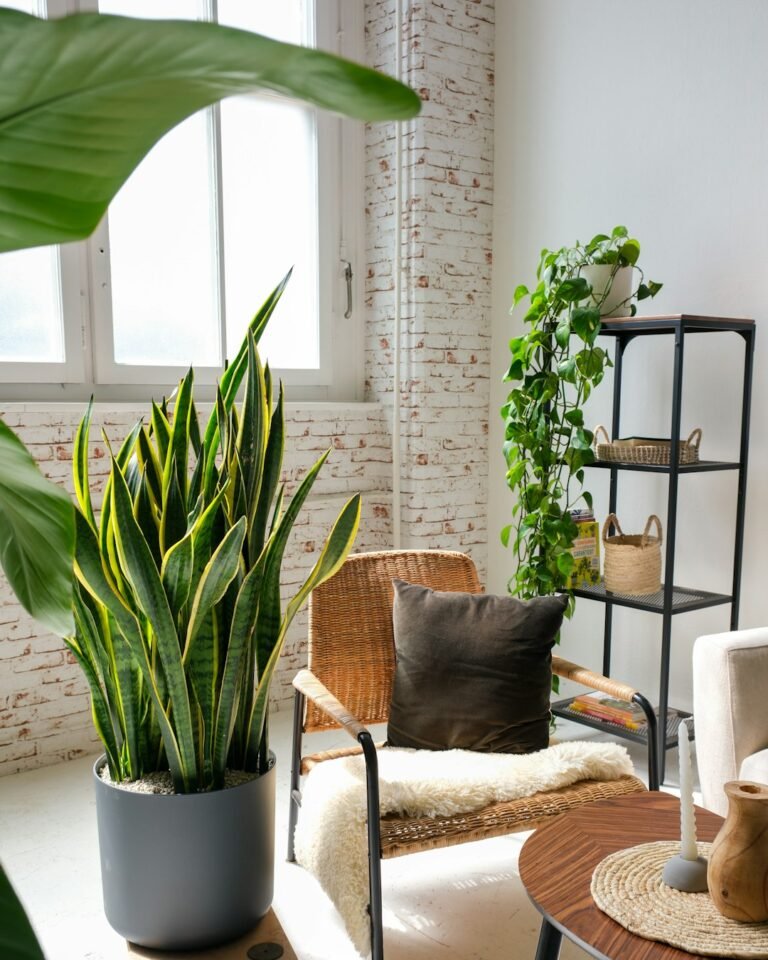
Minnesota Extension’s low-light list includes snake plant, Chinese evergreen (aglaonema), pothos, peace lily, philodendron and ZZ plant. “Low light” means they tolerate it, not that they thrive in it: growth will be slow and new leaves may be smaller. That is fine for a corner you simply want to keep green.
1. Snake plant
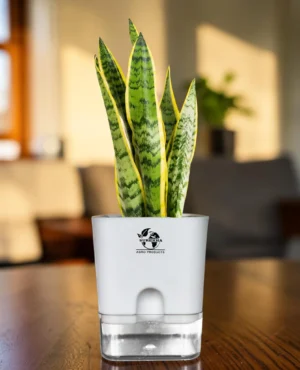
The easiest choice for the corner beside the sofa or TV unit. NC State Extension notes it tolerates very low light, but well-drained soil and careful watering are a must because overwatering rots the roots. In winter it may need water only every one to two months. Tall types such as Laurentii or Superba fill a floor corner; Hahnii types fit a side table. Read more in our snake plant benefits guide.
2. Aglaonema
Aglaonema brings colour to a dim room without needing flowers. Green types handle lower light than the red and pink ones, which keep their colour best in medium light. Keep it away from the AC’s cold blast and water when the top few centimetres of soil feel dry.
3. Money plant (pothos)
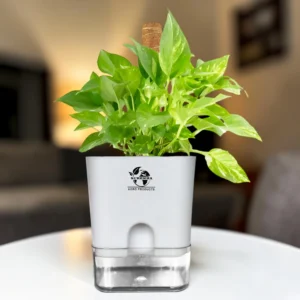
Money plant is the most flexible option: trail it from a bookshelf, train it up a moss stick beside the TV, or let it climb a window grille. NC State notes that low light can fade the variegation and that overwatering causes root rot and blackened leaf edges. Wiping the leaves now and then removes dust, which builds up fast in Indian cities. Our money plant care guide covers pruning and propagation.
4. Peace lily
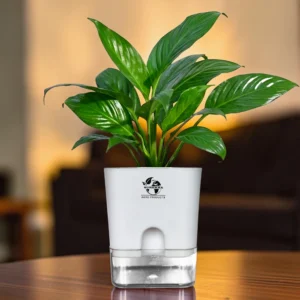
Peace lily is the one low-light plant that may still flower indoors, usually with a little more light. It droops visibly when dry and perks up after watering, which makes it a forgiving plant for beginners. See our peace lily care guide for watering and repotting.
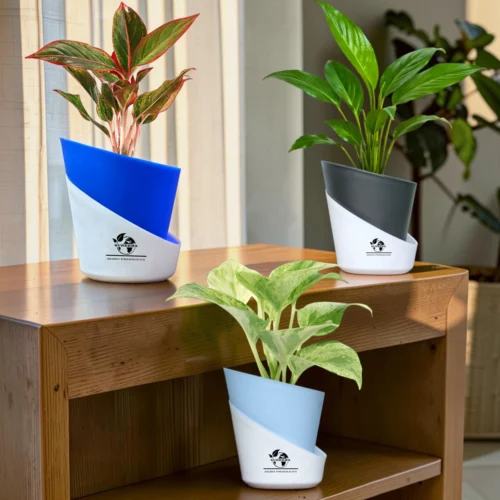
If you want all three types for a dim room at once, the Low-Light Indoor Plant Trio groups a peace lily, a marble queen pothos and an aglaonema. Like our other indoor plants, they come in self-watering pots, which help in a dark room because the soil takes up water from the reservoir instead of being flooded from the top.
Big indoor plants for living room spaces with good light
If you have a bright spot near an east or south window, you can choose bigger plants that become the focus of the room. These need more light than the plants above. In a dark corner they stretch, drop lower leaves and slowly decline.
5. Areca palm
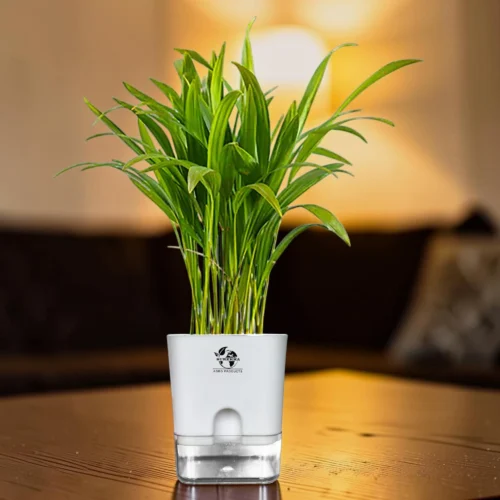
The areca palm is the classic tall plant for the corner beside a window or a balcony door. NC State lists it as one of the most popular indoor palms and notes it prefers partial shade with moist but well-drained soil. ASPCA lists it as non-toxic to cats and dogs, which makes it our first suggestion for homes with pets. Brown leaf tips are common in dry, AC-cooled rooms; trim them with clean scissors and keep the plant away from direct air flow.
6. Rubber plant
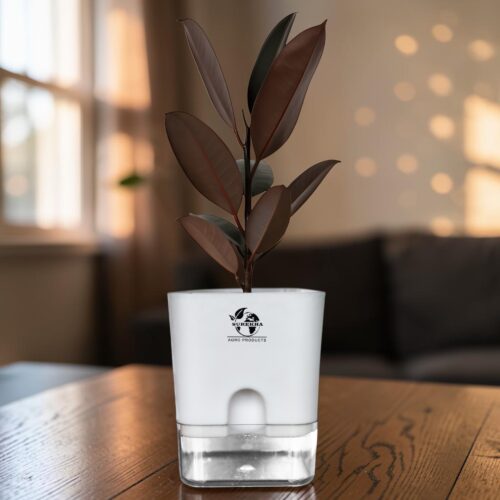
The rubber plant has large, glossy leaves that suit modern and traditional rooms alike. NC State recommends bright indirect light or partial shade indoors, with protection from afternoon sun. It warns that overwatering, temperature drops and cold drafts can cause leaf loss, and that it prefers to stay in one place. Pick its spot carefully and avoid moving it every few weeks. The burgundy-leaf types keep their dark colour best in good light. Our rubber plant care guide covers pruning to keep it bushy.
7. Song of India
Song of India has striped yellow-green leaves that brighten a plain wall. It does best in bright indirect light and grows slowly into a large, branching plant. Our Song of India care guide explains brown tips, pruning and propagation.
8. Fiddle leaf fig
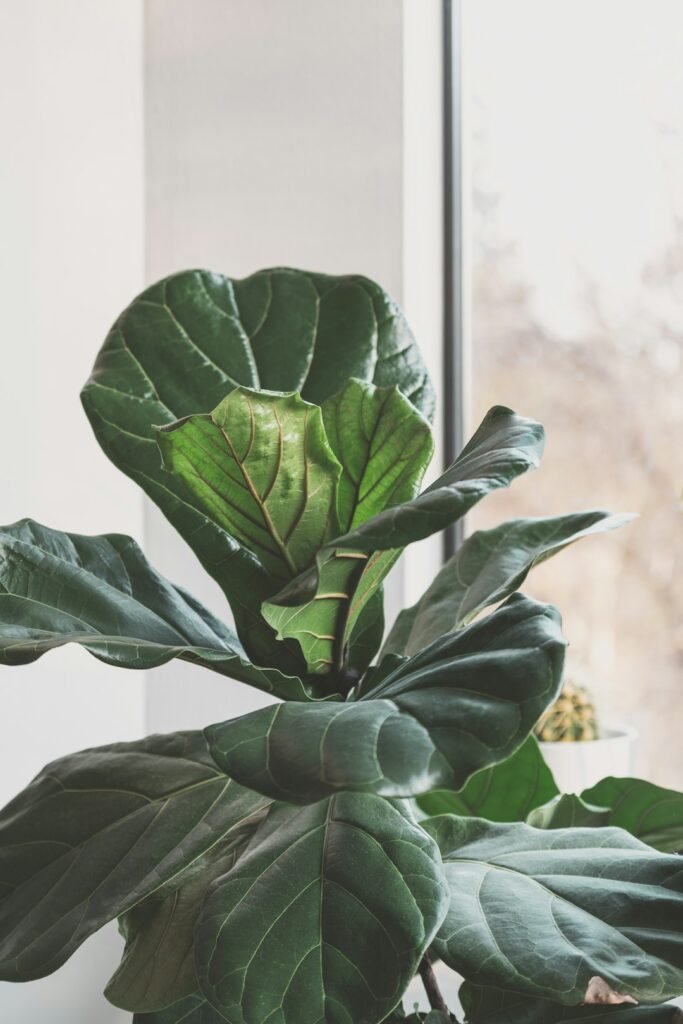
The fiddle leaf fig is the plant in many living room photos, but it is the least forgiving one here. It needs a spot close to a bright window, steady watering and few changes. Moved to a dim corner, it often drops leaves. NC State lists it as toxic to people, cats and dogs if eaten. Choose it only if you have strong light and a little patience; our fiddle leaf fig care guide shows how to help a new plant settle.
Where to place plants in your living room
| Spot in the room | Typical light | Good choices | Avoid |
|---|---|---|---|
| Corner beside the sofa, far from windows | Low | Snake plant, ZZ plant, aglaonema | Fiddle leaf fig, flowering plants |
| Beside the TV unit | Low to medium | Money plant on a moss stick, snake plant | Plants that need daily checks |
| Coffee table or side table | Varies | Peace lily, small aglaonema, Hahnii snake plant | Tall plants that block the view |
| 1–2 m from an east or south window | Medium to bright | Areca palm, rubber plant, Song of India | Nothing in particular; rotate pots monthly |
| Right against west-facing glass | Hot afternoon sun | Move plants back in summer | Peace lily, aglaonema, calathea |
| Under or in front of the AC | Any | Nothing; move the plant | All tropical foliage plants |
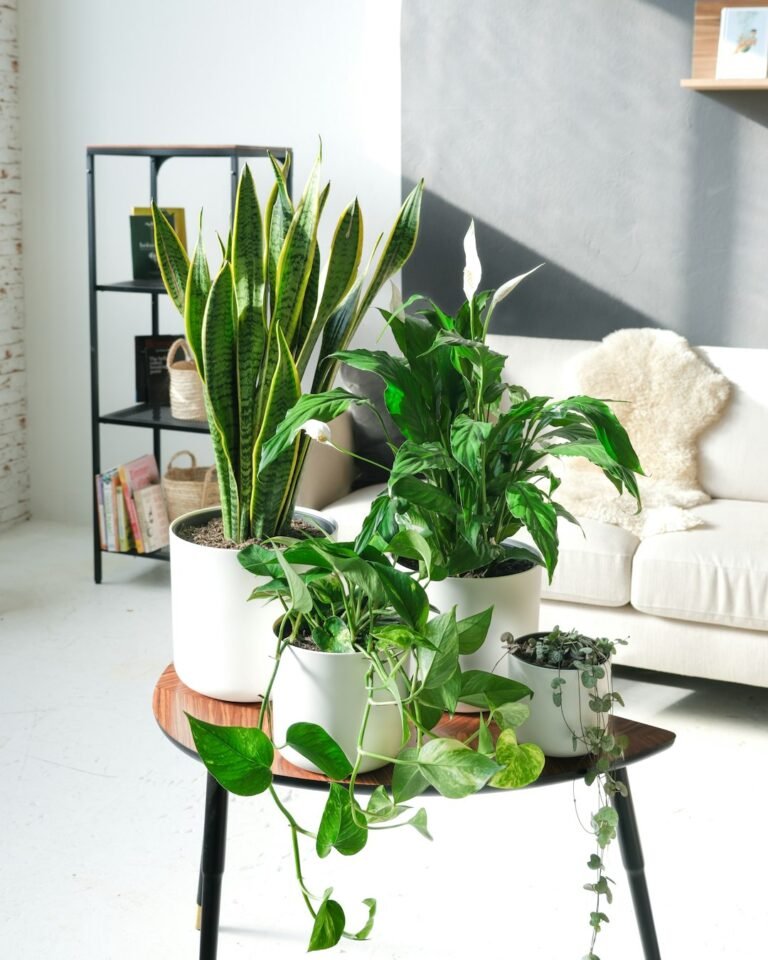
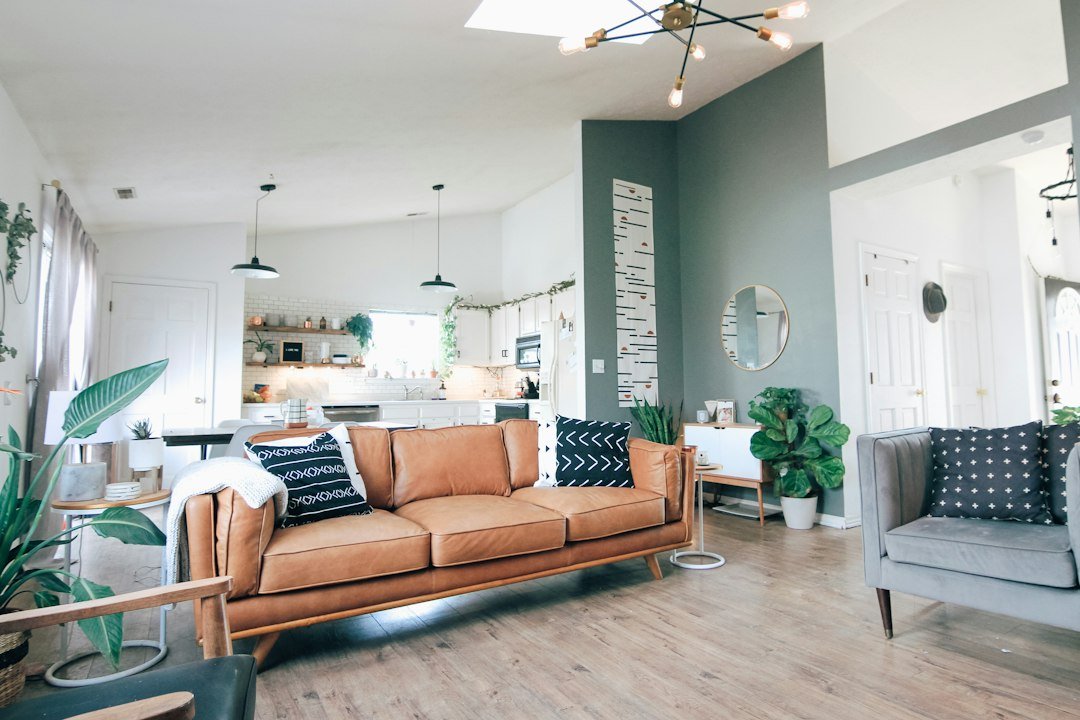
Grouping three plants with different heights on one table, as above, looks fuller than spreading single pots around the room. It also makes watering faster, because you check them together. Put the tallest plant at the back and a trailing one at the front edge.
Many families also place living room plants by Vastu direction. Those placements are cultural beliefs rather than plant-care rules, so treat light as the deciding factor and use our Vastu plants guide if direction matters to you.
Living room plant care through the Indian year
Common living room plant problems
| What you see | Likely cause | What to do |
|---|---|---|
| Long, weak stems leaning to the window | Too little light | Move closer to the window; rotate the pot monthly |
| Yellow lower leaves, wet soil | Overwatering | Let the soil dry; check that the pot drains |
| Brown, crispy leaf tips | Dry AC air or uneven watering | Move away from AC flow; water deeply when dry |
| Pale or scorched patches | Direct afternoon sun through glass | Move back from the window in summer |
| Variegated leaves turning plain green | Too little light | Give brighter indirect light |
| Sudden leaf drop on rubber plant or fiddle leaf fig | Moving the plant, cold draft or overwatering | Keep it in one bright spot; water less |
Are living room plants safe for pets and children?
If you have a cat, a dog or a toddler who puts things in their mouth, check before you buy. ASPCA lists the areca palm and spider plant as non-toxic to cats and dogs. It lists peace lily and golden pothos as toxic because of calcium oxalate crystals, and snake plant as toxic because of saponins. NC State lists fiddle leaf fig and ZZ plant as toxic if eaten. For plants without a clear listing, the safe habit is the same: keep them on a high shelf or stand and pick up fallen leaves.
A note on “air-purifying” claims: a 1989 NASA study tested plants in small sealed chambers. A 2019 review in the Journal of Exposure Science & Environmental Epidemiology calculated that a normal room would need a very large number of plants to match even modest ventilation. Buy living room plants because they make the room calmer and greener, not as a replacement for opening windows. We explain this in more detail in which plant gives more oxygen.
FAQ: indoor plants for living room
Which plant is best for the living room?
For most Indian living rooms, the snake plant is the safest first choice because it tolerates low light and missed watering. If your room is bright and you have pets, choose an areca palm.
Which indoor plants can survive in a living room without sunlight?
No plant grows in total darkness, but snake plant, ZZ plant, aglaonema, money plant and peace lily tolerate low light from a north window or a room lit indirectly. Expect slow growth and water less.
What are the best big indoor plants for a living room?
Areca palm, rubber plant, Song of India and fiddle leaf fig grow into large floor plants. All of them need bright indirect light, so place them within a couple of metres of an east or south window.
How many plants should I keep in my living room?
There is no fixed number. Start with one floor plant in your brightest spot and one or two smaller plants on tables, then add more once you know how fast each one dries out.
Can I keep living room plants near the AC?
Avoid placing any plant directly in the AC’s air stream. Cold, dry air causes brown tips and leaf drop. A spot across the room from the unit is fine.
How often should I water indoor plants in the living room?
Water when the top few centimetres of soil feel dry, not on fixed days. In most living rooms that is weekly in summer and every two to three weeks in winter, and less for snake plant.
Conclusion
Choosing indoor plants for your living room is mostly about light. Fill dim corners with snake plant, aglaonema, money plant or peace lily. Keep areca palm, rubber plant, Song of India and fiddle leaf fig for the bright spot near a window. Avoid hot west glass and AC drafts, water by touch rather than by calendar, and check pet safety before you buy. Start with two or three plants, watch how they settle for a month, then add more.
Written by the Surekha Agro Products plant care team. Last updated 27 November 2026.