Lucky bamboo benefits are mostly about how the plant fits into a home: it lives for years in a glass of water, tolerates the dim corners most Indian flats have, needs almost no tools, and carries a strong good-luck meaning in Feng Shui and popular Vastu practice that makes it a favourite housewarming and Diwali gift. It is not a real bamboo and it is not a proven air purifier, but it is one of the easiest living plants to keep.
If you have just received a bundle tied with a red or gold ribbon, or you are deciding whether to buy one, this guide separates the practical benefits from the cultural beliefs, explains what the number of stalks and layers is said to mean, and shows how to keep the plant green long enough to enjoy either.
Quick answer: Lucky bamboo (Dracaena sanderiana) is worth keeping because it grows in plain water or potting mix, accepts low to medium indirect light, rarely suffers from serious pests, and lasts for years with a weekly water change. Its luck, wealth and harmony benefits are cultural beliefs from Feng Shui and Vastu, not measurable effects. It is toxic to cats and dogs if chewed.
Lucky bamboo benefits at a glance
| Benefit | Type | What it means in practice |
|---|---|---|
| Grows in water without soil | Practical | No mess on tables, shelves or office desks; you can see the roots and water level |
| Copes with low to medium light | Practical | Works in rooms where sun-loving plants fail, as long as there is some daylight |
| Very low maintenance | Practical | Weekly water change and a few drops of weak fertiliser now and then |
| Few pest or disease problems | Practical | Occasional mealybugs, mites or scale; most trouble comes from water quality |
| Long-lasting, shapeable gift | Practical | Stalks can be tiered, spiralled or braided and kept for years |
| Brings good luck and positive energy | Belief (Feng Shui, Vastu) | Many families value it for this; it cannot be measured |
| Purifies indoor air | Mostly a myth | Lucky bamboo itself was not in the NASA study; one plant has a tiny effect in a real room |
What is lucky bamboo, really?
Despite the name and the jointed green stems, lucky bamboo is not a bamboo. NC State Extension describes Dracaena sanderiana as a tropical perennial shrub from West Africa in the asparagus family, sold under names such as friendship bamboo, water bamboo and ribbon plant. True bamboos are grasses; lucky bamboo is a cousin of the corn plant and dragon tree you see in offices.
This matters for two reasons. First, care advice for real bamboo (full sun, big pots, heavy watering in soil) does not apply. Second, the botany explains several of the benefits below: dracaenas root easily from cut stems, grow slowly, and tolerate shade, which is exactly why nurseries can train them into towers and spirals that survive on a living room table.
8 practical benefits of lucky bamboo at home
1. It grows in plain water, so there is no soil mess
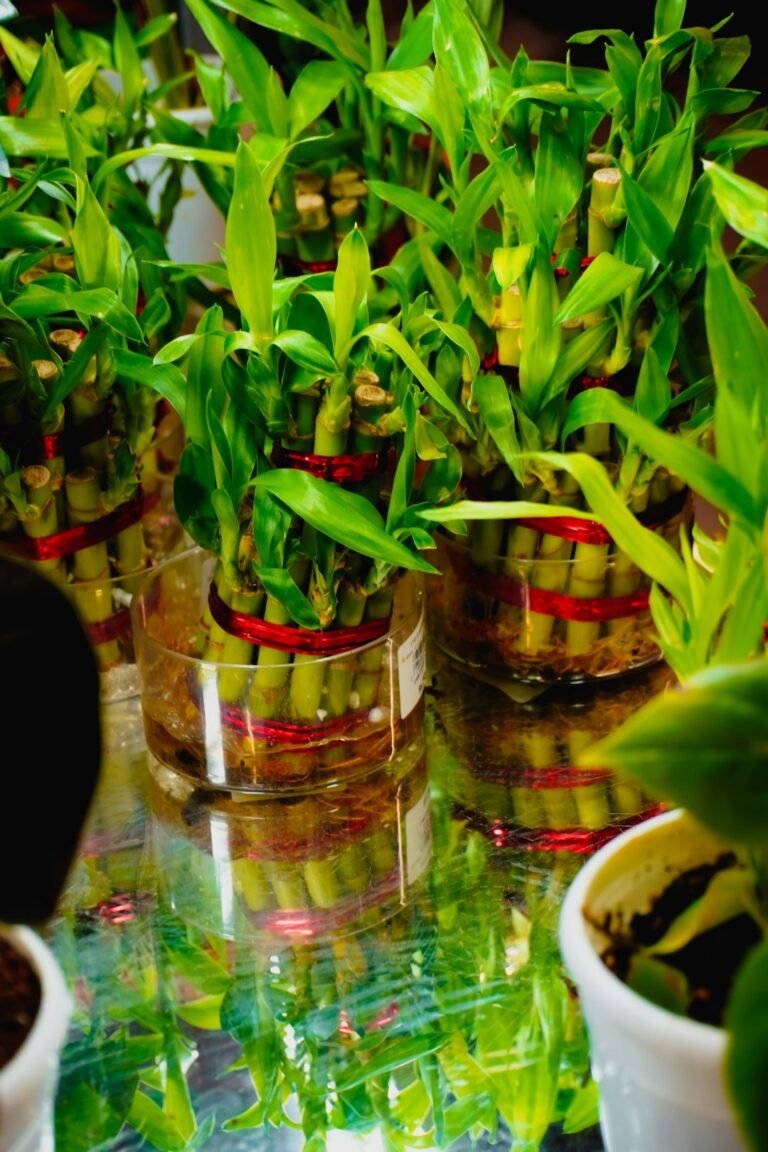
NC State notes that the plant can be grown in a moist potting mix or in chlorine-free water, with pebbles at the bottom to anchor the roots and weigh down the container. For a rented flat, a study table or a puja shelf, a clear vase with pebbles is far cleaner than a pot of soil. You can also see at a glance when the water level drops or the roots darken.
2. It tolerates low light better than most gift plants
Lucky bamboo is listed for dappled shade and even deep shade, and indoors it does best in bright but indirect light. That makes it a good fit for north-facing rooms, inner corridors, reception desks and bathrooms with a frosted window. It still needs some daylight; a windowless cabin with tube lights alone will slowly weaken it.
3. It asks for very little work
The routine is short: top up or change the water weekly, wipe dust off the leaves, and add a weak liquid fertiliser occasionally. There is no repotting, no pruning schedule and no hardening off. For first-time plant owners, students and busy professionals, that low effort is the biggest real benefit.
4. It has few serious pests or diseases
Extension guidance lists no serious insect or disease problems, only the need to watch for mealybugs, mites and scale. If you ever see white cottony patches in the leaf joints, our guide on how to get rid of mealybugs covers safe treatment. Most lucky bamboo failures are caused by water problems, not bugs.
5. It lasts for years and can be reshaped
A healthy arrangement keeps putting out new leafy shoots from the top of each stalk. Growers train the stems into spirals, braids and tiers, and you can trim a tall shoot and root it in water to start a new plant. Few gifts improve with age the way a well-kept lucky bamboo does.
6. It fits small spaces
Because it grows slowly and upright, a single-stalk vase fits on a windowsill or bookshelf, while a two- or three-tier bundle makes a centrepiece on a dining or coffee table. It suits the compact homes common in Indian cities, where floor space for large planters is limited.
7. It makes a meaningful, affordable gift
Lucky bamboo is a common gift for griha pravesh, Diwali, new offices, birthdays and shop openings because it combines a living plant with a well-known good-luck message, and it arrives ready to display. Unlike cut flowers, it is still green months later.
8. It brings green into rooms where you spend time
Studies of indoor plants and mood are modest but encouraging. A small randomised crossover study by Lee and colleagues (2015) found that a short session of repotting a plant lowered stress responses compared with a computer task. A lucky bamboo will not transform your health, but caring for something green on your desk is a pleasant habit.
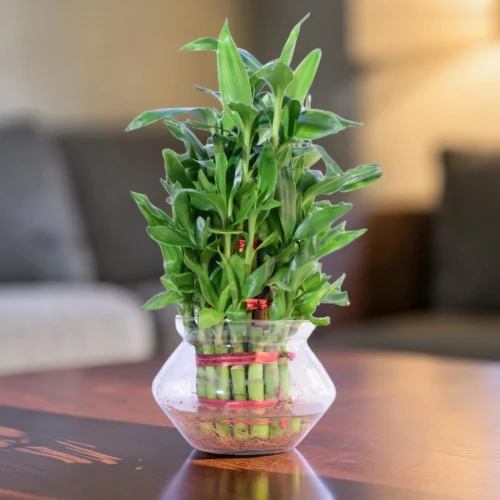
Spiritual benefits of lucky bamboo: Feng Shui and Vastu beliefs
Most searches for lucky bamboo benefits are really about luck, prosperity and positive energy. These are cultural and spiritual beliefs, and we present them that way: many families find them meaningful, but there is no scientific way to test them.
- Good luck and prosperity: In Feng Shui the plant is associated with the wood element, growth and steady fortune, which is why it is placed in homes, shops and offices at openings.
- Harmony of the five elements: A bundle in water with stones or pebbles and a red ribbon is said to combine wood, water, earth, metal (the container or coin) and fire (the red colour).
- Positive energy at work: It is commonly kept on a cash counter or office desk as a symbol of growth.
- Vastu placement: Popular Vastu advice usually suggests the east for health and family harmony, or the south-east for wealth. Our Vastu plants for home guide compares lucky bamboo with tulsi, money plant and jade by room and direction.
Whatever you believe, the practical point stands: a yellow, rotting plant is not a good symbol of anything. Choose a spot that gives it bright indirect light first, then pick the direction within that.
Lucky bamboo layers and stalk numbers: what they are said to mean
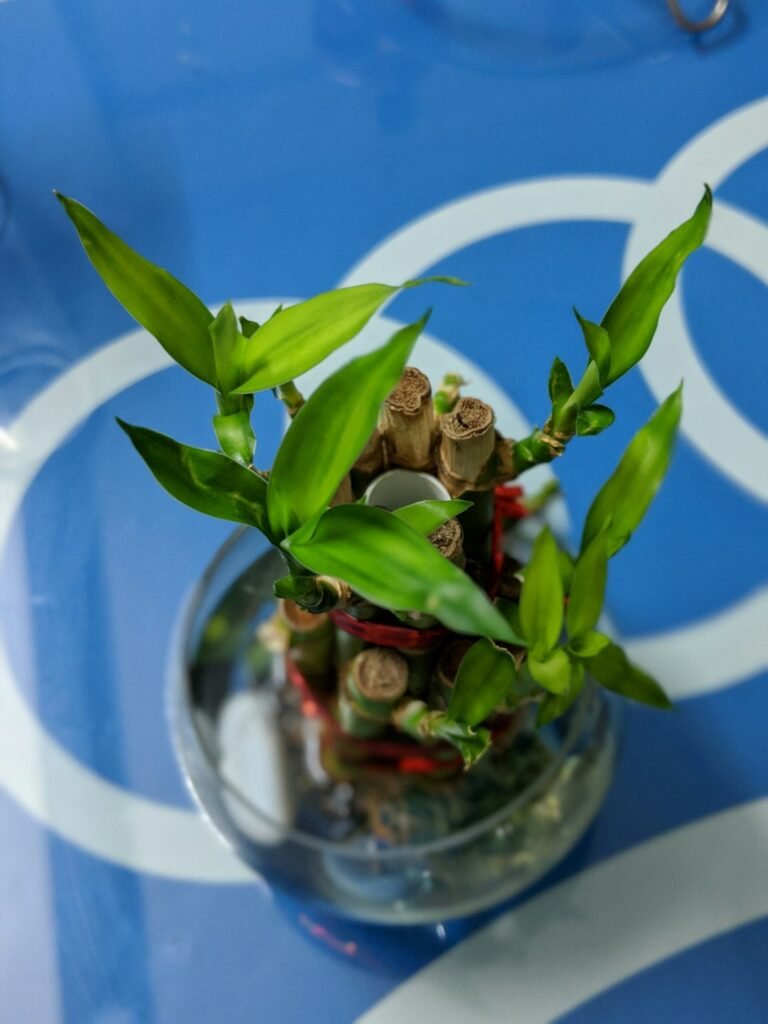
People often ask how many bamboo stalks are lucky. The meanings below come from Chinese number symbolism used in Feng Shui. They vary between sources, so treat them as tradition rather than rules.
| Stalks or layers | Traditional meaning | Common use |
|---|---|---|
| 2 | Love, partnership | Wedding or anniversary gift |
| 3 | Happiness, long life and wealth | The most popular choice for homes; also why 3-layer towers sell well |
| 5 | Balance in different areas of life | Home or study |
| 6 | Prosperity and good fortune | Shop or office opening |
| 8 | Wealth and growth | Business gift |
| 9 | Great luck | Large celebratory arrangement |
| 4 | Usually avoided | The word for four sounds like “death” in Chinese |
A “layer” usually means a ring of stalks cut to the same height. A 2-layer or 3-layer tower combines rings of different heights, so the stalk count and the layer count are not the same thing. For care, the number makes no difference: every stalk needs the same clean water.
Does lucky bamboo purify air or give oxygen?
This is the claim we see most often, and it needs a straight answer. The 1989 NASA study on indoor plants tested several dracaenas, such as Janet Craig, marginata and corn plant, plus a palm called “bamboo palm”. Dracaena sanderiana, the lucky bamboo, was not on the list. And those tests were done in small sealed chambers.
A 2019 review by Cummings and Waring converted results from 12 chamber studies into real-room terms and concluded that you would need roughly 10 to 1,000 plants per square metre of floor to match the air cleaning that normal ventilation already provides. So one vase of lucky bamboo does not measurably clean a room or add meaningful oxygen. For a fuller look at oxygen claims, read which plant gives more oxygen. Open windows, an exhaust fan and less indoor smoke do far more for air quality.
Where to keep lucky bamboo for the best results
- Living room or dining table: Bright, indirect light from a nearby window is ideal. Keep it out of the afternoon sun on a west-facing sill, which scorches the leaves.
- Office desk or cash counter: Fine if there is a window in the room. Under air conditioning, check the water level twice a week.
- Bedroom: Acceptable in a bright room; it does not need to be removed at night.
- Entrance: Works inside a well-lit foyer, not at a dark doorway or in harsh outdoor sun. See our plants for home entrance guide for alternatives.
- Bathroom: Only if there is a window; humidity is welcome.
Seasonal tips for Indian homes
- Summer (March to June): Water evaporates and warms quickly. Move the vase away from glass that gets direct sun and change the water more often.
- Monsoon (June to September): Change the water at least weekly. Standing water in vases can breed mosquitoes, which is one reason NC State recommends a weekly change.
- Winter in North India (December to February): Growth slows; keep it away from cold window glass at night and skip fertiliser until spring.
- Coastal and South Indian cities: Humidity suits the plant; focus on light and clean water.
How to keep lucky bamboo healthy (5 simple steps)
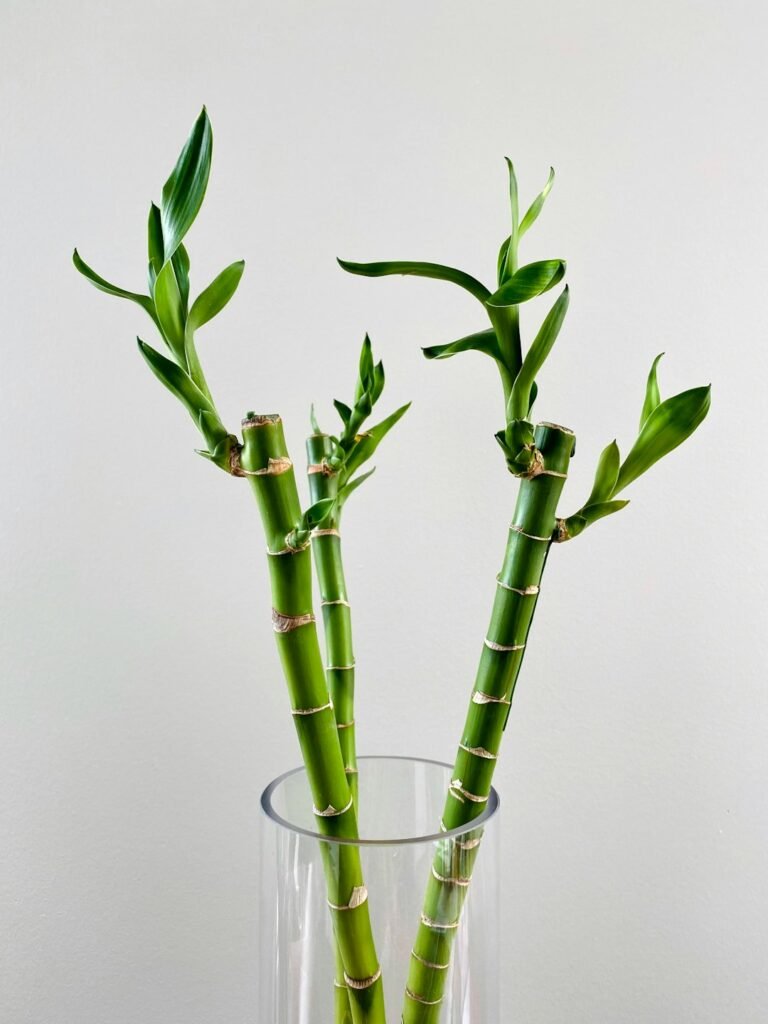
- Use clean, low-chlorine water. Filtered, RO-blended, rain or boiled-and-cooled water is better than fresh municipal tap water. If you must use tap water, let it stand overnight in an open jug.
- Keep the roots covered. Maintain 2 to 5 cm of water above the root zone, not up the whole stalk.
- Change the water weekly. Rinse the pebbles and vase while you are at it to remove slime.
- Feed lightly. A few drops of a weak liquid fertiliser every four to six weeks in the growing season is enough; more causes yellowing.
- Give it bright indirect light. Near a window with a sheer curtain is perfect.
For the full routine, including moving it to soil and propagating shoots, see our lucky bamboo plant care guide.
Common problems that cancel out the benefits
| What you see | Likely cause | What to do |
|---|---|---|
| Yellow leaves | Too much fertiliser, chlorinated tap water, or too much direct sun | Change to clean water, stop feeding, move out of direct sun |
| Yellow or soft stalk | Stem rot from stale water or overwatering | Remove that stalk at once so rot does not spread; cut above the soft part and re-root a healthy top |
| Brown leaf tips | Dry air or salts in the water | Switch water source; keep away from AC vents |
| Green slime in the vase | Algae from light hitting the water | Clean the vase; use coloured glass or an opaque pot |
| Bad smell from water | Decaying roots or leaves | Trim dead roots, wash pebbles, refill |
| White fluff in leaf joints | Mealybugs | Wipe off and treat early |
Is lucky bamboo safe for pets and children?
No, not if it is chewed. The ASPCA lists ribbon plant and other Dracaena species as toxic to dogs and cats because of saponins, with signs such as vomiting, drooling, loss of appetite and, in cats, dilated pupils. NC State tags lucky bamboo as a problem for dogs, cats and children if eaten. Keep it on a high shelf, away from cats that like to nibble leaves, and call your vet if a pet has eaten some.
Choosing the right lucky bamboo
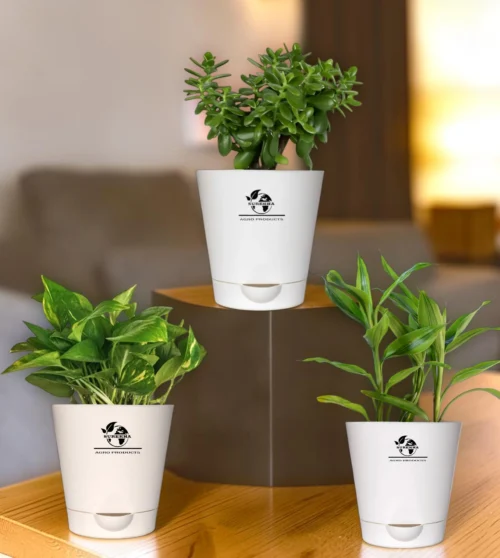
When buying, look for firm, evenly green stalks with no yellow patches, white roots or light orange roots rather than black mushy ones, and fresh leaves at the top. Single vases suit desks; tiered towers suit tables and gifting. If you want lucky bamboo along with other traditional favourites, our Lucky Plants Combo pairs it with jade and variegated money plant, and the 4-plant lucky plants bundle adds an Enjoy money plant too. You can read about the companions in our jade plant benefits and money plant benefits guides.
Frequently asked questions
What are the benefits of lucky bamboo at home?
Practically, it grows in water or soil, handles low to medium indirect light, needs little care, has few pests and lasts for years. Culturally, it is believed in Feng Shui and Vastu to bring good luck, prosperity and harmony.
Is lucky bamboo good for home as per Vastu?
In popular Vastu practice, yes. It is considered auspicious and is usually placed in the east or south-east. These are beliefs; for the plant’s health, prioritise bright indirect light and clean water.
Where should I keep lucky bamboo in my home?
On a table or shelf in a bright room, near a window but out of direct afternoon sun. Living rooms, study tables and office desks with daylight all work.
How many lucky bamboo stalks are lucky?
Three is the most popular, linked to happiness, long life and wealth. Two is linked to love, six to prosperity, eight to wealth and nine to great luck. Four is traditionally avoided.
Does lucky bamboo need sunlight?
It needs daylight but not direct sun. Bright indirect light is best; direct afternoon sun bleaches and burns the leaves.
Can lucky bamboo grow in soil?
Yes. It can be planted in a moist, well-drained potting mix and often grows a little stronger there, but once its roots have adapted to soil it is best left there.
Is lucky bamboo toxic to cats and dogs?
Yes. It is a Dracaena, and the ASPCA lists Dracaena species as toxic to cats and dogs. Keep it out of reach.
Conclusion
The real benefits of lucky bamboo are simple: it is a clean, low-light, low-effort plant that lasts for years and makes a thoughtful gift. Its reputation for luck and prosperity is a cultural belief that adds meaning for many families. Keep it in clean water and bright indirect light, away from pets, and it will keep growing whatever meaning you give it.
Written by the Surekha Agro Products plant care team. Last updated 21 November 2026.
Sources
- NC State Extension Gardener Plant Toolbox: Dracaena sanderiana (lucky bamboo)
- ASPCA Animal Poison Control: Ribbon Plant (Dracaena spp.)
- Wolverton, Johnson and Bounds (1989), NASA: A Study of Interior Landscape Plants for Indoor Air Pollution Abatement
- Cummings and Waring (2019), Journal of Exposure Science and Environmental Epidemiology: Potted plants do not improve indoor air quality
- Lee et al. (2015), Journal of Physiological Anthropology: Interaction with indoor plants may reduce psychological and physiological stress