Ixora plant care starts with a sunny position, an acidic potting medium and roots that stay moist without sitting in water. Let the plant settle before repotting or feeding. If flowers stop or leaves yellow, check light, recent pruning, drainage and growing-medium pH before choosing a treatment.
A pot of Rangan or Rongon can look healthy between flower flushes. The aim is to keep its growing tips and roots working well, rather than chase flowers with another spoon of fertilizer.
Ixora plant care at a glance
| Need | Starting point for a pot |
|---|---|
| Identity | Ixora coccinea and related garden hybrids; glossy opposite leaves and clusters of small, tubular flowers |
| Light | Aim for full sun for strong flowering; introduce a sheltered nursery plant gradually |
| Growing medium | Acidic, moisture-retentive but freely draining; avoid lime-rich rubble or compacted garden soil |
| Water | Check the root zone; water as it begins to dry, then let excess escape |
| Pruning | Shape selectively after a flower flush; repeated clipping sacrifices flowering tips |
| Cold | Protect from frost and cold exposure; a sunny sheltered position matters in northern winters |
Know which Ixora you are growing
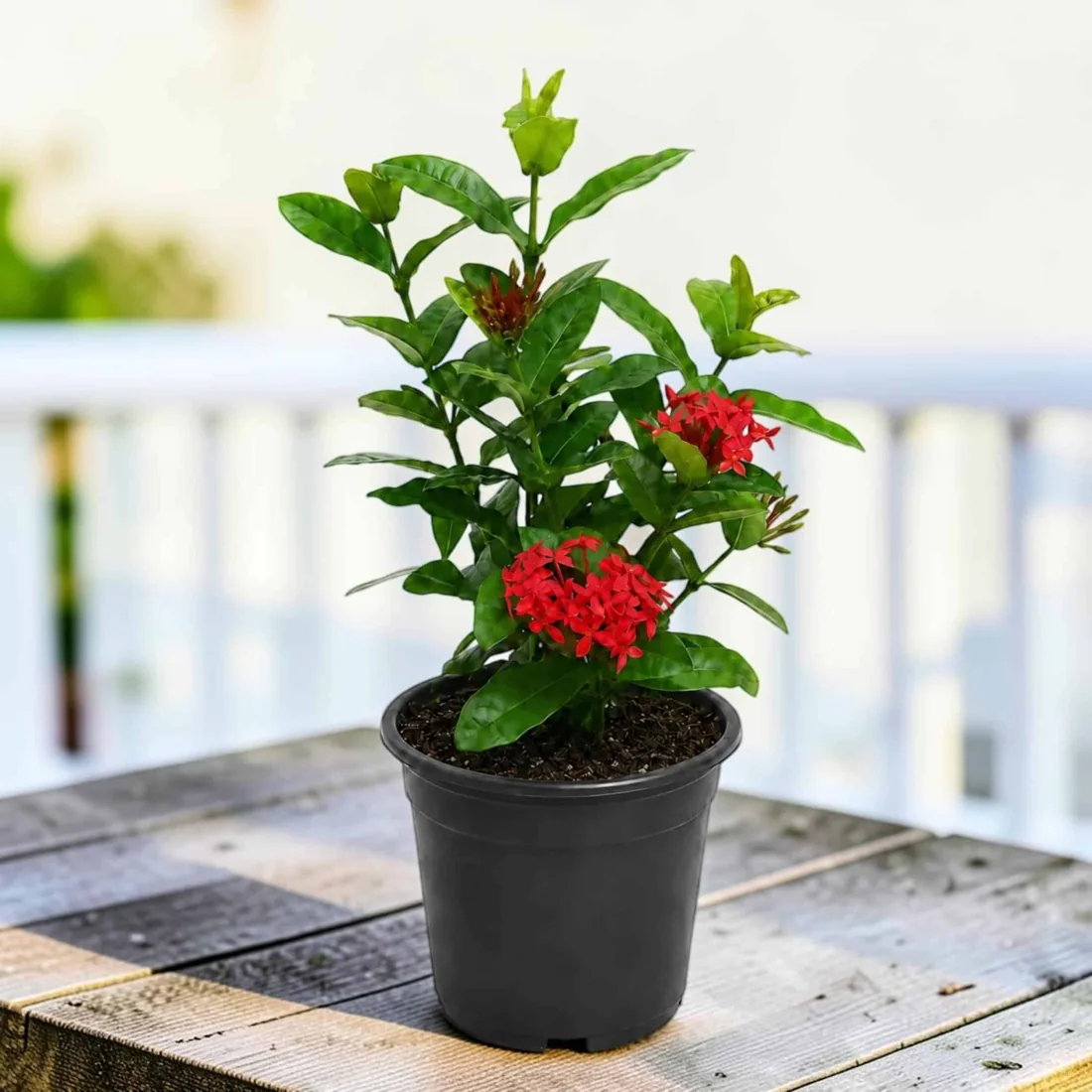
Ixora is a woody shrub, not a seasonal bedding flower. Its small flowers have a narrow tube ending in four spreading petals. New leaves may emerge bronze before becoming green. Dwarf forms and taller shrubs need different amounts of space, so do not identify a cultivar from flower colour alone. NC State’s Ixora profile describes these identification features.
The Surekha Red Ixora listing includes a 4-inch nursery pot. That is a starting container, not a promise that the mature shrub will stay that size. Choose a compact, branching plant and inspect both leaf surfaces before placing it beside other pots.
When your new plant arrives
- Unpack and inspect. Remove restrictive wrapping. Look for snapped stems, standing water and insects around leaf joints. Photograph delivery damage before removing affected parts.
- Check the root ball. Feel the mix beneath the surface. If it is moist, wait; if it is drying and the pot feels light, water slowly and drain. A wilted plant in wet mix needs a drainage check rather than another watering.
- Settle it into light. Begin in a bright, sheltered spot, then increase direct sun as the leaves remain firm and unscorched. Keep it separate while checking for pests.
- Leave sound roots alone. Repot when roots have filled the container or the medium no longer drains properly. Unpacking, heavy pruning, repotting and feeding together make the cause of later stress harder to trace.
Record where it receives sun and how the pot feels after watering. These simple observations give you a useful baseline for the next problem.
Give Ixora sunlight it can use
For flowering, start with a balcony, terrace or garden position receiving substantial direct sun. NC State defines full sun as at least six hours of direct sunlight daily; some afternoon shade is tolerated. A bright room can keep a plant alive while producing fewer flowers.
Observe the spot at different times rather than relying on its compass direction. A neighbouring building can shade a south-facing balcony. In exposed, hot conditions, give protection from the harshest afternoon heat if leaves repeatedly scorch or wilt despite adequate root moisture. Adjust gradually and watch the next growth.
If your available space is a dim indoor corner, choose a plant suited to it instead of repeatedly feeding Ixora. Our home light-placement guide explains how to judge the actual position.
Choose acidic soil and repot only when needed
Ixora’s acid preference is a practical concern. In alkaline conditions, a plant may struggle to obtain nutrients even when they are present. Use a packaged growing medium intended for acid-loving container plants, check its stated pH, and keep cement fragments, lime and building sand out of the pot. UF/IFAS recommends testing soil before attempting pH correction.
A medium must hold moisture while allowing excess water to pass through. “Organic” on a bag does not establish either its pH or drainage. Avoid packing a small shrub into a large tub of heavy soil.
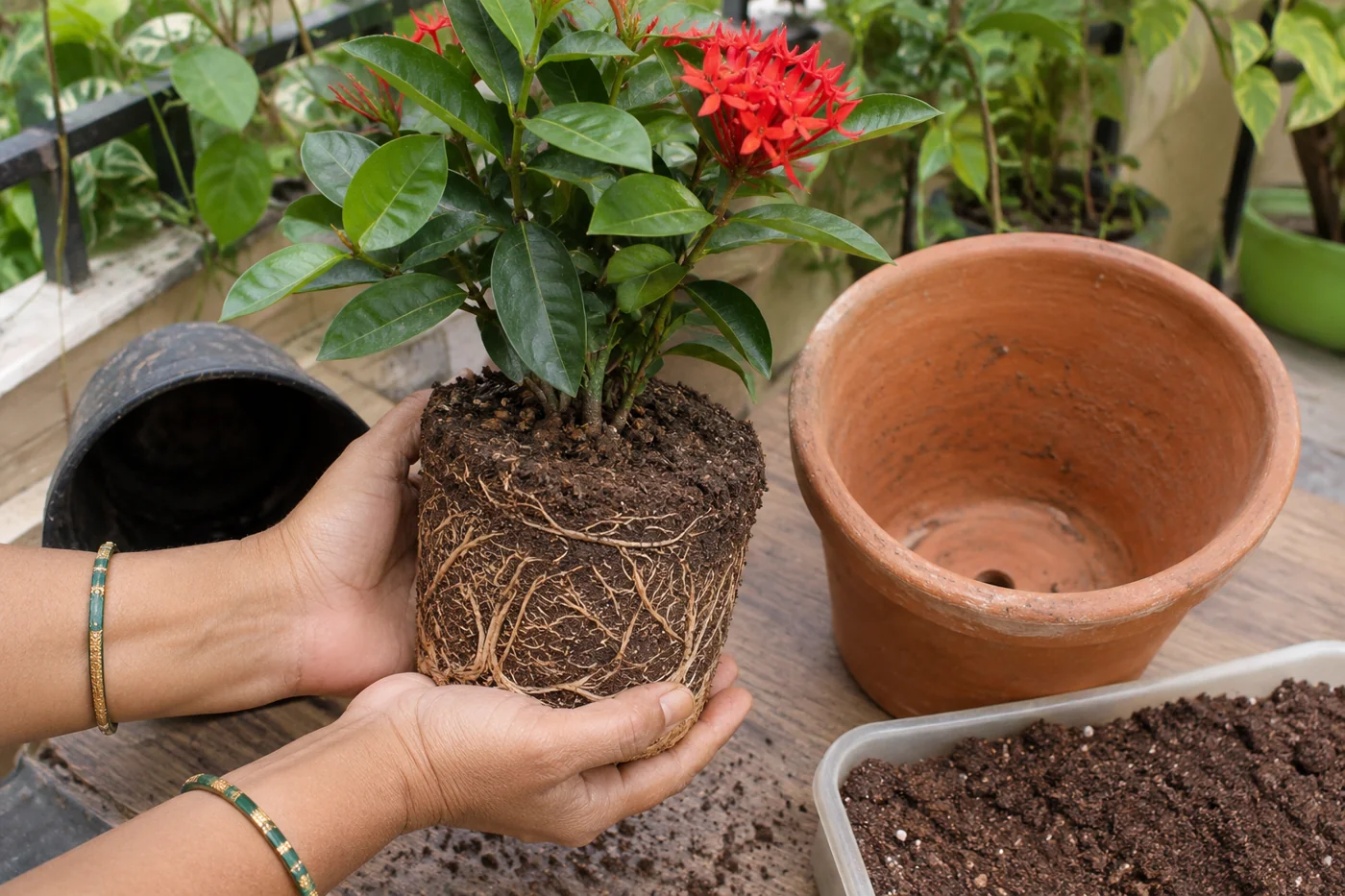
You need: a draining pot, suitable fresh medium, a watering can and a clean work surface. The RHS repotting guide supports a modest increase in container size.
- Confirm crowding. Slide the root ball out while supporting it. Dense circling roots are a better reason to move up than a few roots reaching a hole.
- Select the next size. As a worked example, a root-filled pot about 10 cm across could move to one about 13 cm across, with comparable depth. Avoid jumping straight to a much larger container.
- Keep the planting level. Add medium beneath, position the root ball, then fill around it. Do not bury the stems or firmly compress the mix. Gently ease circling outer roots if needed.
- Water through. Wet the medium until water escapes below. Empty the saucer and watch moisture while the plant establishes; avoid adding fertilizer to a mix that already contains feed.
For container handling in more detail, see our repotting walkthrough. Time non-urgent work for active growth, rather than a cold spell.
Water by the root zone, not the weekday
Feel below the surface and compare the pot’s weight with how it feels after draining. Water when the upper mix begins to dry while the root ball still retains some moisture. Apply slowly across the surface; ensure water enters the root ball rather than running only down a gap at the edge.
If the medium remains wet and the plant wilts, inspect the drainage holes, saucer and roots. Do not keep topping it up. The RHS container-care guidance recommends frequent moisture checks in warm or windy weather and checking below the surface even after rain.
- Hot, dry balconies: check daily; small nursery pots and windy positions can dry quickly. Give a repeatedly stressed plant temporary afternoon protection.
- Monsoon or humid coastal weather: let the root-zone check decide whether rain has already watered the pot. Shelter it from prolonged downpours if the mix stays saturated.
- Cool northern winters: use the sunniest sheltered location and lengthen watering intervals as drying slows. NC State notes cold intolerance below about 10°C; protect before frost or chilling exposure, with bright light if brought inside.
Our watering guide helps distinguish a genuinely dry root ball from a damp surface. A reservoir pot still needs drainage and moisture checks; it does not remove the risk of wet roots.
Feed and prune with flowering in mind
For an established plant making new growth, choose a fertilizer labelled for acid-loving ornamental plants and follow its container rate and interval. Check whether the potting mix already contains fertilizer. Do not use a fertilizer increase to compensate for shade, cold or wet roots.
UF/IFAS’s Ixora management advice favours suitable acid-plant feeding and warns that repeated pruning removes flowers. Its Florida feeding calendar should not become a fixed calendar for every Indian balcony.
Remove a faded flower cluster with a selective cut back to a suitable leaf pair. Shape long shoots after a flush rather than shearing every tip whenever the shrub looks untidy. Keep healthy shoots carrying developing buds. Reserve substantial shaping for the start of active growth, avoiding cold-stressed or newly delivered plants.
If you grow Ixora alongside the plants in our tropical flowering trio, assess each pot separately. The hibiscus and Madhu Kamini guides cover those plants’ distinct routines.
Why are Ixora leaves turning yellow?
Start with which leaves are changing, whether the veins remain green, and whether the root zone is wet or dry. UF/IFAS explains the link between alkaline conditions and chlorotic new growth. That pattern is a reason to investigate nutrient availability, not proof from one photograph.
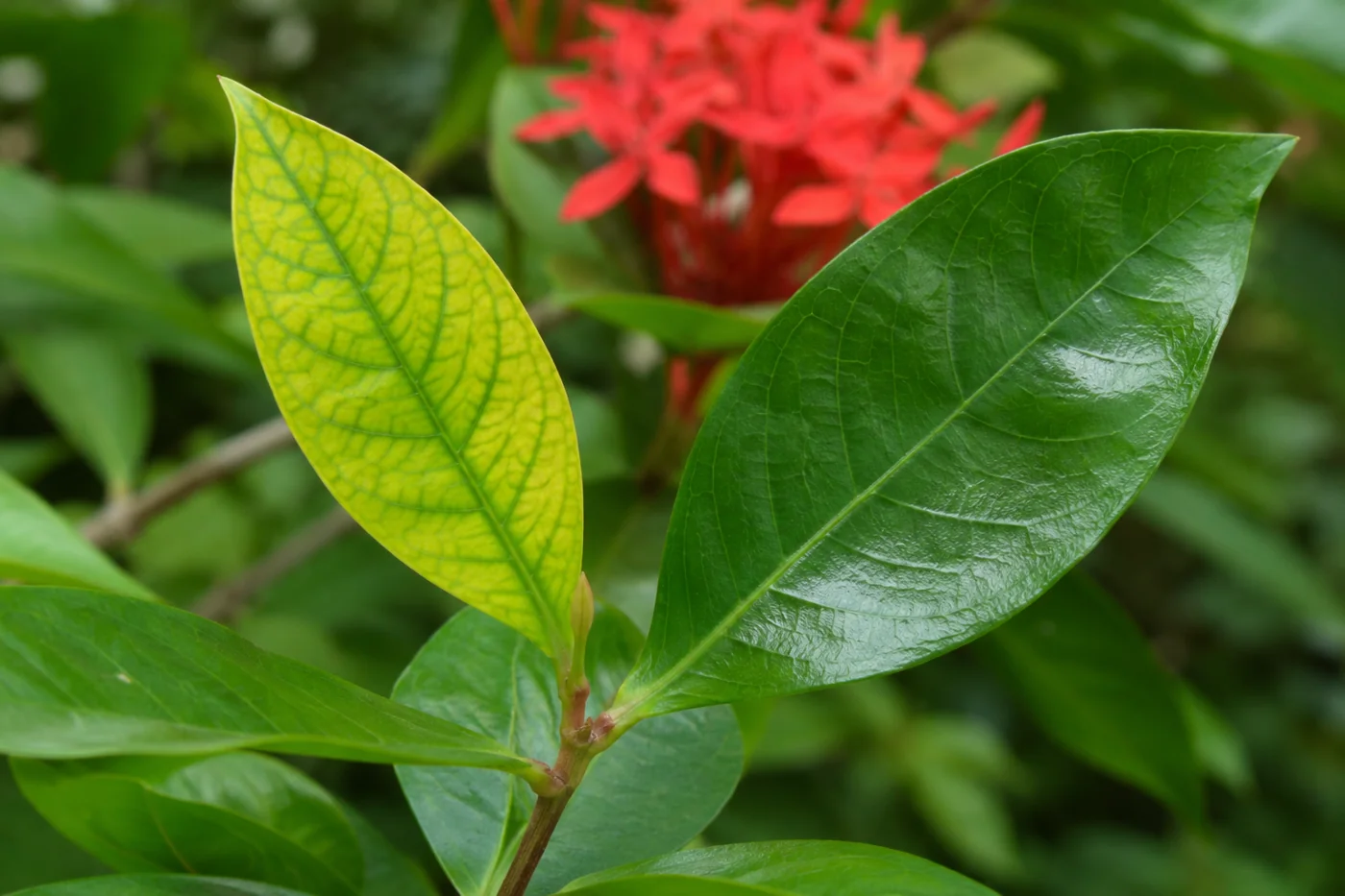
| Observation | Check first | First action and follow-up |
|---|---|---|
| Young leaves pale between greener veins | Growing-medium pH, previous feeding and root condition | Test the medium before adding amendments. Seek advice on a labelled micronutrient product if the evidence supports it; watch subsequent growth. |
| Yellowing plus wilt in wet mix | Drainage, standing water and soft or decaying roots | Stop additional watering while investigating. If roots are deteriorating, get help assessing repotting rather than treating it as a feeding problem. |
| Dry root ball, wilting or crispy margins | Whether water actually wets the centre of the pot | Water slowly, drain and reassess leaf firmness. Adjust exposure if the pot repeatedly dries too fast. |
| Sticky foliage, black coating or white fluff | Undersides and joints for sap-feeding insects | Separate the plant and identify the pest. Use the matching control guide, then inspect nearby plants. |
A black sooty coating can grow on insect honeydew; UC IPM explains why the honeydew source matters. Follow our mealybug guide for cottony insects, or the spider-mite guide if fine webbing and tiny moving specks fit.
Do not pour vinegar or lemon juice into the pot to chase an unmeasured pH. Keep feeds, tools and treated foliage away from children and pets. If a pesticide is needed, use a product whose Indian label covers the ornamental use, follow its precautions and avoid spraying open flowers or visiting pollinators.
Ixora not flowering: check these in order
- Count the sunlight. A bright-looking shaded balcony may be short of direct sun.
- Recall the last pruning. Regular clipping may have removed buds and their supporting shoots.
- Check growth conditions. Cold, repeated wilting, saturated roots or recent repotting can interrupt growth.
- Investigate pale new leaves. Review pH and nutrition after drainage and light, rather than adding a high-phosphorus feed automatically.
Change the identified problem and let healthy growth develop before judging the response. Warm conditions can allow repeated flower flushes; a recently shipped, stressed or cold plant cannot be promised flowers every month.
How to grow Ixora from a cutting
TNAU lists cuttings as a propagation method for Ixora. For home preparation, the following uses the RHS’s general semi-ripe shrub technique; its UK calendar is replaced here by the condition of the shoot.
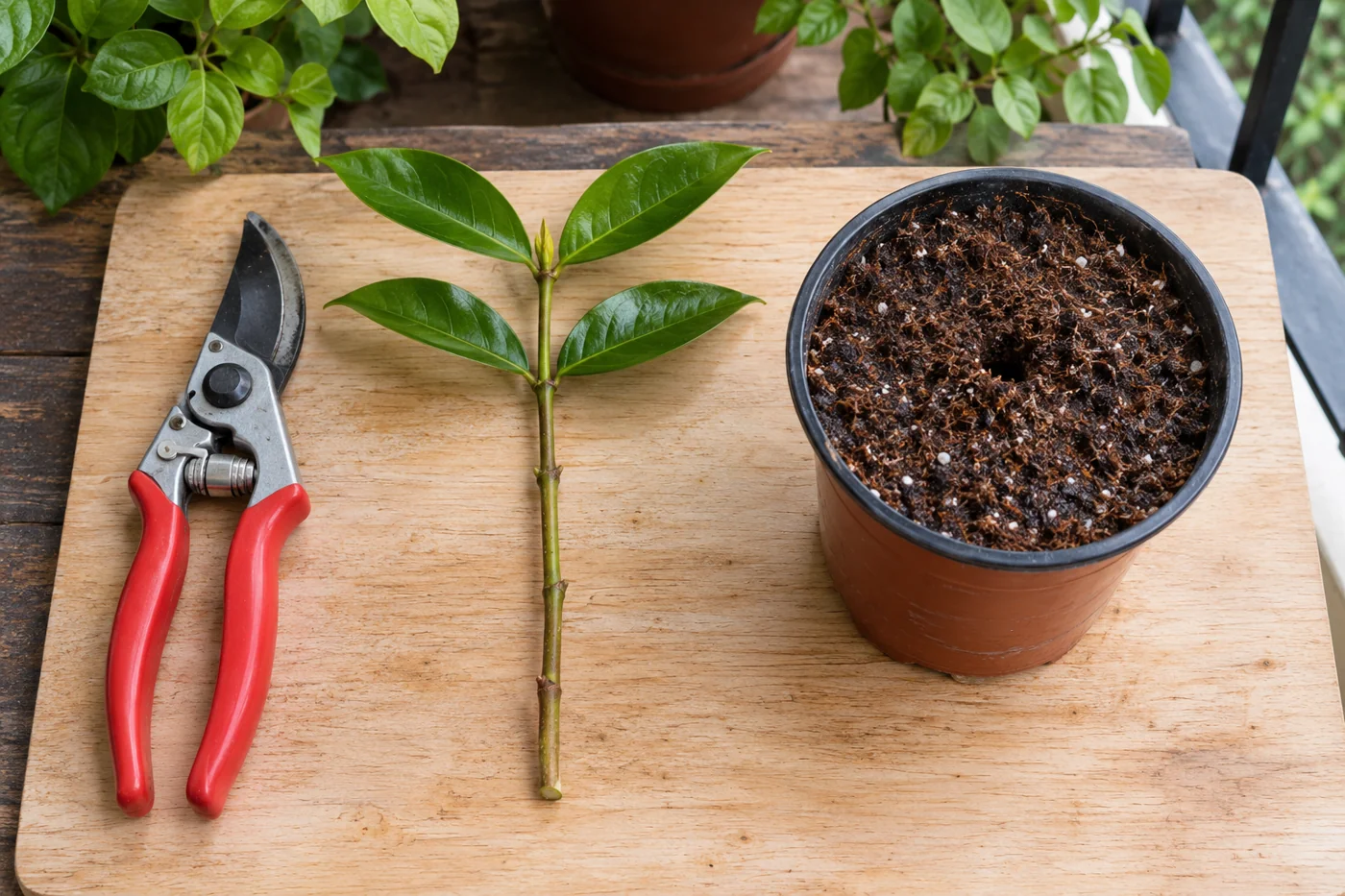
Gather: clean secateurs, a small draining pot, a pencil, clear cover and propagation medium. One RHS option is equal volumes of free-draining peat-free potting compost and horticultural sharp sand, rather than building sand.
- Choose healthy, non-flowering growth whose base has begun to firm. Prepare a cutting about 10–15 cm long, cutting below a leaf node.
- Remove lower leaves and the very soft tip, retaining about four leaves. Make a hole, insert the bare lower stem, then firm the medium gently.
- Water and drain. Cover loosely to retain humidity, keeping the cover off the leaves where possible. Place in warmth and bright light without direct sun.
- Keep the mix damp, ventilate excess condensation and remove decaying material. Wait for roots before potting individually; new leaves alone do not prove rooting. Gradually uncover established cuttings.
Delay propagation during a cold spell or while the parent is struggling. Rooting time varies with the shoot, warmth and humidity; there is no reliable universal day count for an Indian home.
Questions gardeners ask about Ixora
Can I keep Ixora indoors?
Only with adequate light. A very sunny window may work, especially for temporary winter protection. A dim decorative position is unlikely to support strong flowering.
Should I repot a flowering plant straight away?
Not simply because it has arrived. If roots and drainage are sound, let it settle. Repot when the root ball is congested or the medium has a problem that needs attention.
Will more fertilizer bring the flowers back?
Only when nutrition is the limiting issue. First check direct sunlight, pruning and root moisture. Adding feed cannot restore flower tips that have just been cut off.
Is every yellow leaf an iron deficiency?
No. Leaf age, root stress, watering, pests and nutrient availability all matter. Pale new growth with greener veins warrants a pH and root check before choosing a correction.
Can I use the same routine for every colour?
The basic checks are similar, but cultivar size and tolerance vary. Keep the plant’s label and judge its response instead of assuming every red, pink or yellow Ixora is the same variety.
How will I know the care changes are helping?
Look for firm new shoots, healthier subsequent leaves and a root ball that drains and dries predictably. Photograph the same shoot periodically. Review the conditions again if damage spreads or the roots remain persistently wet.
Start with the sun the plant receives and the condition of its roots. Once those are suitable, feeding and pruning become smaller, more deliberate decisions.
Written by the Surekha Agro Products plant care team. Last updated 19 November 2026.
Sources
- NC State Extension: Ixora identity and growing conditions
- UF/IFAS Gardening Solutions: Ixora
- UF/IFAS Extension: soil, feeding and pruning considerations
- RHS: repotting a container plant and container maintenance
- TNAU: landscape shrubs and propagation methods
- RHS: preparing semi-ripe cuttings
- UC IPM: sooty mould and honeydew