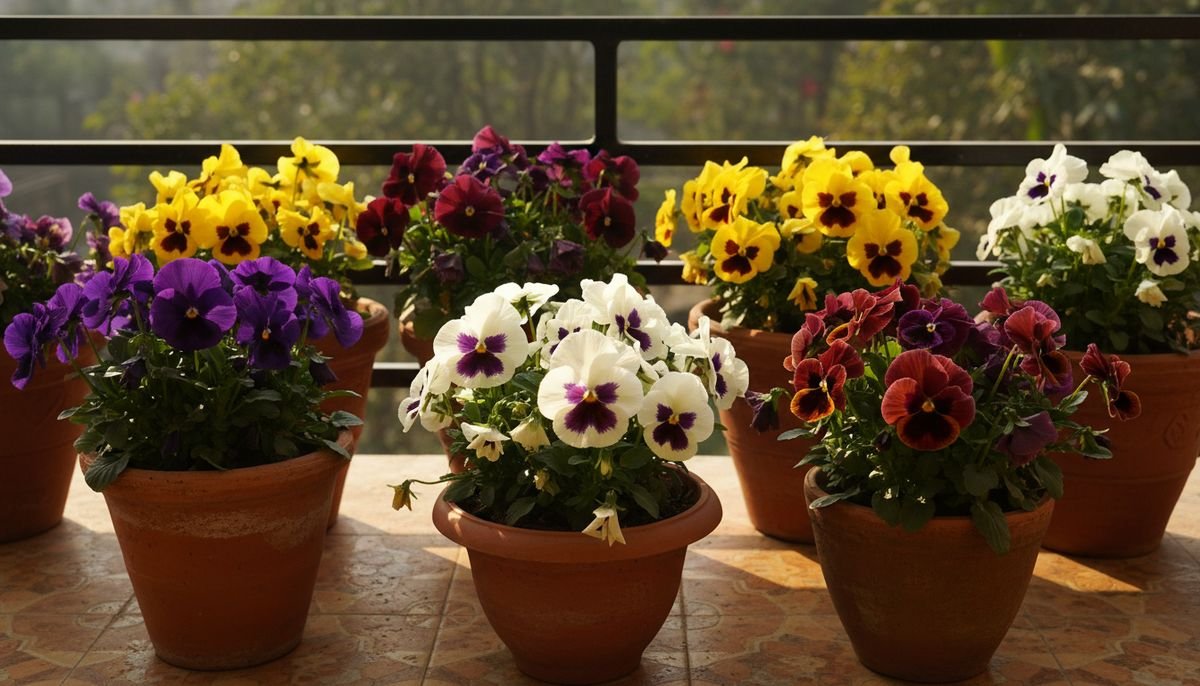
If you want a balcony full of colourful “faces” this winter, how to grow pansy plants well comes down to one thing: timing them to India’s short cool season. Pansies (Viola × wittrockiana) are cool-weather flowers. Sown at the right time and kept in sun, they give months of blooms in small pots. Sown too early or kept in shade, they stretch, sulk and die in the first warm spell.
This guide walks you through the whole cycle for Indian conditions: when to sow in your region, how to germinate the tiny seeds, the potting mix and pot size that work, daily care, and the problems Indian gardeners run into most often.
Quick answer: In most Indian plains, sow pansy seeds from late September to mid-November in a seed tray kept in bright shade, barely covering the seed. Germination is best at about 18°C, so wait for cooler nights. Move seedlings to 6–8 inch pots once they have 6–8 leaves, give at least 6 hours of direct sun, water in the morning only when the top inch is dry, feed lightly every 3–4 weeks, and pinch off faded flowers. Expect blooms from about December to March, ending when the heat returns.
Pansy at a glance
| Feature | Details for Indian home gardens |
|---|---|
| Botanical name | Viola × wittrockiana (violet family, Violaceae) |
| Plant type | Grown as a winter annual in India; dies back in summer heat |
| Size | About 15–23 cm tall and 23–30 cm wide (6–9 in × 9–12 in) |
| Sowing window (plains) | Late September to mid-November, depending on region |
| Germination temperature | Best around 18°C (64–66°F); poor in sustained heat |
| Light | Full sun (6+ hours) for the most flowers; tolerates part shade |
| Pot size | 6–8 inch pot per plant, or 3 plants in a 12 inch trough |
| Soil | Rich in organic matter, moist but well-drained |
| Flowering | Roughly December to March in the plains; can last 4–6 months in cool climates |
| Edible? | Flowers are edible, but not if the plant was sprayed with pesticides |
Why pansies need perfect timing in India
Pansies come from cool parts of Europe and Asia. Utah State University Extension describes their ideal range as roughly 4°C at night to 16°C during the day, and notes they fade and are usually discarded once really hot weather arrives. A production guide from Auburn University says pansies grow and flower best below about 18°C (65°F).
Most of India only offers that kind of weather for a few months. That is why pansy growing here is a race: the plant has to germinate, grow into a sturdy rosette, and flower during the cool window. If you sow in hot September weather, seeds germinate poorly. If you sow in late December, the plants are just reaching flowering size when March heat arrives.
Best sowing time by region
| Region (examples) | Sow seeds | Transplant | Typical bloom period |
|---|---|---|---|
| North Indian plains (Delhi, Punjab, Haryana, Lucknow, Jaipur) | Late September to October | November | December to March |
| Central and West India (Pune, Indore, Ahmedabad, Nagpur) | October to early November | Late November to December | Late December to February |
| East India (Kolkata, Patna, Bhubaneswar) | October to early November | November to December | December to February |
| Deccan plateau (Bengaluru, Hyderabad) | October to November | November to December | December to February or March |
| Hot coastal South (Chennai, Kochi, Mumbai) | Difficult from seed; try November in the coolest spot | December | Short, often January only; nursery plants are easier |
| Hills (Shimla, Darjeeling, Ooty) | Autumn for winter-spring bloom, or early spring sowing | As per local frost | Long season, often into summer |
These windows are guides, not rules. The real signal is night temperature. When nights in your city stay below about 20°C, it is a good time to sow. If you are reading this in mid-November in the North Indian plains, you can still sow now, or buy healthy seedlings from a local nursery for faster results.
What you need
- Fresh pansy seed. Pansy seed is small and loses vigour with age, so use a fresh packet and store any leftover seed in a cool, dry place.
- A seed tray or shallow pot with drainage holes.
- Seed-starting mix: fine cocopeat with a little vermicompost, or a sieved potting mix.
- Final pots: 6–8 inch pots, window boxes or troughs with good drainage.
- A spray bottle for gentle watering of seeds.
- Well-rotted compost or vermicompost and a balanced, low-nitrogen fertilizer.
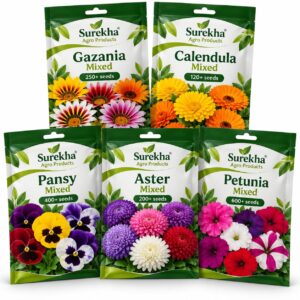
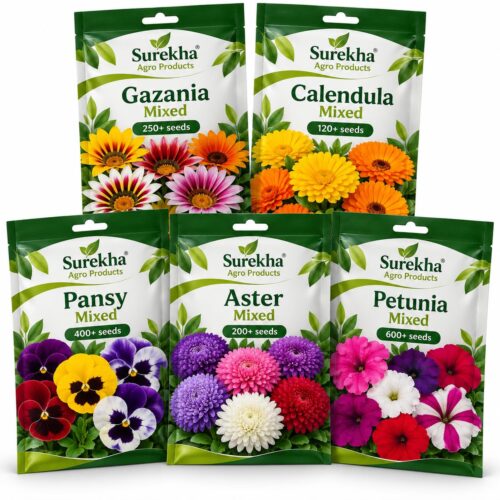
Pansies look best grown alongside other cool-season annuals. Our Premium Winter Flower Seeds Combo includes a mixed pansy packet along with gazania, calendula, aster and petunia, so you can plan a full winter balcony from one order.
How to grow pansy from seed: step by step
Step 1: Prepare the seed tray
- Fill the tray with moist seed-starting mix and level it gently. The mix should feel like a squeezed sponge, not soggy.
- Water the tray before sowing and let the extra water drain away. This keeps the tiny seeds from washing to one corner later.
Step 2: Sow thinly and cover very lightly
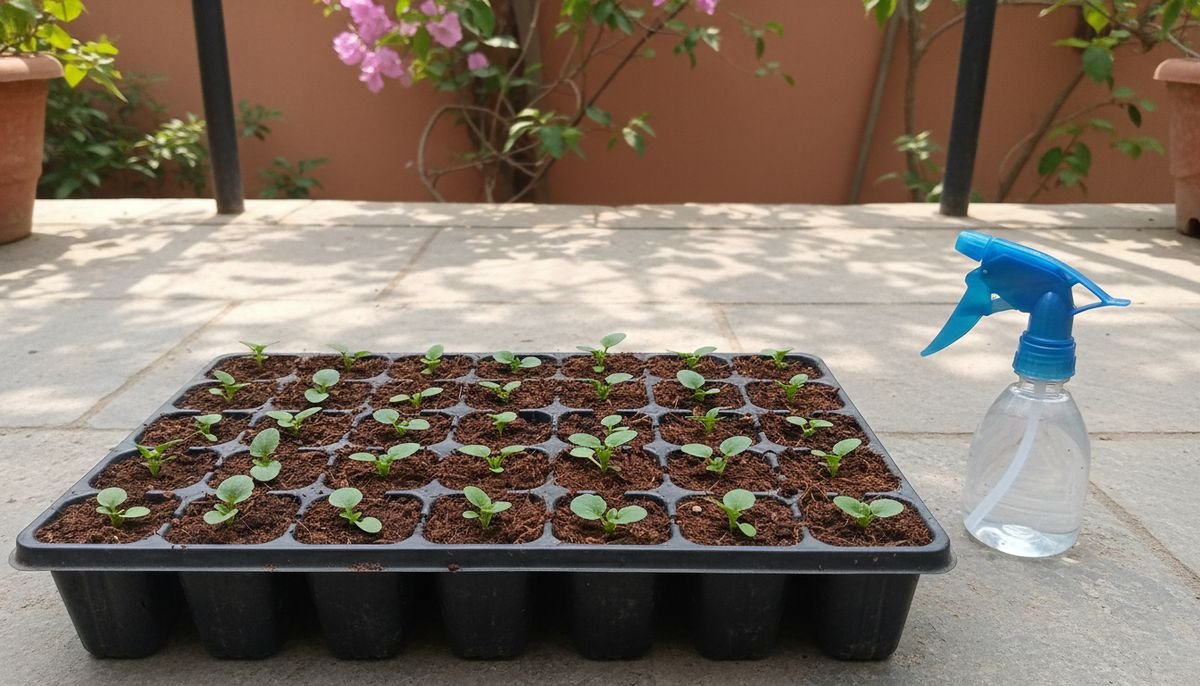
- Scatter seeds thinly, or place 2–3 seeds per cell in a plug tray.
- Cover with only a dusting of mix or fine sand, about 3 mm (1/8 inch), and press down lightly. Utah State University Extension recommends this shallow depth.
- Mist the surface. A sheet of plastic or a damp cloth over the tray helps hold moisture; remove it as soon as you see sprouts, which usually appear in about 5–8 days in suitable temperatures.
Heavy covering is a common mistake. In tests reported in the Auburn University guide, uncovered pansy seed under light germinated slightly better than covered seed, so a very thin cover is all you need.
Step 3: Keep the tray cool
Temperature matters more for pansies than for most flowers. The Auburn guide cites an ideal germination temperature of about 18°C and reports that holding seeds at about 32°C (90°F) for more than a day cut germination from about 90% to 55%. In Indian conditions, that means:
- Keep the tray in bright shade, such as an east-facing windowsill or under a shade net, never in hot afternoon sun.
- Avoid placing trays on a hot terrace floor or near a west wall that radiates heat in the evening.
- If days are still warm, sow a week or two later rather than forcing it.
Step 4: Water lightly and thin
Water little and often, in the morning. Seedlings die quickly if the surface dries after germination, but they also rot if the mix stays waterlogged. Once seedlings are up, thin them so each has space; our guide on how to thin seedlings in pots explains a gentle snip method that works for flowers too.
Step 5: Transplant at 6–8 leaves
- Pansies are usually ready to move about six weeks after sowing, once they have 6–8 leaves.
- Give them a few days of more sun outdoors first. The same idea as hardening off vegetable seedlings applies here.
- Plant each seedling at the same depth it was growing, firm the soil gently and water well.
- Space plants about 18–30 cm (7–12 inches) apart in troughs, or one plant per 6–8 inch pot.
If you buy nursery seedlings instead, choose short, stocky plants with at least 4–5 strong leaves rather than tall plants already in flower.
Best potting mix and pots for pansies
NC State Extension describes pansy as preferring humus-rich soil that stays consistently moist but drains well. For pots, a simple mix that works in most Indian cities is:
- 40% garden soil or red soil
- 30% well-rotted compost or vermicompost
- 30% cocopeat, with a handful of coarse sand if your soil is heavy clay
For more detail on ratios, see our DIY potting mix guide.
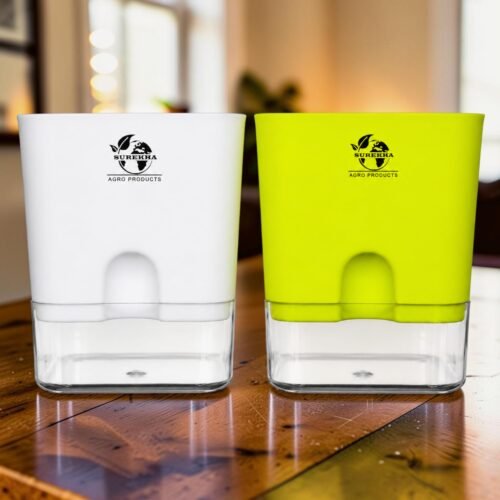
Pansies dislike drying out completely, which makes them a good match for self-watering planters on busy days. The wick keeps the root zone evenly moist without leaving the plant sitting in water. Our self-watering pots guide explains how to set one up, and a pair like the Self Watering Square Pots suits one pansy plant per pot on a sunny windowsill.
Daily care for more flowers
Sunlight
Give pansies at least six hours of direct sun. Both NC State and Utah State University list full sun to part shade, but Utah State warns that too much shade reduces the number and size of flowers and makes plants spindly. In India’s winter, the sun is gentle enough that a south- or east-facing balcony is ideal. If you are not sure how much sun your balcony gets, our balcony sunlight guide shows how to check it.
Watering
- Water when the top 2–3 cm of soil feels dry, which may be every 2–3 days in a dry North Indian winter and less often in humid places.
- Water in the morning. Utah State University Extension advises against watering in the late afternoon or evening because damp leaves overnight encourage disease.
- Water the soil, not the flowers, and empty saucers after 30 minutes.
Feeding
Mix compost into the pot before planting, then feed lightly every 3–4 weeks with a balanced or slightly phosphorus-rich fertilizer at the label rate, such as a diluted liquid feed or a spoon of vermicompost. Avoid heavy nitrogen feeds: Utah State notes that high nitrogen produces soft foliage and can lead to rot. Always water the pot before applying fertilizer.
Deadheading
Pinch or snip off faded flowers with their stalks every few days. Removing them stops seed pods forming and, according to both NC State and Utah State, extends the flowering period considerably. It is the single easiest way to get more blooms from the same plant.
Should you save pansy seed?
Usually not. Utah State University Extension points out that seed collected from your own pansies rarely produces flowers like the parent, and letting plants set seed reduces flowering. Buying fresh seed each season gives more reliable results.
Common pansy problems and fixes
| Problem | Likely cause | What to do |
|---|---|---|
| Seeds did not germinate | Too hot, buried too deep, or old seed | Resow when nights are cooler, cover only lightly, keep the tray in bright shade, and use fresh seed |
| Seedlings collapse at soil level | Damping off from soggy mix and poor airflow | Use clean mix, water from below or mist, and avoid crowding |
| Long, floppy stems and few flowers | Too much shade or too much nitrogen | Move to 6+ hours of sun and switch to a low-nitrogen feed |
| Flowers getting smaller | Seed pods forming, hungry plant, or rising heat | Deadhead regularly and feed lightly; small flowers in March are normal |
| Grey fuzzy mould on flowers | Grey mould (botrytis) in damp, still air | Remove affected parts, water in the morning, improve airflow |
| White powder on leaves | Powdery mildew | Remove badly affected leaves, space pots apart, avoid wetting foliage |
| Spots on leaves | Fungal leaf spot or anthracnose | Pick off spotted leaves, keep foliage dry and do not reuse the same soil year after year |
| Fine webbing, speckled leaves | Spider mites in dry weather | Spray leaf undersides with plain water, isolate the pot, and use a horticultural soap or neem-based product as per label if needed |
| Holes in leaves and petals, slime trails | Snails and slugs | Hand-pick in the evening and keep pots off damp ground |
| Plant wilts and dies in March or April | Summer heat | This is the natural end of the season; compost the plant and sow again next autumn |
NC State Extension lists fungal leaf diseases, pansy leaf spot, powdery mildew, slugs, snails and red spider mites as common problems. Utah State also warns that a soil fungus (Pythium) builds up when pansies are grown in the same soil year after year, so refresh or replace pot soil each season.
Are pansies safe around pets and children?
Pansy flowers are edible: NC State Extension notes they can be used to decorate cakes and salads. It also cautions that nursery-bought plants may have been treated with systemic pesticides, so only eat flowers from plants you have grown yourself without chemical sprays.
Garden pansy does not appear on the ASPCA’s toxic and non-toxic plant list at the time of writing (the “pansy orchid” listed there is a different plant). Even with edible plants, a dog or cat that chews a lot of leaves can get an upset stomach. The bigger risk is usually what goes into the pot: fertilizers, bone meal and pest sprays. Store them out of reach, and read our bone meal fertilizer guide for tips on using it safely around pets. If a pet eats a fertilizer or pesticide, contact your vet promptly.
Design ideas for a winter pansy balcony
- Window boxes: Three pansies in a 24 inch window box, mixing one dark colour with two light ones, read well from a distance.
- Mixed winter pots: Pair pansies with calendula or petunia in a large pot; put the pansies at the front edge where their faces are visible.
- Single-colour groups: A row of identical pots in one colour looks tidy on a narrow railing ledge.
- Edible garnish pot: Keep one spray-free pot near the kitchen for garnishing desserts and salads.
Frequently asked questions
Which month is best to sow pansy seeds in India?
In most plains, October is the safest month, with late September possible in the north and early to mid-November in warmer central and southern cities. Sow when nights drop below about 20°C so the seeds germinate in cool conditions.
How long do pansy seeds take to germinate?
In cool conditions, sprouts usually appear in about 5–8 days, though some seeds may take longer. Warm conditions slow germination and reduce the number of seeds that sprout.
How long does pansy take to flower from seed?
Expect seedlings to be ready for transplanting in about six weeks, with first flowers usually appearing several weeks after that. In practice, an October sowing in the plains typically flowers from December.
Can pansies grow indoors?
Not well. Pansies need several hours of direct sun to flower, so a bright balcony, terrace or sunny windowsill is far better than a room away from windows.
Can I keep my pansy alive through the Indian summer?
In the plains, usually not. Pansies naturally decline in heat, so treat them as a winter annual and sow fresh seed next autumn. In the hills, plants may continue into summer.
Why are my pansy plants tall with few flowers?
The usual causes are too little sun, too much nitrogen fertilizer or crowding. Move pots to a spot with 6+ hours of sun, switch to a low-nitrogen feed and deadhead regularly.
What is the difference between pansy and viola?
Both belong to the genus Viola. Garden pansies have larger flowers, often with dark “face” markings, while violas and Johnny jump-ups have smaller, more numerous flowers. They are grown the same way.
Conclusion
Pansies reward gardeners who respect the calendar. Sow when the nights cool down, keep seed trays shaded and barely covered, move sturdy seedlings into sunny pots, water in the morning and pinch off old flowers. Do that, and a few small pots can keep your balcony full of colour right through the Indian winter.
Sources: NC State Extension Gardener Plant Toolbox: Viola × wittrockiana; Utah State University Extension: Growing Pansies (PDF); Kessler, Hagan and Cobb, Auburn University: Pansy Production and Marketing (PDF); ASPCA Toxic and Non-Toxic Plants list.