
You can grow broccoli in pots in India when the variety and growing season suit your local conditions. Start with one plant in a spacious container, a fertile growing mix that drains freely, consistent moisture and a sunny position. Broccoli is a cool-season crop; Iowa State Extension recommends at least six hours of direct sun. A cooler growing window is usually a better starting choice than an exposed hot-season balcony.
For a first attempt, plan one plant and follow it from nursery stage to harvest. This guide explains a practical container setup, regional season checks, sowing, transplanting and what to watch as the head develops. It does not promise a fixed head size or harvest date for an unnamed variety.
When should you grow broccoli in India?
Choose a period when the plant can develop its head in suitable cooler conditions. University of Minnesota Extension notes that summer heat can harm head quality. Its cultivation principles are useful, but its Minnesota sowing months are not an Indian planting calendar.
- Northern plains: investigate a locally recommended cooler-season sowing window and allow for the variety’s nursery and growing period. Check the weather you expect when the head will form, not only the day you sow.
- Plateau and inland cities: assess your balcony’s actual heat and light. A sheltered morning-sun position can behave differently from a pot beside a hot west-facing wall.
- Warm coastal and southern lowland locations: confirm local variety suitability before buying seeds. A national “winter vegetable” label does not establish that your balcony will provide cool conditions.
- Hill locations: follow local horticultural advice for planting and cold protection. Do not assume an unacclimatised nursery plant can tolerate the same conditions as an established crop.
Variety recommendations can be regional. An ICAR-IARI article about Pusa Purple Broccoli-1 describes a particular subtropical variety for the National Capital Region. That example shows why the variety matters; it does not identify the cultivar in a generic broccoli seed packet or establish that all broccoli suits all Indian regions.
What should you check on the seed packet?
Look for the variety name, suitable sowing season, sowing depth, transplant guidance and maturity information. Check whether the quoted days run from sowing or transplanting. Record those details before starting so you can compare the plant with the right timetable later.
What size pot should you use for broccoli?
A practical first setup is one plant in a container of roughly 20 litres. This is a starting choice, not a universal minimum for every cultivar. Maryland Extension’s container guide illustrates a mature broccoli plant in a five-US-gallon bucket, approximately 19 litres.
Check usable volume and depth, not just the top diameter. Give the leaves room to spread beyond the rim without crowding neighbouring pots. Keep the container safely inside the balcony and consider its weight once the growing mix is wet. Use our grow bag size guide when comparing container labels.
| Decision | Practical starting point | What to verify |
|---|---|---|
| Plant count | One plant in your first pot | Available room for roots and spreading leaves |
| Container | About 20 litres, with a working drainage route | Usable volume, stability and wet weight |
| Light | A position offering at least six hours of direct sun | Sun at the actual pot position in this season |
| Season | A suitable cooler growing window | Local recommendations and the variety’s instructions |
| Growing mix | A container medium that retains moisture and drains | Ingredients, existing feed and product directions |
Use a suitable vegetable-container mix or follow a coherent recipe such as our DIY potting mix guide. Do not add a collection of amendments simply because they are available. Maryland’s guide also advises against gravel or broken-pot layers as a drainage fix.
How do you grow broccoli from seed in a pot?
Start a small nursery batch
Use a clean seed tray or individual nursery cells with an appropriate seed-starting medium. Follow your packet’s depth instructions. As general guidance, Utah State University Extension gives a seed depth of a quarter to half an inch, approximately 6–12 mm.
- Label the sowing. Note the variety and date so that the nursery stage does not get mixed up with the later transplant date.
- Water gently. Keep the medium moist while the seeds emerge, checking the cells rather than relying only on a misted surface.
- Keep the strongest seedling for each final position. Use our thinning guide when seedlings become crowded.
- Review transplant readiness. Utah State describes suitable transplants with four to six mature leaves and developed roots. Use plant condition and packet guidance together.
A nursery calendar is a planning aid. Do not hold seedlings in tiny cells indefinitely because the final pot is not ready. Prepare the container and the outdoor position before the planned move.
Acclimatise before transplanting
If seedlings were raised under protection, introduce outdoor conditions gradually. Follow our hardening-off guide, especially when moving to a brighter or windier position.
Support the root ball as you remove the seedling. Plant at its previous growing level and water it into the new medium; this planting-level guidance is described by Minnesota Extension. Avoid gripping the delicate stem while handling the plant.
How should you water and feed broccoli in containers?
Broccoli needs a steady supply of moisture and nutrients as it grows. Minnesota Extension stresses that water stress can lead to disappointing heads. In a pot, check the growing mix and drainage regularly instead of applying a field watering schedule without adjustment.
- Before watering: check moisture below the surface and note how the container feels.
- After watering: check that excess water has a route out and that the pot is not standing in a full saucer.
- As leaves and the head develop: keep a record of drying and plant response. Reassess the routine when the weather changes.
Check whether your potting mix already contains fertiliser. For additional feeding, use a product suitable for edible container crops and follow its label. A field recommendation expressed per row or hectare should not be converted into an improvised handful for a pot. Seek local advice or a suitable growing-media test if growth remains poor.
Light remains part of the care plan. Recheck your balcony sun map if a neighbouring plant or seasonal shadow starts shading the broccoli.
What should you check if your broccoli is struggling?
Leaves grow, but there is no head
Review the variety’s maturity information, the sowing and transplant dates, heat during head development, light and the feeding record. Minnesota Extension identifies hot conditions as one reason broccoli may fail to form a crown. Do not diagnose a fertiliser shortage from the absence of a head alone.
A small head appears unusually early
This can be “buttoning,” where a plant forms a small premature head. Utah State’s broccoli guide associates it with stress and overmature transplants. Compare the plant’s nursery history and growing conditions before buying another amendment.
There are holes in leaves or insects under them
Inspect the undersides, growing centre and nearby leaves. Utah State lists aphids and leaf-feeding caterpillars among broccoli pests. Photograph the insects and damage, and seek identification from a local nursery or horticultural service if you are unsure. Do not assume every hole calls for a spray or apply an ornamental-plant treatment to an edible crop.
Keep notes about what changed first: weather, watering, position or visible insects. This gives you better evidence than treating several possible causes at once.
When is broccoli ready to harvest?
For heading broccoli, harvest while the head is compact and the flower buds are still closed. Iowa State’s guide gives 60–75 days after transplanting for its discussed crop, depending on cultivar. Treat that as context, not a promised timetable for your packet or Indian balcony.
Use the packet’s maturity guidance and inspect the head as it develops. Cut with a clean tool when it is ready, taking a short section of stalk. Some plants produce usable side shoots after the main head is removed; their development varies. Keep caring for a healthy plant if you want to see whether yours produces them.
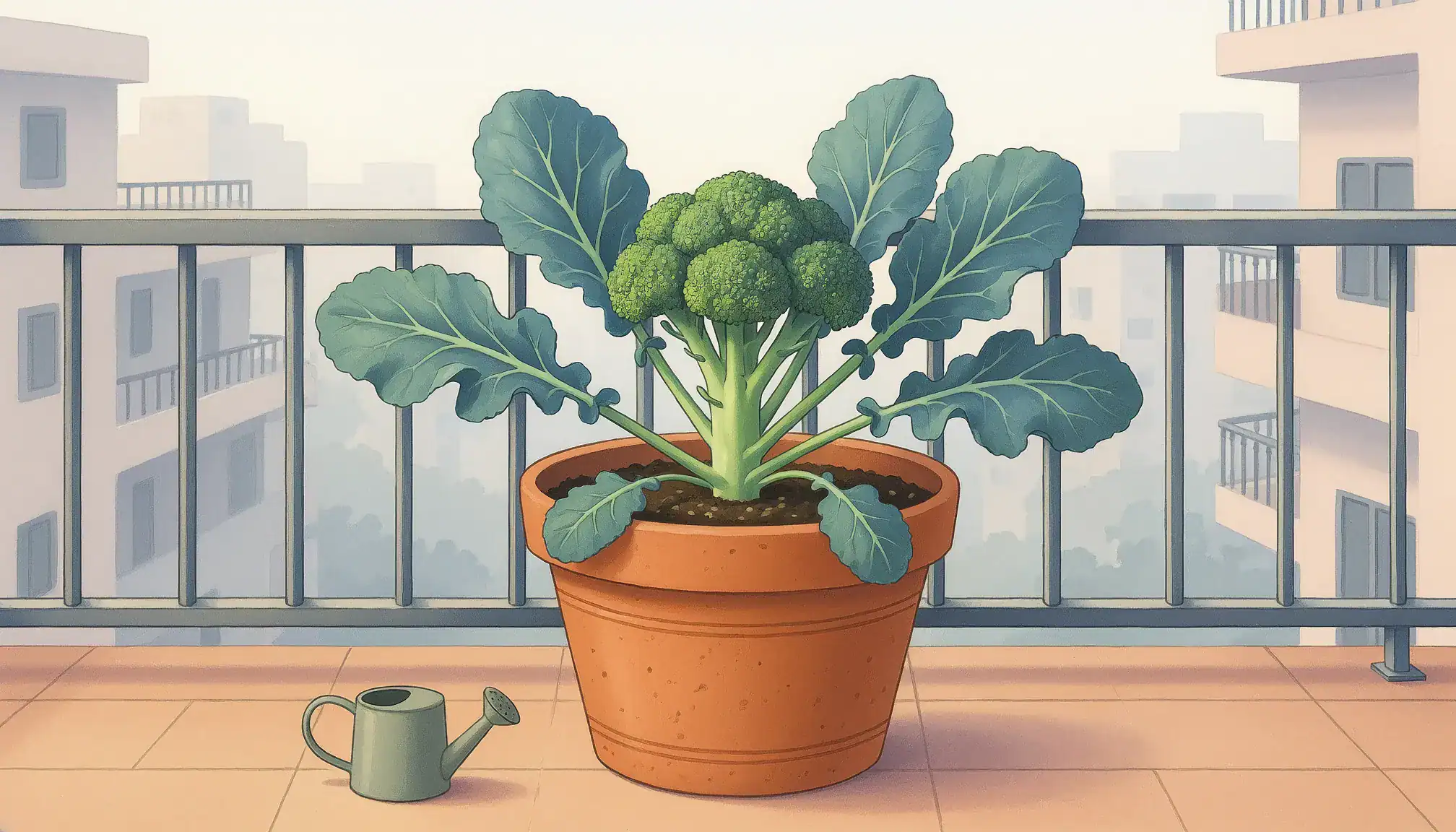
Do not wait for the head in an illustration to match your own plant exactly. The closed buds and actual condition of your crop are more useful signals than a target photograph.
Frequently asked questions
Can broccoli grow in grow bags in India?
Yes, with suitable container capacity, drainage, seasonal conditions and care. Start with one plant and check the bag’s usable volume. A grow bag cannot compensate for an unsuitable variety or excessive heat.
Can I grow two broccoli plants in one small pot?
For a first attempt, give one plant its own spacious container. If you intend a larger shared planter, check cultivar spacing and the planter’s actual usable area before increasing plant numbers.
Can broccoli grow indoors beside a window?
A bright-looking room does not establish adequate crop light. Measure direct sun at the growing position. This guide is for outdoor container growing; an indoor lighting system needs a separate plan.
Does broccoli regrow after cutting?
Some heading plants produce smaller side shoots after the central head is harvested. Do not expect another identical central head or guaranteed repeat harvests. Check the variety’s growth habit.
How many days does broccoli take from seed?
Check the packet and distinguish days from sowing from days after transplanting. Add the nursery period only when the quoted maturity period starts at transplanting. Weather and variety can shift the actual timing.
Ready to start? View our Broccoli F1 Seeds and check the packet’s cultivar and sowing directions before buying. Start with one suitable container and a local-season plan, then use your notes to decide whether to grow more.