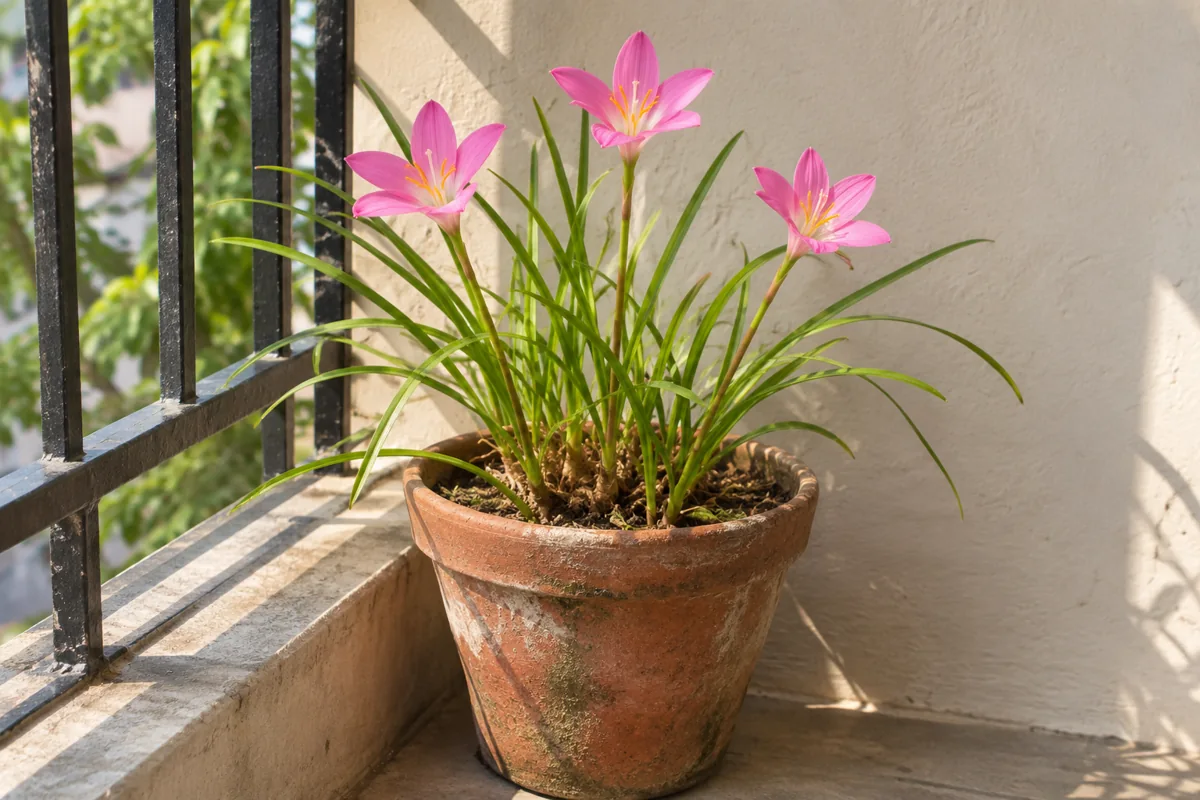
Rain lily care starts with sun, a freely draining pot and watering that follows active growth. Plant bulbs at the depth recommended for their identified type, keep green leaves after flowering and protect the pot from prolonged waterlogging. Expect seasonal flushes rather than continuous flowers; recently planted bulbs may need time to settle.
The name can be misleading: a rain lily responds to wet weather, but a pot that stays full of water is a different environment. The other common mistake is treating every small flower bulb like amaryllis. Start by finding out which bulb you have.
Rain lily care at a glance
| Decision | Useful starting point |
|---|---|
| Identity | Usually Zephyranthes; keep the species or cultivar label. |
| Position | Sun to partial shade; protect from severe afternoon heat where needed. |
| Container | Open drainage holes, room for roots and several bulbs without squeezing them together. |
| Depth | Species and supplier guidance first. The measured pink-rain-lily example below is not a rule for every pack. |
| Water | Keep an actively growing root zone moist without standing water; reduce watering as growth slows. |
| After flowers | Remove spent flower stems if not saving seed; keep healthy foliage. |
| Safety | Ornamental bulbs are not edible. Keep loose bulbs and plants away from children and chewing pets. |
Identify the bulb before choosing planting depth
Zephyranthes produces small bulbs, tufts of narrow leaves and crocus-like flowers. White, pink and yellow forms exist, with different flowering seasons. Rain lily is a common name shared with related plants, including Habranthus. The NC State genus profile explains this diversity. A flower colour alone does not establish a cultivar.
For a labelled pink rain lily, Z. minuta is also sold under the older name Z. grandiflora. White Z. candida has separate guidance. Neither is the same planting task as the much larger bulb in our amaryllis pot guide.
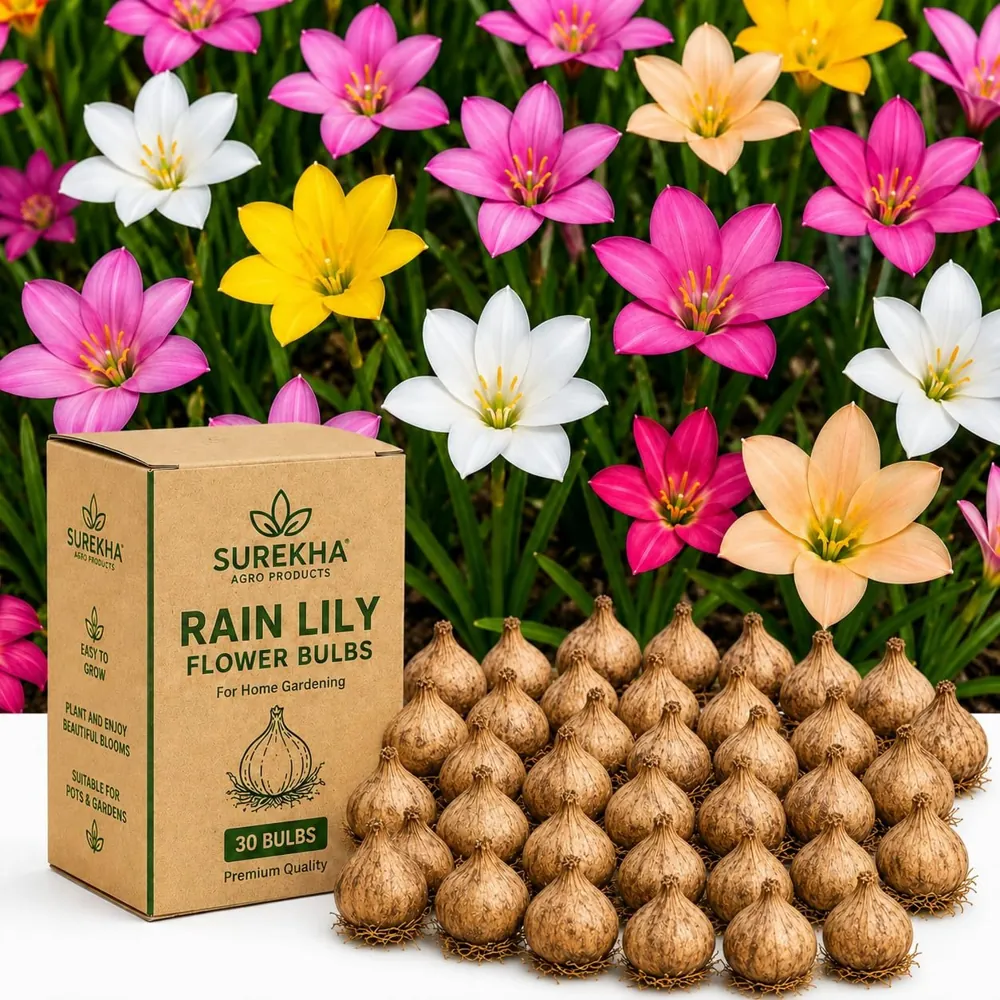
Our Rain Lily Flower Bulbs pack contains 30 planting bulbs; pots, soil and fertiliser are separate. Its current description does not name a species or promise a particular colour mix. Ask for that information and the recommended planting depth before using a species-specific recipe.
How to plant rain lily bulbs in a pot
Gather firm bulbs, a clean pot with drainage holes, fresh container potting mix, gloves, a small trowel, a ruler and a label. Choose a mix that stays crumbly after moistening rather than forming a sticky clay lump. Avoid filling the pot with compacted garden soil.
Choose a mild planting window. For tender pink rain lilies, Wisconsin recommends outdoor planting after frost risk has passed. On a frost-free Indian balcony, assess the supplied type and current growing conditions rather than waiting automatically for a monsoon date. If bulbs arrive during a cold spell, ask the supplier about short-term storage or protected planting for that type.
- Check the bulbs. Keep firm ones with an intact base. A dry outer tunic is normal; a collapsing base, wet softness or decay smell needs closer inspection. Set suspect bulbs apart and contact the supplier about newly delivered stock. Do not bury a mushy bulb among healthy ones.
- Fit the pot to the group. For a small trial, a pot about 20 cm across and 15 cm deep can accommodate a few small bulbs, provided there is space below them for roots. This is a practical example, not a minimum for every variety. Use more pots rather than forcing all 30 bulbs into one small container. Check that water can leave every hole.
- Set up the root zone. Add lightly dampened mix. Arrange the bulbs with gaps between them and allow room at the rim for watering. For a nursery-grown clump, preserve its existing soil level. The RHS bulb growing guide advises retaining the previous depth for container-grown bulbs.
- Measure the correct cover. For identified Z. minuta, Wisconsin Extension specifies about 2.5 cm (1 in) of soil above the bulb’s top, with bulbs 5–10 cm (2–4 in) apart in the ground; containers can be closer without bulbs touching. Measure cover above the bulb, not from the base of the hole. The RHS profile for Z. candida instead gives 10 cm planting depth for its UK conditions. These instructions describe different plants and contexts. Follow the supplied type’s instructions rather than averaging them.
- Plant and settle. Position the pointed neck upwards and the basal plate or roots downwards. Fill gently at the chosen depth and water to settle the mix. Let runoff escape, then empty the saucer. Label the type and planting date.
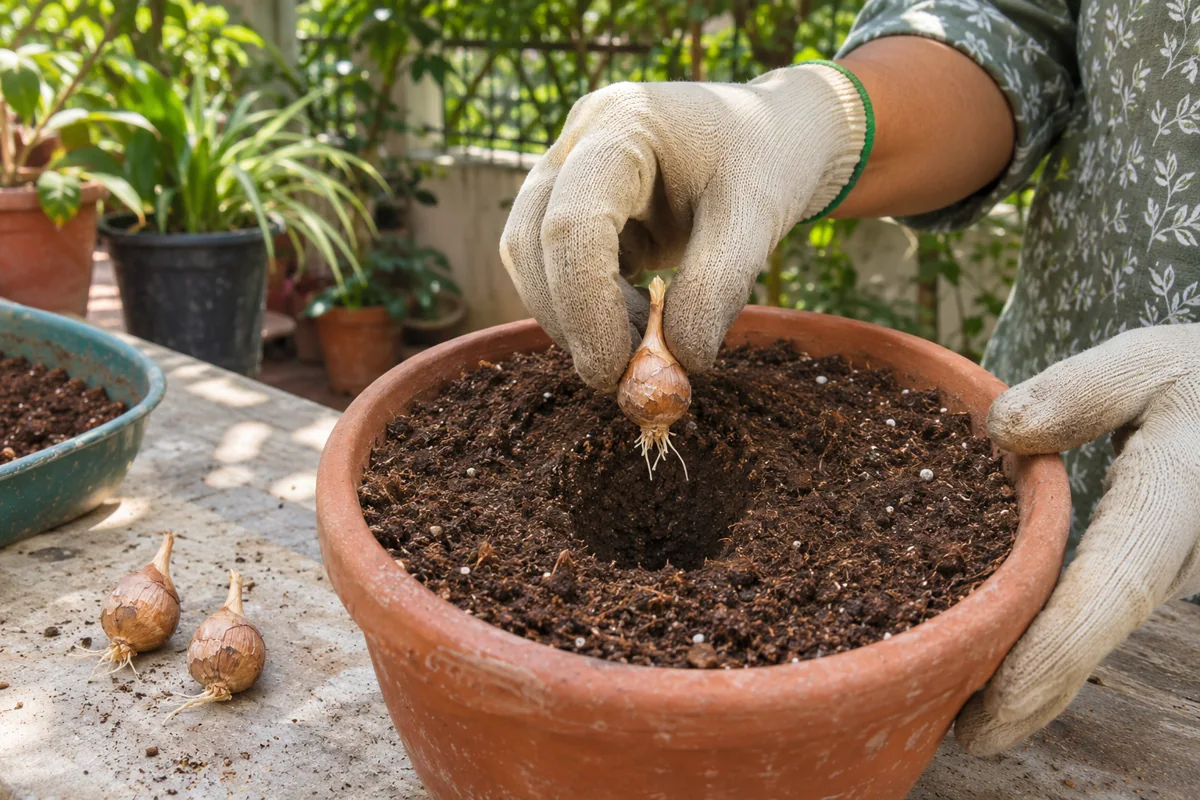
Check for fresh shoots and stable, firm bulbs rather than digging up the whole batch repeatedly. If nothing emerges, review the supplier’s expected window, temperature and moisture before lifting one suspect bulb. A newly planted batch is not a reliable source of immediate flowers: Wisconsin notes that pink rain lilies can take a season or two to establish regular blooming.
Light, water and feeding through the growing cycle
Give the leaves useful sunlight
Watch the proposed position through a clear day. An open balcony can be bright but receive little direct sun behind a parapet. NC State lists sun to partial shade for the genus. For Z. candida, its species profile favours full sun and advises afternoon protection in extreme heat.
On a very hot terrace, start with morning exposure and a cooler afternoon position. If moving a sheltered nursery clump outside, increase exposure gradually while checking new growth. For the broader placement task, use our home light guide; a dark shelf is a poor long-term flowering position.
Water the growth phase, not the calendar
| What you see | What to do |
|---|---|
| Newly planted bulbs, little foliage | After the settling watering, check the mix before adding more. Avoid keeping an unrooted pot saturated. |
| Fresh leaves and active growth | When the upper mix starts drying and the pot feels lighter, water through and let it drain. Do not wait for every leaf to collapse. |
| Repeated showers, mix still damp | Skip extra watering. Check saucers and holes; move the pot under rain shelter if it cannot drain and begin drying. |
| Slower growth or natural leaf decline | Reduce watering and check the bulb if decline is sudden. Do not assume every yellow leaf proves dormancy. |
During cool storage, species needs still matter: NC State advises keeping container-grown Z. candida frost-free with enough moisture to prevent complete drying. Do not impose a bone-dry winter rest on every green clump. Our watering guide explains how to compare surface feel, pot weight and drainage.
Once leaves are growing, check whether the mix already contains feed. If needed, use fertiliser labelled for container flowering plants at its stated dose and interval. Avoid repeated “bloom booster” additions to a cold, leafless or waterlogged pot. See our fertiliser label guide for reading nutrient and dilution instructions.
Flowers, aftercare and dividing offsets
Rain can coincide with a flush of blooms, but NC State notes that many cultivated rain lilies flower without a drought-and-rain cycle. Species differ in season. Check light, growth and bulb maturity before trying to force flowering by withholding water or repeatedly flooding the pot.
Keep a simple record of new leaves and flower stems. Individual blooms are brief; a fading flower does not mean the whole bulb has failed. After flowering, remove spent flower stems if you do not want seed, while leaving green leaves to replenish the bulb. This distinction is part of the RHS bulb aftercare advice.
Divide an established clump when it needs space
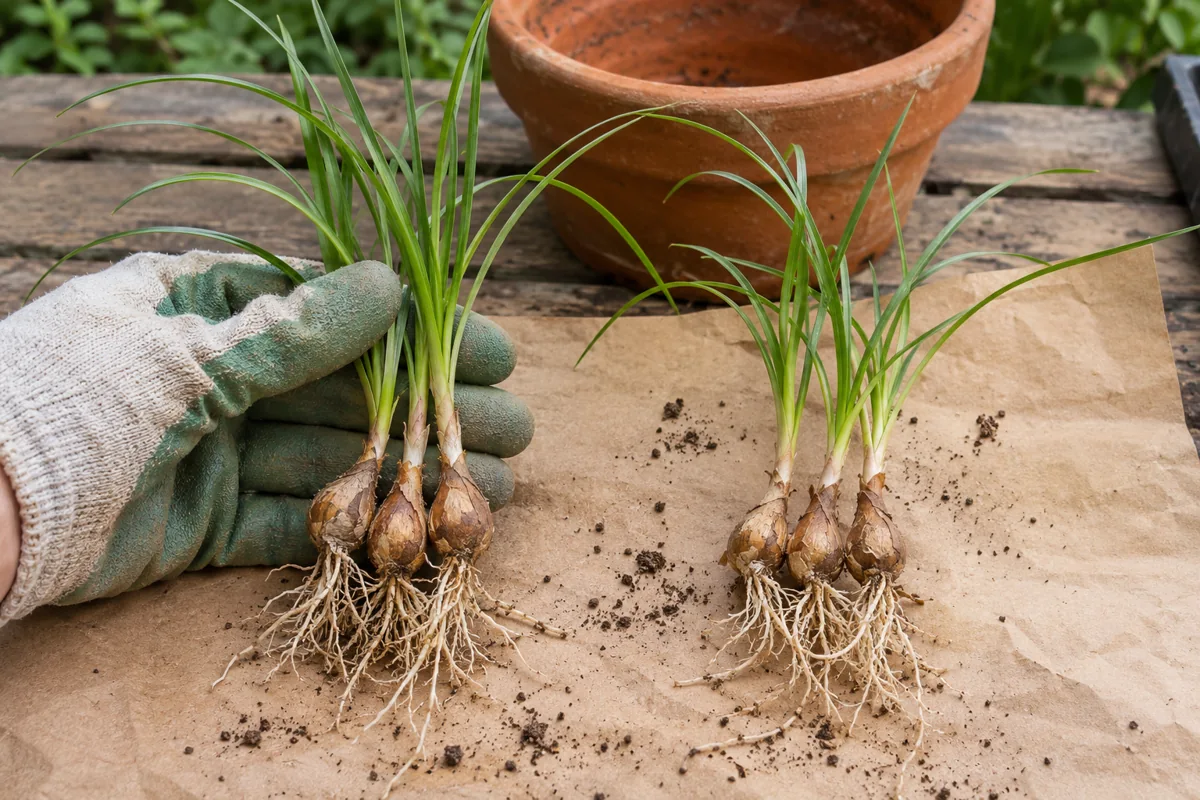
Do not split a newly settled pot just because bulbs sit close together. When an established clump fills its container and division is appropriate, prepare fresh mix and pots first. Fairchild Tropical Botanic Garden describes separating bulblets and replanting in groups.
For Z. candida, NC State recommends spring separation. In an Indian location with a cool rest, use the return of mild, frost-free growing conditions as the cue rather than copying a foreign month. For other types, confirm the suitable division window before disturbing the clump.
- Ease the clump out while supporting its roots. Loosen enough mix to see where bulbs separate.
- Tease naturally separable offsets apart, keeping their bases and roots intact. Avoid slicing sound bulbs to make extra pieces.
- Replant small groups at the appropriate depth, settle with water and let the pots drain.
- Watch for new growth before increasing exposure or feeding. Small offsets may need further growth before flowering.
What changes across Indian seasons?
- Cool northern plains in November–January: assess whether your clump is still growing. Give available sun and check moisture less automatically during foggy spells. Protect tender types when frost is forecast.
- Frost-prone hills: use a movable container and a bright, frost-free shelter. Check the exact species rather than relying on a general “hardy bulb” label.
- Warm coasts and southern cities: a leafy clump may remain active into the cooler months. Continue condition-based watering; protect pots from persistent seasonal rain instead of forcing dormancy by date.
- Hot, exposed terraces: check pots more frequently in drying wind. If leaves scorch during severe afternoon heat, retain morning sun and add afternoon protection.
These are decisions based on growth, weather and exposure, not a single flowering calendar for India. If you want colour during cool weather while rain lilies are resting, keep them separate from the annuals in our winter balcony flower guide.
Rain lily problems: check before treating
| Observation | Discriminating check | First action and reassessment |
|---|---|---|
| Leaves, no flowers | Recent planting or division? Enough direct light? Known flowering season? | Keep healthy leaves, correct poor exposure gradually and observe the next active flowering period. Extra feed cannot make a small bulb mature immediately. |
| Yellowing with wet mix | Blocked holes, standing runoff, soft bulb base or abrupt collapse? | Stop extra water, empty the saucer and shelter from rain. Inspect the affected bulb if softness or collapse continues; do not diagnose a pathogen from colour alone. |
| Leaves disappear in cool or dry weather | Gradual decline with firm bulbs, or sudden collapse with decay? | Reduce watering for a resting clump. Check again as warmth and growth return. Soft bulbs need separate inspection rather than a dormancy assumption. |
| Holes and ragged edges | Look around pots after dusk for snails, slugs or chewing insects. | Remove visible pests and damp hiding debris. Check fresh leaves over the following week before considering treatment. |
| Fine pale stippling | Examine leaf undersides for mites or fine webbing; compare heat damage. | Separate an affected pot and confirm the pest. Use our spider-mite inspection guide before choosing control. |
NC State’s white-rain-lily profile identifies snails, slugs and mites as possible problems, not automatic diagnoses. If several bulbs soften or decline spreads despite correcting drainage, separate the pot and seek local nursery or horticultural advice with photographs of the base and roots. Avoid treating the whole collection with several remedies together.
Safety around children and pets
Keep bulbs labelled and separate from food onions. The RHS warns that ornamental bulbs must not be eaten and recommends gloves when handling Z. candida. Store loose bulbs out of reach, wash hands after potting and position plants where pets cannot chew them. If ingestion is suspected, contact a doctor or veterinarian promptly and provide the plant label.
Frequently asked questions
Can rain lilies grow indoors?
A genuinely sunny window may work, but a dim room can keep a clump leafy without meeting its flowering needs. Choose the position by actual light reaching the leaves.
Should I plant all 30 bulbs together?
Only if the container comfortably fits the bulbs, their roots and the required gaps. Split the pack across pots when necessary; pack size is not a pot-size recommendation.
Do rain lilies flower every time it rains?
No. Type, maturity, light and growth conditions influence flowering. Rain is not a guarantee, and repeatedly soaking an already wet pot can damage it.
Should I cut the grass-like leaves after flowering?
Keep green leaves. Remove fully dead foliage as it declines, and distinguish a finished flower stem from the leaves supporting the bulb’s next growth.
Why do planting instructions give different depths?
They may describe different species, climates or ways of measuring depth. Check whether a number means cover above the bulb or depth of the whole hole. For an unlabelled pack, ask the supplier before planting deeply.
Are offsets or seeds easier for a first attempt?
Rooted offsets from a healthy established clump give you a visible bulb to work with. Seed availability and behaviour vary by type. Follow fresh-seed instructions for the identified species rather than assuming an old packet will behave like a bulb.
Choose the type and the sunny position first. Then plant a manageable group, label it and watch the foliage through its growing cycle. That record will tell you more about the next watering or flowering decision than a fixed weekly routine.
Written by the Surekha Agro Products plant care team. Last updated 28 November 2026.
Sources: NC State: Zephyranthes genus; NC State: white rain lily; Wisconsin Extension: pink rain lily; RHS: Zephyranthes candida; RHS: growing bulbs; RHS: container bulb aftercare; Fairchild: rain lily division.