A dry, brown amaryllis bulb does not look like much when it arrives. A few weeks later it can push up a thick green stalk topped with trumpet flowers the size of your palm. If you want to know how to grow amaryllis in a pot on an Indian balcony, terrace or sunny window, the good news is that this bulb asks for very little: the right pot size, a shallow planting depth, careful watering and a sunny spot. This guide walks through each step, adapted for Indian seasons, from planting the bulb to getting it to flower again next year.
Quick answer: Plant one firm bulb in a pot only about 2.5 cm (1 inch) wider than the bulb, with the upper half of the bulb above the mix. Water once to settle the mix, then water only when the top 5 cm feels dry. Keep the pot in bright light; a flower stalk usually appears within a few weeks and blooms roughly 6 to 8 weeks after planting. After the flowers fade, cut the stalk but keep the leaves growing in sun and feed them, because the leaves rebuild the bulb for next season.
Amaryllis at a glance
| Point | What to know |
|---|---|
| Botanical name | Hippeastrum hybrids (the true Amaryllis is a separate South African genus) |
| Plant type | Perennial flowering bulb, family Amaryllidaceae |
| Best planting window in Indian plains | October to December for cool-season flowering; avoid planting into peak monsoon |
| Pot size | About 2.5 cm wider than the bulb, and roughly twice as deep as the bulb is tall |
| Planting depth | Upper half of the bulb, including the neck, above the mix |
| Light | Bright light to full sun while leafy; filtered light once flowers open |
| Watering | When the top 5 cm of mix is dry; never let the pot stand in water |
| Time to flower | About 6 to 8 weeks after planting a fresh bulb |
| Flowers per stalk | Usually 2 to 6 |
| Pets | Toxic to cats and dogs if chewed |
What you are actually growing
The plant sold as “amaryllis” in nurseries and online stores is almost always Hippeastrum, a bulb from the tropical and subtropical parts of South and Central America. University of Wisconsin–Madison Extension notes that modern hybrids come mostly from a handful of wild species and that each tall, hollow scape carries two to six large flowers. Because the parent species come from warm regions, the bulb suits most of India better than spring bulbs such as tulips, which need a long cold spell.
Two practical facts follow from this. First, the bulb stores the energy for its first flowering before you buy it, so a big, healthy bulb matters more than anything you do in the first month. Second, the flowers you get next year depend on how well you look after the leaves this year. Keep both points in mind and most of the steps below make sense.
When to plant amaryllis in India
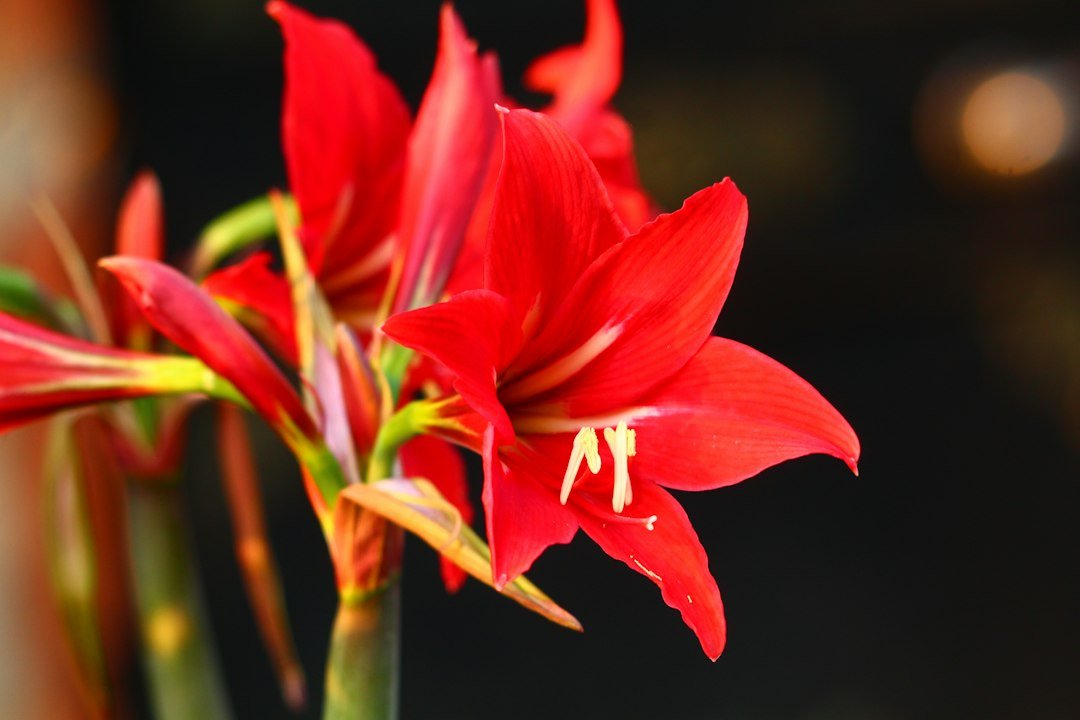
Amaryllis is not frost hardy, but it also dislikes heat while it is flowering. Extension guidance from UW–Madison suggests growing a newly planted bulb at about 18 to 21°C and keeping a flowering plant a little cooler, around 16 to 18°C, to make the blooms last longer; warmer conditions tend to give weaker stalks and smaller flowers. That is why the Indian winter is such a useful window.
- North and central India (Delhi, Punjab, UP, MP, Rajasthan, Gujarat): plant from late October to December. Days are mild and sunny, and nights are cool. In the coldest weeks of late December and January, move pots close to a sunny wall at night so they are not exposed to unusually cold nights on an open roof.
- Maharashtra, Telangana, Karnataka plateau: October to December works well. Give morning sun and some afternoon shade if your terrace heats up after midday.
- Coastal and south India (Chennai, Kerala, coastal Karnataka, Mumbai): winters are warm, so flowers may not last as long. Plant in November or December, keep the pot in bright but not scorching light, and expect blooms to finish faster.
- Hill regions: treat amaryllis as an indoor or veranda plant during cold months, and keep it away from frost and freezing nights.
Whatever your region, avoid planting a fresh bulb straight into heavy monsoon rain. A newly potted bulb with few roots sitting in soggy mix is the quickest route to rot.
Choosing a good bulb
Bulb size decides how many stalks and flowers you can expect in the first season. UW–Madison Extension advises picking the largest bulbs available and making sure they are firm and dry with no mould, soft patches or injury. University of Minnesota Extension adds that bulbs with fresh green growth and no spots are a good sign.
When your bulbs arrive, press each one gently. It should feel solid, like an onion, not spongy. A few dry outer skins and old root stubs are normal. If a bulb is soft at the base or smells sour, plant it separately so it cannot affect the others, or contact the seller.
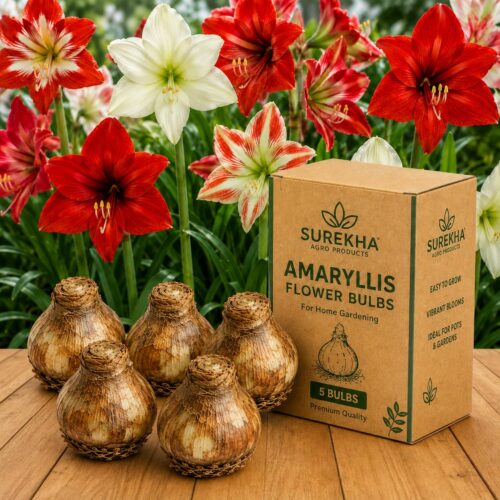
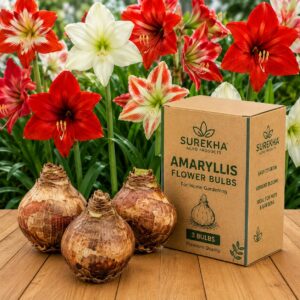
If you are starting from scratch, our amaryllis flower bulbs (pack of 3) suit a single row of pots on a balcony ledge, while the pack of 5 amaryllis bulbs lets you stagger planting a few weeks apart so the flowering season stretches longer.
Pot and potting mix
Amaryllis flowers best when it is slightly crowded. Both UW–Madison and Minnesota Extension recommend a pot only about 2.5 cm (1 inch) wider than the widest part of the bulb. Minnesota also suggests a pot roughly twice as tall as the bulb, so the roots have depth to grow down. In practice, a bulb the size of a large orange fits a 15 to 18 cm (6 to 7 inch) pot.
- Use a pot with at least one good drainage hole. Clay pots dry faster and suit heavy-handed waterers; plastic pots hold moisture longer.
- A heavy-bottomed pot helps, because a bulb in full flower is top-heavy and can tip over in wind.
- Choose a fresh, loose mix that is rich in organic matter but drains quickly. A simple home blend is equal parts garden soil, well-rotted compost or vermicompost, and coarse sand or cocopeat with some perlite. Our guide to making your own potting mix explains how to adjust the ratio.
- Do not reuse old mix from a pot where a plant rotted. Minnesota Extension recommends clean containers and sterile, new potting soil to reduce disease.
Self-watering pots keep the lower layer of mix damp, which most bulbs dislike. A regular pot with a drainage hole is the safer choice for amaryllis.
How to plant an amaryllis bulb, step by step
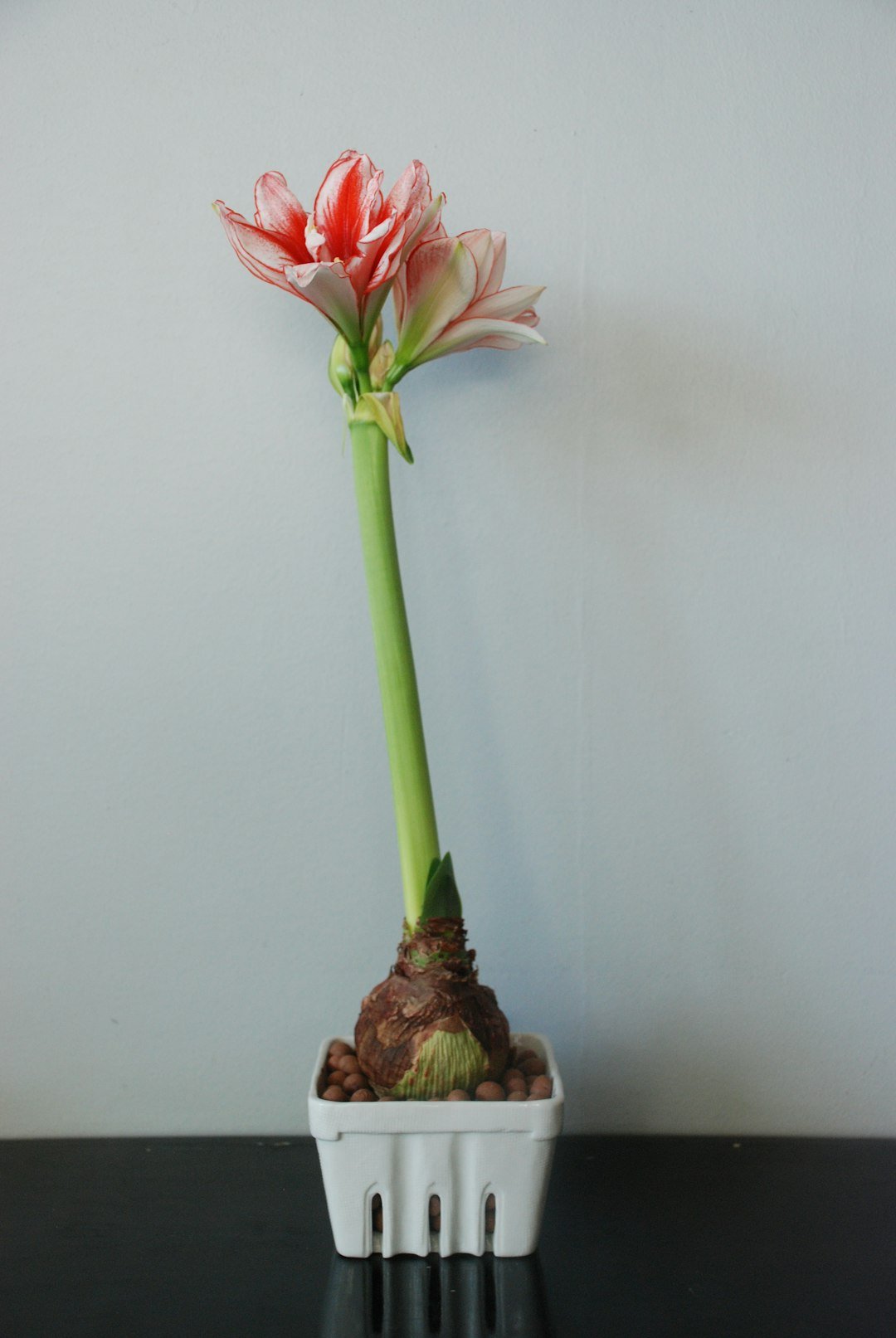
Notice in the photo above how high the bulb sits: much of it is exposed, and the flower stalk rises straight from the neck. That is the look you want.
- Soak the roots (optional). If the old roots look very dry, stand only the root plate in a shallow bowl of room-temperature water for a few hours. Keep the bulb body dry.
- Half-fill the pot. Put mix in the pot so that, when the bulb sits on it, the top half of the bulb will be above the rim of the mix and the mix surface will end about 2.5 cm below the pot rim, leaving space for watering.
- Set the bulb. Place the bulb pointed end up, with its roots spread over the mix. NC State Extension’s plant profile says to bury only half the bulb, keeping the narrow neck above the surface.
- Fill around it. Add mix around the sides and press it gently with your fingers so the bulb stands upright. Do not pile mix over the shoulders or neck.
- Water once, thoroughly. Water until it drains from the hole, then let the pot drain completely. Do not water again until the top 5 cm of mix is dry.
- Place it in light. Put the pot in the brightest spot you have: a sunny balcony, a south- or east-facing window, or a terrace corner with morning sun.
- Label it. If you plant several bulbs on different dates, write the date and colour on a plant tag. It makes later care much easier.
Care from sprouting to flowering
Light and turning the pot
Once a stalk appears, give the pot as much light as possible so the stalk grows thick and straight. A stalk in weak light stretches and leans towards the window. Turn the pot a quarter turn every two or three days so it grows evenly.
Watering
This is where most amaryllis bulbs are lost. Minnesota Extension advises watering when the top 5 cm (2 inches) of mix feels dry and never letting the plant sit in water, because constantly wet soil can lead to bulb and root rot. Before the stalk and leaves appear, the bulb needs very little; water more often once there is active green growth. For a refresher on judging soil moisture, see our guide on how to water plants in Indian homes.
Feeding
A fresh bulb already holds the food for its first flowers, so it does not need fertiliser to bloom. Start feeding once leaves are growing. UW–Madison suggests a balanced or phosphorus-leaning fertiliser such as 10-10-10 or 5-10-10 monthly at the dose given for houseplants, and warns that stronger doses can build up salts and burn roots. Minnesota suggests a half-strength feed with each watering during active growth. Choose one approach, not both. If you prefer organic inputs, a small amount of bone meal mixed into the top layer adds slow-release phosphorus; our bone meal guide for pots covers how much to use, and this fertiliser guide explains NPK labels.
Staking tall stalks
Stalks can reach 45 to 60 cm. If one leans, push a thin bamboo stick into the mix beside the bulb (not through it) and tie the stalk loosely with soft string.
Making flowers last
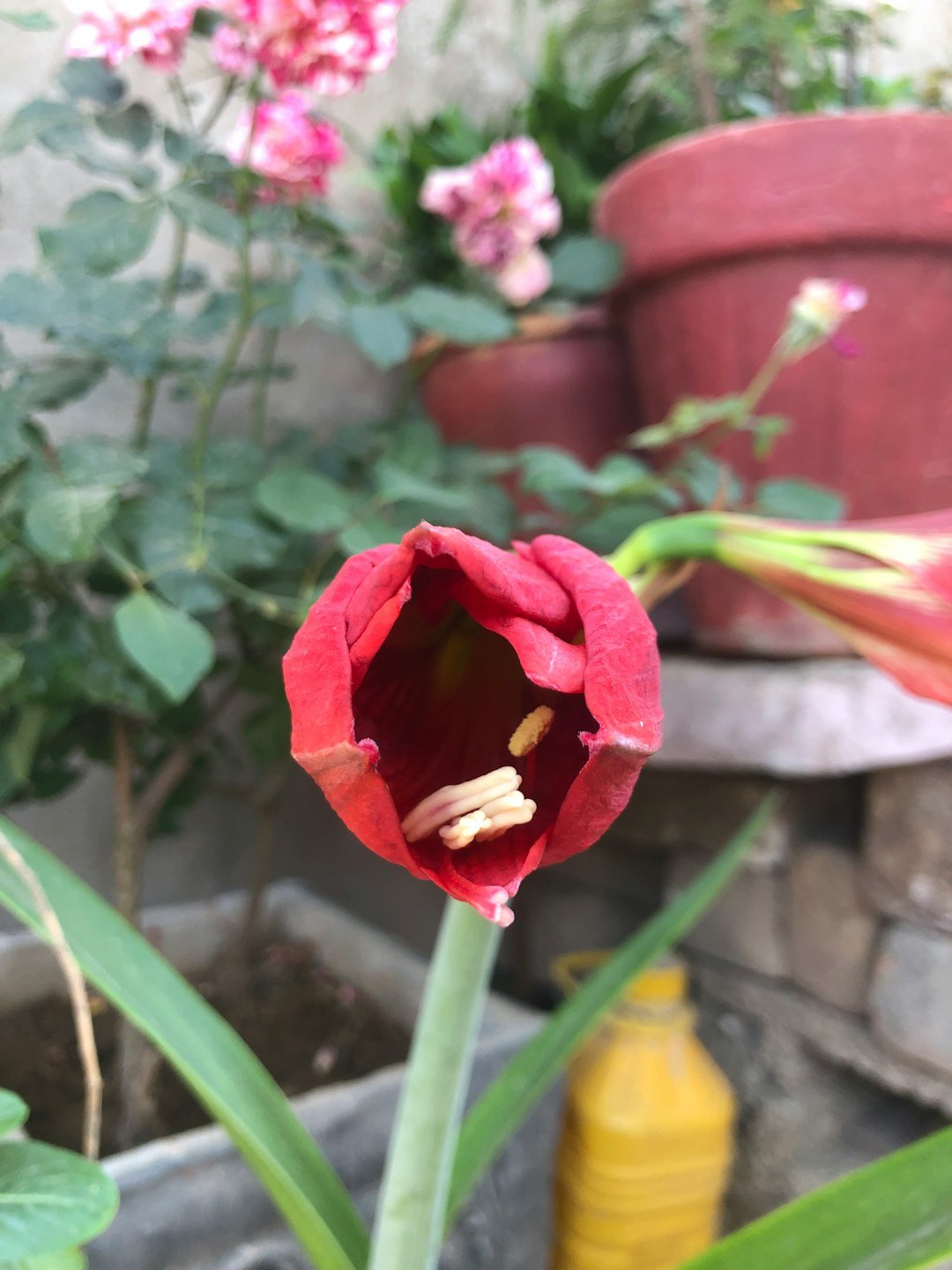
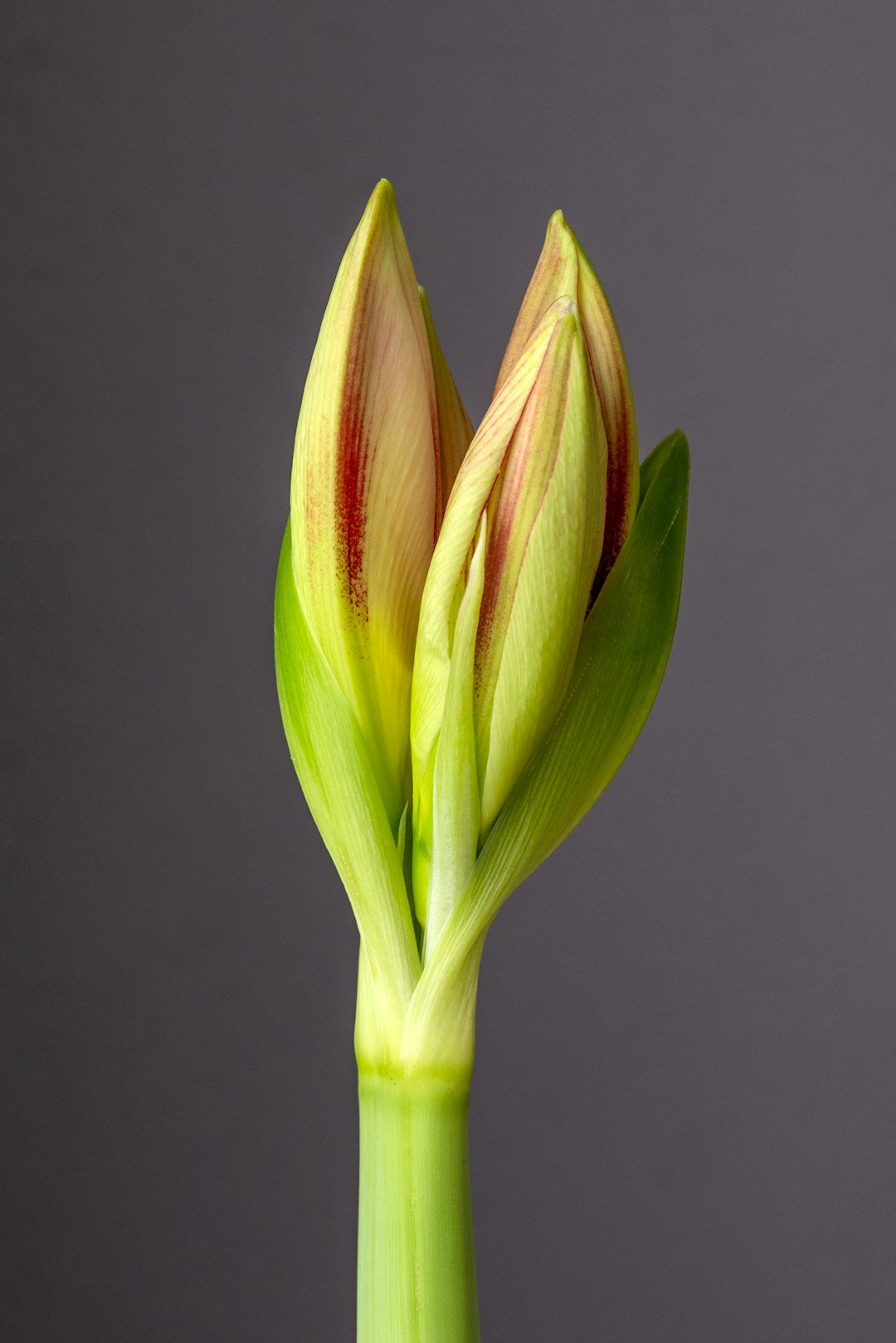
The buds stay wrapped in two papery bracts, as in the photo above, until they are ready to open. When the first bud starts to show colour, move the pot out of harsh direct sun into bright, filtered light, as Minnesota Extension recommends. A cooler spot during flowering helps the blooms last longer; NC State notes the flowers can last three to four weeks in total. In a warm south Indian flat, expect a shorter show.
After flowering: how to get amaryllis to bloom again
Many people throw the bulb away after the flowers fade. You do not have to. UW–Madison Extension explains that to rebloom, the plant must be kept actively growing after flowering. In practical terms:
- Remove spent flowers. As each flower fades, pinch off the flower and the small swollen part just below it so the plant does not spend energy making seed.
- Cut the stalk later. When the whole stalk turns yellow or brown, cut it a few centimetres above the neck of the bulb. While it is still green, it is still feeding the bulb.
- Grow the leaves in sun. Move the pot to full sun for at least six hours a day, water regularly and feed monthly. Strap-shaped leaves are the bulb’s solar panels.
- Protect from monsoon waterlogging. During heavy rains, move pots under a shade or chajja so they do not stay wet for days.
- Rest is optional in most of India. Minnesota Extension notes that amaryllis does not need a dormant period and will bloom again if allowed to keep growing; a rest of 8 to 12 weeks in a cool, dark, dry place is used mainly to time flowering. Indian plains rarely offer the cool storage those guides describe (roughly 7 to 16°C), so most home growers simply keep the plant growing. If the leaves yellow on their own, cut them off when dry, reduce water to a light sprinkle, and resume watering when new growth appears.
- Repot only every few years. Both Extension services suggest repotting every 3 to 4 years, after a rest period, into a pot just slightly larger.
Mature bulbs also form small offset bulbs at the side. You can leave them for a fuller pot or separate them when repotting and grow them on; an offset usually needs a few seasons of good leaf growth before it is big enough to flower.
Common problems and fixes
| Problem | Likely cause | What to do |
|---|---|---|
| Bulb soft at the base, sour smell | Rot from wet mix or a damaged bulb | Lift the bulb, cut away soft tissue only if a small area is affected, let it dry for a day and replant in fresh, dry mix. Discard if most of the bulb is mushy. |
| Only leaves, no flower stalk | Small or exhausted bulb, too little light last season | Grow the leaves in full sun and feed through the season; flowering depends on the bulb building up again. |
| Long, floppy stalk | Low light or too much warmth | Move to brighter light, turn the pot regularly, stake the stalk. |
| Red spots or streaks on stalk and leaves | Red blotch, a fungal disease (Stagonospora curtisii) | UW–Madison notes it rarely kills the plant. Remove badly marked leaves, avoid wetting the bulb neck, and use clean mix next time. |
| White cottony clusters in leaf bases | Mealybugs | Wipe them off with a cotton bud dipped in rubbing alcohol; repeat weekly until clear. |
| Chewed leaves on terrace pots | Snails and slugs | Pick them off in the evening and keep the area around pots free of damp debris. |
| Leaf tips brown and crispy | Salt build-up from heavy feeding or hard water | Flush the pot with plenty of water and reduce the fertiliser dose. |
If a plant is going downhill and you are not sure why, our checklist for signs a plant is dying and how to save it can help you narrow down the cause.
Is amaryllis safe for pets and children?
No. The ASPCA lists amaryllis as toxic to dogs, cats and horses because of lycorine and related compounds. Signs it lists include vomiting, diarrhoea, abdominal pain, drooling, loss of appetite, depression and tremors. NC State Extension also tags Hippeastrum as poisonous, and the bulb is the part to be most careful with. Keep pots where pets and small children cannot chew the leaves or dig up the bulb, store loose bulbs out of reach, and wash your hands after handling them. If you think a pet has eaten any part of the plant, contact your veterinarian promptly.
Plants that pair well with amaryllis
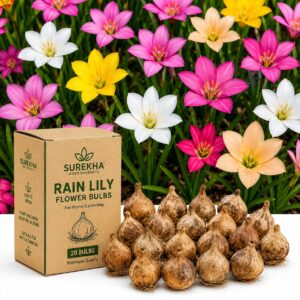
Amaryllis gives one big burst of colour, so it looks best with plants that fill the gaps. In the same cool season you can sow winter annuals such as pansy, calendula or marigold in nearby pots for steady colour, then let the amaryllis leaves take over after flowering. For a bulb that flowers later in the year, rain lily bulbs are a relative in the same plant family that usually flower in warm, wet weather.
Frequently asked questions
How long does an amaryllis bulb take to flower after planting?
A fresh, good-sized bulb usually sends up a stalk within a few weeks and flowers about 6 to 8 weeks after planting, according to UW–Madison Extension. Cooler, bright conditions give sturdier stalks; very warm rooms can speed things up but weaken the stalk.
Should I bury the whole amaryllis bulb?
No. Keep the upper half of the bulb, including the neck, above the mix. Burying the whole bulb keeps the neck damp and raises the risk of rot.
Can I grow amaryllis in the ground instead of a pot?
In frost-free parts of India you can, in a raised, well-drained bed with afternoon shade in hot regions. Pots are easier to manage because you can move them out of heavy rain and control watering. UW–Madison also notes the roots are brittle, so repeatedly digging up bulbs from the ground is not ideal.
Why is my amaryllis growing leaves but no flowers?
The bulb probably did not store enough energy last season. Give the leaves full sun, regular water and monthly feeding for the whole growing season, and do not cut green leaves. Very small offset bulbs also need time to reach flowering size.
Do I need to put amaryllis bulbs in the fridge?
Not in most of India. Extension services describe a cool, dark rest of 8 to 12 weeks mainly to control when the plant flowers, and note amaryllis will bloom again without a dormant period. If you do use a fridge, keep bulbs in a paper bag away from food.
How often should I water amaryllis in winter?
Check rather than follow a fixed schedule. Water when the top 5 cm of mix is dry. In a north Indian winter that may be once a week or less; on a hot south Indian terrace it may be more often.
Is amaryllis the same as a lily?
No. It is often called “amaryllis lily” in shops, but Hippeastrum belongs to the Amaryllidaceae family, not the true lily family. The care is different too: amaryllis likes to be pot-bound and planted shallow.
Conclusion
Growing amaryllis in a pot comes down to a few habits: choose a firm, large bulb, plant it in a snug pot with half the bulb showing, water lightly until it is growing, and give it plenty of light. Plant between October and December in most of India and you can expect flowers in about two months. Then treat the leaves well after flowering, and the same bulb can flower again in a later season. Keep the pot away from curious pets, and enjoy one of the easiest showpiece flowers you can grow on a balcony.
Sources: University of Wisconsin–Madison Extension, “Amaryllis”; University of Minnesota Extension, “Growing amaryllis”; NC State Extension Gardener Plant Toolbox, Hippeastrum; ASPCA Animal Poison Control, “Amaryllis”.