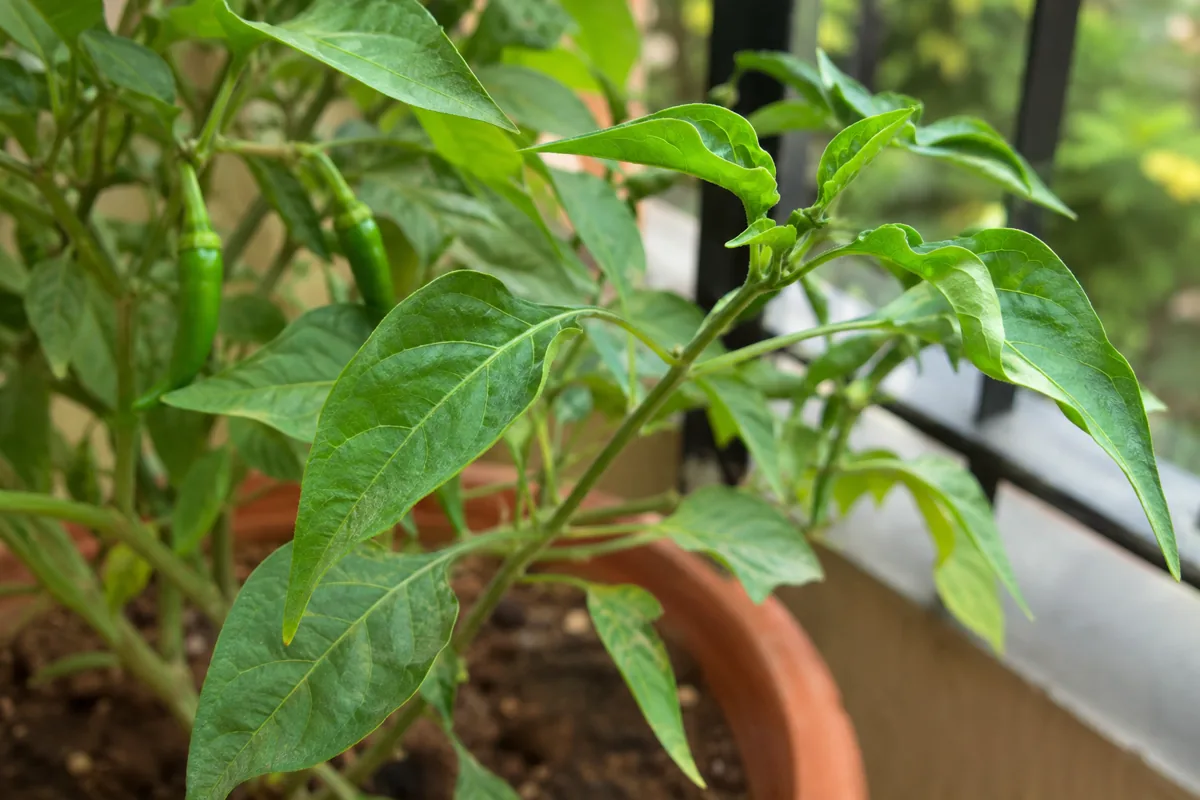
Chilli plant leaf curl can follow watering or heat stress, sap-feeding pests, or viral disease. Start by checking the pot, new growth and leaf undersides before choosing a treatment. Separate a suspicious plant from nearby peppers, record what you find, and seek closer identification when small distorted leaves and stunting continue.
The useful first question is not “Which spray fixes curling?” It is “What else changed?” A leaf that curls during a hot afternoon needs different attention from a plant producing progressively smaller, crumpled shoots. ICAR’s chilli guidance describes a leaf-curl complex involving sucking pests as well as viruses. More than one problem can occur together.
Chilli leaves curling: choose a check before a remedy
On a phone, swipe the table sideways to read every column.
| What you notice | Check next | First decision |
|---|---|---|
| Curling with wilting after heat or a missed watering | Moisture below the surface, pot weight and recent exposure | Correct a verified water or exposure problem; do not water an already wet pot |
| Sticky leaves or insects underneath | Aphid colonies, whitefly adults and immature stages | Separate the pot, identify the insect and begin targeted control |
| Scarred, distorted young leaves or buds | White-paper scouting and close examination of growing tips | Investigate thrips or mites; a quick naked-eye check can miss them |
| Repeated tiny distorted leaves, short stem sections and stunting | Whole-plant pattern, neighbours and possible virus vectors | Seek local diagnostic advice promptly; do not rely on curl direction |
These are routes for investigation, not a photo diagnosis. The Minnesota Extension’s pepper diagnostic guidance stresses the difference between environmental disorders and infectious disease. An inaccurate diagnosis can lead to unnecessary treatment while the real cause continues.
Inspect a potted chilli plant in five steps
Bring plain white paper, a hand lens if available, a phone camera and a note of recent watering, feeding and sprays. Work in good light. Avoid rubbing your eyes after handling chilli fruits, and wash your hands afterwards.
- Record the pattern. Photograph the whole plant, one affected shoot and a flatter leaf for comparison. Note whether older leaves, the newest growth or one side is affected. Write down any recent move into stronger sun, repotting, feeding or spray application.
- Check the root zone. Feel below the surface near the pot edge without tearing roots. Check that drainage holes are open and the pot is not standing in runoff. A dry-looking surface can hide a wet interior.
- Inspect undersides. Gently turn a leaf and look along veins, petioles and new tips. Check both affected and less-affected leaves. Sticky residue, pale insects or moving specks are useful findings to photograph.
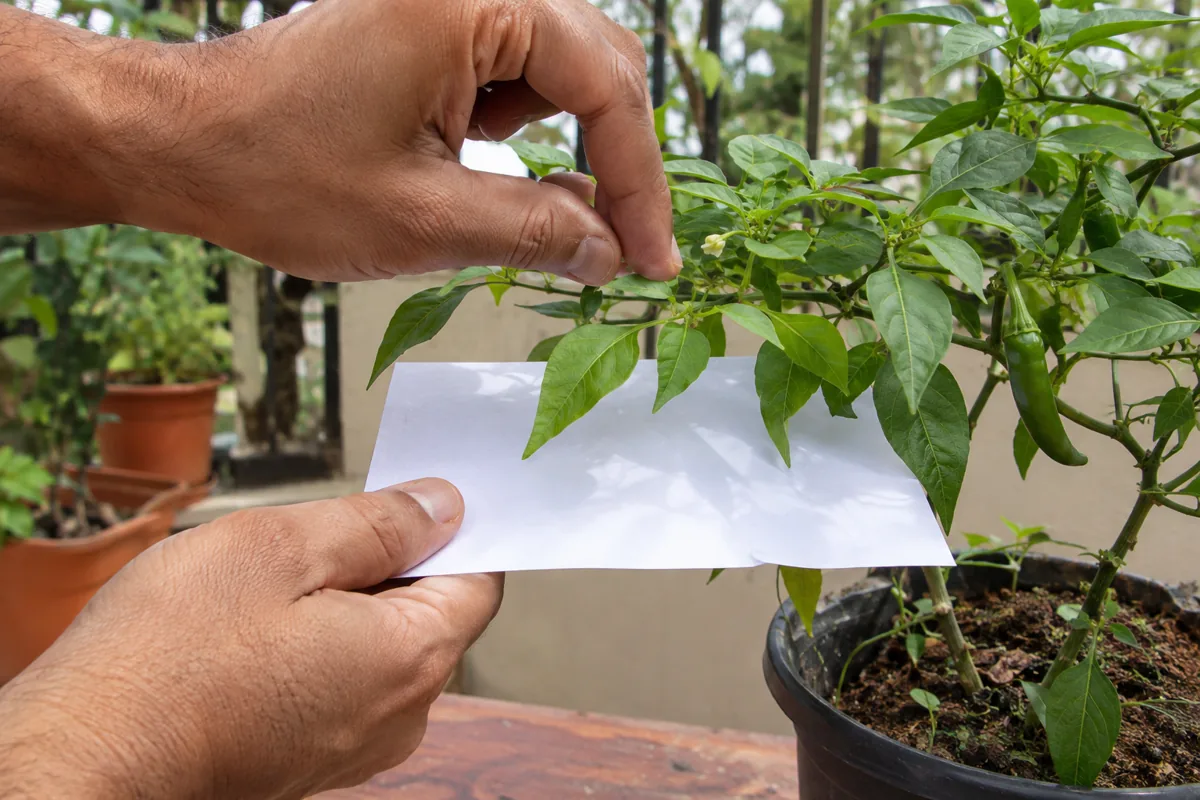
- Try white paper. Hold paper beneath a leafy shoot and gently tap the shoot. Examine anything that falls onto it. UC IPM recommends this scouting method for thrips. Finding a tiny insect is a lead for identification, not proof that every insect is a pest.
- Choose the next branch. Act on what you found: a moisture/exposure problem, a visible pest, or unexplained progressive distortion. If several plants are involved, record which developed symptoms first.
If the pot or growing conditions are the problem
For a genuinely dry root zone, water the mix evenly and let excess drain out. If it is still wet, pause additional watering, empty collected runoff and check the outlet. Do not repeatedly repot or pull apart the roots of a stable plant simply because a few leaves curl.
Peppers benefit from consistent moisture. Minnesota Extension’s pepper guidance warns against shallow surface sprinkling and unnecessary leaf wetting. Its outdoor weekly rainfall amounts are not a watering schedule for a small Indian balcony pot. Our chilli growing guide covers the wider sowing-to-harvest task; use the inspection sequence here for unexplained curl.
After a sudden move into fierce sun or drying wind, provide temporary relief from the harshest exposure and compare the plant when conditions ease. Keep a useful bright growing position rather than moving it permanently into a dark room. For seedlings, follow a gradual hardening-off process. Check recent sprays and feeding too: a damaged plant does not automatically need more fertiliser.
Look for evidence of the particular pest
Aphids and whiteflies
Aphids can form colonies on tender growth, with sticky residue and leaf distortion. Small white insects rising when a plant is disturbed suggest whiteflies; inspect the undersides for their immature stages as well. UC IPM describes whitefly identification and early management.
For a small, confirmed whitefly problem, support the foliage and dislodge adults with a directed water stream that does not snap tender growth. Keep the pot away from other susceptible plants during this work. Remove only isolated heavily infested leaves when appropriate, not the whole canopy. Routine irrigation should still be directed to the mix.
Yellow sticky cards can help monitor flying adults; they do not cure an infected plant or prove that a particular insect carried a virus. Inspect foliage again instead of judging success solely by the number caught. Preserve beneficial insects and avoid spraying simply because an insect is present.
Thrips and broad mites
Thrips can leave distorted young growth, scars or silvery areas and dark specks. They often hide in buds and shoot tips. Record insects from the paper check and seek identification before choosing a pesticide. Old feeding injury will not be repaired by a spray; assess the condition of new growth instead.
Broad mites are different from the web-making spider mites many gardeners recognise. UF/IFAS describes broad-mite injury on peppers, including distorted young leaves, bronzing and malformed tips. Their very small size and hidden feeding make a casual look unreliable. Take clear photographs and ask a local horticultural adviser or plant clinic how to submit a fresh sample. Do not conclude “no mites” because there is no web.
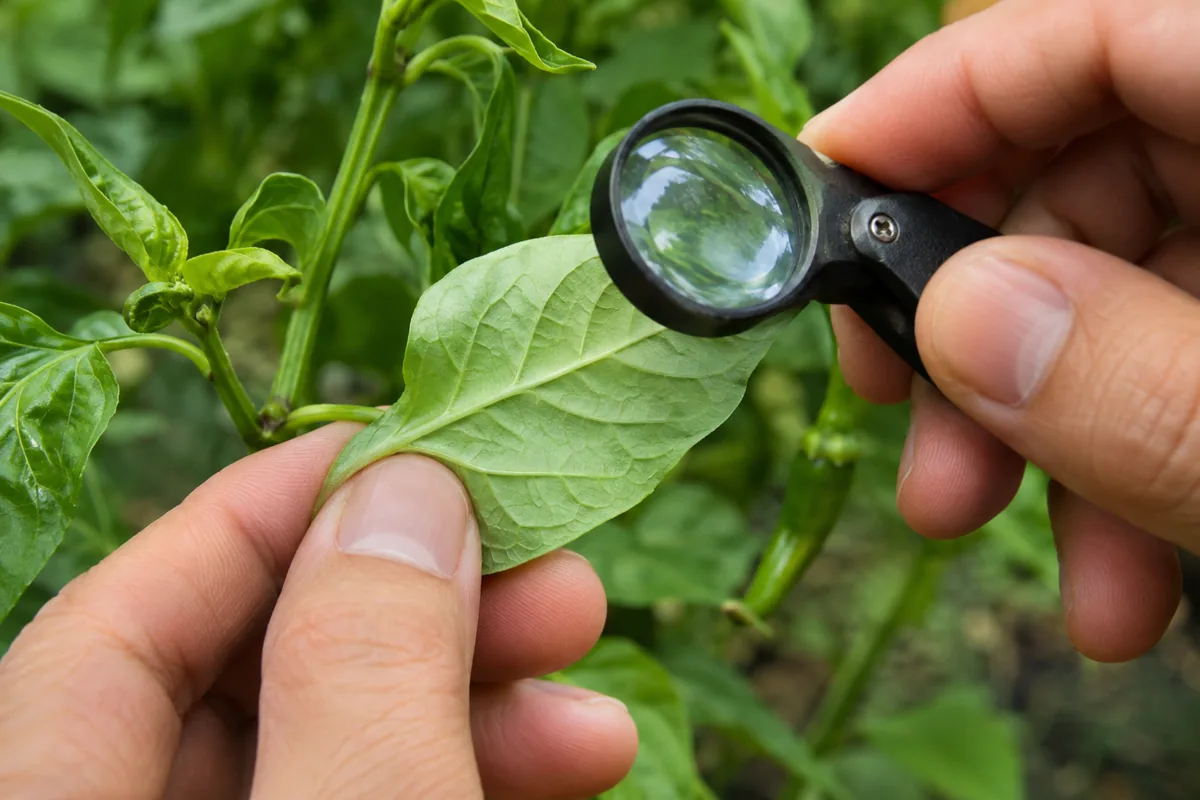
If control beyond physical removal is necessary, choose a product only after identifying the target and checking its current Indian directions for chilli. Check application rate, coverage, repeat interval, protective measures, restrictions around flowers and pollinators, and the pre-harvest interval. Products sold for ornamental houseplants are not automatically suitable for an edible chilli crop. This guide does not prescribe a blanket oil, soap, insecticide or miticide mixture.
When could chilli leaf curl virus be involved?
TNAU’s chilli disease guidance describes deformed leaves, reduced leaf size and stunting with shortened spaces between leaves. Whiteflies can transmit chilli leaf-curl viruses. Persistent deterioration across successive shoots deserves attention, especially when neighbouring plants also develop symptoms.
Those signs still overlap with pest injury and stress. Whiteflies on a plant do not establish that it has a virus, and their absence today does not exclude earlier transmission. Keep the pot separate and contact your local Krishi Vigyan Kendra, agricultural extension service or plant-diagnostic facility. Ask what photographs or sample they need before carrying material through a nursery.
For viral disease, focus on preventing spread rather than expecting a curative spray. Minnesota Extension explains that viruses in peppers cannot be cured, while TNAU recommends removing infected chilli plants. If the diagnosis supports viral infection, remove the affected plant as advised rather than taking cuttings or keeping it beside healthy peppers. Contain removed material and follow local disposal advice; do not scatter it among your pots.
Controlling a vector and curing a virus are separate claims. A product that reduces an insect population should not be described as reversing viral infection. Equally, one curled leaf is not a reason to discard an otherwise stable plant.
What to check after the first action
- After correcting water or exposure: compare the plant after the harsh conditions ease and check moisture before the next watering. If it remains wilted despite a wet root zone, or decline spreads, investigate roots or disease rather than adding more water.
- After managing a confirmed pest: inspect the same marked shoot and additional tips. Record live insects and new injury. Follow any product’s stated reassessment and repeat directions; do not invent a daily spray schedule.
- While seeking a diagnosis: keep the plant separate and record new growth. Do not wait for every old leaf to flatten before deciding whether the plant is stabilising.
There is no single recovery deadline. New leaves expanding more normally and a stable growing tip are more useful milestones than a promise that the plant will recover in three days.
Adjust the checks to your Indian growing conditions
On hot, dry inland terraces, inspect exposure and root-zone moisture while also checking tender tips for pests. On a rain-exposed coastal balcony, first look for continuing rain input and trapped runoff. In a cool northern winter, a pot may dry more slowly; do not continue a summer watering routine automatically. Under a cover or in a protected nursery corner, keep inspecting new growth instead of assuming shelter excludes insects.
Use the actual growing position, not the city name, to make these decisions. Our balcony sunlight guide helps assess exposure, and the vegetable potting-mix guide explains a separate container setup task. Neither light nor fresh mix is a treatment for an established virus.
Protect the next plant before replacing this one
Inspect incoming seedlings before placing them beside peppers or tomatoes. Choose clean planting material; where a supplier offers documented resistance, check the exact variety and disease claim. “Hybrid,” “organic” and “high yielding” do not by themselves establish leaf-curl resistance.
Fine-mesh protection can help exclude insects from clean young plants. UC IPM advises applying covers to pest-free plants and managing space and heat as the plants grow. Do not enclose an infested plant with its pests or leave seedlings overheating beneath a cover. TNAU also describes protecting nursery seedlings with netting.
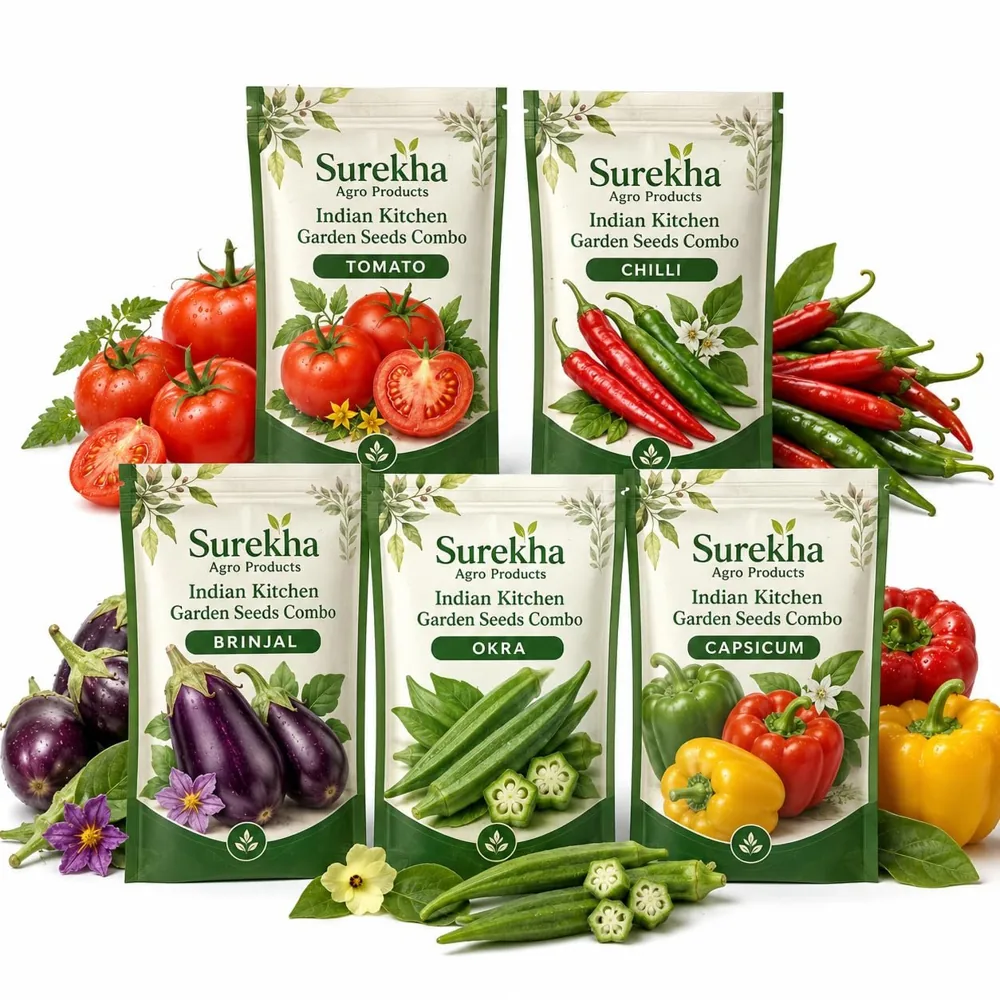
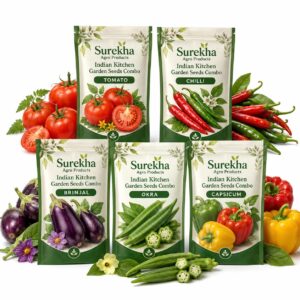
If restarting from seed fits your season and space, the Surekha Indian Kitchen Garden Seeds Combo is one option containing chilli. It is a seed purchase, not a remedy for a sick plant. Follow the chilli growing walkthrough for sowing, establishment and harvest.
Frequently asked questions
Does upward curl mean thrips and downward curl mean virus?
No. Curl direction can be a clue, but overlapping pest, virus and environmental symptoms make it inadequate as a diagnosis. Check the whole plant, recent conditions and leaf undersides.
Can neem oil cure chilli leaf curl virus?
Do not treat an insect-control product as a virus cure. Diagnose the cause first. If a plant is virus infected, the management decision concerns containment, affected plants and vectors.
Should I cut off every curled leaf?
No. Keep functioning foliage while you investigate. Selective removal of isolated infested material may help a confirmed pest problem, but stripping all leaves can weaken the plant and does not cure systemic infection.
What if I cannot see any insects?
Repeat careful tip and underside checks and use the paper test. Hidden pests can be missed; very small mites may need expert examination. Also investigate moisture, exposure and recent inputs.
Can I harvest immediately after spraying?
Never assume that is permitted. Check the exact product’s chilli directions and pre-harvest interval, and keep an application record. A homemade mix or an “organic” description does not supply a verified waiting period.
Will damaged leaves become flat again?
Not necessarily. Existing scars and deformation may remain. Assess live pests, continued decline and the quality of new growth rather than repeatedly treating an old curled leaf.
Keep a simple record: one whole-plant photo, one underside photo, recent inputs and the first action taken. If the evidence remains unclear, that record gives a local adviser a better starting point than choosing another spray.
Written by the Surekha Agro Products plant care team. Last updated 24 November 2026.
Sources
- ICAR Goa: chilli leaf-curl complex
- TNAU: chilli viral symptoms and nursery management
- UC IPM: thrips scouting and exclusion
- UC IPM: whitefly identification and management
- UF/IFAS: broad mites on peppers
- Minnesota Extension: pepper growing conditions