Which plant gives more oxygen? Indoors, the honest answer is the plant with the most healthy leaf area in the brightest light, such as a well-grown areca palm, money plant or rubber plant. No houseplant, though, gives enough oxygen to change the air you breathe; open windows do that. This guide explains what really drives a plant’s oxygen output, which plants are worth growing, and which popular claims are only beliefs.
Quick answer: All green plants release oxygen in light through photosynthesis and use a little at night through respiration. Big, leafy, fast-growing plants in bright indirect light make the most. Snake plant and jade take in carbon dioxide at night, but the oxygen-releasing step of photosynthesis needs light. For fresher indoor air, ventilate first, then grow plants for greenery, mood and a little humidity.
Oxygen plants at a glance
| Plant | Why it is a good pick | Light it needs | Best spot in an Indian home | Pets (ASPCA) |
|---|---|---|---|---|
| Areca palm | Lots of leaf area, grows into a large clump | Bright indirect | Living room near an east or north window | Non-toxic |
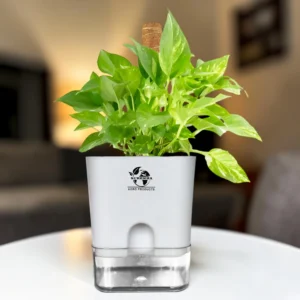
| Money plant (golden pothos) | Fast grower, easy to keep full and leafy | Medium to bright indirect | Shelf, moss stick or window grille | Toxic |
| Rubber plant | Large, broad leaves on a tall stem | Bright indirect | Corner near a big window | Not checked here; see the ASPCA list |
| Spider plant | Many leaves, multiplies quickly | Bright indirect | Hanging basket, window ledge | Non-toxic |
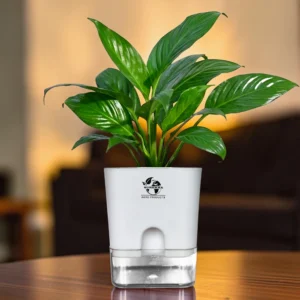
| Peace lily | Broad leaves, tolerates lower light | Medium indirect | Bedroom or study away from harsh sun | Toxic |
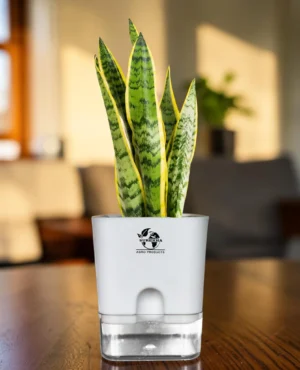
| Snake plant | Hardy; takes in CO2 at night (CAM) | Low to bright indirect | Bedroom, entrance, low-light corner | Toxic |
| Jade plant | CAM succulent, very low water | Bright light, some direct sun | Sunny window or balcony | Toxic |
| Tulsi | Leafy, culturally valued, grows best outdoors | Full sun | Balcony, terrace, courtyard | Basil is listed non-toxic |
How plants make oxygen (and why light matters)
Photosynthesis has two linked parts. In the light-driven part, the plant splits water and releases oxygen. In the second part, it fixes carbon dioxide into sugar. Around the clock, the plant also respires, which uses oxygen, just as we do. So in daylight a healthy plant gives off more oxygen than it uses, and in the dark it uses a little.
That is why “more oxygen” depends mostly on three things:
- Leaf area. A full, bushy plant has more green surface working than a sparse one of the same kind.
- Light. The same areca palm photosynthesises far more by a bright window than in a dim corridor.
- Health. Dusty, yellowing or root-rotted plants work below their potential.
Do snake plants give oxygen at night?
Snake plant and jade are often called “night oxygen” plants. Both are CAM plants (Crassulacean Acid Metabolism, named after the jade family, Crassulaceae). CAM plants open their pores at night, when it is cooler and less water is lost, take in carbon dioxide and store it as an acid. During the day they release that stored CO2 inside the leaf and finish photosynthesis with their pores closed. The water-splitting step that releases oxygen still runs in light. So a snake plant in your bedroom does take in some CO2 at night, but it is not a meaningful night-time oxygen source. Keep one for its looks and toughness, not to improve your sleep air.
Is it safe to keep plants in the bedroom at night?
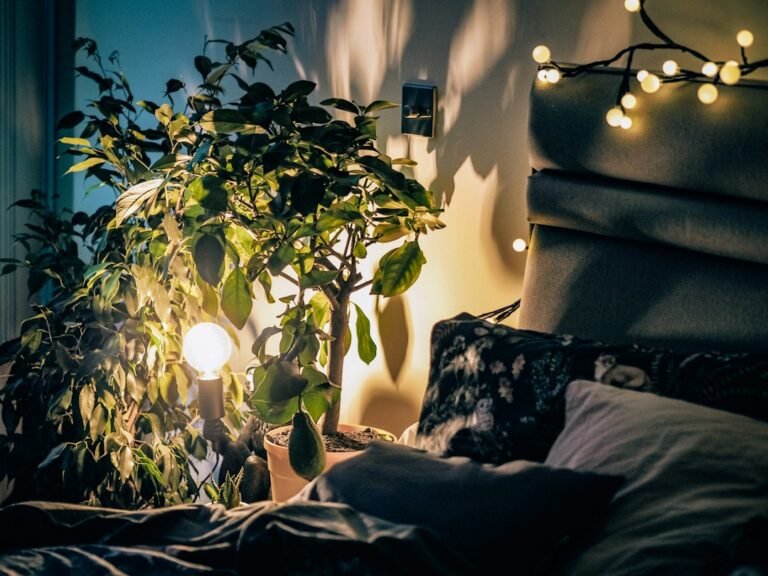
Yes. The small amount of oxygen a few potted plants use overnight is tiny next to what one person breathes, and normal air leakage and ventilation easily cover both. The old advice to remove plants from a sick room at night is not a reason to worry for ordinary houseplants. The real bedroom risks are overwatered pots that grow mould and fungus gnats, so water carefully. See our guide on how to water indoor plants in Indian weather.
What the NASA study really found
Most lists of “oxygen plants” trace back to a 1989 NASA technical memorandum by B.C. Wolverton and colleagues. That study tested common indoor plants in small sealed chambers for removing three chemicals: benzene, trichloroethylene and formaldehyde. It did not measure oxygen output, and it was not run in real homes.
In 2019, Cummings and Waring reviewed 12 such chamber studies and converted 196 results into a clean air delivery rate, the measure used for air purifiers. The median single plant cleaned about 0.023 cubic metres of air per hour. To match the cleaning that normal outdoor-to-indoor air exchange already gives a typical building, you would need roughly 10 to 1,000 plants per square metre of floor. Their review was about chemical pollutants, not oxygen, but the lesson carries over: in a real room, the air moving through windows and doors matters far more than the plants.
So plants are worth growing, just for honest reasons. Studies have linked indoor greenery to lower stress and a better mood; a small Korean crossover study found that transplanting an indoor plant lowered stress responses in young adults compared with a computer task. We cover this in more detail in snake plant benefits and money plant benefits.
Best plants for oxygen in Indian homes: 8 picks
If you want plants that photosynthesise strongly and stay healthy indoors in India, these are the ones we would choose, ranked roughly by how much healthy leaf they carry when grown well.
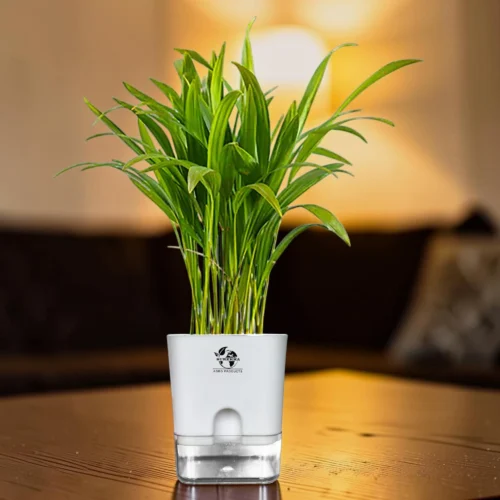
1. Areca palm
A multi-stemmed palm with many feathery fronds, so it carries a lot of leaf for its pot size. It likes bright indirect light and evenly moist (not soggy) soil. Brown tips usually mean dry air, salty water or underwatering. Full care in our areca palm care guide.
2. Money plant (golden pothos)
The easiest way to get a lot of green in a small flat. Pinch the tips to keep it bushy, and train it up a moss stick so leaves get bigger. It grows well in water too; see money plant benefits and care.
3. Rubber plant
Few large, glossy leaves that catch a lot of light. Wipe them every few weeks; dust cuts the light reaching the leaf. Our leaf cleaning routine shows how.
4. Spider plant
Quick to fill a hanging pot and easy to multiply from its babies. One of the few common picks that ASPCA lists as non-toxic to cats and dogs. See spider plant care in India.
5. Peace lily
The best choice here for a room with medium light. It droops visibly when thirsty, which makes watering easy to judge. Details in peace lily care in India.
6. Snake plant
Not the biggest oxygen producer, but the hardest to kill, so it stays healthy where other plants fail. Water only when the soil is dry most of the way down.
7. Jade plant
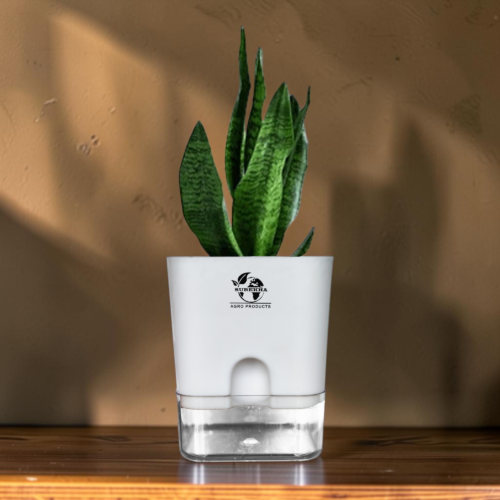
A CAM succulent for a sunny window or balcony. It needs very little water and plenty of light. More in jade plant benefits.
8. Tulsi (outdoors)
Tulsi is often said to give oxygen for 24 hours. That is a widely shared belief, but like every green plant it releases oxygen only in light. It is still one of the most rewarding plants to grow in full sun on a balcony or in a courtyard, for its leaves and its cultural place in Indian homes.
Peepal, neem and “24-hour oxygen” claims
You will often read that peepal, neem or tulsi release oxygen day and night. We have not found measurements that show any plant releasing net oxygen in the dark, and the basic biology says the oxygen from photosynthesis needs light. Large trees such as peepal, neem and banyan do produce far more oxygen than any houseplant, simply because they carry enormous leaf area in full sun. Plant and protect trees outdoors; enjoy houseplants indoors for what they are.
How to get the most from your plants: 6 steps
- Give them light first. Place leafy plants within one to two metres of an east, north or shaded west window. Light is what drives photosynthesis.
- Keep leaves clean. Wipe broad leaves with a soft damp cloth every 2 to 4 weeks, more often in dusty cities.
- Water by touch, not by calendar. Check the top few centimetres of soil. Most plants here rot from too much water, not too little.
- Feed lightly in the growing season. A mild feed from March to October keeps new leaves coming. Skip it in cold north Indian winters when growth slows.
- Group plants. Clusters raise humidity around leaves a little, which helps palms and peace lilies.
- Ventilate. Open windows when outdoor air is clean, and use exhaust fans in kitchens and bathrooms. This, not plant count, is what refreshes indoor air.
Seasons and regions: what changes in India
- North Indian winter (November to February): Smog days are when people most want “oxygen plants”. Plants cannot fix outdoor AQI; check the local AQI before opening windows and consider an air purifier on bad days. Plants grow slowly now, so water less and move them closer to the window.
- Summer (March to June): Strong light means faster growth, but keep tropical foliage plants out of harsh afternoon sun behind glass. Water more often and check soil daily in heat waves.
- Monsoon (June to September): High humidity and low light. Cut back watering, empty saucers, and watch for fungus gnats and root rot.
- Coastal and south India: Warm and humid most of the year, which suits areca palm, peace lily and money plant well. Good airflow prevents fungal spots.
Common problems that reduce a plant’s output
| What you see | Likely cause | What to do |
|---|---|---|
| Pale, stretched growth leaning to the window | Too little light | Move closer to a bright window; rotate the pot weekly |
| Yellow lower leaves, wet soil | Overwatering, poor drainage | Let soil dry, check drainage holes, empty saucers |
| Brown leaf tips | Dry air, salty water, uneven watering | Water deeply then let excess drain; use stored or filtered water |
| Dull, dusty leaves | Dust layer blocking light | Wipe leaves with a damp cloth |
| White fluff in leaf joints | Mealybugs | Isolate and treat; see our mealybug guide |
| Small flies around the pot | Fungus gnats from wet soil | Let the top soil dry; see our fungus gnat guide |
For the last two, follow how to get rid of mealybugs and how to get rid of fungus gnats.
Pet safety
According to the ASPCA, snake plant, golden pothos (money plant), peace lily and jade plant are toxic to cats and dogs. Areca palm, spider plant and basil are listed as non-toxic. If you have pets that chew leaves, choose areca palm and spider plant for floor level, and keep the others on high shelves or hanging well out of reach.
Choosing plants for your home
If you want a simple starting set, pick one large leafy plant for the brightest spot (areca palm or rubber plant), one trailing plant for a shelf (money plant), and one tough plant for a darker corner (snake plant or peace lily). Our Combo of 4 Indoor Air Purifier Plants puts an areca palm, spider plant, Golden Hahnii snake plant and money plant together, each in a self-watering pot, which is the format all our listed indoor plants ship in.

Short on light? See low light indoor plants for Indian homes. Placing plants by the door? See which plant is good for home entrance.
FAQ
Which plant gives the most oxygen indoors?
The plant with the most healthy leaf area in the best light. In practice, a large areca palm, rubber plant or well-grown money plant by a bright window. No houseplant gives enough oxygen to noticeably change room air.
Which plant gives oxygen 24 hours?
None that we know of. Oxygen from photosynthesis needs light. Snake plant and jade take in carbon dioxide at night (CAM), and tulsi and peepal are culturally associated with 24-hour oxygen, but no plant has been shown to release net oxygen in the dark.
How many plants do I need for oxygen in a room?
You do not need plants for oxygen; ventilation supplies it. A 2019 review found you would need 10 to 1,000 plants per square metre just to match normal air exchange for chemical removal. Grow as many as you can care for well.
Is snake plant good for the bedroom?
Yes, as a hardy low-light plant. It takes in some CO2 at night but does not meaningfully add oxygen while you sleep. It is toxic to cats and dogs if chewed.
Do indoor plants reduce pollution in Indian cities?
Not in a way you would measure. The NASA 1989 work used sealed chambers, and later reviews show the effect in real rooms is small. On high-AQI days, keep windows shut and use an air purifier if you can.
Which outdoor plant gives the most oxygen?
Large trees, because of their huge leaf area. Peepal, neem and banyan produce far more oxygen than any potted plant. On a balcony, sun-loving leafy plants such as tulsi grow fastest.
Conclusion
The plant that gives more oxygen is simply the healthiest, leafiest plant you can keep in good light. Choose areca palm, money plant, rubber plant, spider plant or peace lily for indoors, enjoy snake plant and jade for their toughness, and open the windows for fresh air. Plants make a home calmer and greener; that is reason enough to grow them.
Written by the Surekha Agro Products plant care team. Last updated 17 November 2026.
Sources
- Wolverton, B.C., Douglas, W.L., Bounds, K. (1989). A Study of Interior Landscape Plants for Indoor Air Pollution Abatement. NASA TM-108061.
- Cummings, B.E., Waring, M.S. (2019). Potted plants do not improve indoor air quality: a review and analysis of reported VOC removal efficiencies. Journal of Exposure Science & Environmental Epidemiology.
- Bräutigam, A. et al. (2017). On the Evolutionary Origin of CAM Photosynthesis. Plant Physiology.
- Northern Arizona University. Types of Photosynthesis: C3, C4 and CAM.
- LibreTexts Biology. CAM and C4 Photosynthesis.
- Lee, M.S. et al. (2015). Interaction with indoor plants may reduce psychological and physiological stress. Journal of Physiological Anthropology.
- ASPCA Toxic and Non-Toxic Plants: mother-in-law’s tongue, golden pothos, peace lily, jade plant, areca palm, spider plant, basil.