
You can grow French beans in pots in India if you match the variety to your space and the sowing season to your local conditions. Start with a clearly labelled dwarf or bush type for a small balcony, use a container with drainage and adequate root space, and choose a sunny position. Climbing French beans need a substantially larger container and a stable support installed before sowing.
The first decision is on the seed packet: does this variety stay compact or climb? Buying a packet described only as “French beans” leaves that question unanswered. Confirm the growth habit before choosing the pot.
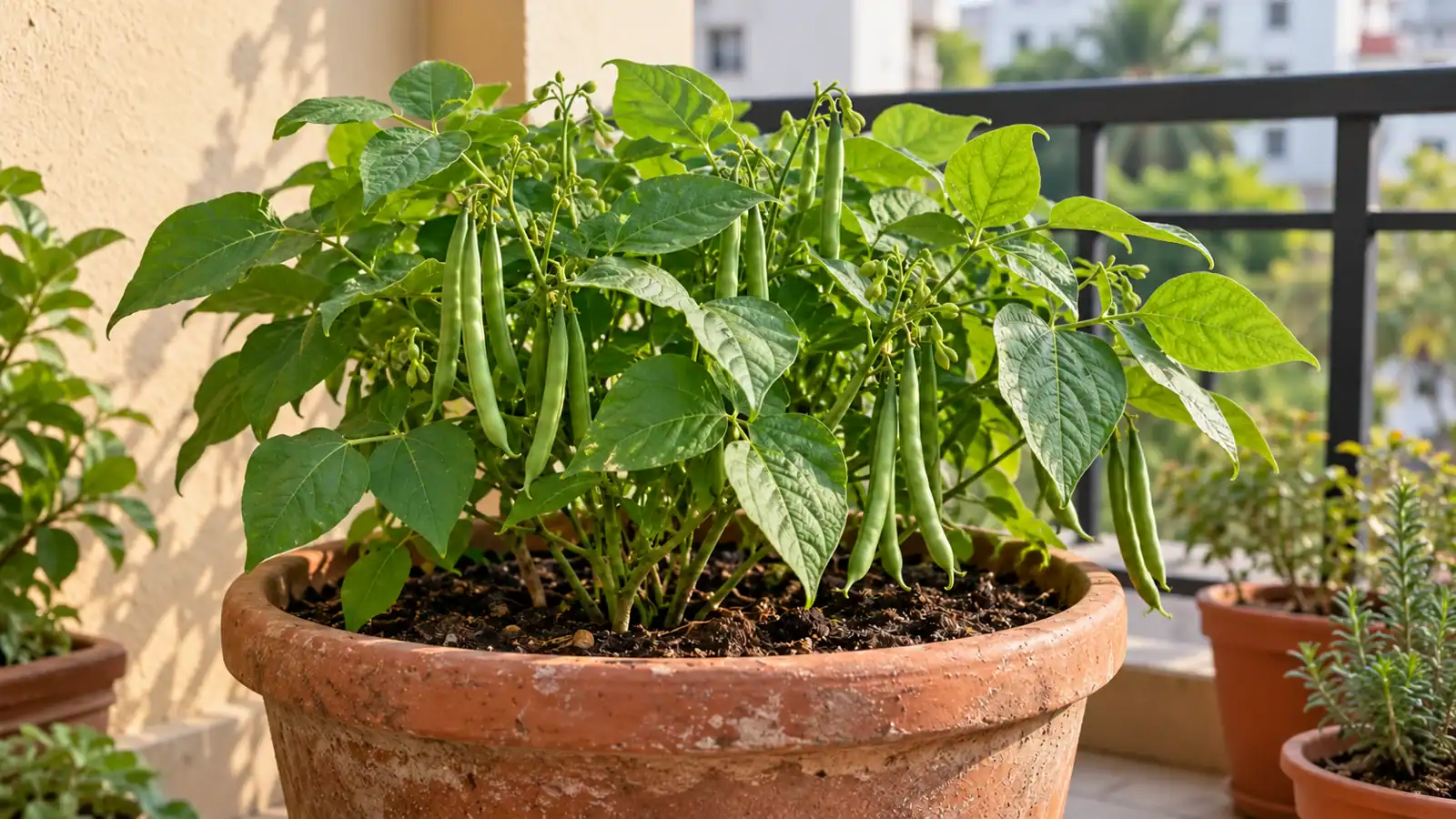
Which French bean type is better for a balcony?
French beans are Phaseolus vulgaris. Dwarf and climbing forms have different space requirements. For a first container trial, a known dwarf variety makes the setup easier to manage; choose a climbing one only when you have room for its container and support. The RHS distinguishes compact dwarf plants from climbers that can reach around two metres. Source: RHS French bean guide.
| Choice | What it means for your setup | Best first check |
|---|---|---|
| Dwarf or bush | A compact plant, usually without a tall trellis. | Read the variety’s mature size and final spacing. |
| Climbing or pole | A climbing stem that needs a tall, stable support. | Reserve both the pot footprint and usable vertical space. |
| Growth habit not stated | You cannot confidently plan around the product name alone. | Ask for the cultivar or growth habit before sowing. |
Do not substitute advice for peas, broad beans, lablab or yard-long beans simply because the packet says “beans”. These are different crops. Keep the packet beside your sowing notes so the crop name and instructions stay together.
When should you sow French beans in India?
Use regional guidance rather than an India-wide month chart. Tamil Nadu Agricultural University lists October–November for plains and February–March for hills in its French bean guidance, alongside an optimum temperature range of 15–21°C. These are regional crop recommendations, not a promise that every balcony in India suits those dates. Source: TNAU French bean guidance.
- Plains with a suitable mild growing window: check the packet’s season and whether enough suitable weather remains for flowering and pod development.
- Cool hill areas: do not copy a plains autumn schedule. Check a local horticulture or Krishi Vigyan Kendra calendar and expected cold conditions.
- Warm coastal and southern balconies: use actual conditions and local variety recommendations. A “winter seed” label does not make a hot balcony cool.
- Balconies exposed to regional monsoon rain: assess drainage and whether a small sowing can establish before committing the whole packet.
French beans are frost-tender. University of Maryland Extension advises sowing after frost danger has passed; its own calendar is for Maryland and is not reproduced here. Source: Maryland bean-growing advice. Check local conditions at the start of the crop, not just on the day you buy seeds.
What pot size should you use?
For dwarf French beans, the RHS recommends a container 30–45cm wide. Its climbing-bean example is much larger: at least 75cm wide and 45cm deep. These are separate setups; a small decorative tabletop pot is not an equivalent substitute for the climbing-bean container. Source: RHS container guidance.
Depth matters too. NC State Extension’s general bean container table lists an 8–10-inch minimum depth, approximately 20–25cm. For a beginner dwarf-bean trial, a pot around 25–30cm deep offers a practical starting choice, subject to the variety’s requirements and usable root volume. This is not a universal minimum for every bean cultivar. Source: NC State container-gardening handbook.
Measure the space inside the pot, not its outside decorative height. A tapering pot or built-in reservoir changes the volume available for growing mix. Our grow bag size guide explains the difference between dimensions and litres.
Prepare the container and growing mix
Use drainage outlets that can discharge freely and a suitable container-growing mix. Avoid a dense, compacted fill that stays saturated. NC State advises against putting a gravel layer under the growing mix to improve drainage. Source: NC State drainage guidance. If preparing a mix at home, use the checks in our vegetable potting mix guide.
Choose the light before filling the pot
Aim for a position with at least six hours of direct sunlight, the full-sun baseline given by Maryland Extension for beans. Source: Maryland bean-growing advice. Count the light reaching the proposed plant position, including shading from walls, railings and other plants. See our balcony sunlight guide before committing a large container to a dim corner.
How do you sow French bean seeds in pots?
- Confirm the variety. Note whether it is dwarf or climbing, the suggested season and final plant spacing.
- Prepare the final position. For climbing beans, install the support before sowing. Do not wait for roots to fill the pot before driving canes through it.
- Moisten the mix. Start with evenly moist growing medium and clear drainage, rather than a dry centre beneath a wet surface.
- Follow the packet’s sowing depth. University of Minnesota Extension uses about an inch, approximately 2.5cm, as a general bean-sowing reference and gives packet directions priority. Do not assume every bean seed needs the same depth. Source: Minnesota seed-starting guidance.
- Leave growing room. For dwarf French beans, the RHS gives 15cm spacing as a container reference. Use the cultivar’s instructions when they differ. Source: RHS.
- Label and observe. Record the crop, variety and sowing date. Keep a note of emergence before deciding whether to sow more.
For a small first trial, use a few properly spaced sowing positions rather than filling every visible gap. There is no reliable “seeds per pot” answer without the pot’s dimensions, cultivar and intended final spacing.
If raising plants in separate cells, move them with the root ball intact and follow a gradual hardening-off plan before putting sheltered seedlings into an exposed position. A crowded seedling tray is not a substitute for reserving final growing space.
How should you water and feed container-grown beans?
Inspect the growing mix instead of watering on a fixed weekly schedule. Container moisture needs change with plant size, weather, pot material and growing medium. Watering that suits a small seedling may not suit the same pot at pod formation. Source: Maryland container-growing guidance.
At each check, look at both the surface and the mix below it. Water when the root zone needs it, allow drainage and investigate a pot that remains persistently wet. After rain, assess the pot before adding more water. A roofed balcony can also stay dry while nearby open ground receives rain.
Do not assume that beans need no nutrition because they are legumes. Check whether the potting mix already includes fertiliser, then follow an appropriate container-vegetable feed’s label if more is needed. Conversely, adding extra nitrogen to force leaf growth is not a solution to missing pods: Maryland Extension notes that excessive nitrogen can delay flowering. Source: Maryland bean fertility guidance.
Keep your first routine simple: one container, a consistent observation record and a label-based feeding plan. Field fertiliser rates per hectare should not be divided casually into an improvised dose for one pot.
When are French beans ready to pick?
For fresh snap beans, look for tender pods before the individual seeds create obvious bulges. Pod shape and size vary by cultivar, so use development rather than a single length rule. Minnesota Extension distinguishes this young-pod stage from beans grown for shelling or dry seed. Source: Minnesota harvest guidance.
Check among the leaves and handle the plant gently when picking. Keep a note of the first useful harvest and how long the pot remains productive. Packet maturity days are a planning estimate; check whether they are counted from sowing or transplanting, and do not treat them as a fixed appointment.
If a compact crop finishes sooner than your household would like, consider a later separate batch only while the season remains suitable. Our succession sowing guide covers that planning decision without assuming uninterrupted harvests.
What should you check if the crop struggles?
| What you see | Check first | Useful next step |
|---|---|---|
| Poor emergence | Seed condition, depth, temperature and persistent wetness. | Review the original sowing before repeating it unchanged. |
| Plants growing into each other | The packet’s final spacing and the actual number of plants. | Reduce crowding; see the seedling thinning guide. |
| Flowers but few pods | Recent temperature stress, water supply and feeding history. | Record the conditions around flowering instead of adding fertiliser automatically. |
| Leaves with curling, spots or insects | Leaf undersides, new shoots and how widely symptoms occur. | Photograph the plant and seek a crop-specific diagnosis before treatment. |
Minnesota Extension notes that cold soil can hinder establishment and hot conditions can disrupt flowering and fruit set. It also lists several possible pests and diseases, which is why a symptom alone is not a diagnosis. Source: Minnesota bean-growing guidance.
Choose seeds that match the setup
Surekha Agro’s Winter Kitchen Garden Vegetable Seeds Combo lists French beans alongside red radish, white radish, beetroot and knol khol. Before choosing it for this project, confirm the French bean variety and growth habit on the current packet or with the seller; the listing name alone does not establish dwarf or climbing growth.
Grow each crop with its own spacing and care plan. A seed combo is not an instruction to sow all five crops into one pot, and its contents do not guarantee a particular germination rate or harvest.
Frequently asked questions
Can I grow French beans in a grow bag?
Yes, if its root volume, drainage and stability suit the variety. Check the filled dimensions rather than just the advertised bag height. A climbing crop still needs an appropriate support.
Do all French beans need a trellis?
No. Compact dwarf types and climbing types are different choices. Confirm the variety instead of buying a tall frame for an unknown packet or assuming a climber will remain bush-sized.
Can I grow them on an indoor windowsill?
A bright-looking room is not proof of enough direct sunlight or growing space. Assess the actual light, mature plant size and airflow first. This guide is intended for a suitable balcony, patio or terrace position.
How many pods will one pot produce?
There is no dependable fixed number from pot size alone. Variety, plant count, light, season and care all affect the result. Start with a manageable trial and keep your own record rather than planning around a promised yield.
Before sowing: confirm the growth habit, check your local season, measure the pot and decide where the mature plant will stand. Those four decisions make the rest of the routine easier.