Thuja plant care needs an outdoor position with useful sunlight, a moist but draining root zone and restrained pruning. In Indian pots, check moisture and heat exposure instead of following a fixed weekly watering interval. If foliage browns, inspect where the damage starts before adding water, fertilizer or a spray.
Thuja plant care at a glance
- Before buying: confirm the botanical name, cultivar and eventual size.
- Placement: assess an outdoor spot with sun or partial shade and protection from harsh exposure.
- Watering: maintain root moisture while allowing runoff to escape; check more often in heat and wind.
- Shaping: retain green foliage and investigate browning before cutting.
Which plant is sold as Thuja or Morpankhi?
“Thuja” and “Morpankhi” are common nursery names, not enough information to select a hedge or predict heat tolerance. Thuja occidentalis, the American arborvitae, is different from Platycladus orientalis, the oriental arborvitae previously called Thuja orientalis. NC State documents that older name. Ask the nursery which plant and cultivar you have, especially before buying several for a boundary.
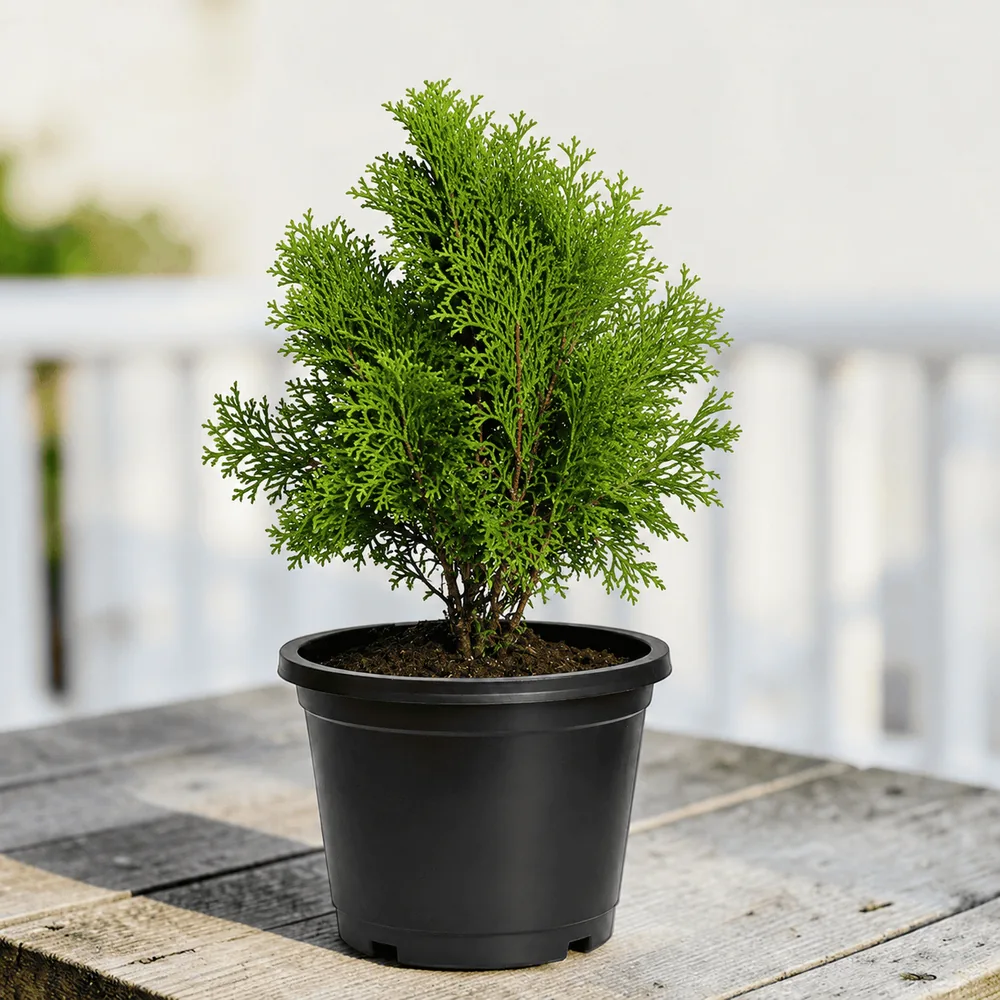
Our Thuja listing currently names T. occidentalis and describes a small plant in a non-reservoir black pot. A compact delivery size does not prove a permanently dwarf cultivar. Use the catalogue photograph to understand the presentation, then confirm identity and expected mature size when space or local summer survival matters.
This guide covers the practical checks for nursery-grown arborvitae-type conifers in containers. It does not make all named species interchangeable or promise that one plant suits every Indian climate.
Sunlight and climate: choose an outdoor home
NC State’s American arborvitae profile recommends sun or partial shade and warns that full shade thins the foliage. It also notes problems on dry, exposed, windy sites. Oriental arborvitae likewise accepts sun or partial shade but dislikes wet, boggy conditions. Neither description supports a permanent position in a dim bedroom or office corner.
Check your proposed spot at different times of day. Notice direct sun, hot reflected light from a wall, wind and rain reaching the pot. A sheltered outdoor position with morning sun is a useful starting assessment for an unacclimatised nursery plant in hot conditions. It still needs substantial daylight; deep shade is not a cure for heat.
- Hot northern plains or a baking terrace: protect a small pot from the harshest heat while maintaining light. Check moisture more often and ask a local nursery whether the identified plant performs through your summer.
- Wet coastal or monsoon conditions: ensure runoff escapes and foliage has space for airflow. Shift a saturated pot away from repeated rain rather than adding water because the surface looks clean.
- Cool northern November or a windy hill balcony: inspect the actual root ball before watering. Shelter from drying wind where needed; do not impose an overseas “no water in winter” rule on an unfrozen Indian pot.
These are applications of the light and root-moisture guidance to the conditions you observe. They are not a substitute for confirming species and local suitability.
Water the root ball, not the calendar
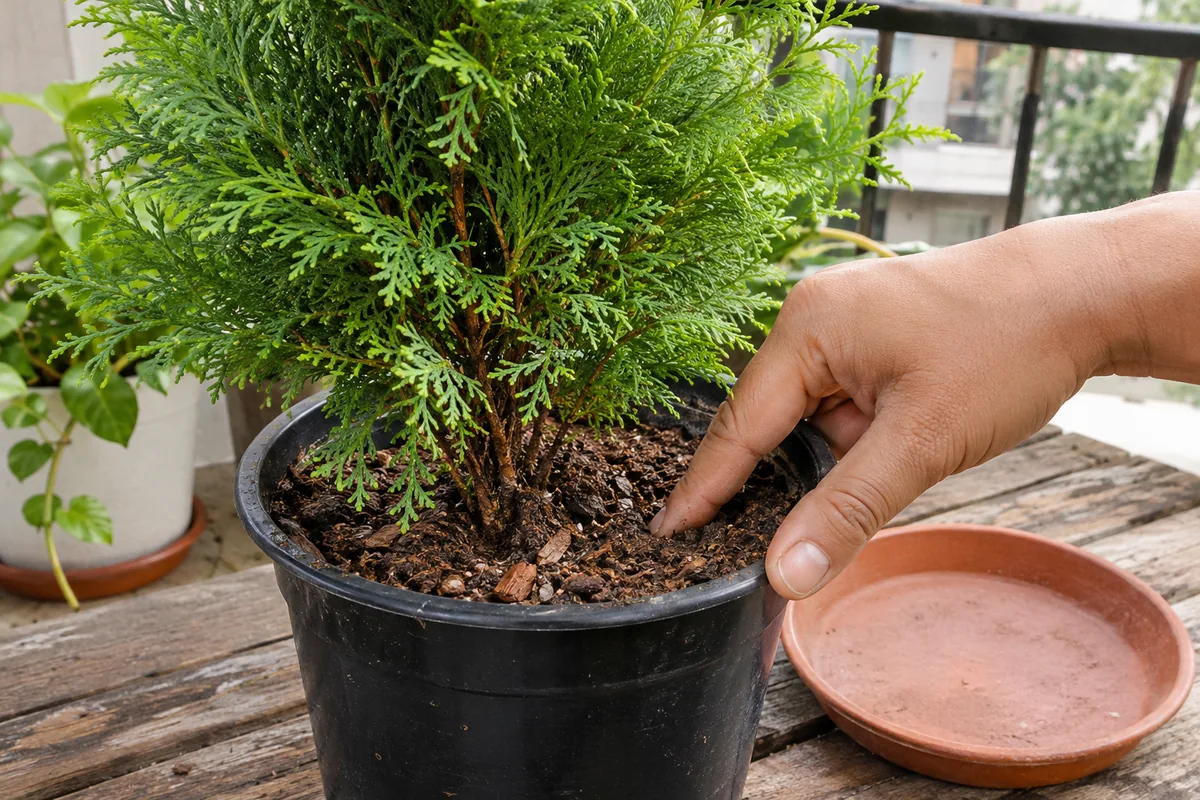
A small root system in a pot can dry even when a planted garden tree would find moisture deeper down. Conversely, repeated watering can leave a covered pot saturated. The RHS container-care guide recommends checking daily in warm or windy weather and still checking beneath the surface after rain. Frequent checking does not mean frequent watering.
For an ordinary draining pot, have a watering can, access to the mix and a place for runoff:
- Check beneath the surface. Feel the mix near the pot edge and notice the pot’s weight. If it remains wet, wait and investigate drainage. Do not let the root ball become completely dried out while waiting for the foliage to wilt.
- Water evenly when needed. Apply water across the mix so that the root ball is moistened, rather than repeatedly sprinkling the foliage or one small patch.
- Watch the outlets. Let excess water escape, then empty the saucer. Check blocked holes or compacted mix if drainage is poor.
- Record the response. Note the mix condition when you water and compare the next check. Reassess after heat, rain, a move or repotting.
Illinois Extension describes thorough watering and emptying the saucer; pot size, material and conditions change the interval. Our watering checks guide explains moisture assessment, but Thuja’s outdoor light requirements still apply.
Potting mix and repotting an established nursery plant
Choose a container mix intended for long-term outdoor shrubs, with a structure that retains moisture while allowing drainage. Inspect the bag’s intended use and ingredients; do not assume plain cocopeat, dense garden mud or a fertilizer-rich blend will behave like a balanced container mix. Keep outlet holes open. A layer of stones cannot fix a pot without drainage.
Check for densely circling roots, a root-filled mass or increasingly rapid drying that you cannot reasonably keep up with. Do not repot every newly delivered plant automatically. The RHS conifer guide describes repotting container conifers as they grow, often at intervals of two to three years; actual crowding takes priority over that review interval.
- Prepare a measured next pot. For a small container below 25 cm across and deep, RHS repotting guidance suggests a new one about 2.5–5 cm wider and deeper. For example, a 13 cm pot moves to roughly 16–17 cm, not straight to a large decorative tub. Measure the actual pot rather than relying on a size label.
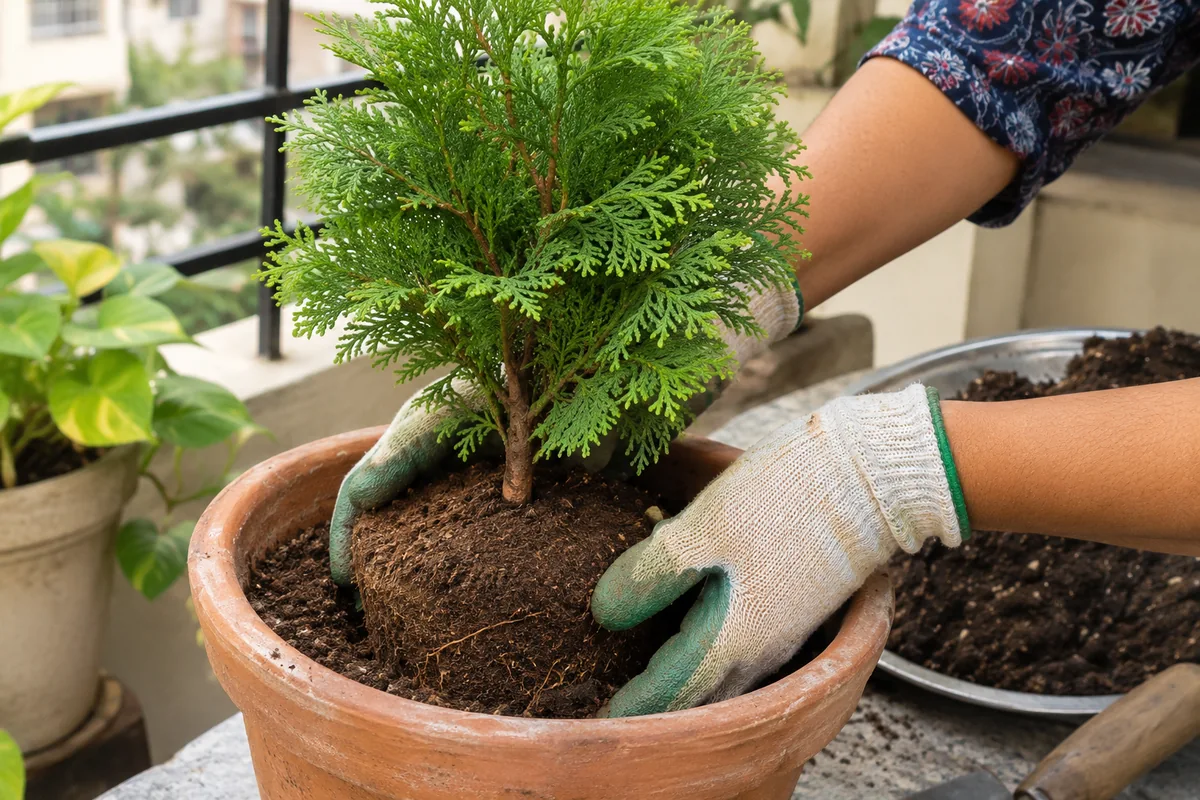
- Support the root ball. Ease it out without pulling the trunk. Gently loosen outer circling roots if needed; keep the main root mass intact. Soft roots and a collapsing stem base call for diagnosis, not routine upsizing.
- Keep the old planting depth. Set fresh mix beneath and around the root ball so the stem base stays at its previous soil line. Leave watering space beneath the rim.
- Water and drain. Settle the mix with water, allow runoff to escape and monitor moisture in the original root ball as well as the new surrounding mix.
The same-depth and root-inspection steps are consistent with Illinois Extension’s repotting advice. Our repotting walkthrough helps with preparation and handling. Avoid routine major root disturbance during extreme heat or a period of unexplained decline.
Feed during growth and trim within green foliage
A container’s nutrient supply is limited. Use a fertilizer labelled for the intended ornamental container use and follow its rate and interval, accounting for fertilizer already included in the mix. Feeding cannot correct trapped water or a location without enough light. Do not add several products to unexplained browning. Our fertilizer guide explains the checks before dosing; apply the actual product label to this outdoor container.
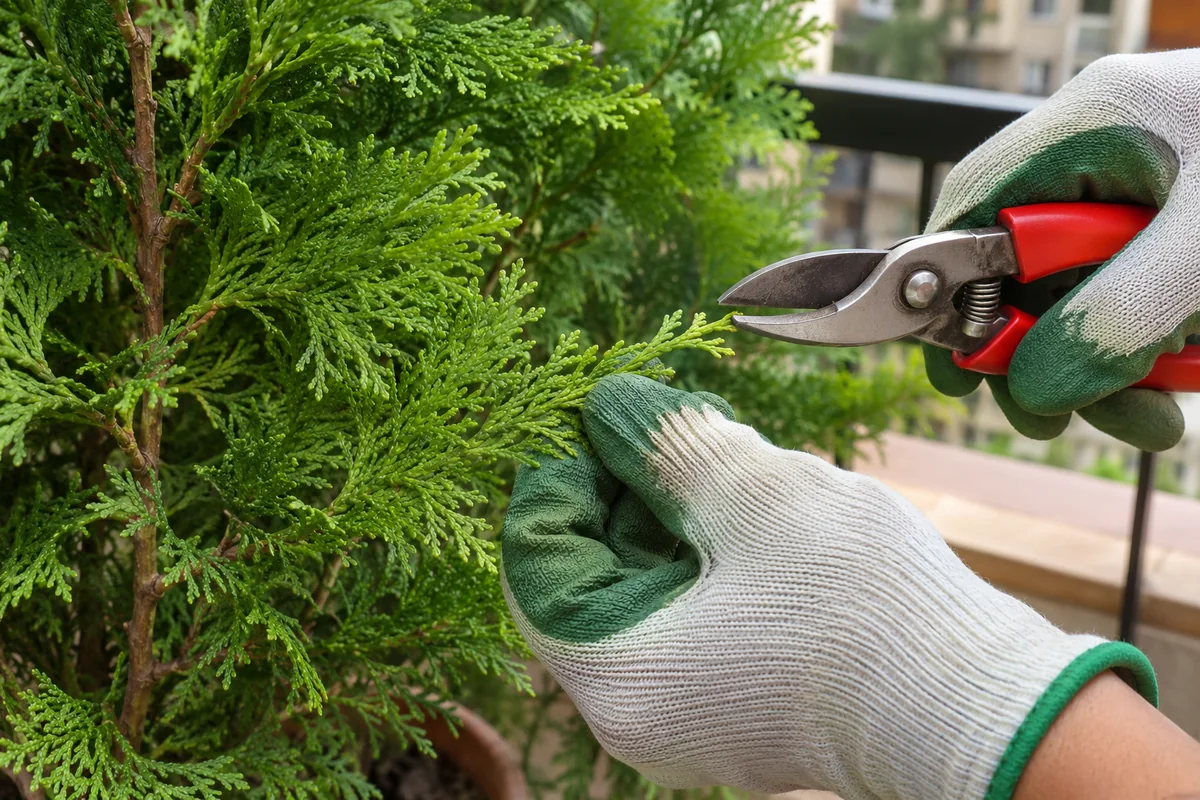
Most specimen conifers need little pruning. For a light shape adjustment, inspect the whole plant first, then use clean secateurs to shorten only selected green tips, leaving green foliage on the retained shoot. Work conservatively and stop to reassess the outline. Keep the main leader unless a knowledgeable grower has advised a specific shaping plan.
The RHS cautions against cutting into old brown wood: Thuja may regenerate less reliably than gardeners expect. Avoid trimming a dry, heat-stressed plant. Do not remove every brown area before establishing whether it is dead growth, seasonal shedding or an active problem.
Why is my Thuja turning brown?
Start with the pattern, a moisture check and a photograph for comparison. Iowa State explains that dry and excessively wet roots can cause similar symptoms. Brown foliage alone does not identify a fungus or prove that the plant needs more water.
On a phone, swipe sideways to read the action column.
| Observation | Discriminating check | First action |
|---|---|---|
| Older inner sprays brown; outer tips stay green | Is loss limited to the interior, without continuing outer-tip damage? | Monitor the pattern; seasonal shedding is possible, not confirmed by the month alone. |
| Brown tips with a light, dry root ball | Check moisture within the original root mass and recent hot wind. | Water the dry root ball properly, drain and correct excessive exposure. |
| Browning while mix remains saturated | Check outlets, trapped runoff, rain and the stem base. | Stop adding water; correct drainage and seek a root assessment if decline continues. |
| Expanding dead patches, webbing or visible insects | Inspect live and damaged shoots closely; photograph signs. | Arrange identification before choosing a treatment; avoid a blanket spray. |
Some older inner foliage is naturally shed by evergreen conifers. That does not make widespread or progressive browning normal. RHS guidance describes multiple environmental, insect and disease causes. North American autumn timings are not a diagnosis for an Indian balcony.
If you find stippling or fine webbing, use our spider-mite inspection guide; cottony deposits call for a different check in the mealybug guide. Any pesticide must have label directions covering the intended plant and use. If outer growth keeps dying, send the whole-plant photograph, close-ups and watering history to a nursery or plant clinic rather than repeating several remedies.
Optional propagation: try a healthy semi-ripe cutting
Propagation is a separate project, not a rescue for a badly declining plant. The RHS semi-ripe method applies to many conifers. Confirm your plant’s identity and choose firm current-season growth whose tip is still softer; do not copy a UK month into every Indian climate.
- Prepare clean secateurs, a draining pot and peat-free cuttings compost. RHS gives an alternative of equal measures of free-draining peat-free potting compost and horticultural sharp sand, not builders’ sand.
- Take a healthy cutting about 10–15 cm long, remove lower foliage and the soft tip, and insert its bare base into the prepared medium.
- Water and drain. Use a propagator or a supported clear cover in bright, indirect light; keep it out of hot direct sun.
- Keep the medium moist and check regularly for decay. Pot on after a root system is established, then acclimatise gradually to outdoor conditions. Fresh tip growth alone is not proof of a complete root system.
Questions before you change the routine
Can Thuja stay in a pot permanently?
A confirmed compact cultivar may suit long-term container growing, with root-space, moisture and feeding checks. A small nursery plant is not necessarily dwarf. Ask about its eventual size and plan for repotting or another location.
Will dead brown foliage turn green again?
Dead tissue does not recover its colour. Healthy shoots may provide replacement growth, but bare wood is not a reliable place to expect new shoots. Identify the cause and assess living growth before hard pruning.
Should I mist it every day?
Misting does not replace root watering or correct a saturated container. Check the growing mix and airflow first. Avoid keeping dense foliage continually wet as a substitute for investigating its condition.
Does rain mean I can skip the moisture check?
No. Foliage can intercept water, and a sheltered part of the pot may remain dry. Alternatively, repeated rain can saturate the mix. Check beneath the surface and confirm that excess water escapes.
Does Thuja need a flowering booster?
No routine flowering treatment is needed for this foliage-care task. Thuja is a conifer with cones, not a flowering balcony annual. Base nutrition on the container’s needs and the fertilizer label.
Can I use the foliage for tea or home remedies?
Treat the plant as an ornamental. This care guide does not establish medicinal or edible use. Keep clippings away from children and pets, use gloves when trimming and wash your hands after handling.
For the next inspection, compare the outer green tips, the older interior and the root-zone moisture together. Make the change that those checks support, then watch whether fresh damage continues.