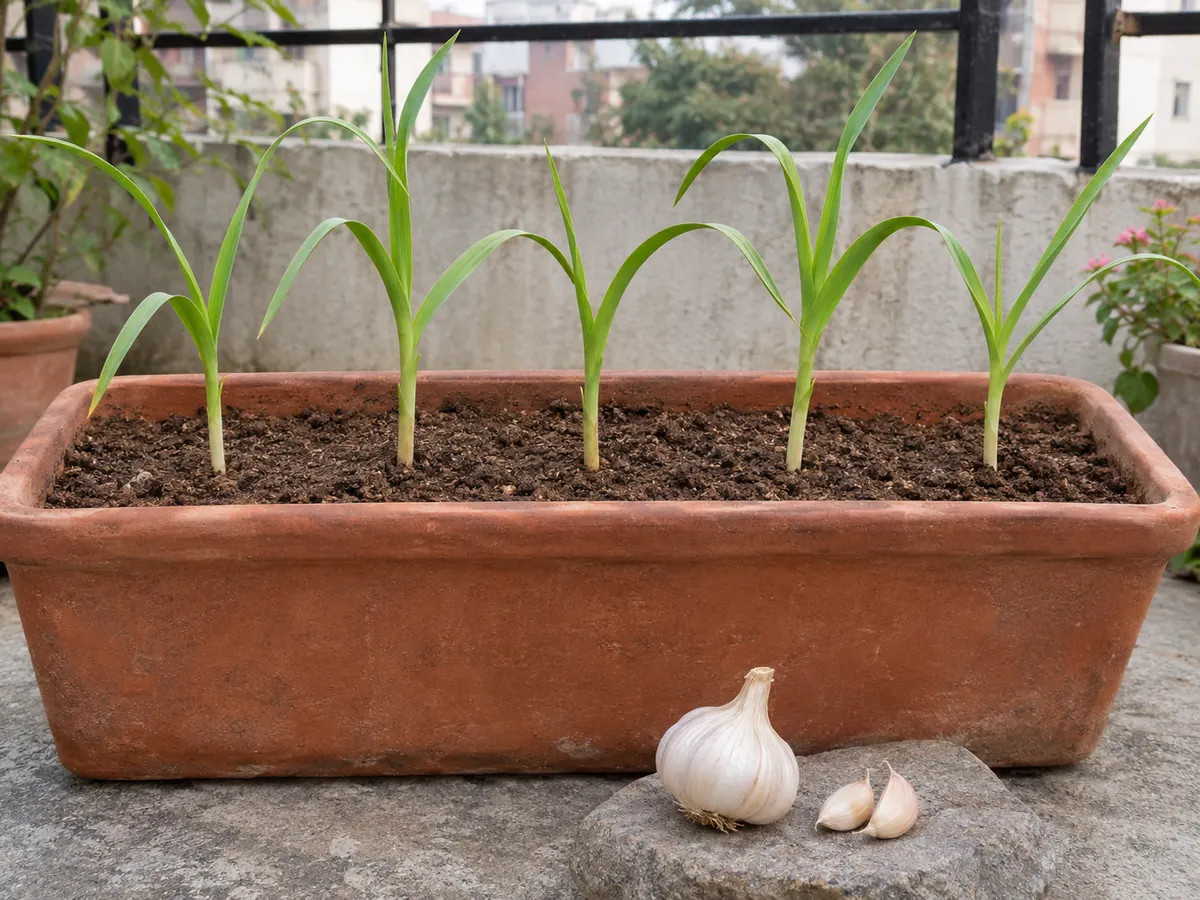
To learn how to grow garlic in pots, start with firm planting cloves, a sunny outdoor spot and a container at least 25 cm deep. In a free-draining mix, plant each clove tip up with 2.5 cm of mix over the tip. Give plants room to develop and check a bulb before harvesting the rest.
What you need to grow garlic in a pot
- For bulbs: Sound, locally adapted planting garlic, a pot with open drainage holes, free-draining vegetable potting mix and a ruler.
- Pot dimensions: At least 25 cm deep. Plan for 15 cm between clove centres and measure inside the pot at the level where the mix will sit.
- For a small balcony: A round pot with an internal width of 30 cm comfortably takes two plants on this spacing. If you have room for a trough, an internal surface of 45 × 30 cm gives you room for two rows of three.
Those two layouts are worked examples using the Royal Horticultural Society’s container depth and spacing guidance. Mark the planting positions before opening the bulb. Tapered pots often have less room for mix than their advertised diameter suggests. For measuring and checking outlets on a container you already own, see our vegetable grow bag guide.
When should you plant garlic in India?
Garlic grows well through a mild, cool period, then needs suitable conditions for the bulb to fill and ripen. Time planting to the local garlic season rather than using a single national date. In the northern plains, October and November are common planting months, though Punjab Agricultural University’s local recommendation is earlier, at the turn of September and October. See the Punjab Agricultural University vegetable guide. Guidance from the College of Agriculture, Bikaner gives October–November for Gujarat, West Bengal and Odisha, and a wider window for Maharashtra, Karnataka and Andhra Pradesh. Treat these as regional field references. Ask a local nursery or Krishi Vigyan Kendra which planting garlic and timing fit your district. College of Agriculture, Bikaner’s region-by-region garlic notes.
On a rainy terrace, keep the pot in direct light where a roof edge can protect the mix from repeated soaking. On a balcony that gets hot early in the season, prioritise a locally adapted variety and its planting window. A clove can put out leaves before you know whether conditions will support a divided bulb. If your balcony stays dim through winter, use the sunniest available spot and start with a small trial while you choose other crops from our winter vegetable guide.
How to grow garlic in pots from cloves
- Choose firm cloves. Ask for planting stock suited to your area. Break the bulb apart just before planting. Use plump cloves with an intact, dry skin and an undamaged flat base. Discard cloves with soft spots or visible mould.
- Prepare the pot. Check that water can run out before you fill the container. Use a crumbly vegetable potting mix that drains and still holds enough moisture for roots. If you’re mixing your own, start with our vegetable potting mix guide. A cocopeat block can supply one component of the mix.
- Mark and plant. Mark centres 15 cm apart. Make a pocket for each clove, lower the flat base into it and cover with loose mix. Measure 2.5 cm from the point of the clove to the final surface. This is the cover over the tip. The whole pocket will be deeper by the length of the clove.
- Water and label. Water gently until excess drains, then empty any saucer. Label the pot with the planting date and variety if known. Place it outdoors where it gets direct sunlight. Keep the mix from drying out completely while roots and shoots establish.
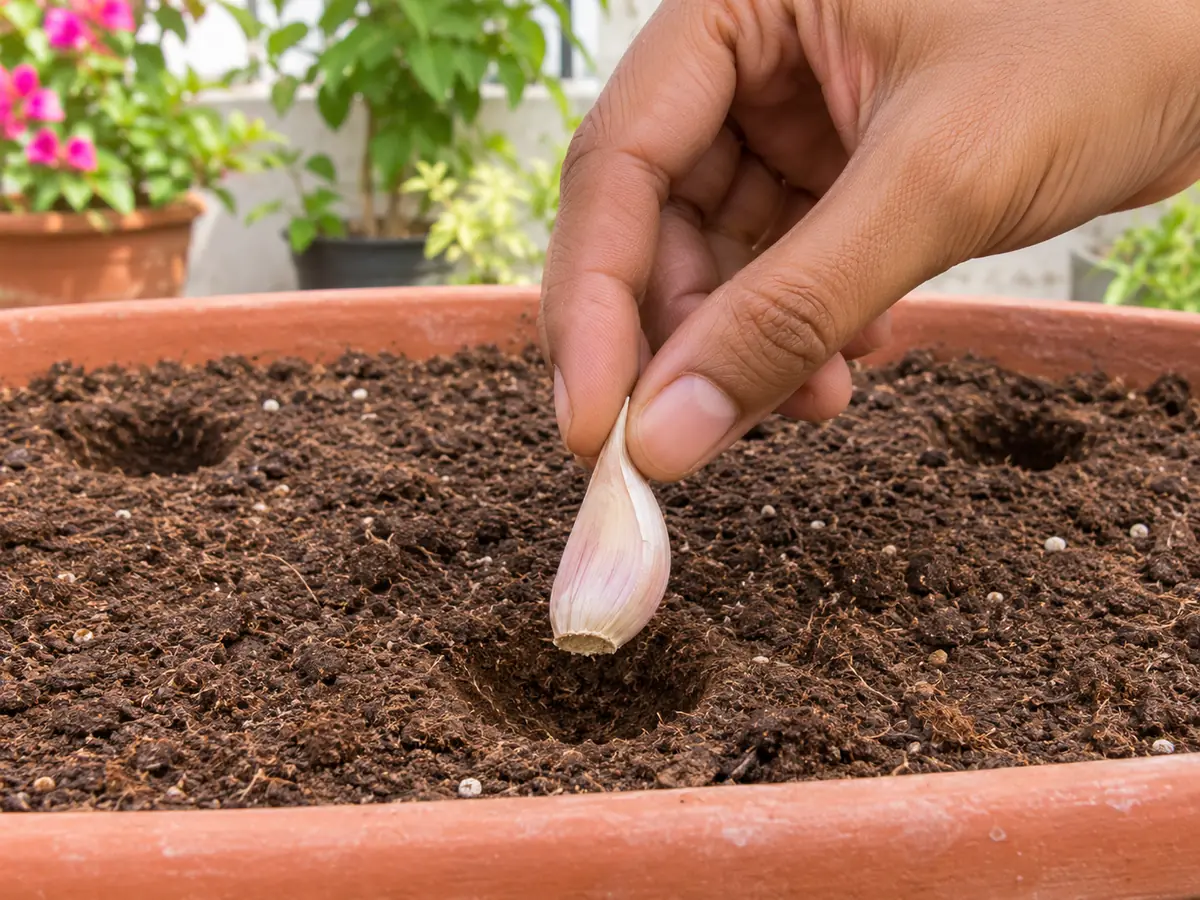
The pocket depth depends on clove length. A 3 cm clove with 2.5 cm of cover, for example, places the base about 5.5 cm below the surface. That is a worked example of the RHS tip-depth method, which is handy when the cloves in one bulb vary in size.
How to care for garlic while the bulb develops
After shoots emerge, keep weeds out and leave the green leaves in place if you want bulbs. Check the mix just below the surface before watering. If it still feels damp, check again later. If it’s beginning to dry while leaves are actively growing, water slowly enough to moisten the root zone, let it drain, and empty the saucer. A breezy terrace and a sheltered winter balcony can dry at different speeds on the same day.
Once the lower leaves begin drying naturally near harvest, ease off watering and check a bulb. Avoid repeated top-ups when the mix stays damp. Early yellowing with soft growth, or a wilted plant whose mix is wet, calls for a root and drainage check instead. RHS watering and ripening guidance.
A complete vegetable potting mix is a practical starting point for one container. If the mix label says that it already contains feed, use that information before adding more. For feeding recommendations specific to a region or a known deficiency, consult local guidance. Field fertiliser recommendations in kilograms per hectare can’t be turned into a reliable spoonful per pot without knowing the actual mix and product.
When is potted garlic ready to harvest?
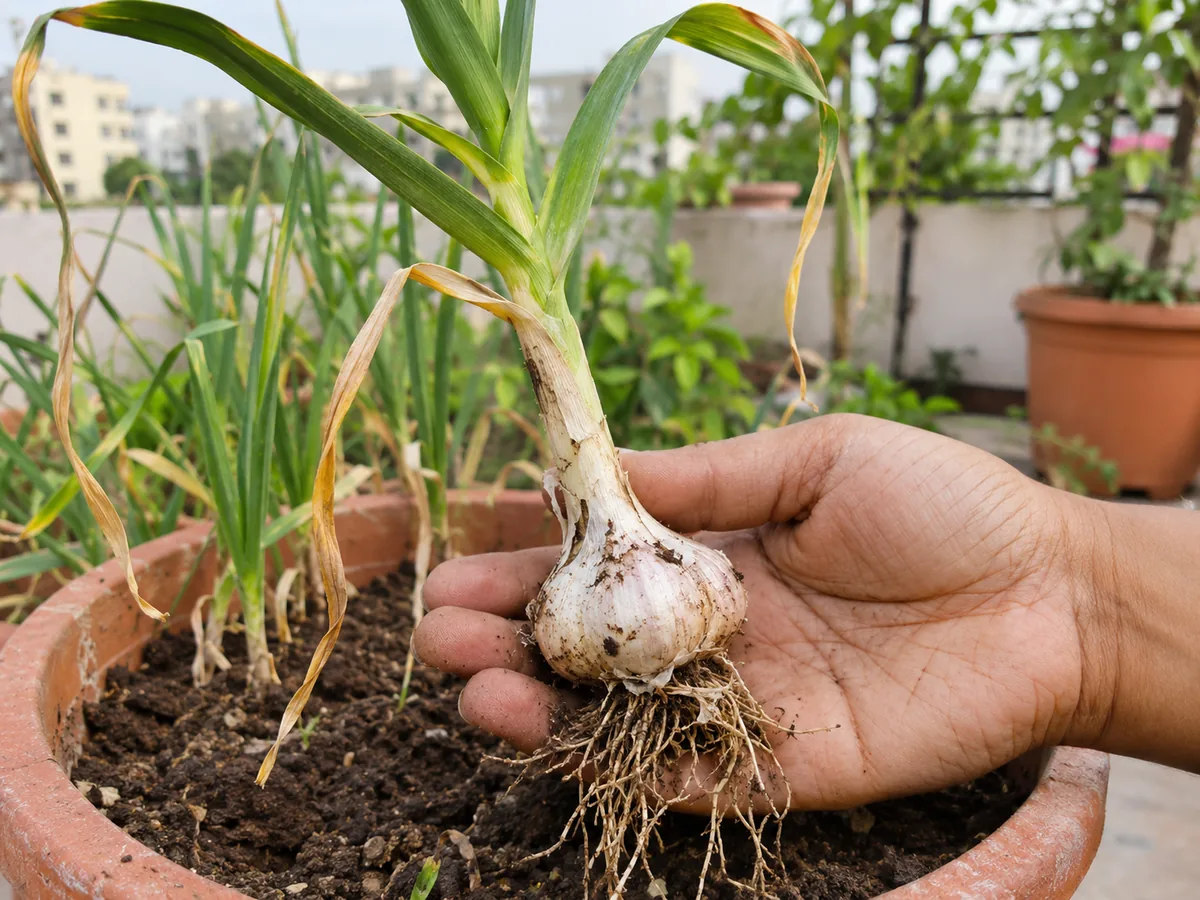
Start checking when the lower leaves turn brown while a good portion of the upper foliage is still green. Ease a trowel into the mix outside the plant’s base and lift one test bulb with its top attached. A well-filled bulb shows the shape of individual cloves beneath its wrapper. If it is narrow, the leaves are mostly healthy and you see no rot, leave the other plants and check again as more lower leaves dry. If the wrappers are already splitting apart, lift the remaining mature bulbs promptly. University of Minnesota Extension’s harvest cues.
How to cure and store garlic after harvest
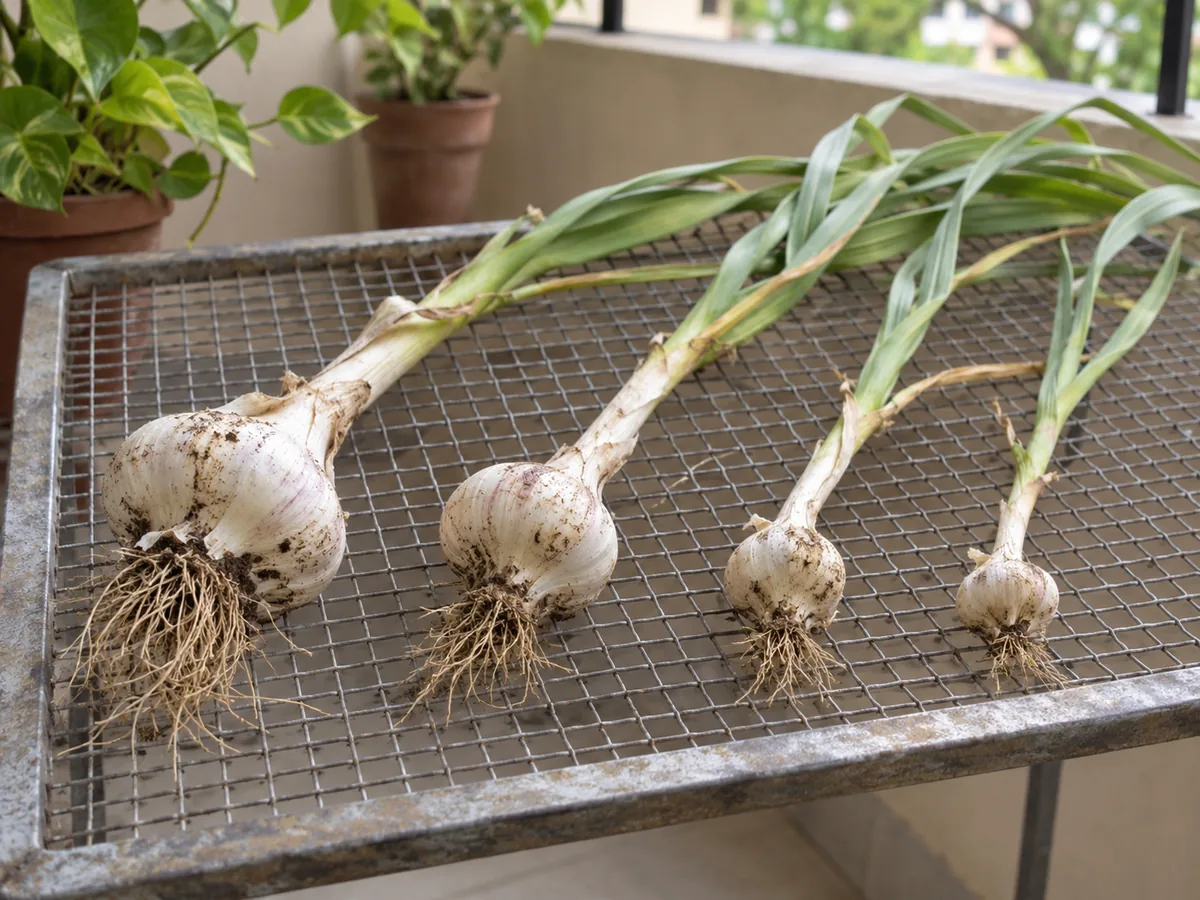
Shake off loose mix gently, keeping the skins, tops and roots attached. Set sound bulbs apart on a mesh rack in a dry, shaded place with good airflow. In a humid spell, use a covered, ventilated area protected from rain. Wait until the outer wrappers feel papery and the neck and roots are dry before trimming. Check the bulbs while they dry and remove any that soften. Store the fully cured bulbs somewhere dry with ventilation. RHS drying and storage guidance.
What if the cloves sprout but the bulbs stay small?
- Lots of leaves and little swelling. Check whether the crop is still growing, whether the plants are crowded and how much direct light reaches the pot. A trial bulb near maturity tells you more than leaf height. For the next planting, keep the spacing and choose a planting variety suited to the local season.
- Soft clove with no shoot. Check one clove and make sure the outlets aren’t blocked. If the clove is soft and the mix stays wet, correct the drainage before trying again. Choose sound planting cloves and use fresh mix if you see signs of rot.
- Yellowing or wilting weeks before harvest. Feel below the surface. If the mix is still wet, pause watering and check one affected plant for decay at the base. Early wilting can have several causes. If more than one plant is affected or you find fungal growth, get it identified before reusing the mix or keeping cloves for planting. University of Minnesota’s garlic symptom comparison.
Questions about growing garlic in containers
Can I plant a garlic clove from the kitchen?
A firm clove can be worth a small trial, especially if it came from garlic grown locally. Its variety, storage history and disease status may be unknown. Choose verified local planting stock when you’re relying on the pot for a bulb harvest.
Can I plant a whole garlic bulb in one hole?
Separate the bulb into individual cloves. Give each its own space so the growing plants aren’t crowded together.
Do garlic cloves need to sprout first?
Healthy planting cloves can go straight into the mix. Leave the papery clove skin in place and protect the flat root end from damage.
Can I harvest a few green garlic leaves?
Young leaves can be picked for the kitchen, but if bulbs are your main aim, keep most foliage intact as it grows. Plant a separate pot if you want to pick greens regularly. RHS garlic harvest guide.
How long does pot-grown garlic take to mature?
Allow several months for bulbs. The variety, local planting window and weather all affect timing. Use the lower-leaf and test-bulb checks to make the harvest decision.
Written by the Surekha Agro Products plant care team. Last updated 16 November 2026.
Sources
- College of Agriculture, Bikaner, Onion and Garlic
- Punjab Agricultural University, Package of Practices for Cultivation of Vegetables
- Royal Horticultural Society, How to Grow Garlic
- University of Minnesota Extension, Growing Garlic in Home Gardens
- University of Minnesota Extension, Diagnosing Garlic Leaves That Yellow and Wilt