Song of India plant care starts with bright, softened daylight, gentle drying between waterings and a pot that releases surplus water. Its yellow leaf borders are normal; new browning, widespread yellowing or leaf loss needs investigation. In Indian homes, adjust to the actual heat, rain and indoor exposure before changing water or fertilizer.
Song of India plant care at a glance
- Recognise it: narrow leaves with green centres and yellow or cream margins, grouped around woody stems.
- Choose its position: useful window light with protection from hot rays and draughts.
- Before watering: feel the upper mix, judge pot weight and look for collected runoff.
- Before treating a leaf: distinguish its normal border from a new change in colour, texture or growth.
Identify the plant, then assess your window
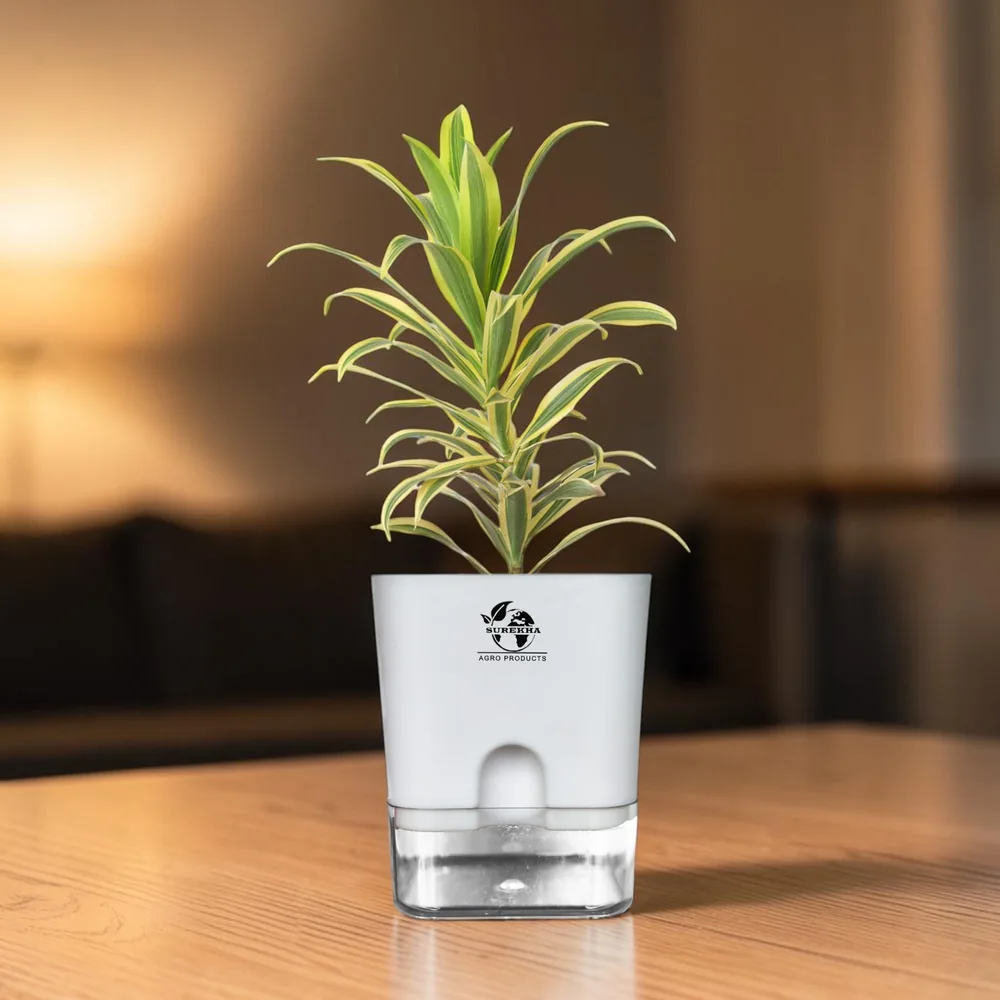
NParks records Dracaena reflexa ‘Song of India’ as a tropical shrub with green-and-yellow foliage. It is often sold under “Song of India” or “Songs of India”. A common name alone is less useful than the botanical label and the foliage you receive; other dracaenas have different stripe patterns.
Our Song of India product page is the place to compare the current size and planter options. This guide covers its care after selection. A small tabletop plant can develop taller woody stems over time, so leave room above it and check that its container is stable.
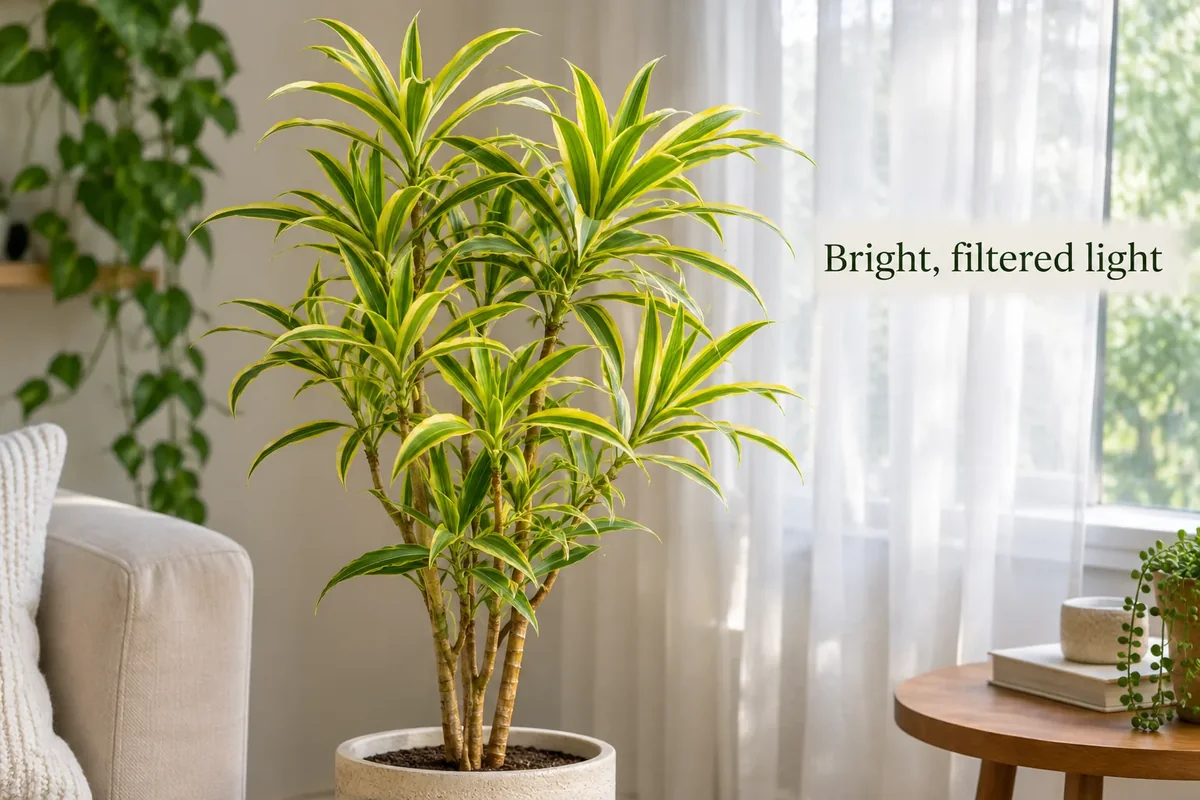
For indoor care, NC State’s reflexa profile favours bright, indirect light. Stand at the intended position during the day: does daylight reach the foliage, or is it blocked by furniture? Notice the path of direct rays. A sheer curtain can soften a bright window, while a distant dark shelf may need a different plant or more light.
NParks also records outdoor sun tolerance in tropical landscaping. That does not mean a nursery plant raised under shelter can immediately tolerate a baking west-facing Indian balcony. Increase exposure cautiously, checking for fresh pale or dry patches. Use our indoor light and placement guide to assess the room rather than choosing only by window direction.
Water after a check, and consider the water source
Clemson Extension recommends slight drying between thorough waterings for dracaenas. The aim is to avoid both persistent saturation and a completely neglected root ball. A rigid “three times a week” or “every fortnight” rule cannot account for a small plastic pot, a large planter and a windy balcony.
- Feel and lift. Check the upper growing mix near the edge and, if practical, lift the pot to judge its weight. A damp, heavy pot needs more time. A drying upper layer and a lighter container are reasons to assess whether the root ball now needs water.
- Wet the mix evenly. In an ordinary draining pot, apply water across the surface rather than to one small spot. Do not use repeated leaf misting as a substitute for watering roots.
- Let runoff leave. Empty the saucer or removable outer cover after drainage. Illinois Extension’s watering guidance explains why the plant should not remain in the collected water.
- Learn this container. Note when you watered and what the mix felt like. Check again before repeating, especially after a weather change or a move.
For a reservoir planter, inspect both the reservoir and the growing mix and use that planter’s instructions. A water-level view is not a complete reading of root moisture. The self-watering pot guide explains the parts to check; a conventional grow pot inside a decorative cover needs its runoff emptied.
Dracaenas can also react to fluoride in irrigation water. Clemson identifies this sensitivity, while RHS advice for D. reflexa prefers rainwater. If tips keep deteriorating despite sensible moisture and placement, review your water supply and any filtration specifications. “Filtered” can describe different treatments; brown tips alone do not prove a particular chemical cause.
Repot when the roots need room
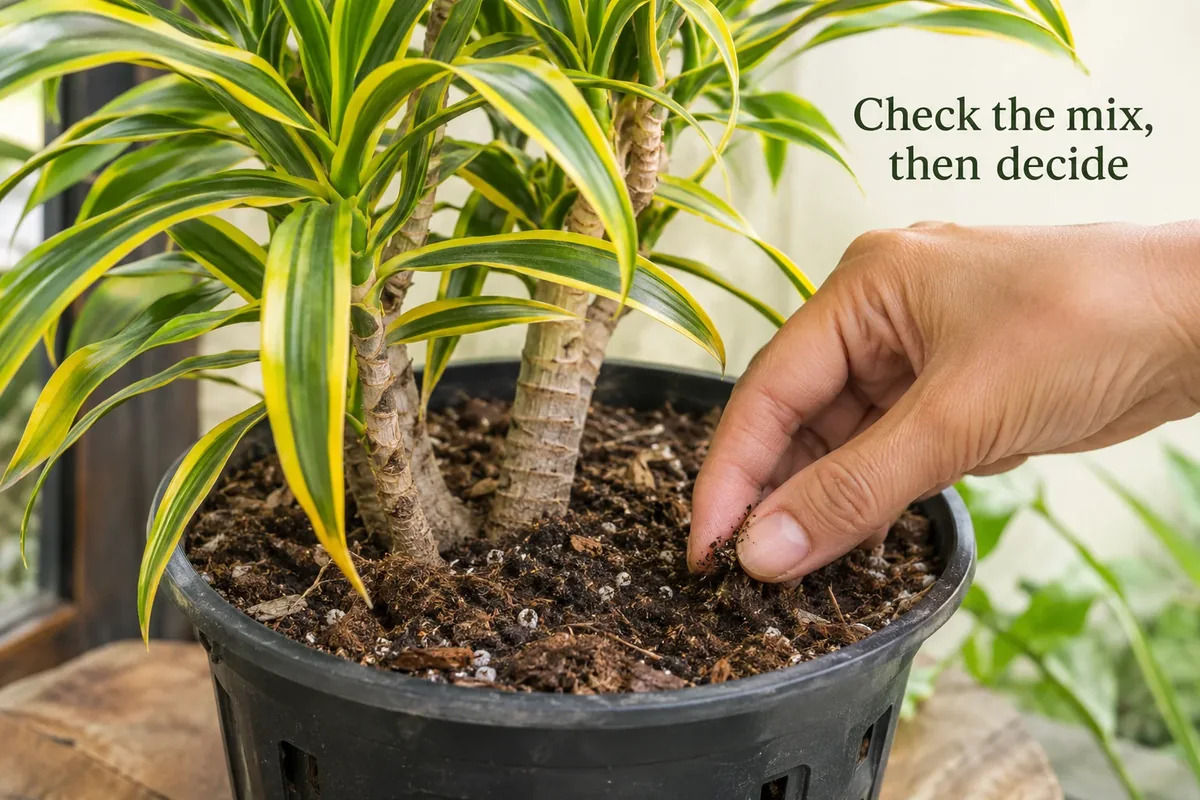
Delivery is not, by itself, a reason to replace the mix. First let a stable plant settle and learn its watering behaviour. Consider repotting when the roots have filled the container, form a congested circling mass, or make normal watering and drainage difficult. One root visible at a hole deserves inspection, not an automatic jump into a much larger tub.
Prepare a pot with open outlets, fresh commercial houseplant potting mix, a scoop and a clean work surface. Clemson supports a standard houseplant mix; check that it holds some moisture while remaining loose and draining. Different dracaena references describe different compost formulations, so there is no need to copy a universal cocopeat-and-perlite ratio or add fertilizer powders to compensate for a poor structure.
- Measure the next pot. RHS guidance suggests an increase of about 2.5–5 cm in width and depth for containers below 25 cm across and deep, keeping the increase modest. A measured 14 cm pot moving to roughly 17 cm is a worked example, not a measurement of our catalogue planter.
- Release and inspect. Support the root ball as you ease it out; avoid hauling on the stems. Gently loosen congested outer roots. If roots are deteriorating or the base is soft, pause routine upsizing and investigate the decline.
- Retain the planting level. Add mix beneath and around the root ball so the stem base remains at its former soil line. Settle gently and leave space below the rim for watering.
- Water, drain and monitor. Check the original root ball as well as the fresh surrounding mix during aftercare. Keep the plant in stable, softened light while assessing its response.
Illinois Extension supports same-depth placement and gentle root-ball handling. Avoid burying stems, sealing drainage or adding a gravel layer as a substitute for an outlet. For routine work, choose a period of active growth in comfortable conditions; postpone an elective repot during a cold, slow spell or extreme heat.
Feed lightly, clean the leaves and shape with a purpose
Use a foliage-houseplant fertilizer according to its label when the plant is growing, accounting for feed already in the fresh mix. Do not translate a foreign spring-to-autumn calendar into mandatory feeding throughout every Indian home. Extra feed can worsen leaf-margin injury: Clemson includes excessive fertilizer among possible causes of tip and edge burn.
Hold each leaf steady and wipe away dust using a clean, damp, soft cloth. Our leaf-cleaning guide covers gentle handling. While cleaning, examine the undersides and places where leaves meet stems. Oily shine mixtures make those inspections less useful.
Pruning is optional for a healthy plant whose shape you like. If a stem has become too tall or sparse, decide which section to shorten before picking up clean secateurs. Cut the selected healthy stem at the chosen height, retain a viable stem below, and allow space for replacement shoots. The RHS woody-dracaena guide describes replacement shoots below a pruning cut. This is shaping, not a cure for a soft, collapsing base.
Wear gloves, keep sap away from eyes and wash your hands after handling. Collect clippings immediately, especially around pets or small children. Avoid stripping a small plant merely to force it to look bushier.
Propagate a healthy semi-ripe cutting
The RHS species reference supports semi-ripe cuttings. Choose healthy current-season material with a firmer base and a softer tip. In a cool northern November room, waiting for better warmth and active growth is more sensible than treating the date as a propagation deadline.
- Prepare clean secateurs, a small draining pot and a commercial cuttings medium. Have a clear supported cover or propagator available.
- Following the RHS basic semi-ripe method, prepare a cutting about 10–15 cm long, with the base cut just below a node. Remove lower leaves and the soft tip; retain upper foliage.
- Insert the bare base into the medium, keeping the remaining leaves above it. Water and let surplus drain.
- Keep it warm and bright, protected from direct sun. Maintain moisture without saturating the medium; inspect for decay and excess condensation.
- Pot on once a root system is established, gradually reducing the protection. Do not pull it out repeatedly to look for roots or assume a fresh leaf proves successful rooting.
Rooting speed varies. This method is an optional project for a healthy plant, not a guaranteed rescue from dying stems.
Brown tips, yellowing or falling leaves: what to check
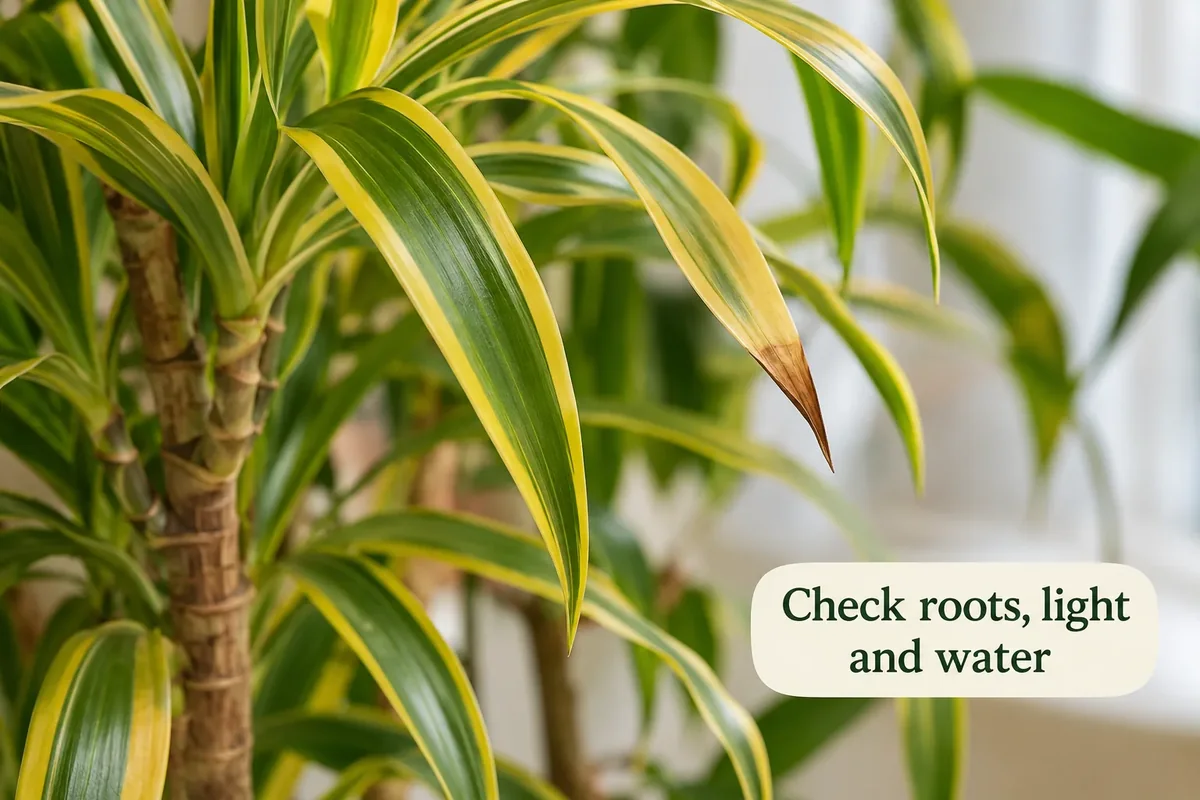
A normal yellow margin is different from a newly yellow leaf blade or a dry brown tip. Compare photographs of the same leaf and note whether damage is spreading. NC State lists several environmental and pest problems; leaf colour alone does not identify a pathogen.
On a phone, swipe sideways to see the action column.
| Change | Check first | Action and follow-up |
|---|---|---|
| Dry tips; rest of leaf firm | Repeated drying, wet roots, direct air stream, feed or water-source changes? | Correct the clearest issue; watch for new damage. Existing dead tips will not turn green. |
| Several leaves yellow or drop | Is the mix dry or persistently wet? Has temperature or placement changed? | Restore appropriate moisture and stable conditions. Continuing loss needs closer root/base assessment. |
| Pale dry patches after a move | Did stronger sun start striking those leaves? | Soften that exposure and compare subsequent growth; do not assume fertilizer deficiency. |
| Webbing, mottling or cottony deposits | Inspect leaf undersides and stem joints closely for pests. | Separate from nearby plants while identifying the problem; choose a treatment only after confirmation. |
Use our spider-mite guide for fine webbing and stippling, or the mealybug guide for cottony clusters. Avoid a blanket neem, fungicide or fertilizer response. Any pesticide needs label directions covering the intended ornamental use.
For a soft base, rapidly worsening leaf loss or persistent wilting in wet mix, seek a nursery or plant-clinic assessment. Send the whole plant, base, leaf close-ups and recent watering history. One symptom photograph cannot establish the cause.
Adjust the routine to your Indian home
- Hot or windy balcony: check exposure and drying more often, without watering a still-wet pot. Protect a recently moved plant from harsh reflected heat.
- Coastal rain or a wet monsoon: prevent repeated saturation and empty collected water. Leave airflow around the foliage.
- Cool northern weather: keep the tropical plant away from chilly open windows. If growth and drying slow, wait for the moisture check before repeating summer watering or feeding.
- Air-conditioned room: move leaves away from the direct stream while preserving useful daylight. Investigate dry tips together with roots and water quality.
These are applications of the source guidance to observed conditions, not region-tested watering intervals. Change the strongest problem first so you can judge the response.
Frequently asked questions
Does the yellow edge mean the plant lacks nutrients?
Not by itself. Green-and-yellow foliage is characteristic of Song of India. Investigate a new change across the blade, growth or texture rather than trying to remove its normal margin with extra feed.
Can I put it in a room with very little daylight?
A bright, softened window position is a better choice for sustained growth. If the only spot is far from a window, assess additional lighting or select a plant suited to that situation.
Should I trim every brown tip?
Trimming changes appearance, not the underlying cause. Photograph the damage first, inspect the conditions and avoid removing large areas of healthy leaf. Judge improvement by stable foliage and subsequent growth.
Can it flower indoors?
Flowers are uncommon on indoor reflexa plants, according to NC State. Keep this as a foliage plant; absence of flowers does not justify a flowering-booster routine.
Is Song of India safe for cats and dogs?
No. ASPCA lists dracaenas as toxic to cats and dogs. Prevent chewing and contact a local veterinarian promptly if ingestion is suspected. Do not use the foliage as food or a home remedy.
What should I record when a plant starts declining?
Photograph the whole plant and affected leaves, note its position, last watering, mix condition and any recent feeding or move. Those observations are more useful for choosing the next step than changing several treatments together.
At your next check, compare normal yellow borders with new damage, feel the mix and inspect the outlet. Keep the change that solves an observed problem, then watch whether fresh damage continues.