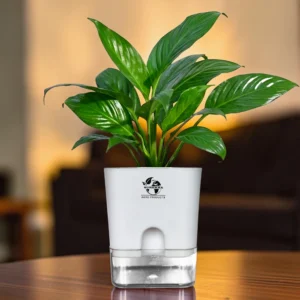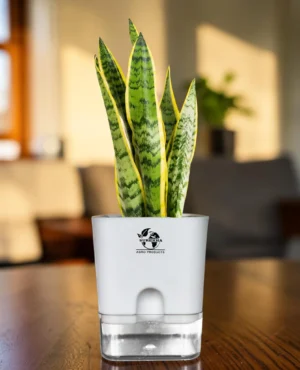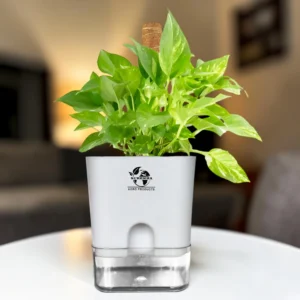
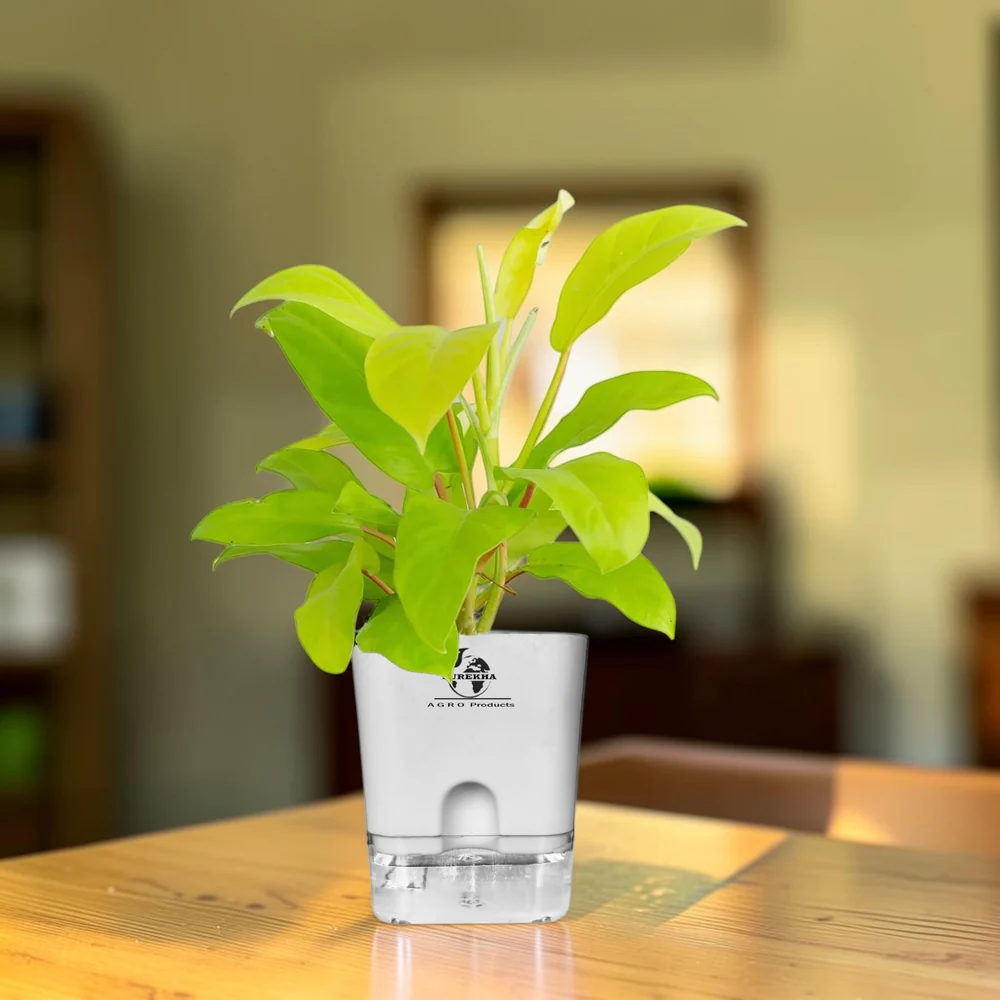
Philodendron care starts with filtered daylight, a pot that drains and watering after the upper mix dries. Check whether your plant grows as a vine or a compact crown before choosing a support or taking cuttings. In Indian homes, adjust the routine to actual heat, rain exposure and indoor light rather than a weekly calendar.
Philodendron care at a glance
Use these as starting checks for common indoor foliage philodendrons. Rare species and confirmed cultivars can need more specific conditions.
On a phone, swipe the table sideways to read the action column.
| Check | What to look for | Next action |
|---|---|---|
| Light | Daylight at the leaves, without hot direct sun | Use a bright position with filtered sun; assess new growth. |
| Moisture | Upper 2.5 cm beginning to dry; no trapped runoff | Water a draining pot thoroughly when needed, then empty the saucer. |
| Growth habit | An extending stem, or leaves clustered around a short crown | Support a climber; leave room around a bushy plant. |
| Cold exposure | Chilly balcony, cold glass or an AC blast | Choose a sheltered position; RHS recommends keeping philodendrons above 15°C. |
The RHS growing guide supports indirect light and protection from cold; South Dakota State Extension gives the top-inch moisture check. That depth is a starting observation, not proof that a deeper root ball is dry.
First identify a vine, a crown and the correct plant
On a climbing plant, leaves emerge at intervals along an extending stem. Heartleaf Philodendron, Philodendron hederaceum, is a familiar example. On a self-heading plant, leaves cluster around a much shorter stem, creating a bushier outline. Look at the stem rather than counting leaves. NC State Extension describes both habits and notes that young and mature foliage can look different.
“Money plant” usually refers to pothos in Indian homes; pothos and Monstera are related plants, not names for every Philodendron. Check the nursery label when identity matters. Our Ceylon listing uses a trade name and shows its available planter choices. Confirm exact cultivar identity with the nursery if you need a particular named collection plant.
On arrival, remove transport wrapping, check for broken stems and look beneath leaves before placing the plant among others. Photograph existing damage and inspect the container. A healthy plant in a sound pot does not need immediate repotting simply because it has arrived.
Choose light and space before changing the care routine
Start where filtered window light actually reaches the foliage. A sheer curtain can soften strong sun; a balcony roof can provide shelter, but check where the sun travels before leaving the plant there. A bright-looking room can still have a dim corner behind furniture. Our indoor plant placement guide helps you assess the position.
Common foliage philodendrons tolerate ordinary household humidity, although they prefer more humid air. Keep leaves away from cold AC airflow and avoid pressing foliage against a hot window. NC State’s growing guidance supports warm conditions, indirect light and adaptation to typical homes. Forcing extra humidity is not the first response to every brown tip.
- Hot, dry terrace or west-facing window: protect the plant from harsh sun and assess pot moisture more often. A drooping leaf is a reason to check, not automatic permission to water.
- Humid coastal room or monsoon balcony: inspect for wind-driven rain and water caught inside the outer planter. Do not top up an already wet pot.
- Cool northern home in November: check the overnight position and reduce watering if the mix dries more slowly. Keep the plant away from cold draughts rather than adding fertilizer to compensate for slow growth.
These are condition-based applications of the care guidance, not a single calendar for all India. Record the position and compare the next leaves with earlier growth before making another major change.
How to water Philodendron without trapping water
You need access to the growing mix, a watering can and a sink or tray for runoff. Follow this sequence for an ordinary pot with drainage holes:
- Feel and lift. Check the upper roughly 2.5 cm near the pot edge. Notice whether the container remains heavy and damp below. Wait if the root zone is still wet.
- Water the mix. When needed, distribute room-temperature water across the surface instead of repeatedly giving a tiny splash to one spot.
- Let it drain. Allow excess water to escape through the outlets, then empty the saucer or cover pot. If no water can escape, correct that container problem.
- Check again before repeating. Note the date and mix condition. Use the note to learn how this pot dries; do not turn it into a compulsory refill date.
Illinois Extension explains thorough watering and emptying runoff, and why light, temperature, pot material and mix change the interval. Do not wait for the entire root ball to become hard and bone-dry.
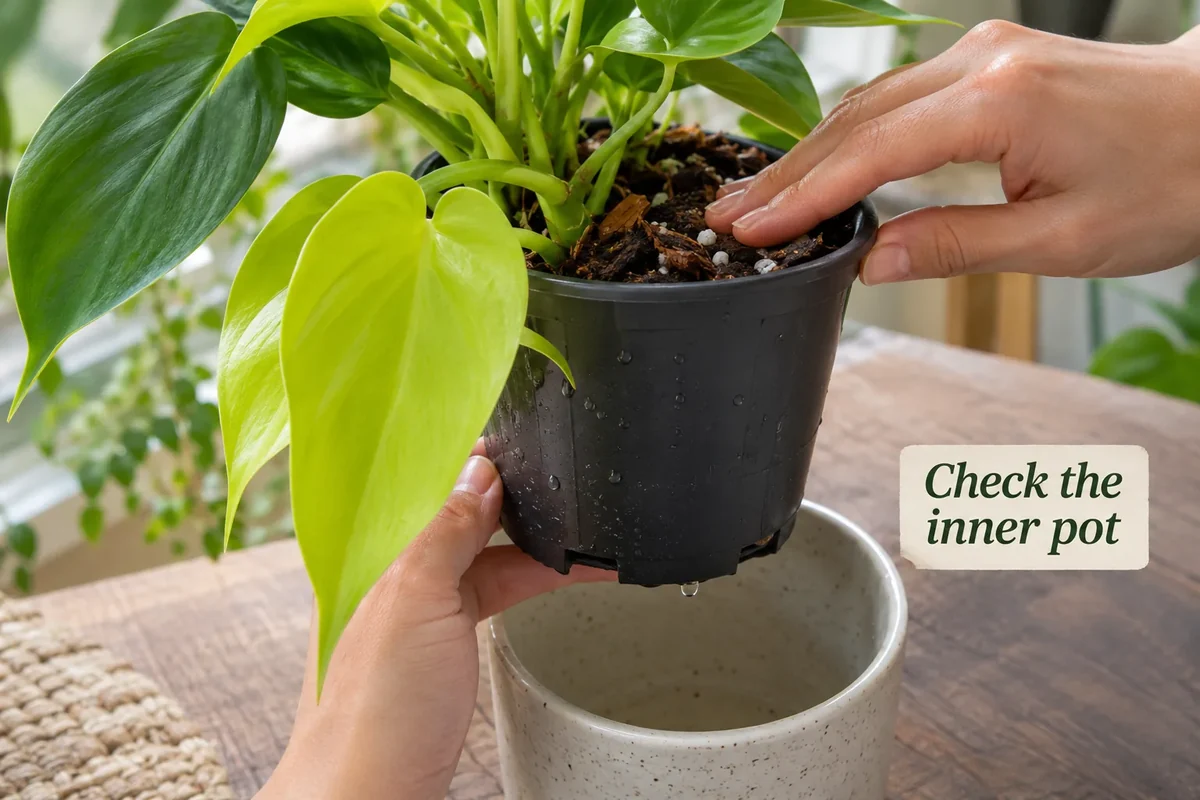
A self-watering planter is a different setup. Read its filling, wick and overflow instructions and inspect the root zone before refilling. A low reservoir does not establish that the mix is dry. Use our self-watering pot guide to identify the parts rather than applying the draining-pot sequence blindly.
Potting mix and repotting: change what needs changing
Choose a loose houseplant potting mix that holds some moisture while allowing drainage. Start with a labelled container mix rather than dense garden soil packed into a small pot. Inspect its structure and intended use; “organic” alone says little about how it will drain. Clemson Extension recommends general-purpose potting soil and identifies poor drainage as a contributor to root problems.
Repot when roots densely occupy the root ball, not merely because one aerial root is visible. Frequent wilting or very rapid drying can justify a root check, but also inspect heat exposure. Illinois Extension lists crowding indicators and recommends repotting during active growth.
- Prepare. Have fresh mix, gloves and a clean pot with open drainage holes. For a crowded healthy plant, choose one only a few centimetres wider than its root ball, following RHS guidance. A large jump can leave excess wet mix around the roots.
- Inspect. Ease out the root ball while supporting the plant. Gently loosen circling roots. If the base is soft or roots are collapsing, seek a closer diagnosis instead of treating it as routine upsizing.
- Replant at the same depth. Fill around the root ball and leave space below the rim for watering. Keep the crown at its previous level.
- Water and observe. Water, drain and return to filtered light. Check subsequent moisture and leaf condition before adding another intervention.
See our first-plant repotting walkthrough for handling and preparation. Avoid routine root disturbance during a cold, slow-growth spell unless a container or root problem needs attention.
Feeding, leaf care and support
Feed a healthy, actively growing plant with a houseplant fertilizer at its labelled rate and interval. Check whether the fresh mix already contains fertilizer. Do not apply several feeds together or use extra fertilizer to fix unexplained yellowing. Clemson notes that excessive fertilizer can cause curled, browned tips. Our indoor plant feeding guide explains the decisions before dosing.
Support a climbing stem with a stable pole or trellis; guide the stem without pinning leaf stalks tightly. Bushy forms generally need no pole. When a vine outgrows its space, use clean secateurs and gloves, and cut above a node on the retained plant. Remove damaged foliage carefully. These training and pruning principles follow the RHS guide.
Wipe dusty smooth leaves gently, supporting them from below. Avoid polish or oil intended to create an artificial shine. Our leaf-cleaning guide covers the method. Leave an emerging leaf to open without pulling it apart.
Propagating a climbing Philodendron from a stem cutting
Use a healthy, identified climbing plant with accessible nodes. Do not dismantle a compact crown to imitate a vine cutting. Prepare gloves, clean sharp secateurs, a clean jar and water.
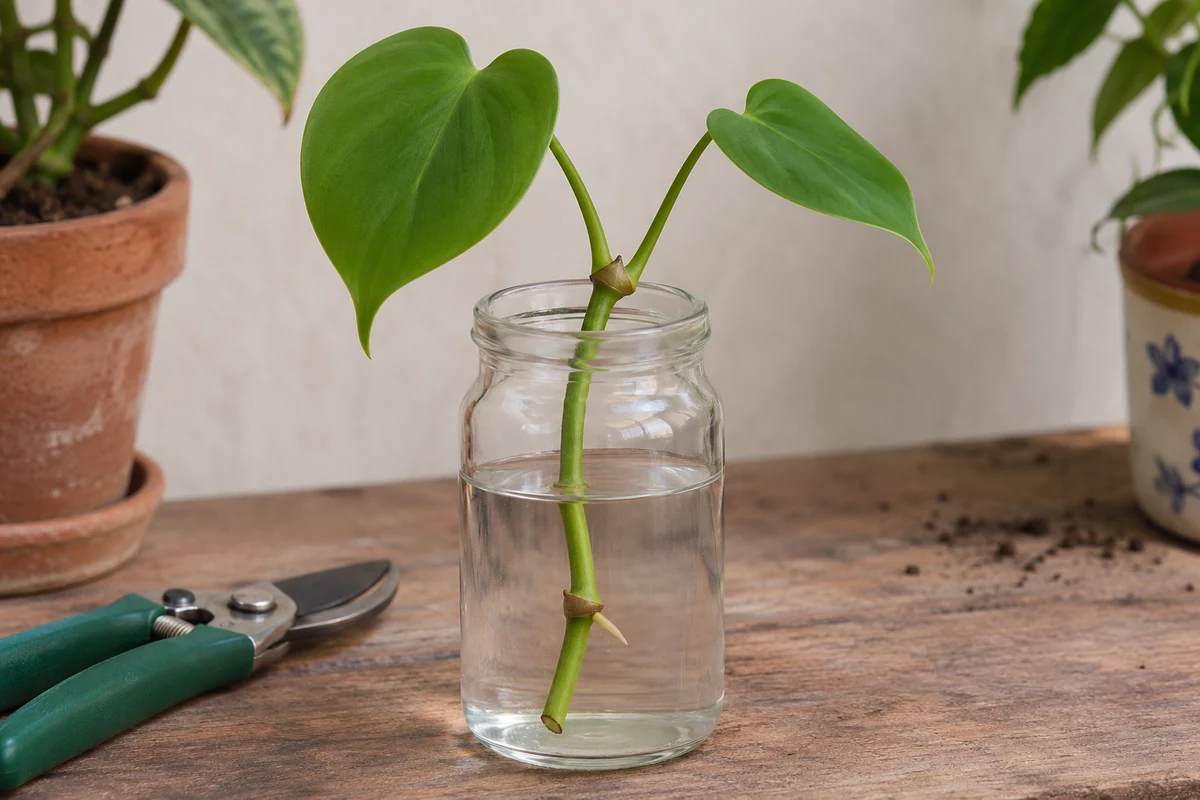
- Choose the stem. Select a piece about 8–15 cm long with at least two nodes. A node is the stem joint where a leaf emerges; a leaf stalk alone is not the same structure.
- Make the cutting. Cut below the lower node and remove leaves that would sit underwater. Keep upper leaves intact above the jar.
- Root in water. Immerse the lower node, keeping leaf blades clear of the water. Place in bright indirect light and change the water regularly; check for cloudiness or a softening stem.
- Pot after roots develop. Iowa State recommends waiting for roots several inches long before transferring a water-rooted Philodendron cutting to potting soil. Use a small draining pot suited to those roots, then monitor moisture as it establishes.
The stem length and water-rooting method come from Iowa State’s Philodendron guide; Illinois Extension explains nodes and cutting preparation. Judge roots and healthy tissue rather than promising a new plant by a particular date. For a non-climbing plant, separate an offset only when one actually exists and its roots can be retained.
Yellow leaves, brown tips and pests: check before treating
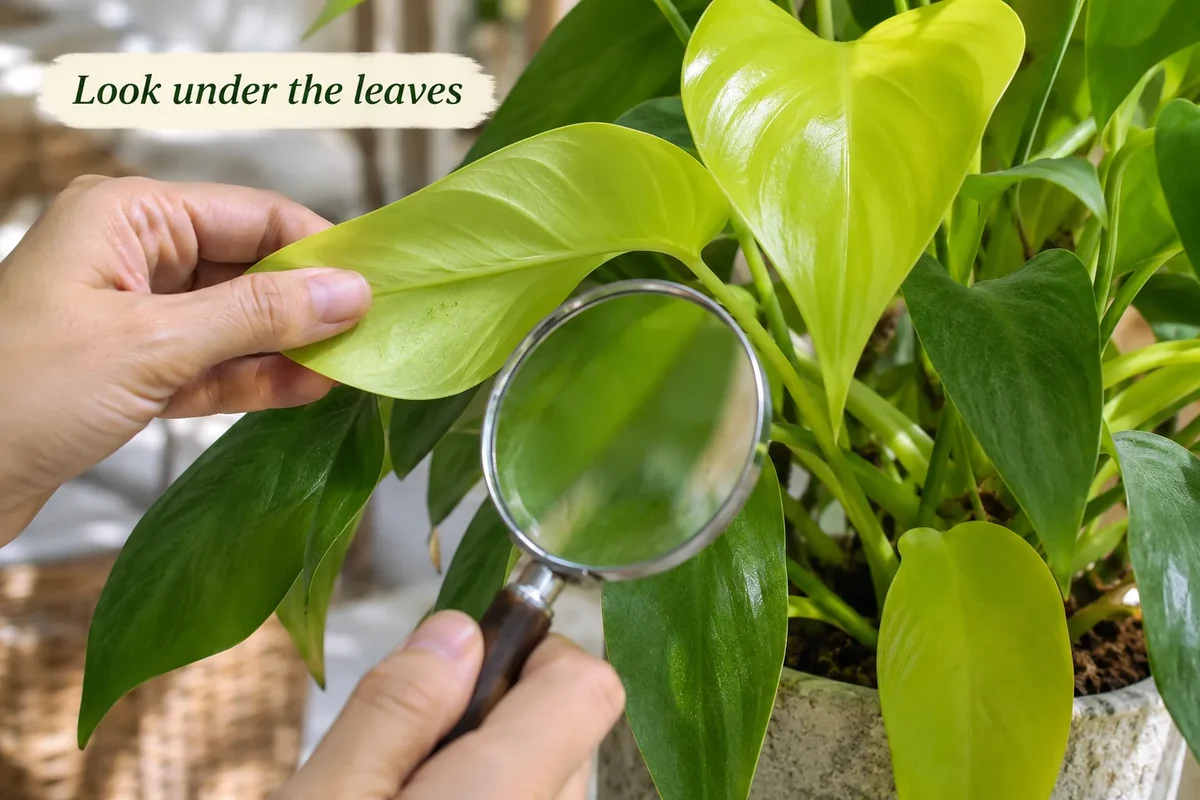
Photograph the whole plant and the affected leaf, then inspect moisture, drainage and leaf undersides. Clemson and NC State describe overlapping causes; colour alone cannot tell you which treatment is needed.
- Several leaves yellow while the pot remains wet
- Look for trapped runoff and blocked outlets. Empty collected water and pause watering. If yellowing progresses or the base softens, arrange a root inspection or ask a nursery or plant clinic for help.
- Drooping foliage
- Check moisture first: both too much and too little water can cause drooping. Water a dry pot appropriately; do not add more to a wet one. Reassess the whole plant rather than repeating watering when it stays limp.
- Brown or curled tips
- Review recent fertilizer use, dryness and hot or cold airflow. Stop unnecessary feeding and correct the observed exposure. Do not assume a deficiency from a brown edge.
- Sticky patches, cottony deposits or stippling
- Separate the plant from touching foliage and inspect the undersides and stem joints. Identify what is present before treatment. Use our mealybug guide or spider-mite inspection guide when those signs fit.
Use a pesticide only when its current Indian label covers the intended plant and use; follow its application and safety instructions. Avoid routine preventive spray mixtures. For spreading unusual leaf patterns or repeated decline despite correcting conditions, take photographs and the care history for professional assessment.
Questions that often come up
Can Philodendron grow in a room with no window?
Low-light tolerance does not mean a plant can grow indefinitely without useful light. Provide appropriate daylight or a suitable grow light. Reconsider the position if new growth becomes sparse or much smaller.
Are pale Ceylon leaves always a watering problem?
No. The catalogue plant has lime-toned foliage. Compare a leaf with its own earlier appearance and check the pot before changing care. A photograph cannot establish nutrient status or exact cultivar identity.
Should I cut off aerial roots?
You can leave them. On climbers they can help attach to a support. Iowa State notes that removing aerial roots does not harm the plant, but they do not need trimming simply because they look different from buried roots.
Can I keep a cutting in water permanently?
This guide uses water as a rooting stage before potting. Long-term water culture needs a separate nutrient and container routine; a jar topped up with plain water is not the same as complete plant care.
Will an indoor Philodendron flower?
NC State notes that houseplants usually do not flower. Grow it for healthy foliage rather than adding a flowering booster to force blooms. Flowering behaviour also depends on the species and maturity.
Is Philodendron safe around cats and children?
Keep it out of reach, including trailing stems and discarded cuttings. Sap can irritate skin, so wear gloves when cutting. The ASPCA lists Philodendron among plants containing irritating calcium oxalate crystals. Contact your vet after suspected pet ingestion; swallowing or breathing difficulty needs urgent veterinary attention.
For your next check, look at three things together: the growing stem, the root-zone moisture and the newest leaf. Those observations are more useful than changing the water, fertilizer and position all at once.