
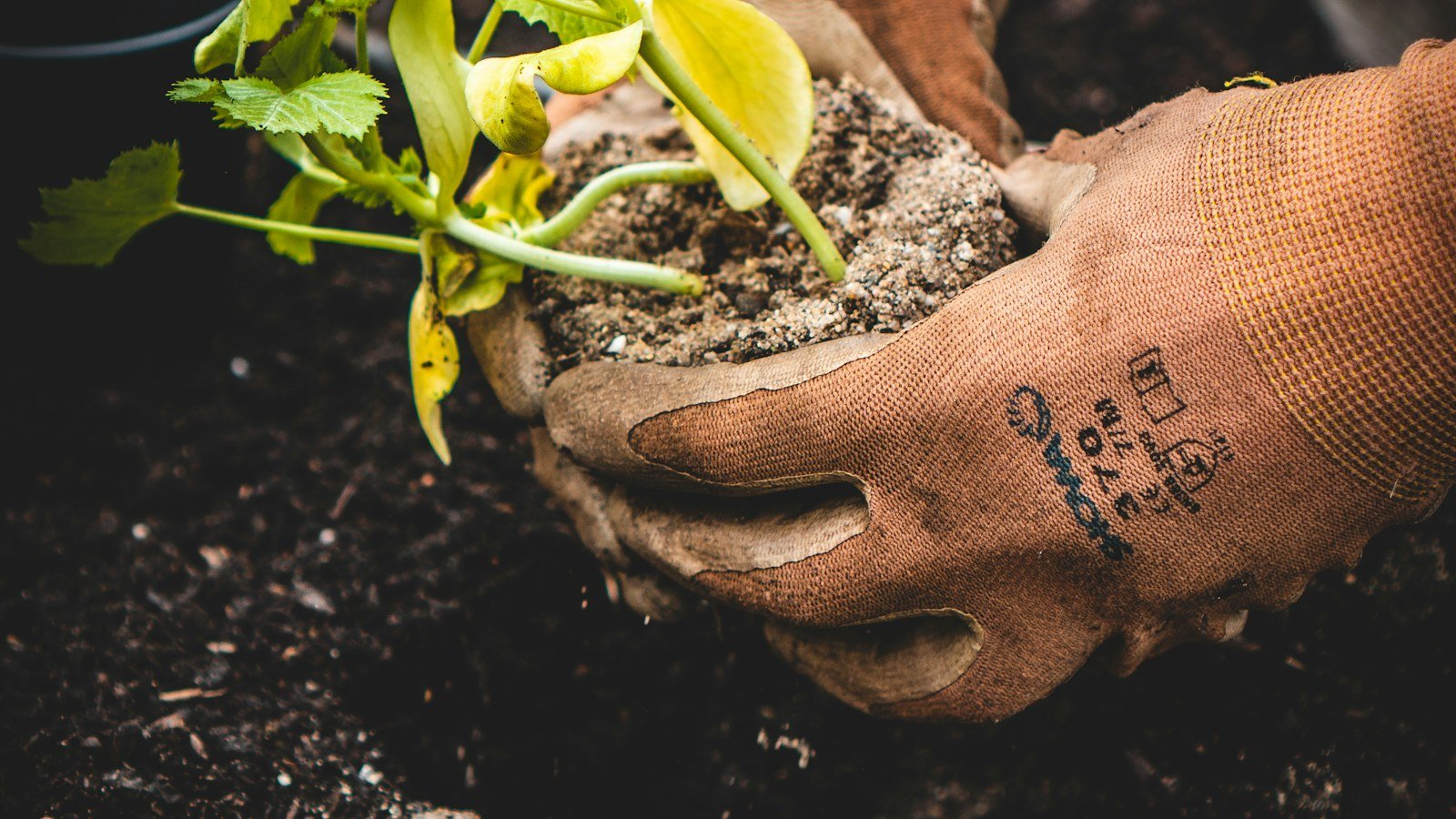
November is when many Indian gardeners fill new pots for tomatoes, flowers and winter vegetables, and a bag of bone meal fertilizer often ends up in the mix. It can be a useful ingredient, but only for a specific job. It supplies phosphorus and calcium, very little nitrogen, and no meaningful potassium, so it cannot feed a plant by itself. This guide explains what it does, when it is worth adding, how much to use in a pot, and when you should leave it on the shelf.
Quick answer: Mix bone meal into fresh potting mix before planting, at about 1 tablespoon per 5 litres of mix or the rate printed on your pack, then water well. Use it when you are starting a new container or when phosphorus is known to be low. It works slowly, so it will not rescue a struggling plant, and it does not replace a nitrogen and potassium feed later in the season.
Bone meal at a glance
| Question | Short answer |
|---|---|
| What is it? | Ground animal bones, sold raw or steamed |
| Main nutrients | Phosphorus and calcium, with a little nitrogen |
| Potassium | None listed in the TNAU table below |
| Speed | Slow, because soil microbes have to break it down |
| Best time to add | Before planting, mixed through the root zone |
| Starting rate for pots | About 1 tablespoon per 5 litres of mix (Surekha product guidance) |
| Skip it when | Phosphorus is already high, the plant has a watering or pest problem, or your household avoids animal products |
| Pet risk | Dogs may eat it if it is left exposed, so keep it covered and stored |
What does bone meal fertilizer contain?
The numbers vary with how the bones were processed. TNAU Agritech’s table of concentrated organic manures lists these averages:
| Type | Nitrogen (N) | Phosphate (P2O5) | Potash (K2O) |
|---|---|---|---|
| Raw bone meal | 3 to 4% | 20 to 25% | Not listed |
| Steamed bone meal | 1 to 2% | 25 to 30% | Not listed |
Other references give lower ranges. NC State’s Extension Gardener Handbook uses roughly 3-15-0, and Washington State University’s Dr Linda Chalker-Scott reports commercial products from about 0-12-0 to 3-20-0. The Surekha Organic Bone Meal specification lists an approximate 2-14-0. So read the label on the bag you actually own rather than assuming a textbook figure.
Steaming matters for another reason too. eAgri fertilizer lecture notes explain that steaming removes fat, which lets the material decompose more readily in soil, while finer grinding makes its phosphorus more available. A fine, steamed powder is therefore a better choice for a small pot than coarse crushed bone.
What bone meal can and cannot do
Phosphorus supports root formation and the quality of flowers, fruit and seed, according to the NC State handbook. A plant short of it grows slowly, and its older leaves can turn dark green with purple or red tints on the underside. That is the problem bone meal addresses.
It is not a growth stimulant, though it is often sold as one. The WSU article is blunt on this point: phosphorus is a mineral, not a plant growth regulator, so extra phosphorus will not push a plant beyond its normal growth. The same article warns that too much can suppress mycorrhizal fungi, the root partners that help plants take up water and nutrients. More is not better here.
Two more limits are useful to know:
- It is low in nitrogen. Pale, slow leafy growth usually points to a nitrogen shortage, and bone meal supplies too little to correct it. Compost or a balanced feed is the better answer.
- It has no real potash. Flowering and fruiting plants still need potassium from another source, such as a measured dose of water-soluble potash used according to its label.
For an overview of how the three main nutrients fit together, read our beginner’s guide to plant fertilizer.
Does soil pH change how well it works?
It can. A 2013 field study on meat and bone meal in Plant, Soil and Environment notes that the phosphorus in the bone fraction sits in apatite, and that releasing it requires hydrogen ions, which are more plentiful in acidic conditions. It also lists soil pH and grinding among the factors that decide how much a crop can use. That study was run in Poland on field crops, not Indian pots, so treat it as an explanation of the chemistry rather than a prediction for your balcony.
The practical takeaway: in a strongly alkaline mix, expect bone meal to act more slowly and do less. Gardeners using hard water or alkaline garden soil in their pots should build the mix around good compost and not expect bone meal to correct a shortage quickly. If you garden in the ground and want a real answer, a soil test tells you far more than a guess. Both NC State and WSU advise testing before adding nutrients.
How to use bone meal in pots, step by step
The eAgri notes advise applying bone meal as a basal dose, meaning before sowing or planting. That suits containers well, since it gets the powder down where the roots will grow.
For a new pot or grow bag
- Measure your potting mix. A simple vegetable potting mix is a good base.
- Wear gloves and add bone meal at the rate on your pack. The Surekha product page suggests about 1 tablespoon per 5 litres of mix.
- Stir it evenly through the whole batch so it does not sit in a concentrated layer against the roots.
- Fill the container, plant or sow, and water until the excess drains out.
- Note the date on the pot or in your phone. It stops you adding a second dose too soon.
For an established potted plant
- Water the plant lightly the day before if the mix is very dry.
- Scrape back the top 3 to 5 cm of mix around the edge of the pot, keeping away from the main stem.
- Sprinkle a measured amount and work it in gently without tearing surface roots.
- Cover it with mix and water thoroughly.
Since phosphorus does not leach from soil readily, as NC State notes, there is rarely a reason for repeated top-ups. Use it once a season at most. The easiest moment is often when you are already repotting a plant.
Which plants are worth it?
| Plant group | Is bone meal useful? | What to pair it with |
|---|---|---|
| Fruiting vegetables such as tomato and capsicum | Reasonable as a pre-planting addition to fresh mix | Nitrogen early, potassium once flowering starts |
| Root crops such as beetroot | Reasonable in fresh mix, mixed in well before sowing | Compost and steady watering |
| Annual flowers such as marigold | Optional in fresh mix | A light balanced feed |
| Bulbs such as amaryllis | Optional, a traditional choice, mixed below the bulb and not touching it | Well-draining mix |
| Leafy greens | Low priority, since leaf growth depends more on nitrogen | Compost |
| Foliage houseplants | Usually unnecessary in a healthy pot | A diluted balanced feed in the growing season |
| Proteas and other plants adapted to poor soils | Avoid. WSU reports that phosphorus sources are toxic to the Protea family | Not applicable |
Timing it across India
Because natural fertilizers depend on microbes to release their nutrients, the NC State handbook describes them as acting more slowly and over a longer period than synthetic ones. Temperature and moisture affect that microbial work, so these are sensible seasonal adjustments rather than fixed rules:
- North Indian plains, now through January: add it at planting while you set up winter pots. Expect a slow response in the coldest weeks, and do not add more because nothing seems to be happening.
- Western and central India, in the mild winter months: this is a comfortable window for starting pots. Mix it in, then water according to the pot, not the calendar.
- Tamil Nadu and coastal areas with northeast monsoon rain: wait for a dry spell if the pots sit in the open, or move them under cover, so heavy rain does not wash loose powder off the surface.
- Hill regions: prepare pots ahead of your local planting window. Cold soils slow decomposition further.
- Before summer: build it into the mix for pots you set up in February or March, and keep up watering, since dry mix also slows the process.
Common problems and what to do
| What you notice | Likely cause | What to do |
|---|---|---|
| No visible change after weeks | Slow release, or phosphorus was never the limiting factor | Check light, watering and nitrogen before adding anything else |
| Yellowing leaves | Bone meal rarely addresses this. Overwatering or low nitrogen are more common | Check drainage first. See our guide to yellow leaves and magnesium if the yellowing sits between the veins |
| Dog or cat digging in the pot | The scent attracts animals, especially when powder sits on the surface | Work it in, cover it with mix, and move the pot out of reach |
| Flies or a smell around the pot | Powder left exposed on wet mix | Bury it under fresh mix and let the top dry between waterings |
| Whitish crust or powder on the surface | Undissolved product, or salts from hard water | Scrape off the top layer and replace it, then flush with clean water |
| Weak growth after repeated doses | Too much phosphorus can interfere with mycorrhizae and other nutrients | Stop adding it. Levels fall over time once you stop, as WSU explains, and fresh mix is the quick fix in a pot |
Pet and household safety
Bone meal is not harmless just because it is organic. Pet Poison Helpline says eating fertilizers containing bone or blood meal causes gastrointestinal distress in companion animals, and that large amounts can lead to intestinal blockages or pancreatitis. Our practical advice follows from that:
- Store the bag sealed, in a closed cupboard or a lidded container, out of reach of dogs, cats and children.
- Never leave powder on the surface of a pot. Mix it in and cover it.
- Wear gloves and avoid breathing dust when you pour it, and wash your hands afterwards.
- If a pet eats any, contact a veterinarian, especially if it swallowed a lot or starts vomiting.
It is also an animal product. Some Indian households prefer to keep animal-derived inputs away from their kitchen gardens or tulsi pots for personal or religious reasons. If that applies to you, compost is a straightforward alternative, and NC State names it as an organic phosphorus source as well.
Frequently asked questions
Is bone meal fertilizer good for all plants?
No. It helps where phosphorus is short or when you want it included in a fresh mix for fruiting and flowering plants. Many healthy houseplants and soils already have enough, and Protea family plants can be harmed by it.
How much bone meal should I add to a pot?
Follow your pack. Surekha’s guidance is about 1 tablespoon per 5 litres of mix when blending, or 1 to 2 tablespoons for a large 10-litre pot. There is no benefit in going above the label rate.
How long does bone meal take to work?
Slowly. Microbes have to break it down, so there is no quick visual response like the one you might see with a soluble feed. Surekha’s product page describes release over 3 to 4 months. Actual speed depends on temperature, moisture and pH.
Can I use bone meal and compost together?
Yes, and this is a sensible combination for pots. Compost contributes organic matter and a broader spread of nutrients, while bone meal adds a concentrated source of phosphorus and calcium. Mix both into the batch before planting.
Can I dissolve bone meal in water as a liquid feed?
It is not a good fit. The eAgri notes describe its phosphate as citric-acid soluble rather than water soluble, which is why it is recommended as a basal application. Mix the powder into the soil instead, and use a true water-soluble fertilizer if you need a liquid feed.
Is bone meal safe to use on vegetables?
Bone meal is a long-established organic input for food crops. Use it at the label rate, mix it well into the soil, wear gloves when handling it, and wash your produce as usual before eating.
Should I use bone meal if my plant has yellow leaves?
Probably not first. Yellow leaves usually have other causes, such as overwatering, poor drainage, low nitrogen or low magnesium. Check those before reaching for a phosphorus source.
Use it once, use it well
Bone meal fertilizer earns its place as a pre-planting ingredient: a measured amount in fresh mix for a new pot, then left alone. It will not replace nitrogen or potassium, and it will not fix a watering problem. If you are setting up pots this month, sow your tomato seeds or winter flowers in a well-drained mix, add only what the pack recommends, and let the roots do the rest.


