
To grow knol khol in pots in India, choose a cool growing window, use a sunny container with drainage, give each plant room and keep the mix evenly moist. Sow shallowly, thin seedlings before they crowd and harvest the swollen stem while it is tender. The right season depends on your local temperature and seed variety; October is a useful planning month in many places, but it is not a suitable sowing date everywhere.
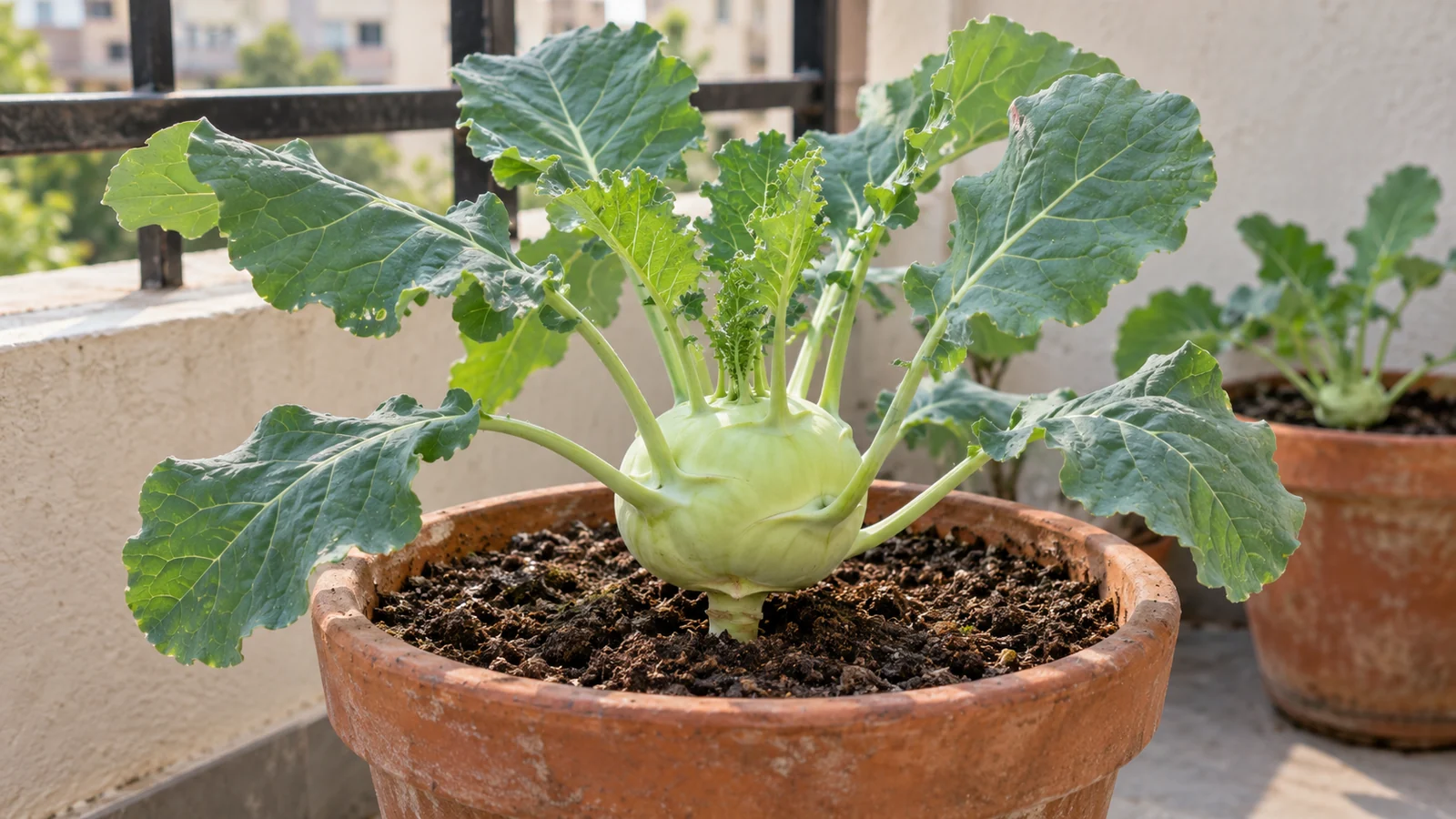
Also called kohlrabi or ganth gobhi, knol khol produces its rounded edible stem above the soil. That shape can look surprising in a balcony pot. It is a different harvest from the roots of beetroot or radish: do not keep covering the swelling stem with extra soil. Illinois Extension explains its above-ground stem structure.
When should you grow knol khol in India?
Start with the expected weather during stem development, rather than the month printed on a general gardening calendar. CBSE’s horticulture text describes a relatively cool, moist growing climate, an optimum growth range of about 15–25°C depending on cultivar, and September–October planting in the north eastern plains. That last window is regional guidance, not a calendar for every Indian city. Source: CBSE Olericulture II, knol khol section.
| Your conditions | How to plan a pot crop |
|---|---|
| Northern and inland plains cooling after the monsoon | Look for a cool period long enough to finish the chosen variety. Check both daytime heat and approaching winter cold before sowing. |
| Humid eastern or north eastern plains | Compare the regional planting window with current rain and drainage. Avoid leaving pots in standing water during wet spells. |
| Mild southern cities and plateau gardens | Use actual balcony temperatures and a locally suitable variety. A cool night does not cancel a very hot, exposed afternoon. |
| Hot coastal balconies | Wait for the coolest suitable local window. If the pot stays hot all day, postpone rather than expect shade alone to make the crop suitable. |
| Cold hills and frost-prone locations | Use the local spring or other frost-safe window recommended for your elevation. Do not copy a plains winter calendar. |
This table is a planning framework, not a set of tested city-specific sowing dates. Heat can impair stem quality, while young plants can be damaged by hard frost. Utah State University Extension discusses temperature stress; its US planting dates should not be transferred to India.
What pot size and sunlight does knol khol need?
For a straightforward first attempt, use one plant in a pot roughly 30 cm wide with 25–30 cm of usable growing depth. This is a practical starting setup, not a universal minimum for every variety. Measure the filled root space, not just the height of the decorative outer container. Larger types need more room.
Colorado State University lists an 8-inch (about 20 cm) minimum container depth for kohlrabi and an 8-hour direct-sun target. Choosing a little more depth provides extra room for moisture management. Check drainage openings before filling, and place the pot where runoff can escape safely. Source: CSU container vegetable guidance.
Mark the sunny patches on your balcony through a whole day. A bright-looking covered corner may receive little direct sunlight. Use our balcony vegetable sunlight guide to check the space before planting.
Fill with a loose, well-draining container mix. Do not pack heavy garden soil tightly into a small pot. For help choosing and adjusting ingredients, see our vegetable potting mix guide. Leave a watering gap below the rim and label the pot with the sowing date and variety.
How to sow knol khol seeds in a pot
- Moisten the mix first. Let excess water drain so the surface is damp and workable.
- Sow about 0.6–1.2 cm deep. Use the packet’s instructions if they differ for your seed lot. Cover lightly and water gently.
- Keep the seed zone moist. Inspect it regularly; do not let it crust dry or remain saturated.
- Thin to your final plan. For the single-plant setup, retain one healthy seedling. In a larger trough, follow the variety’s spacing instead of keeping every germinated seed.
- Record progress. Note emergence, thinning and any move to a new pot. These dates make the packet’s maturity guidance more useful.
Utah State recommends that sowing depth and thinning around the 3–4 true-leaf stage. Its general in-row spacing is about 15 cm, whereas CBSE gives 20–25 cm between plants in a field layout. Variety and growing system explain why one spacing is not a rule for every pot. Leave generous room around a single balcony plant; use our seedling thinning guide for the method. USU sowing guidance and CBSE spacing guidance.
Can you transplant knol khol seedlings?
Yes. If using tray-grown plants, choose sturdy seedlings with an established root system. Cover the root plug when planting, water it in and avoid burying the developing swollen stem. Acclimatise sheltered seedlings before moving them into exposed balcony sun; our hardening-off guide explains that transition. University of Saskatchewan guidance covers transplant plugs and hardening off.
Daily care: steady moisture, suitable feeding and clean leaves
Check the mix before watering. A pot’s needs change with wind, sun, material and plant size. Water the root zone thoroughly when needed, allow drainage and avoid a cycle of severe drying followed by flooding. Do not prescribe the same number of cups every day.
Match feeding to the mix. Check whether it already contains fertiliser. Use a container-appropriate vegetable feed at its labelled rate and interval; do not convert field fertiliser doses into spoonfuls for a small pot. CSU highlights consistent water and nutrients, with light, regular feeding for container kohlrabi. Source: CSU Extension.
Inspect leaf undersides and new growth. Aphids and leaf-chewing caterpillars are possible brassica pests. Identify what is present before treating; holes alone do not identify the cause. For a few pots, inspect regularly and remove visible caterpillars by hand. Fine insect mesh can help exclude pests when secured around a clean crop without trapping damaging heat. USU describes common pests; USask discusses protective covers.
When is knol khol ready to harvest?
Watch the stem size as well as the packet’s maturity estimate. For many standard varieties, harvest at roughly 5–8 cm across, before the stem becomes oversized and woody. Giant or specialist varieties can have different instructions. Do not wait for the plant in your pot to match a photograph. Iowa State recommends harvesting standard kohlrabi at about 2–3 inches and notes that each plant produces one kohlrabi. Source: Iowa State growing and harvesting guide.
Support the swollen stem and cut below it with a clean, sharp tool, keeping your other hand clear. Wash before preparing and peel the tough outer skin as needed. Do not plan on repeated main-stem harvests from the same plant. If you want several harvest dates, start separate pots in small batches when the local season allows.
Why is your knol khol not swelling or staying tender?
| What you notice | First checks | Useful next step |
|---|---|---|
| Mostly leaves, little stem swelling | Crop age, variety, crowding, direct sun and temperature | Compare with the packet, measure spacing and inspect the root zone before adding more feed. |
| Stem becomes tough or woody | Harvest size, hot weather and drying episodes | Harvest suitable plants promptly and improve timing and moisture consistency for the next batch. |
| Wilting although the mix is wet | Blocked holes, standing runoff and root condition | Restore drainage and inspect roots; more watering may worsen the problem. |
| Chewed or curled leaves | Leaf undersides, caterpillars, aphids and new growth | Identify the pest and choose a targeted response. Avoid spraying an unidentified problem. |
These checks narrow down possibilities; they are not a diagnosis from a symptom alone. Heat, water stress and late harvest are recognised causes of poor eating quality. Illinois Extension discusses tender growth and timely harvest.
Frequently asked questions
Is knol khol a root vegetable?
The round part usually harvested is a swollen stem above the ground. It resembles a turnip, but its leaves attach around that stem. Source: Illinois Extension.
Can I grow several plants in one grow bag?
Only when its usable surface area gives each plant the final spacing required by the variety. A bag’s litre rating alone does not tell you how many plants fit. For a first small-pot crop, one plant is an easy plan to manage.
Should I remove leaves to make the knob bigger?
Keep healthy foliage while the plant grows. Do not strip it to expose the stem or try to force swelling. Remove damaged material selectively and inspect the cause of any leaf loss.
Is there a guaranteed harvest day?
No. Read whether the packet counts maturity from sowing or transplanting. Variety, weather and seedling condition change the timing; judge readiness by the recommended stem size too.
Plan a small cool-season kitchen garden
If you want to try knol khol alongside other crops, explore Surekha Agro Products’ Winter Kitchen Garden Vegetable Seeds Combo. Its listed contents include knol khol, French beans, beetroot and red and white radish. Give each crop its own suitable container and spacing. Check the packet for cultivar, sowing and maturity details before planning your pots; the product listing does not specify a knol khol cultivar or promise a particular harvest date.