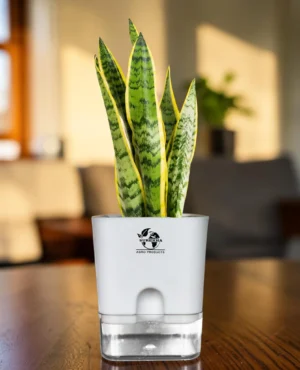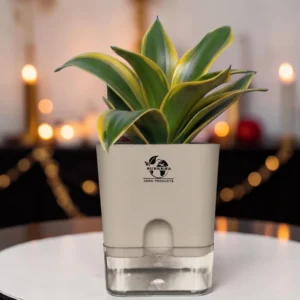
A golden snake plant is usually the dwarf variety Golden Hahnii (Dracaena trifasciata ‘Golden Hahnii’, still sold as Sansevieria): a low rosette of short, broad leaves with wide yellow edges. Care for it like any snake plant, with one twist: it needs a bit more light to keep its gold, and water must never sit in its cup-shaped centre.
Most people meet this plant on a nursery bench or in a gift combo and then wonder why it looks nothing like the tall snake plant in a neighbour’s living room. This guide explains how to identify it, how to care for it through an Indian summer, monsoon and winter, and how to keep those yellow edges bright for years.
Quick answer: Keep a golden snake plant in bright, indirect light (a little gentle morning sun is fine), in a small pot with a gritty, fast-draining mix. Water only when the mix is dry all the way down, usually every 2 to 3 weeks in summer and far less in winter, and pour at the soil edge, not into the rosette. Divide it to make new plants, because leaf cuttings often lose the gold.
Golden snake plant at a glance
| Feature | What to expect |
|---|---|
| Botanical name | Dracaena trifasciata ‘Golden Hahnii’ (older name Sansevieria trifasciata) |
| Common names | Golden snake plant, Golden Hahnii, golden bird’s nest, dwarf snake plant |
| Size | Compact rosette, usually 10 to 20 cm tall indoors; leaves under 30 cm |
| Light | Bright, indirect light; tolerates low light but the gold fades |
| Water | Only when the mix is fully dry; keep water out of the rosette |
| Soil | Gritty, fast-draining mix (cactus-type) |
| Pot size | Small: 10 to 15 cm for a single rosette |
| Best propagation | Division of offsets (pups); leaf cuttings may not keep the yellow edge |
| Pets | Toxic to cats and dogs if chewed (saponins) |
| Difficulty | Easy, if you do not overwater |
What is a golden snake plant? How to identify Golden Hahnii
The name “golden snake plant” is used loosely in India. Sellers apply it to at least three different plants, so it helps to know which one you have before you decide on pot size and placement.
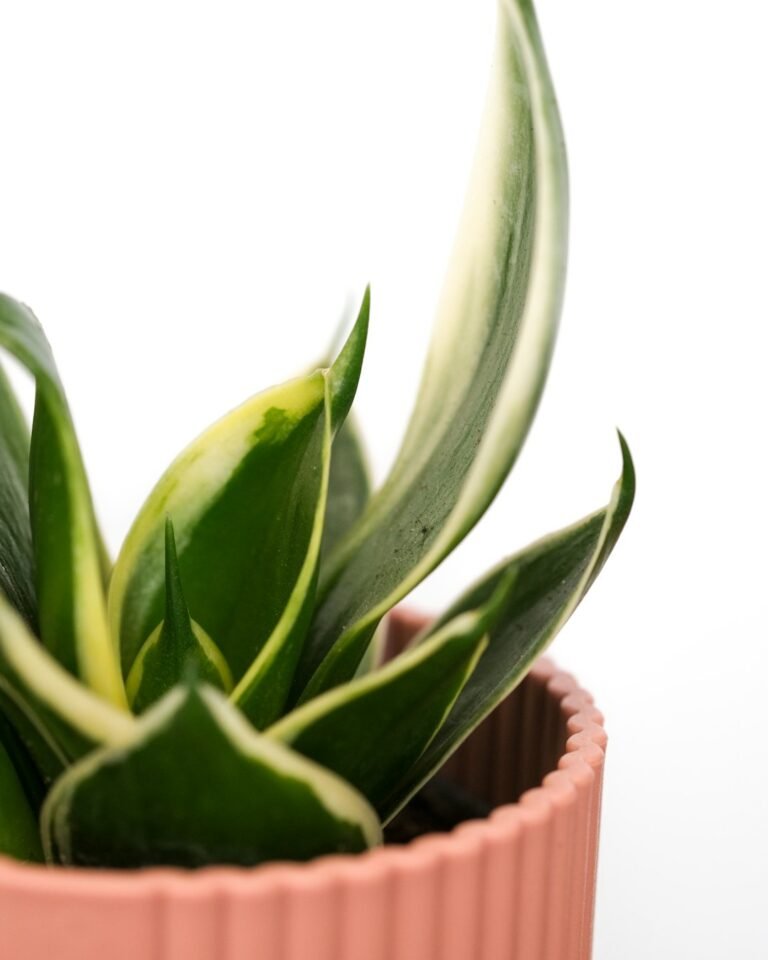
- Golden Hahnii (the true golden snake plant): a dwarf “bird’s nest” type. The leaves are short and broad, pointed at the tip, and spiral out from a low, funnel-shaped rosette. The centre is grey-green to dark green with faint silvery cross-bands, and the edges carry broad stripes of pale yellow or cream. The Royal Botanic Gardens Victoria describes its leaves as under 30 cm long with broad pale yellow variegation, and Singapore’s NParks lists it as a succulent herb up to about 15 cm tall.
- Laurentii: the tall, upright snake plant with thin yellow margins along long sword-like leaves. It can reach well over half a metre. Some shops call it “golden snake plant” too.
- Golden Flame and other new cultivars: NC State Extension lists ‘Golden Flame’ as a grey-green cultivar with a yellow-gold stripe pattern. These are less common in Indian nurseries.
The quickest test is shape. If your plant is short, wide and grows like an open rosette that fits in your palm, it is a Hahnii type. If it sends up tall, narrow, upright leaves, it is a Laurentii or another tall cultivar.
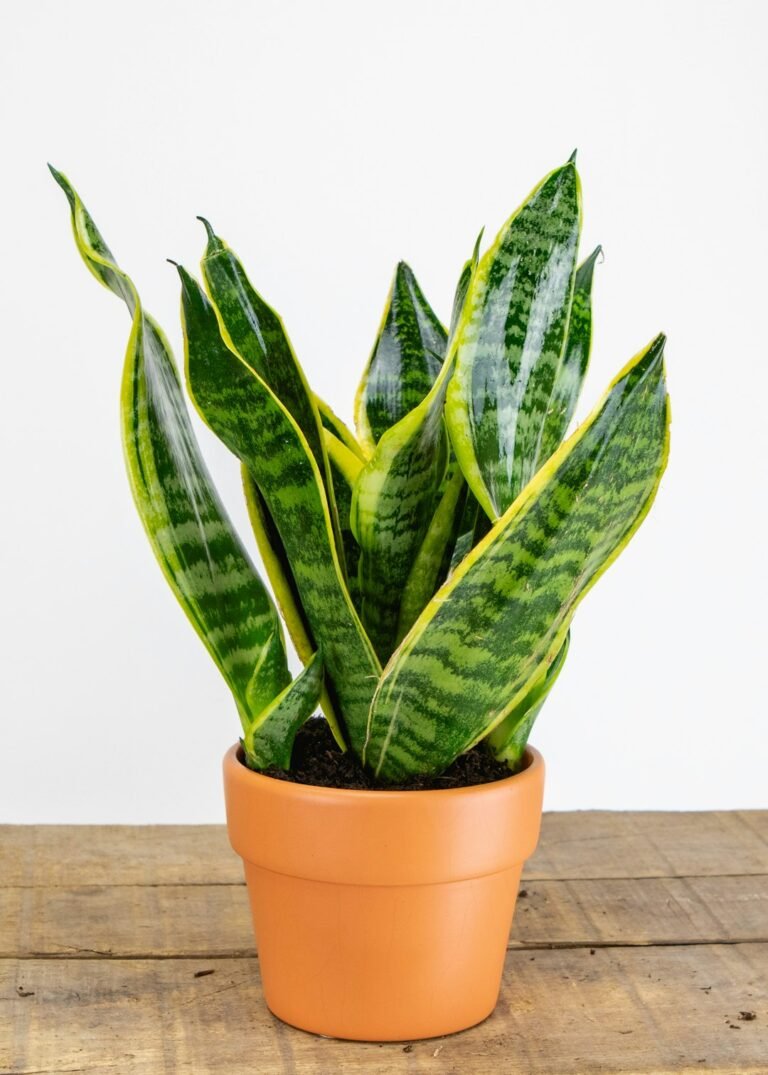
Golden Hahnii vs Laurentii vs Silver Hahnii
| Variety | Height and shape | Leaf colour | Best spot |
|---|---|---|---|
| Golden Hahnii | Dwarf, low rosette | Grey-green centre, broad yellow or cream edges | Desk, windowsill, shelf, small side table |
| Laurentii | Tall, upright swords | Banded green with thin yellow margins | Floor corner, beside a TV unit, entrance |
| Silver Hahnii | Dwarf, low rosette | Silvery grey-green, little or no yellow | Same small spots as Golden Hahnii |
If you want the upright form instead, see our Sansevieria Laurentii snake plant. For a compact silver partner on the same shelf, the Silver Hahnii snake plant needs exactly the same care.
How to care for a golden snake plant in India
The basics match our general snake plant care guide for India. What changes with Golden Hahnii is the small size, the rosette shape and the variegation. Here is the routine, step by step.
- Give it bright, indirect light. A spot within a metre or two of an east- or north-facing window is ideal. NC State Extension notes that snake plants do well with direct sun for only part of the day, about 2 to 6 hours, and tolerate very low light. For a golden variety, lean towards the brighter end: in dim corners the yellow edges tend to become narrower and duller. Avoid the harsh afternoon sun of a west-facing balcony in April to June, which can scorch the pale parts of the leaf.
- Use a small pot with a drainage hole. A single rosette is happy in a 10 to 15 cm pot. A big pot holds far more wet soil than the roots can use, and that is how most snake plants rot.
- Choose a gritty, fast-draining mix. Penn State Extension recommends a cactus potting mix or a mix with perlite for snake plants. At home you can use roughly equal parts garden soil or potting mix, coarse sand or perlite, and a little cocopeat. Skip heavy clay soil that stays sticky for days.
- Water deeply, then wait until it is fully dry. Push a finger or a wooden stick to the bottom of the pot. Water only when it comes out dry. In most Indian homes that means roughly every 2 to 3 weeks in summer and every 4 to 6 weeks, or less, in winter. Our article on how to water indoor plants in Indian homes explains the stick test in more detail.
- Pour at the edge, never into the rosette. Golden Hahnii grows as a cup. Water that collects in the centre sits against the soft new growth. NParks notes that this cultivar is prone to rot when overwatered or when the leaves become wet. If water lands in the centre, tip the pot gently or blot it with a tissue.
- Feed lightly, only in the growing season. From about March to September, a half-strength balanced liquid fertiliser once a month is plenty. Do not feed in winter or during long cloudy spells in the monsoon, when the plant is barely growing.
- Wipe the leaves now and then. Dust dulls the gold and cuts light. A soft damp cloth every few weeks keeps the leaves bright. Never use leaf-shine sprays or oil.
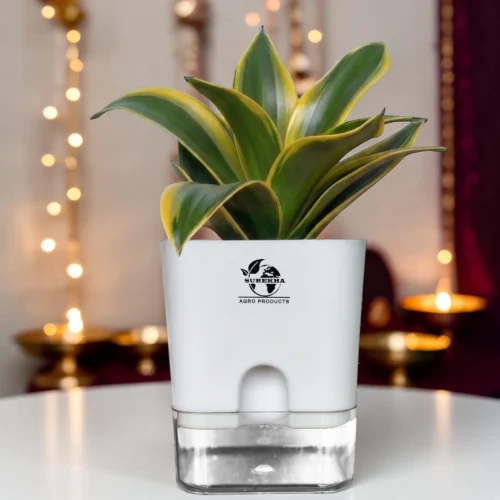
A note on self-watering pots
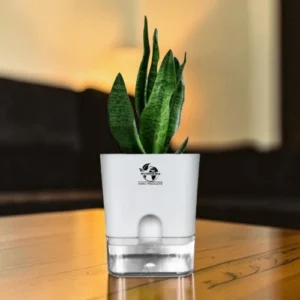
Our Golden Hahnii snake plant ships in a self-watering pot, and the most common question we get about it is how to fill the reservoir for a succulent. The honest answer: for a snake plant, treat the reservoir as a drip tray rather than a water tank. Water from the top when the mix is dry, let any excess drain into the reservoir, and empty it if water is still standing there after a day. In very hot, dry weather in north India you can leave a small amount in the base, but never keep it topped up. Our guide on how to use self-watering pots covers this for other plants too.
Golden snake plant care through the Indian year
Snake plants come from tropical West and Central Africa, so Indian heat suits them. The two risks are long wet spells and cold nights in the north.
| Season | What to do | Watch out for |
|---|---|---|
| Summer (March to June) | Main growing season. Water when dry, feed monthly at half strength, repot or divide if crowded. | Midday and afternoon sun through glass or on open balconies; move the plant back from the window. |
| Monsoon (June to September) | Water much less; the air is humid and soil dries slowly. Keep plants on covered balconies out of rain. | Rain filling the rosette, soggy soil, soft mushy leaf bases. |
| Autumn (October to November) | Taper watering as days cool. Stop feeding by October. | Mealybugs hiding in the leaf bases. |
| Winter (December to February) | Water rarely. NC State suggests every one to two months in winter. Keep indoors in north India. | Cold, wet soil. Snake plants tolerate about 10°C but not frost; in Delhi, Punjab and the hills, bring them away from cold windows at night. |
In the warm south and on the coasts (Chennai, Kochi, Mumbai, Goa), winter is mild, so the plant keeps growing slowly and may need water every 3 to 4 weeks. Always go by the stick test rather than the calendar.
How to keep the gold bright
The yellow edge is variegation: the pale parts of the leaf have little or no green pigment. That makes it beautiful, and also a little more demanding than a plain green snake plant.
- Light is the main lever. New leaves formed in good, bright light usually show wider, brighter edges. In a dark corner, new leaves often come out greener.
- Remove green reversions. Now and then a pup or leaf grows almost entirely green. Those green shoots grow faster than the golden ones and can take over. Cut or divide them off at the base.
- Do not expect old leaves to change. A leaf that has already opened green will not turn golden later. Judge your light changes by the next few new leaves.
- Do not over-fertilise. More food does not make more gold, and excess salts can brown the leaf tips.
How to propagate golden snake plant without losing the colour
This is the one place where Golden Hahnii care really differs from plain snake plants.
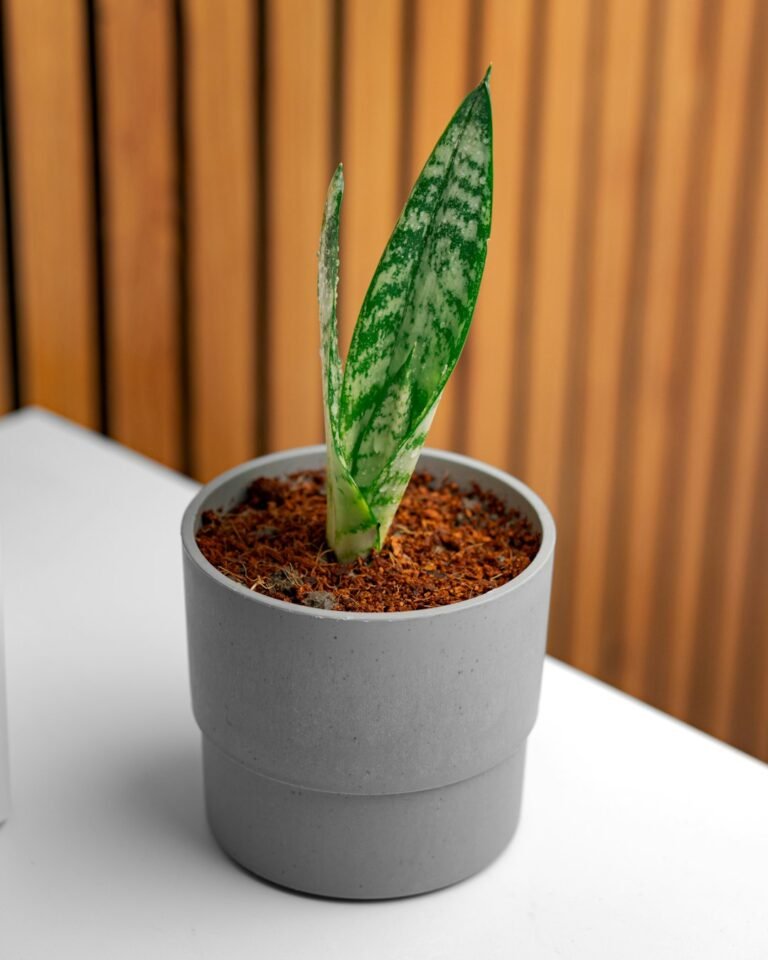
Iowa State University Extension explains that most variegated snake plants do not come true from leaf section cuttings, because the variegation is a chimera (two genetically different layers of tissue). Cultivars with yellow leaf edges lose their colouring when grown from leaf pieces. NParks makes the same point for Golden Hahnii: it can be propagated by leaf cutting, but the new plant may not have the parent’s variegation. So use division.
How to divide a golden snake plant
- Wait for pups. Healthy plants send up small rosettes from underground rhizomes at the side of the pot. Let them reach a few leaves of their own.
- Water a day before. Slightly moist roots come out of the pot more easily and tear less.
- Tip the plant out and find the joins. Brush away soil until you can see where each rosette connects to the main rhizome.
- Cut cleanly. Use a clean, sharp knife to separate each pup with some roots attached. Let the cut surfaces dry in shade for a day.
- Pot each piece separately. Use a small pot and the same gritty mix. Wait about a week before the first light watering.
For more on cuttings, pups and timing, see the full snake plant propagation guide.
Repotting a golden snake plant
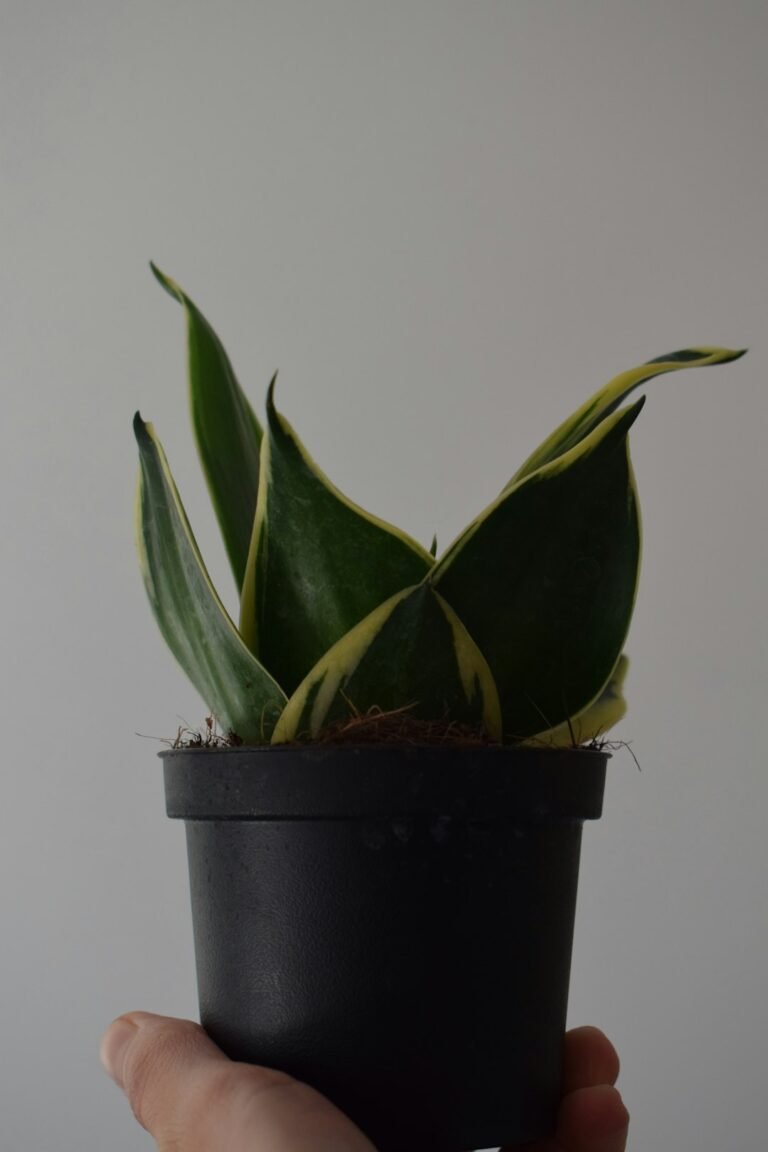
Dwarf snake plants fill their pots with pups faster than the tall types. The author of a Penn State Extension article notes that their ‘Hahnii’ needs repotting about every 3 years, while their tall snake plant went 15 years between repots. Repot when pups press against the pot wall, the plastic pot bulges, or water runs straight through without soaking in.
- Repot between March and June, when the plant is actively growing.
- Go up only one pot size (2 to 3 cm wider), or divide and reuse the same pot.
- Plant at the same depth as before; burying the rosette base invites rot.
- Wait about a week before watering so any damaged roots can seal.
Our beginner’s repotting guide walks through the steps with photos.
Golden snake plant problems and fixes
| Problem | Likely cause | What to do |
|---|---|---|
| Soft, mushy leaf bases; foul smell | Overwatering or water sitting in the rosette | Unpot, cut away soft brown roots and rhizome, let dry, repot in dry gritty mix. Water much less afterwards. |
| Yellow edges fading, new leaves greener | Too little light | Move closer to a bright window; judge by the next new leaves. |
| Pale, bleached or brown patches on the leaf face | Sudden strong sun, often through glass | Shift to bright shade. Damaged patches will not recover, but new leaves will be fine. |
| Brown, crispy leaf tips | Very irregular watering or fertiliser salts | Water deeply but less often; flush the pot with plain water; feed less. |
| Wrinkled, curling leaves | Long drought or roots lost to rot | Check the roots first. If healthy, water deeply once and resume the normal routine. |
| White cottony spots in leaf bases | Mealybugs | Remove with a cotton bud dipped in rubbing alcohol; see our mealybug guide. |
| Fine speckling and webbing | Spider mites in hot, dry air | Wipe leaves, isolate the plant, and follow a mite routine. |
NC State Extension lists mealybugs and spider mites as the pests to watch for, and root rot from overwatering as the main problem. For a deeper diagnosis of yellow, droopy or split leaves, see snake plant problems and solutions.
Is the golden snake plant safe for pets and children?
No, not if it is chewed. The ASPCA lists snake plant (mother-in-law’s tongue, also called golden bird’s nest) as toxic to dogs and cats because it contains saponins; signs include nausea, vomiting and diarrhoea. NC State Extension also flags it as a problem for children if eaten. The risk is from chewing or eating leaves, not from having the plant in the room. Keep it on a shelf or desk that pets and toddlers cannot reach, and call your vet if your pet has eaten part of it.
Where to keep a golden snake plant at home
Because it stays small, Golden Hahnii fits places a tall snake plant cannot: a work desk near a window, a bathroom shelf with a frosted window, a study table, a kitchen windowsill away from the stove, or a row of small pots on a bright bookshelf. Two or three rosettes in matching pots look good on a narrow ledge.
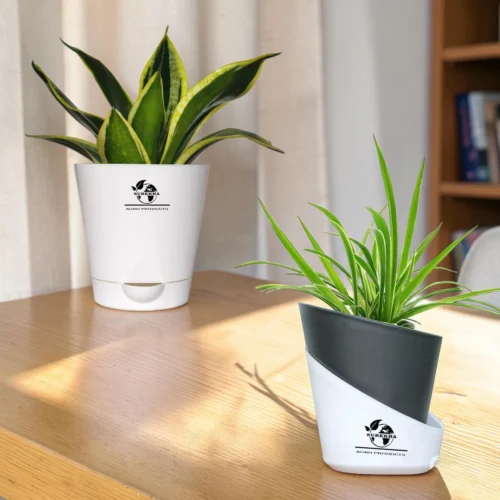
Many Indian families keep snake plants for Vastu reasons, often near the entrance or in the south or east of the home. These placements come from tradition and belief rather than science; our Vastu plants for home guide sets out the common beliefs room by room. Snake plants also appear on “air-purifying” lists because of a 1989 NASA chamber study. Later reviews of real rooms found the effect of a few potted plants is very small compared with ordinary ventilation, so enjoy your golden snake plant for its looks and easy nature, not as an air purifier. Our article on which plants give more oxygen explains the research honestly.
Frequently asked questions
What is the difference between golden snake plant and normal snake plant?
A golden snake plant (Golden Hahnii) is a dwarf rosette with short, broad leaves and wide yellow edges. A “normal” snake plant usually means the tall, upright green or Laurentii type with long sword-like leaves. The care is almost the same, but the golden one needs a smaller pot and a little more light to keep its colour.
How big does a golden snake plant grow?
It stays compact. Most plants are 10 to 20 cm tall in a pot, and botanical descriptions put its leaves at under 30 cm. It spreads sideways slowly by producing pups rather than growing tall.
How often should I water a golden snake plant in India?
Only when the mix is dry to the bottom of the pot. In most homes that is every 2 to 3 weeks in summer, less in the monsoon, and every 4 to 8 weeks in a north Indian winter. Always water at the soil edge, not into the centre of the rosette.
Can a golden snake plant grow in low light?
It will survive in low light, but it grows very slowly and new leaves tend to lose their yellow edges. For the best colour, place it in bright, indirect light near a window. Our list of low-light indoor plants suggests better choices for truly dark corners.
Why is my golden snake plant turning green?
The most common reason is too little light. Another is reversion, where an all-green pup appears and outgrows the golden ones. Move the plant to a brighter spot and remove fully green shoots at the base. Plants grown from leaf cuttings also often come up green.
Can I grow a golden snake plant in water?
It is not a good idea. The rosette and rhizome rot easily when kept wet, and NParks notes this cultivar is prone to rot when overwatered. Grow it in a gritty, well-drained mix instead.
Is golden snake plant good for the bedroom?
Yes, if the room has a bright window and pets cannot reach it. It is small, slow and needs little care. Just do not expect it to noticeably change the air quality; any effect from a few plants is minor.
Conclusion
The golden snake plant is one of the easiest small plants you can grow in an Indian home, provided you remember three things: bright, indirect light to keep the gold; a small pot of gritty mix watered only when fully dry; and no water left sitting in the rosette. Divide it when the pot fills with pups, and you will have more golden rosettes to share. To start one of your own, see our Golden Hahnii snake plant, and read snake plant benefits for the real reasons it earns a place on your shelf.
Written by the Surekha Agro Products plant care team. Last updated 20 November 2026.
Sources
- NC State Extension Gardener Plant Toolbox: Dracaena trifasciata (snake plant)
- National Parks Board Singapore, Flora & Fauna Web: Dracaena trifasciata ‘Golden Hahnii’
- Royal Botanic Gardens Victoria, HortFlora: Sansevieria trifasciata ‘Golden Hahnii’
- Iowa State University Extension: How to propagate houseplants by leaf section cuttings
- Penn State Extension: Snake plant: a forgiving, low-maintenance houseplant
- ASPCA Animal Poison Control: Mother-in-law’s tongue
- Cummings, B.E. and Waring, M.S. (2019). Potted plants do not improve indoor air quality: a review and analysis of reported VOC removal efficiencies. Journal of Exposure Science & Environmental Epidemiology.