
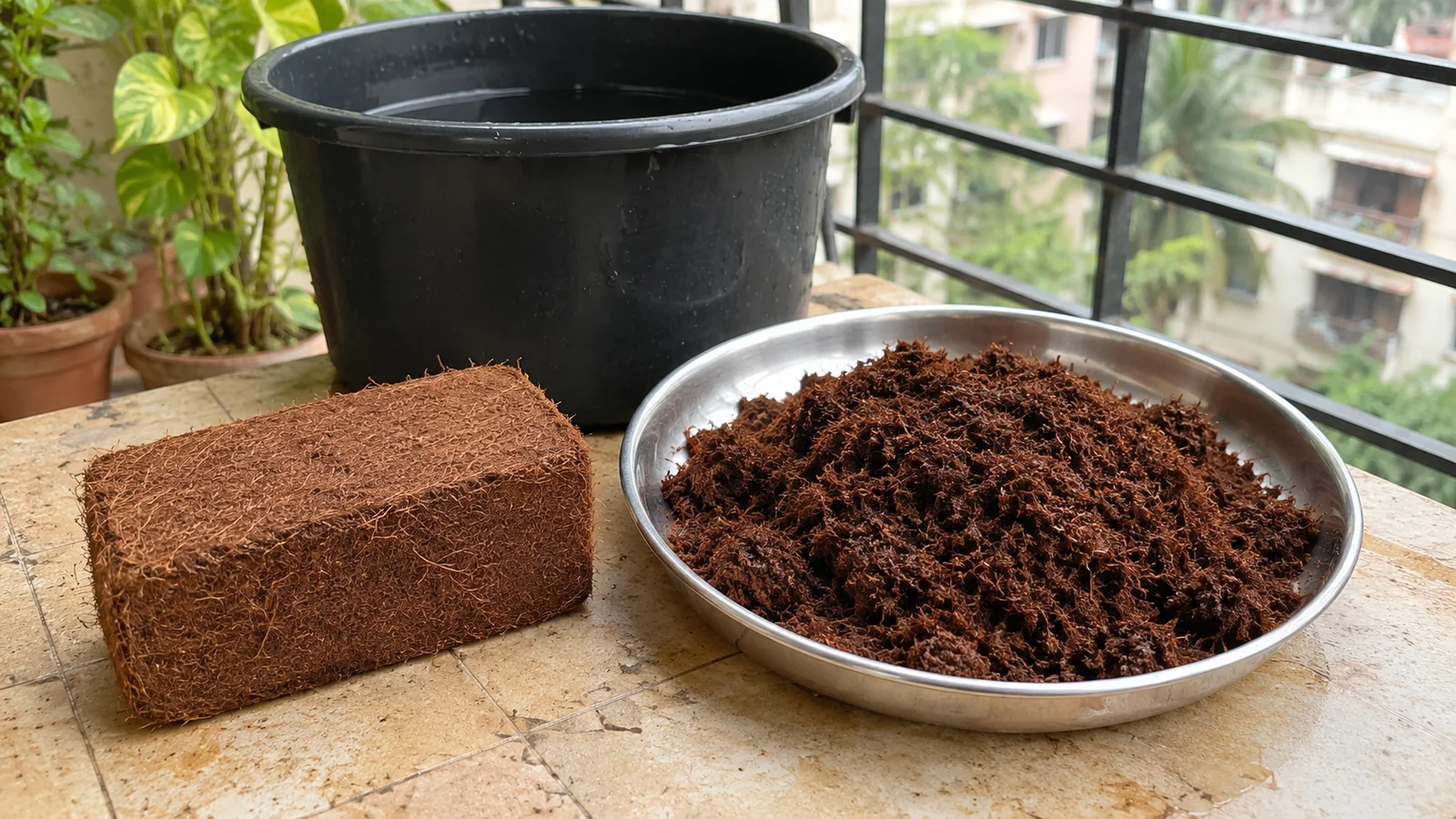
When you unwrap a cocopeat block, it can feel too hard to get a scoop into. Put it in a clean tub with room to expand, add clean water as directed on the pack, and pull apart the layers as they soften. Drain off any excess water. The hydrated coir is ready to measure when it feels evenly damp and crumbles in your hand with no hard centre. Use it as the moisture-holding part of a seed-starting or potting mix. University of Florida Extension explains how compressed coir expands when rehydrated.
Which cocopeat should you buy?
Cocopeat is the fine pith and short fibres left from processing coconut husks. For seed trays, look for a fine horticultural grade. Coarse coco chips have a different job: they leave larger air spaces in a mix and make poor contact with very small seeds. For a few trays, choose a small brick by its stated expanded volume. Check that the packet gives a water quantity or hydration directions.
Look for a supplier that identifies the grade and reports low soluble salts. Some packs describe this as low EC. EC, or electrical conductivity, is a measure related to the concentration of dissolved salts. Washed coir has undergone a rinse to remove soluble salts. Buffered coir is treated to change how it holds and releases nutrient ions. If the packaging gives an EC number without a test method, ask the supplier what it means for propagation. NC State’s growing media reference explains coir processing and particle sizes.
How to hydrate a cocopeat block
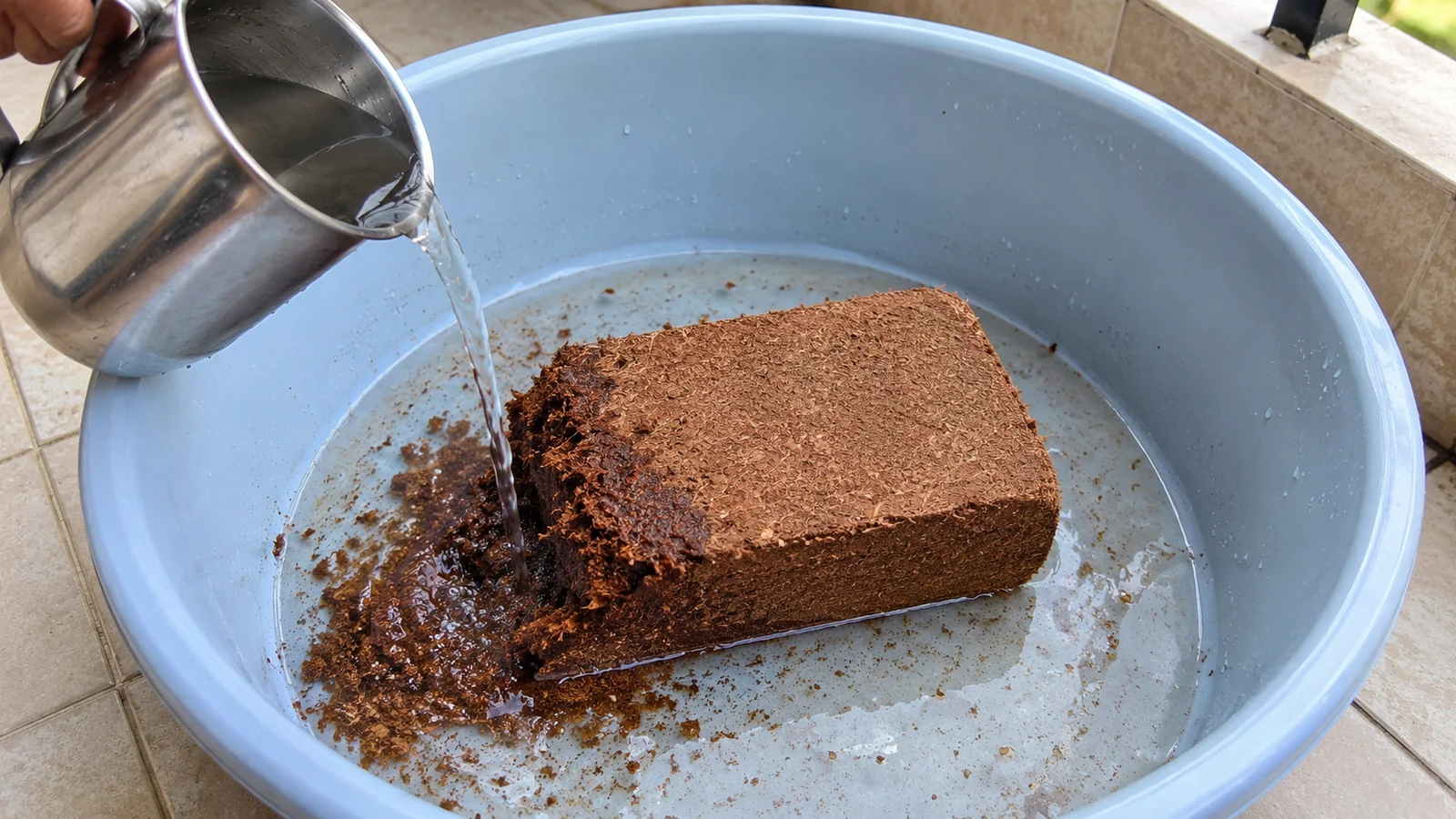
You need a clean tub, a jug, clean water, and a scoop or your hands to loosen the coir. Have a colander or clean draining pot on hand if the batch gets too wet. If the pack says the brick makes 9 litres loose, a 12–15 litre tub gives you working room. Use your pack’s expansion figure for that calculation. The amount of water to add and the resulting volume of loose coir are different measurements.
- Start with the packet directions. Remove all wrapping and place the brick flat in the tub. Add clean water as directed. If the packet lacks an amount, pour a little at a time around the brick and wait for it to absorb before adding more.
- Check the centre. Once the edges pull away easily, lift off the loose layers. Turn the hard part so water can reach it. If no water remains and the core stays firm, add another small pour and wait. Continue until the centre crumbles without force.
- Drain and fluff. Tip away standing water or transfer the coir to a draining container. Break up clumps with your fingers or a scoop. A handful should feel damp and separate easily when you open your fingers. If a gentle squeeze releases a stream, let it drain further.
- Measure it loose. Scoop the hydrated, drained coir into a measuring jug or mug. Keep the same measure for each ingredient and avoid packing it down.
Do you have to rinse or buffer it at home?
Check the packet before you soak. For a horticultural block marked washed and low EC, follow the maker’s directions. If the supplier calls for rinsing, pour fresh water through the expanded coir in a draining container and discard the runoff. Reusing the same soak water leaves any dissolved salts in the tub. For an unlabelled brick with no growing-grade or salt information, use a known low-salt seed mix for your first tray. Runoff colour alone cannot tell you how much salt remains. Soaking expands the brick, rinsing removes some soluble salts, and buffering is a separate treatment. University of Florida Extension discusses washing coir before use.
How much cocopeat should you mix in?
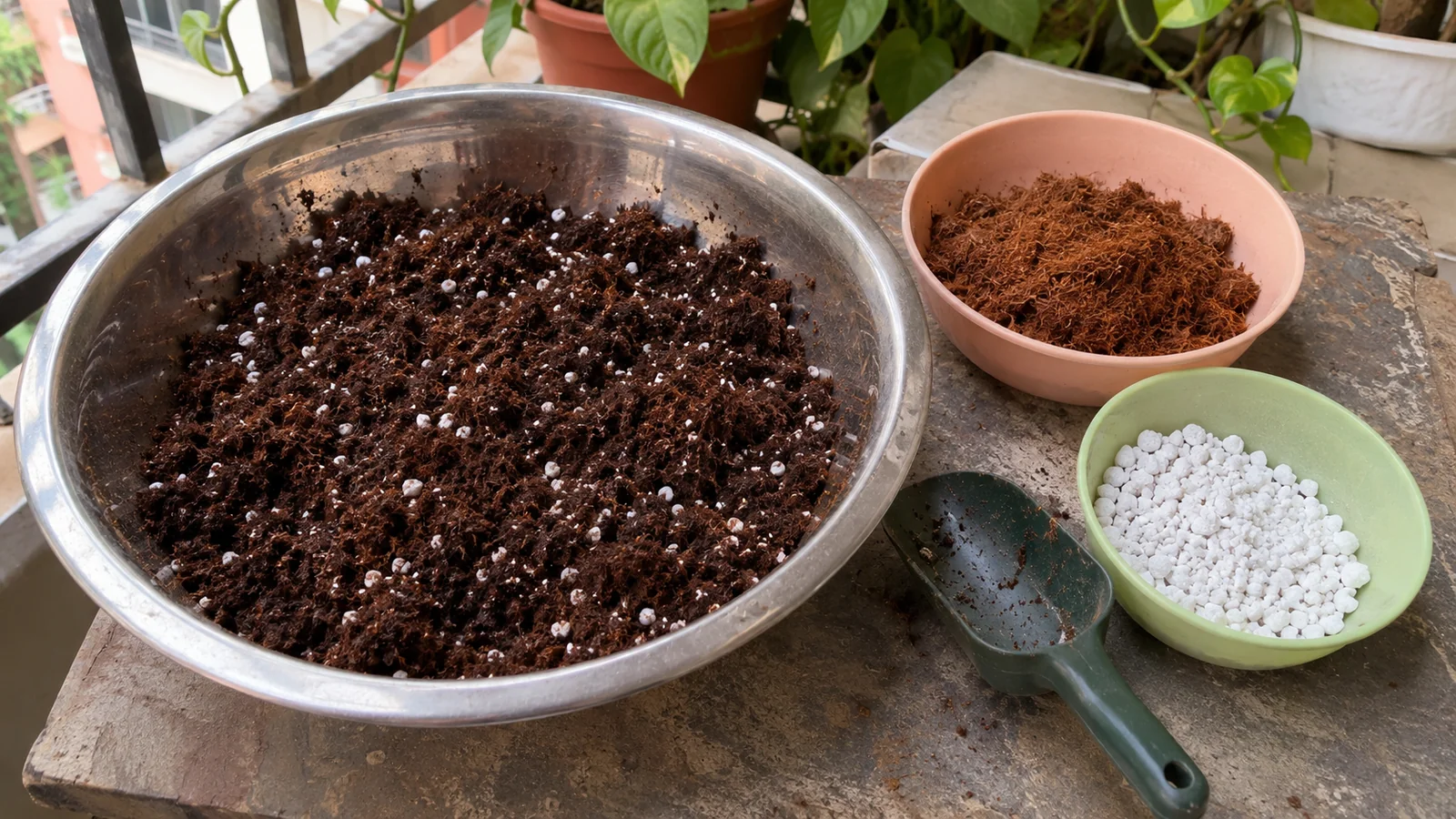
- For a seed tray: Try three parts hydrated, drained fine coir to one part horticultural perlite by loose volume. Three 250 ml measures of coir plus one 250 ml measure of perlite make a small trial batch. Mix thoroughly before filling the cells. This is a starting blend from Montana State University Extension.
- For established plants: Use cocopeat as part of a blend that also supplies air space and suitable nutrition. If your bagged potting mix already contains coir and drains well, you can use it as sold. For vegetables in pots, see the worked recipe in Surekha’s vegetable potting-mix guide. For cacti and succulents, use a blend suited to plants that need to dry faster. Oklahoma State University Extension explains how seed and potting mixes differ.
Test a small amount in the pot you plan to use. Pour water slowly over the surface. It should enter the mix, come out of the holes and leave the medium damp. If it pools, check for blocked holes or tightly packed material before changing the recipe. If the pot stays heavy and wet between checks, test a mix with more air space before you fill the rest. Coir holds water but does not supply all the nutrients an established plant needs.
How to use it in a seed tray
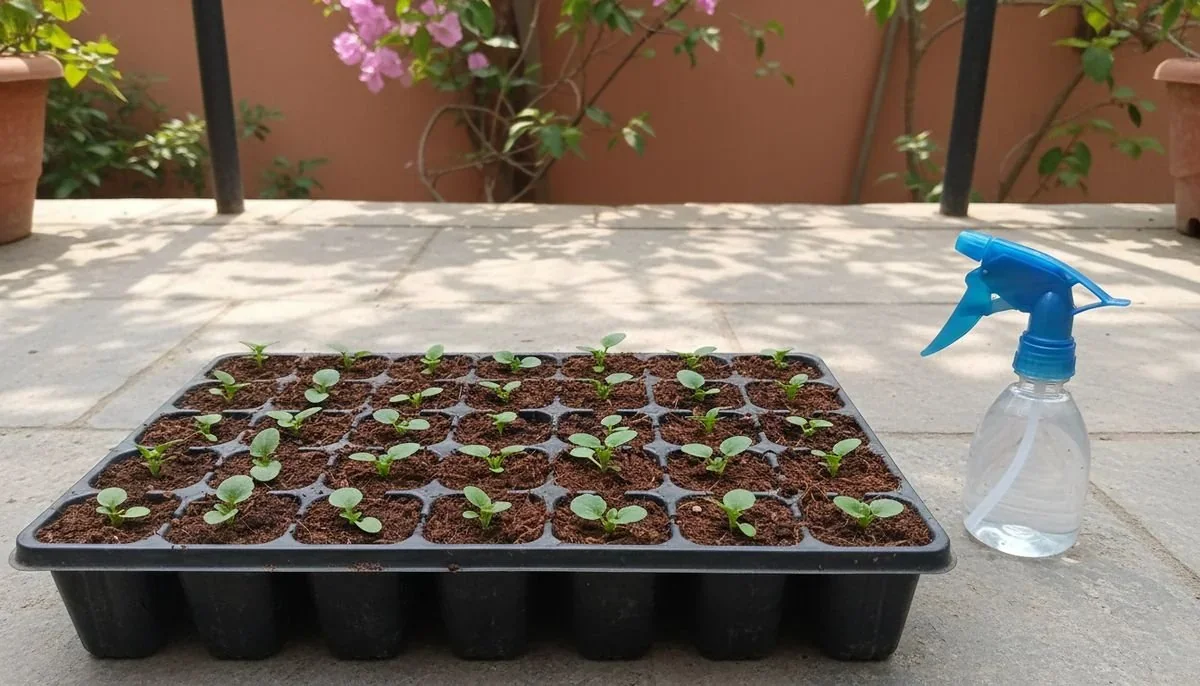
Fill clean cells with drainage holes with the damp blend and level them lightly. Sow at the packet depth. Surface-sow seeds that need light, and cover only those whose instructions say to do so. Use a fine spray or water from below so seeds stay in place, then drain the tray. Keep the mix evenly moist while the seeds sprout. Once seedlings emerge, give them enough light and keep an eye on the moisture below the surface. When the true leaves appear, plan the next step based on the crop and the mix. A coir-and-perlite blend contains little nutrition, so seedlings will eventually need either an appropriate feed or a move into a suitable potting mix. Utah State University Extension covers seed media and watering.
If you want a small crop for a cool balcony, read the lettuce growing guide for local sowing and pot care. Surekha’s green salad lettuce seeds are one option. For tiny flower seeds, the winter flowers guide explains why some seeds, such as petunia, belong on the surface.
What to check when the mix behaves differently
- The surface dries on a hot, windy terrace: Feel underneath before adding water. If the lower mix is damp, shelter the tray from wind and check again later. If the whole cell feels light and dry, water gently and let it drain.
- The tray stays wet during humid or cloudy weather: Check for standing water and blocked holes. Drain it, give the tray airflow, and wait for the mix to begin drying before you water again. If stems thin or collapse at the surface, separate affected cells and see University of Minnesota Extension’s damping-off guidance.
- Seeds fail to emerge or seedlings stall: First check the seed age, sowing depth, moisture and temperature. If the block was unlabelled or the supplier reports high salts, sow the same seeds in a few cells of known seed mix and compare after the packet’s germination window. That comparison can help you decide whether to change the mix.
Can you hydrate only part of a brick?
Yes. For a small tray, let one edge soften, scoop out what you need and keep the unused dry portion separate. A small briquette or bag of loose coir is easier to portion if you regularly sow just a few cells. Store the dry remainder somewhere clean and dry.