
Petunia plant care in India starts with a suitable local growing season, a sunny position, a pot that drains well and watering guided by the growing mix. Give the variety enough space, feed according to its container requirements and remove spent flowers where appropriate. If starting from seed, remember the key difference from many vegetables: petunia seeds need light to germinate and should not be buried.
This guide follows the plant from a fine seed to an established balcony display, with separate advice for sowing and mature plants. A covered seed tray and a flowering pot need different treatment, even when they sit on the same balcony.
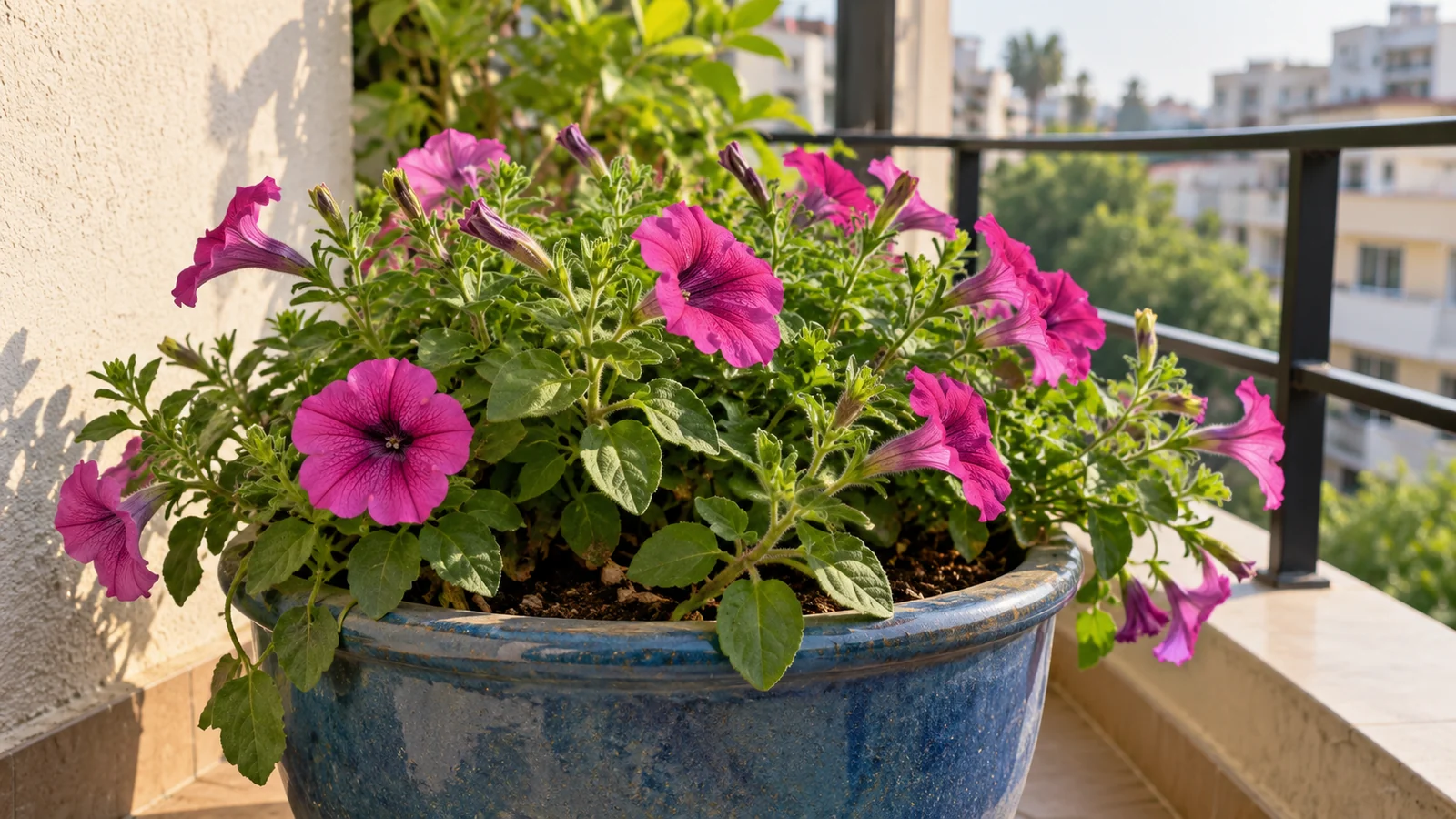
When should you grow petunias in India?
Use a regional sowing window rather than one nationwide flowering calendar. The Package of Practices for Horticultural Crops, prepared by Assam Agricultural University and Assam’s Department of Agriculture, gives October–November sowing for winter blooming and March–April for summer blooming in its petunia entry. This is Assam guidance, not a guarantee for every altitude, city or cultivar. Source: Assam horticultural package, printed page 168.
| Your conditions | Check before sowing | Plan for the flowering pot |
|---|---|---|
| Mild autumn or winter conditions | A locally recommended cultivar and enough time to raise seedlings. | Reserve a sunny position before starting a whole packet. |
| Frost-prone plains or hills | Local frost risk and the protected seedling-growing window. | Do not copy a warm-region planting date. |
| Hot coastal or southern location | Actual temperatures and heat reflected from walls and floors. | Observe the chosen spot through the day, not just at morning watering. |
| Rain-exposed balcony | Rainfall, shelter and drainage, including northeast-monsoon conditions where relevant. | Allow access to remove damaged flowers and inspect the mix after rain. |
The packet’s variety information and advice from a local nursery or Krishi Vigyan Kendra help translate a regional calendar into a practical start date. Do not assume a seed sown shortly before a celebration will produce a finished flowering display in time.
How much sunlight do petunias need?
University of Minnesota Extension recommends at least five to six hours of good sunlight, with better flowering in full sun. More shade generally means fewer flowers. Source: Minnesota petunia guide. Count the direct light at plant height, including shadows cast by buildings, railings and other pots.
A bright indoor room is not automatically a suitable flowering position. Our balcony sunlight guide explains how to observe the light; use that method for your flower display as well.
Choose the growth habit before planning the display
Petunias range from compact plants to vigorous spreading types. Clemson Extension distinguishes large-flowered grandifloras, smaller-flowered groups and spreading or trailing plants. It also notes that large, heavy flowers can suffer in hot, humid conditions. Source: Clemson petunia guide. Look for the named cultivar’s mature spread, weather suitability and care requirements rather than choosing from flower colour alone.
A seed mix does not establish a particular trailing habit or named series. For a hanging display, confirm that the variety is intended to trail and that you can safely reach the basket for watering and inspection.
What pot and growing mix should you use?
Choose a stable container with clear drainage and enough usable root volume for the cultivar. For a first trial with one known compact plant, a pot around 25–30cm wide is a practical starting setup, subject to the plant’s mature size. This is an editorial planning suggestion, not a minimum for every petunia or a specification for vigorous spreading varieties.
Use a suitable container-growing mix. Do not fill a decorative pot with compacted garden soil and expect drainage holes alone to solve poor structure. Check that water can leave the container in its actual position and that an outer cover is not collecting it unnoticed. Our potting mix guide explains the physical checks; adjust nutrition for the flowering plant and the mix you use.
Leave growing room rather than filling every visible gap with seedlings. A pot that looks full at planting can become difficult to water and inspect once the stems expand.
How do you grow petunias from seed?
Sow petunia seeds on the surface of a clean, moist seed-starting medium and do not cover them with more mix. Iowa State Extension explains that they need light for germination. The seeds are very small, so start a manageable batch in a tray or small sowing container. Source: Iowa State petunia seed guide.
- Label before opening the packet. Record the variety and sowing date.
- Moisten the medium first. This reduces the need to disturb fine seeds with a heavy stream of water.
- Sow thinly and press gently onto the surface. Keep the seeds exposed to light; follow any specific instructions for pelleted seed.
- Maintain moisture gently. Avoid drying the surface or flooding it.
- Use the right germination conditions. Iowa State gives a warm medium of 75–80°F, approximately 24–27°C, in bright light. It warns against direct sun on a plastic-covered tray because the interior can overheat. Source: Iowa State.
- Remove the cover after emergence. Continue with adequate light and appropriate seedling conditions rather than keeping seedlings in a sealed humid enclosure.
Iowa State gives 7–10 days for germination under suitable conditions, not a guarantee. Emergence is different from reaching transplant size. Source: Iowa State.
As seedlings develop, give them individual growing space and avoid handling them by their delicate stems. Gradually introduce outdoor conditions before moving sheltered seedlings into the final display. Our hardening-off guide explains the transition method; its vegetable examples do not replace your petunia variety’s requirements.
How often should you water and feed potted petunias?
Water according to the mix and the plant
Check moisture below the surface before watering. University of Maryland Extension notes that container drying changes with sun, wind, pot size and plant maturity; pots under a roof can receive little rain even during a wet spell. Source: Maryland container guidance.
Water the root zone thoroughly when needed, let excess drain, and reassess after rain. Keep the flowers and foliage from being repeatedly soaked unnecessarily: Clemson recommends avoiding wetting them when watering and identifies petal blight as a possible problem in rainy, very humid conditions. Source: Clemson.
Account for feed already in the mix
Petunias in containers need a feeding plan, but the amount depends on the product, growing medium and cultivar. Minnesota Extension discusses timed-release feed at planting and supplementary feeding during growth, with more demanding spreading types treated differently. Source: Minnesota. Follow a suitable container-flower feed’s label and account for what is already in the mix. Do not combine several fertilisers or convert a field dose into an improvised spoonful for one pot.
How do you deadhead petunias and manage leggy growth?
Deadheading removes a fading flower before it develops seed. For varieties that benefit from it, remove the spent bloom with its developing seed-bearing base, rather than pulling away only the soft petals. Preserve nearby buds and healthy shoots. Mississippi State Extension highlights this distinction in its deadheading instructions. Source: Mississippi State.
Check cultivar instructions before pinching or cutting back. Minnesota Extension distinguishes types that benefit from early pinching from milliflora and spreading types that should not receive the same treatment. Source: Minnesota. A treatment for one named series is not automatically right for a mixed packet.
If growth becomes long and sparse, first review light, crowding and the cultivar’s natural habit. Then follow its pruning guidance. Cutting a stressed plant hard does not correct shade, a persistently wet root zone or an unsuitable growing season.
What should you check when petunias look unhealthy?
| Observation | Check first | Useful next step |
|---|---|---|
| Seeds have not emerged | Whether they were buried, moisture and medium temperature. | Review the sowing record before repeating the same method. |
| Few flowers | Direct light, plant age, recent care and local conditions. | Identify the limiting condition before adding more feed. |
| Wilting | Moisture around the roots and whether drainage is working. | Distinguish a dry pot from a wet one before watering. |
| Damaged flowers or distorted shoots | Recent rain, buds, leaf undersides and visible insects. | Remove deteriorating blooms and obtain a diagnosis for persistent symptoms. |
UC IPM’s petunia reference covers several potential pests and diseases as well as basic cultural needs. Source: University of California IPM. A photograph of the whole plant, close-up symptoms and a short watering history is more useful for advice than a symptom name alone.
Choose seeds for the display you can maintain
Surekha Agro’s Premium Winter Flower Seeds Combo lists petunia mixed seeds alongside gazania, calendula, pansy and aster. Check the current petunia packet for sowing and mature-size information; a mixed listing does not establish the exact colour or growth habit pictured in this guide.
Grow each flower with its own spacing and care needs. For a first display, raise only the seedlings you can give suitable light, final pots and regular attention.
Frequently asked questions
Can petunias grow in a small pot?
Some compact varieties suit containers, but “small” needs a measurement. Compare the usable root volume with the cultivar’s mature size and avoid crowding several seedlings into a tiny decorative pot.
Why are petunia seeds not covered with soil?
They need light to germinate. Surface sowing and careful moisture management are more appropriate than applying the sowing depth used for beans or other large seeds.
Can I keep flowering petunias indoors?
Choose a position with adequate direct light for flowering. A bright-looking interior does not establish that requirement; a suitable outdoor balcony or patio is usually the more practical display location.
Do all petunias need identical deadheading and pruning?
No. Growth habit and cultivar instructions matter. Identify the variety before applying a pinching or cutting-back routine intended for another type.
A useful weekly review: observe the direct light, check the growing mix, inspect flowers and buds, and record what changed. Keep the seedling stage and the flowering stage separate in your care notes.