Gazania plant care in India starts with a sunny outdoor position, a freely draining pot and watering that allows the established plant’s mix to dry between applications. Grow it during a locally mild spell, remove faded flowers and check light before adding more fertiliser. Its flowers commonly close in dull weather or at night, so a closed flower is not automatically a care problem.
Gazania, also called treasure flower, suits balconies and terraces where sunlight reaches the leaves directly. A bright-looking indoor room is a different growing situation. This guide helps you start seeds, manage a container and decide whether a lack of open flowers needs action.
Where should you keep a gazania pot?
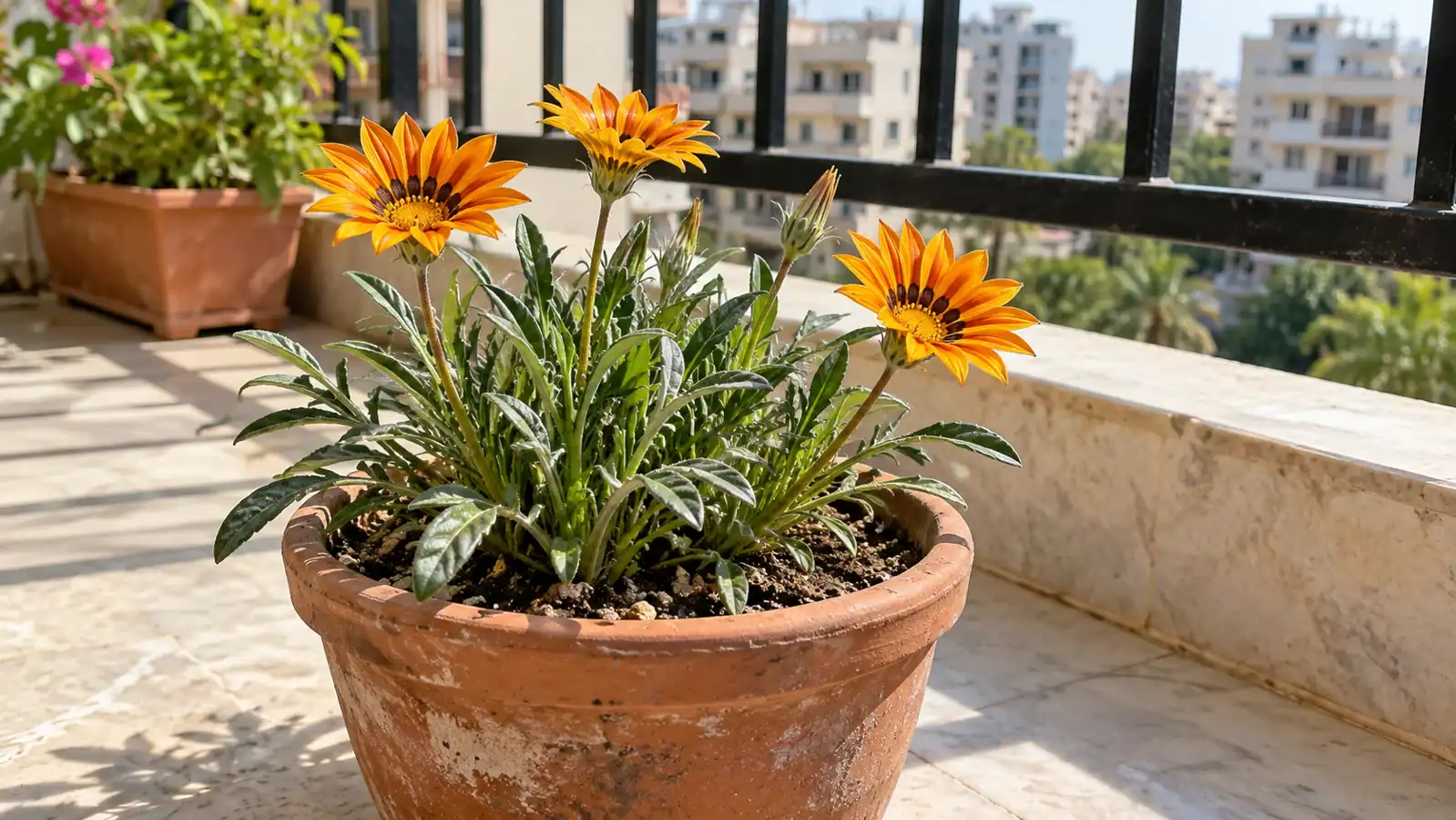
Choose an outdoor position with strong direct sunlight and enough room for the plant to spread. North Carolina Extension describes full sun as six or more hours of direct sun a day for this plant. Its Gazania rigens profile also explains that severe summer heat can interrupt flowering. A sunny position and a cool enough season need to work together.
Observe your balcony at different times rather than judging it from one bright morning. A deep roof, neighbouring building or dense railing screen can shorten the direct-sun window. If the plant arrived from a shaded nursery or was raised indoors, increase sun exposure gradually; our seedling hardening-off guide explains that gradual transition, although its crop examples are vegetables.
The Royal Horticultural Society’s gazania profile describes it as a low-growing perennial often used as an annual, with flowers that respond to sunshine. Tamil Nadu Agricultural University also lists gazania among low-growing ornamental plants propagated from seed or suckers. Neither description means every cultivar will live or flower for the same length of time in your pot.
Choose the growing window for your part of India
Use local temperature, rainfall and frost risk to plan. A “winter flower” packet is not an all-India sowing calendar, and a UK spring recommendation should not be transferred directly to an Indian city. Allow time for seedlings to establish before the weather becomes unsuitable.
| Your growing conditions | What to prioritise | When to reconsider |
|---|---|---|
| Northern plains with a milder autumn and winter | A sunny position and establishment while conditions are mild; protect small plants if frost is forecast | Do not assume a newly germinated seedling has the cold tolerance of an established plant |
| Warm plateau towns or dry, bright balconies | Good direct light, root-zone moisture checks and shelter from extreme heat while plants settle | A very hot spell may make flowering less reliable |
| Humid coastal gardens or a rainy period | Drainage, air movement and a sunny spot protected from repeated soaking rain | A pot that remains wet between showers needs attention before more watering or feeding |
| Cool hills or frost-prone locations | Use the local frost-free growing window and a sheltered sunny container position | Move or protect the pot during damaging cold; do not rely on a warm-plains calendar |
These are ways to apply the plant’s light, drainage and weather needs to home gardens. They are not measured flowering schedules for each region.
Choose a pot and mix that drain well
For a first attempt, keep one compact gazania in its own container so that you can judge moisture and growth easily. Choose a pot with usable drainage holes and room for its root ball and expected spread. Use the cultivar’s spacing information when placing several plants in a trough; do not fill every visible gap with another seedling.
Use a container potting mix that remains airy after watering. Keep the drainage outlet clear and avoid leaving the pot standing in retained water. The RHS container-gardening guidance explains why container size, drainage and regular care matter. Heavy, compacted material that stays saturated is a poor starting point.
How to grow gazania from seeds
- Read the individual packet. Check the variety, sowing instructions and recommended conditions. In a flower-seed combo, give each species its own labelled tray or section.
- Prepare a clean container. Use a seed tray or small pots with drainage holes and suitable seed-sowing mix. Moisten it before sowing so a heavy first watering does not move the seeds.
- Cover as directed. The RHS seed germination guide lists gazania with a 5 mm compost covering and a 15–18°C germination range, with emergence potentially taking up to 30 days. Treat that as general guidance; follow specific instructions supplied for your seed lot.
- Keep the sowing mix lightly moist. Check it regularly and water gently. An established plant’s tolerance of drier conditions does not mean a germinating seed should be left in dry mix.
- Give emerged seedlings light and space. Keep labels in place and avoid crowded, weak growth. Handle seedlings carefully when they are large enough to move, supporting the root plug.
- Settle them into their final pots. Gradually introduce outdoor conditions, plant without burying the crown deeply and water to settle the mix. Watch moisture closely while roots establish.
Do not count a packet’s sowing date as a guaranteed flowering date. Cultivar, seed quality, temperature, light and establishment all affect the result. If flowering is needed for a particular occasion, buying an established plant is a different starting point from sowing seed.
Water according to the pot, then feed thoughtfully
For an established gazania, let the mix dry between waterings rather than keeping it continuously wet. Avoid taking that instruction to the point of repeated severe wilting. North Carolina Extension warns that overwatering can lead to root rot; drought tolerance is not protection against waterlogged roots.
Feel below the surface and consider the pot’s weight before watering. Apply water slowly to the mix rather than routinely soaking flowers and foliage. Check that excess can escape and empty a water-catching saucer. The RHS guide to watering containers recommends checking moisture before each application and adjusting for container, weather and plant stage.
A newly planted pot needs closer observation than an established one. Warm wind can dry a small terracotta pot quickly; a shaded or rain-soaked container may remain wet for much longer. “Every morning” is not a dependable rule for both.
Check whether the potting mix already contains fertiliser before adding another feed. If the plant needs feeding, use an appropriate container fertiliser at its label rate and interval. Do not stack several products to force open flowers. University of Minnesota’s container-feeding advice emphasises label directions and avoiding over-fertilisation. Its general watering examples should not override gazania’s particular drainage needs.
Why are gazania flowers closed or not appearing?
Check a flower again during a bright part of the day before deciding that the plant is failing. Gazania flower heads can close in shade, cloudy weather and darkness, as the RHS profile describes. A spent head that stays brown is different from a healthy flower that opens and closes.
| What you see | Check first | Useful response |
|---|---|---|
| Flowers close in the evening or on a dull day | Whether they reopen in direct sunshine | Allow for the normal response to light; avoid an unnecessary extra feed |
| Healthy leaves but few open flowers | Direct-sun hours, plant maturity, weather and old flower heads | Improve the position if needed and remove spent heads |
| Wilting while the pot is still wet | Drainage, recent rain and root condition | Investigate wet-root stress before adding more water |
| Weak or distorted shoots, sticky residue or visible insects | Leaf undersides and the identity of the problem | Separate an affected pot where practical and obtain suitable treatment advice |
Remove faded flower heads with their stalks, taking care not to damage neighbouring buds. Regular deadheading is recommended in the RHS gazania profile. It keeps old heads from obscuring new growth; it is not a guarantee of uninterrupted flowering.
Common questions
Can gazania grow indoors?
A dim indoor position is unlikely to provide the direct sun needed for a good flowering display. Prefer a suitable sunny outdoor balcony, terrace or patio.
Does gazania flower all year in India?
Do not assume so. Local heat, rain, cold, variety and plant condition affect the flowering window. Plan for suitable local conditions rather than year-round colour from every pot.
How often should I water a gazania pot?
Check moisture first. Established plants need a drying interval, while seed trays and recently planted seedlings need closer moisture management. There is no one frequency for all pots.
Is gazania an annual or a perennial?
It is commonly described as a perennial used as a seasonal annual. Whether you can keep the same plant depends on local weather and how well it remains established.
Start a sunny flower pot with suitable seeds
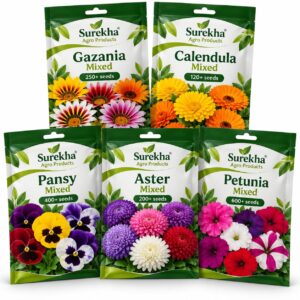
Surekha Agro Products’ winter flower seeds combo currently lists gazania alongside calendula, pansy, aster and petunia. Check the current pack details and grow each variety according to its own needs. The flower colours shown here do not specify a named seed cultivar.
For the other varieties in the pack, our calendula care guide and petunia growing guide explain their separate routines. Keep gazania’s sunny position and drying interval in mind when arranging mixed displays.