You bring home a chandramallika covered in buds, set it beside the balcony door and start wondering: should you move it into a bigger pot, feed it, or trim it into a rounder shape? The most useful first step is to notice its stage. A young green plant is ready to build branches; a plant already carrying buds needs those branches left alone.
For chrysanthemum plant care in India, give an established plant good daylight and suitable sun, keep the root ball evenly moist with free drainage, and stop pinching once flower buds develop. After the display finishes, healthy new shoots can provide material for next season. Flowering depends on the variety, night length and temperature, so a November purchase and a cutting started months earlier need different plans.
Start with the chrysanthemum you actually have
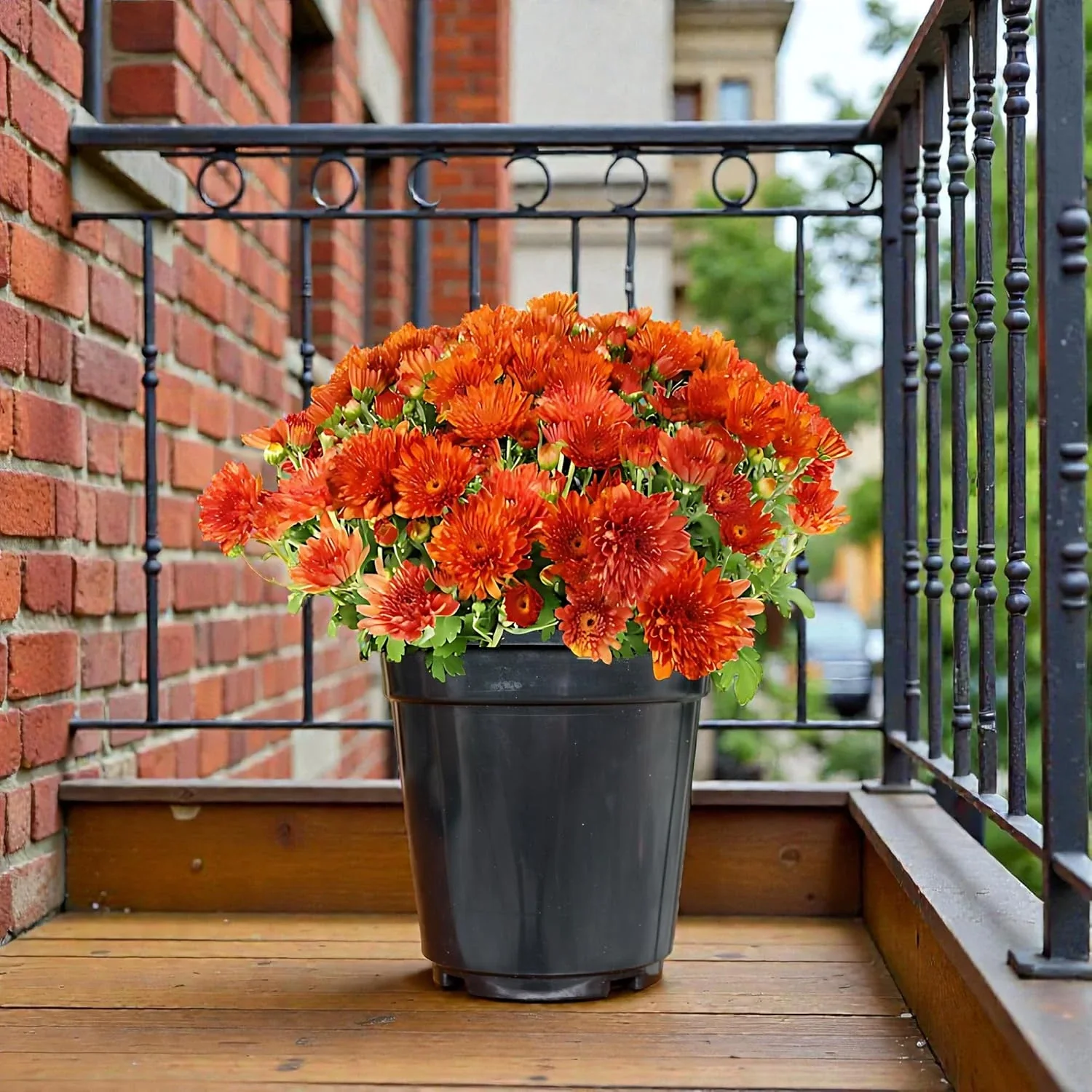
Chrysanthemums sold for pot displays include compact, many-flowered plants and taller forms grown for larger individual blooms. If your aim is a manageable balcony pot, ask for a compact pot variety and its expected mature size. A plant’s current nursery-pot size does not tell you its final size.
For colour soon, choose a healthy rooted plant with developed buds; for shaping a plant yourself, start earlier with a young rooted cutting. Check leaf undersides and shoot tips before adding it to your collection. Look for firm stems and an evenly moist root ball rather than buying by flower count alone. Utah State’s guide distinguishes rooted cuttings, budded plants and florist-grown mums.
Surekha’s Red Chandramallika listing describes a plant in a 5-inch non-self-watering black pot with drainage. It was out of stock when this guide was prepared; check the current listing before planning a purchase. Its pot is a starting container, not a promise of a particular mature spread or flowering date.
| Plant stage | Your priority | Hold off on |
|---|---|---|
| Newly arrived, budded or flowering | Check moisture, drainage and a bright suitable position | Hard pruning or routine root disturbance |
| Established, making leafy shoots | Sun, steady moisture, appropriate feeding and early shaping | Repeatedly cutting back a plant approaching bud formation |
| Buds developing | Leave tips intact; check night lighting and water supply | Extra fertiliser as a substitute for suitable conditions |
| Display finished | Remove spent flowers; assess healthy shoots for renewal | Discarding a living plant simply because flowers faded |
Where should the pot sit in an Indian home?
For a plant growing on toward another flowering season, choose a sunny, sheltered outdoor position with air moving around it. Six hours of direct sun is a useful garden-mum target in Iowa State’s guidance. A hot west-facing balcony needs adjustment: UC IPM advises afternoon-sun protection in hot climates. Give useful morning sun rather than moving the pot deep indoors.
A purchased florist mum in full flower can be displayed in a bright, cool indoor spot; that is different from raising strong new growth in a dim room. If a plant arrived from a shaded shop, introduce stronger sun gradually. Watch the leaves during the change and keep the root ball from drying out.
Use the weather at your balcony, not a nationwide sowing calendar:
- Cool northern plains: make use of gentle winter sun, but shift pots into a bright frost-free shelter when frost threatens.
- Warm coastal homes: favour morning sun and a position away from a heat-trapping afternoon wall. Do not assume every variety will flower on a north Indian timetable.
- Rainy periods: use an airy rain shelter if the pot keeps getting soaked, and clear its drainage route.
- Cold hill locations: protect container roots from freezing; a sheltered spot outdoors is not necessarily frost-free.
These are condition-based adjustments. TNAU’s commercial guidance connects flowering to short days and gives a Tamil Nadu production calendar, illustrating why one regional schedule should not be applied to every Indian balcony.
When should you repot, and what should you use?
Settle a newly bought flowering plant first. Check whether water reaches the root ball and can leave the pot. If the container works and the plant is stable, repotting does not need to be a day-one job. Persistent drainage failure or a badly crowded root ball deserves attention, but avoid stripping healthy roots merely to change the pot’s appearance.
For a young plant being grown into a substantial long-term container specimen, the RHS recommends a pot at least 30 cm across. Treat this as a growing-on example, not an instruction to put every tiny cutting straight into a large tub. Compact varieties and different root-ball sizes need different transitions.
- Prepare a container with unobstructed drainage holes, fresh container potting mix, water and a support if the variety grows tall.
- Use a mix that retains moisture while allowing surplus water through. Avoid filling the container with dense, sticky garden soil.
- Ease the root ball out while supporting it. Set the plant at its existing soil level; add mix around it and firm gently.
- Water to settle the mix, let it drain, and place it where you can check recovery before adding other changes.
The handling steps follow Maryland Extension’s container guidance. For another walkthrough, see our beginner repotting guide; use this article’s chrysanthemum stage and seasonal advice to decide when to do the job.
Water the root ball, then let the pot drain
Check the mix frequently while the plant is in bud or flower. When its surface becomes dry to the touch, water slowly until water leaves the drainage holes, then empty the collecting tray. A small flowering pot can dry sooner than a neighbouring foliage plant. A cool, cloudy day can leave the same pot moist for longer. Iowa State describes this surface-check and drain-through method for florist mums.
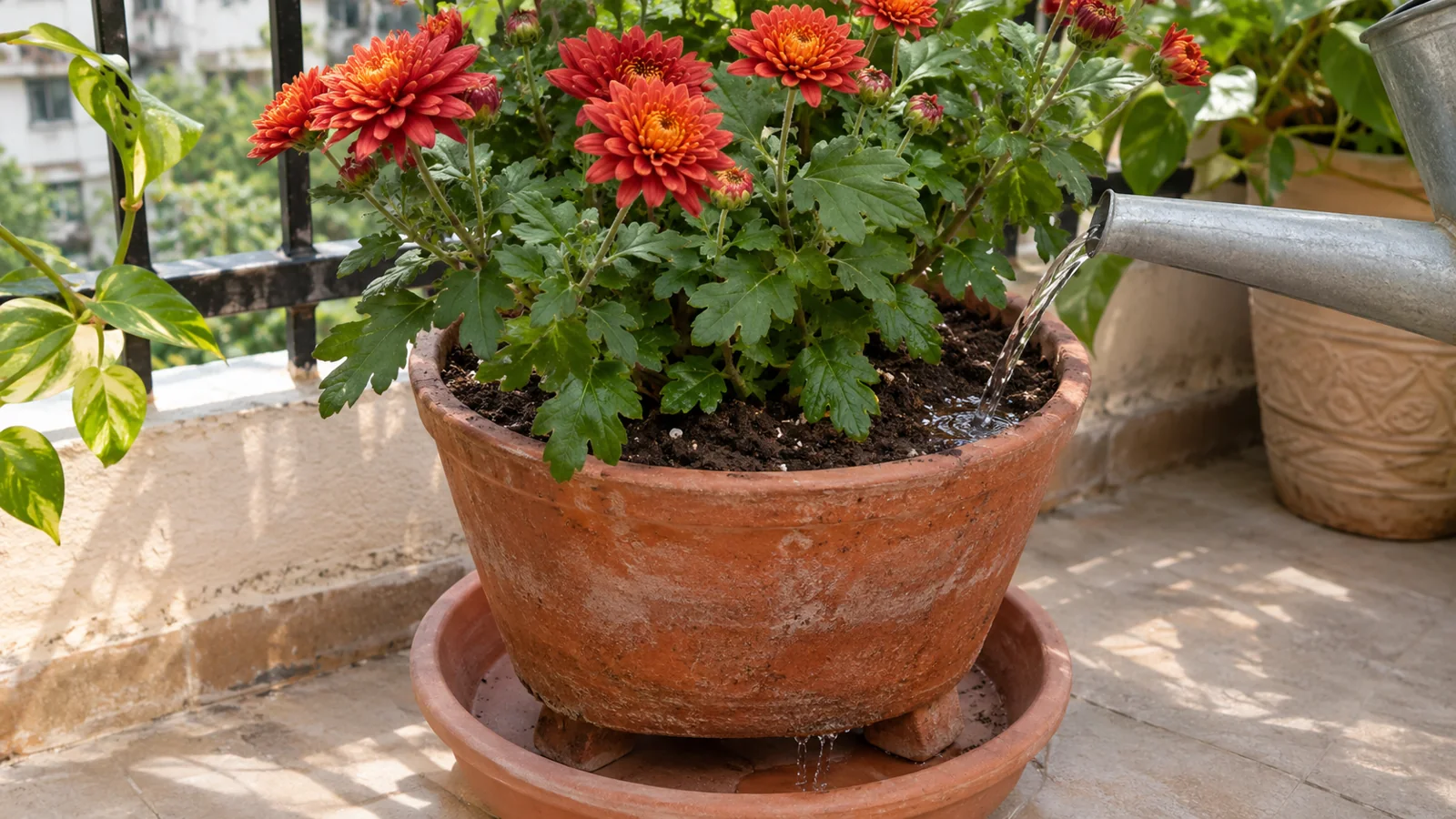
If water races down a gap at the edge while the centre stays dry, pause and reapply slowly in stages, checking whether the root ball is actually moist. A wet saucer alone does not show that the roots received water. If the mix remains soggy, clear the drainage route and investigate before watering again.
Does it need a flowering fertiliser?
Feed an established plant during active growth using a labelled container-plant fertiliser and its stated rate. Check whether the potting mix already contains feed before adding more. Penn State advises stopping fertilisation once flower buds form. A recently purchased display pot is not an invitation to add several boosters together.
Keep one simple record: product, dilution, date and plant stage. If a product gives no container instructions, choose one that does. Adding potash, Epsom salt or bone meal without establishing a need is not the next step for every reluctant chrysanthemum; our Epsom salt guide explains why a supplement is not a general flowering remedy.
Pinch leafy shoots early; protect buds later
Pinching removes a soft growing tip so side shoots can develop. On a healthy, established young plant still making leafy growth, remove roughly 1–2 cm of tender tip just above a leaf, leaving the lower foliage intact. Use clean fingers or clean snips. Do not take off a large section of the branch. Purdue explains the tip-to-leaf method; timing varies with the type and intended flowering period.
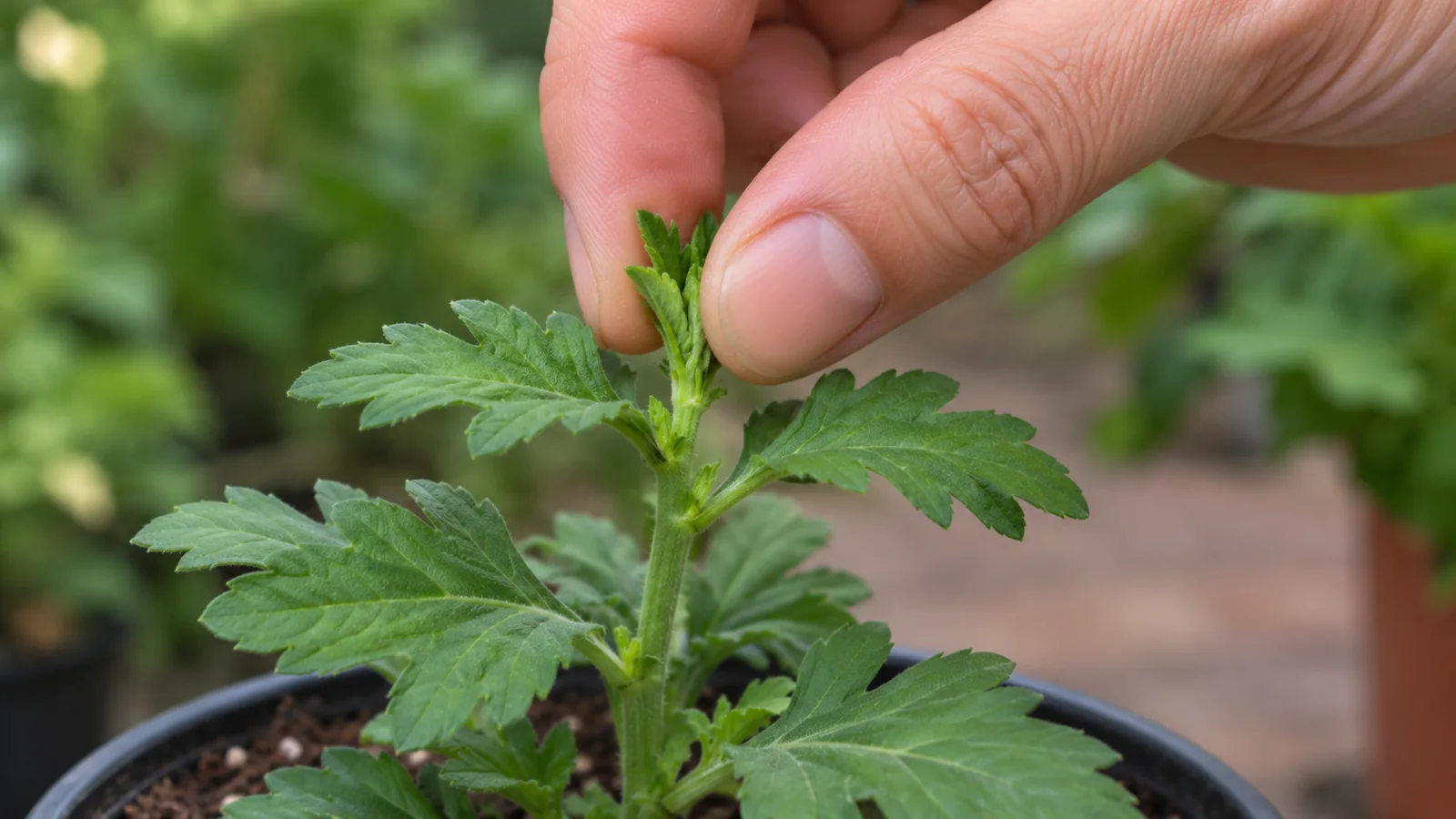
Once you see flower buds, leave the tips alone. Late trimming removes developing flowers and can delay the display. Pinching is also different from disbudding: exhibition growers may remove selected side buds to concentrate on fewer large blooms. A beginner growing a many-flowered pot generally does not need that extra operation. Support tall branches before they lean heavily.
Why does night lighting matter?
Chrysanthemum flowering responds to long, uninterrupted nights as well as temperature and cultivar. A bright porch lamp or balcony light can interfere with bud development. Choose a position out of the beam or switch off an unnecessary light; keep the plant in its suitable daylight position by day. Avoid covering it in a warm, unventilated box as a casual home remedy. Missouri Extension explains the effect of night lighting. This is a check for a plant failing to set buds, not proof that a particular lamp caused the problem.
What happens after the flowers fade?
Snip off spent flower heads without taking healthy unopened buds with them. When the display ends, keep the plant in a bright suitable position and assess the living stems and fresh shoots. Continue moisture checks, adjusting to slower growth. Chrysanthemums can be kept as perennials, although a florist-grown plant’s future performance depends on its type and conditions; another identical display is not guaranteed. The RHS covers perennial renewal and frost protection.
Make a new plant from a non-flowering shoot
Wait for healthy fresh growth rather than sacrificing a budded branch. Prepare clean snips, a small draining pot, fresh propagation mix and a clear propagator or loose transparent cover. ICAR’s Indian Horticulture article describes 5–7 cm terminal cuttings; its June–July timing is production guidance, not a deadline for every climate.
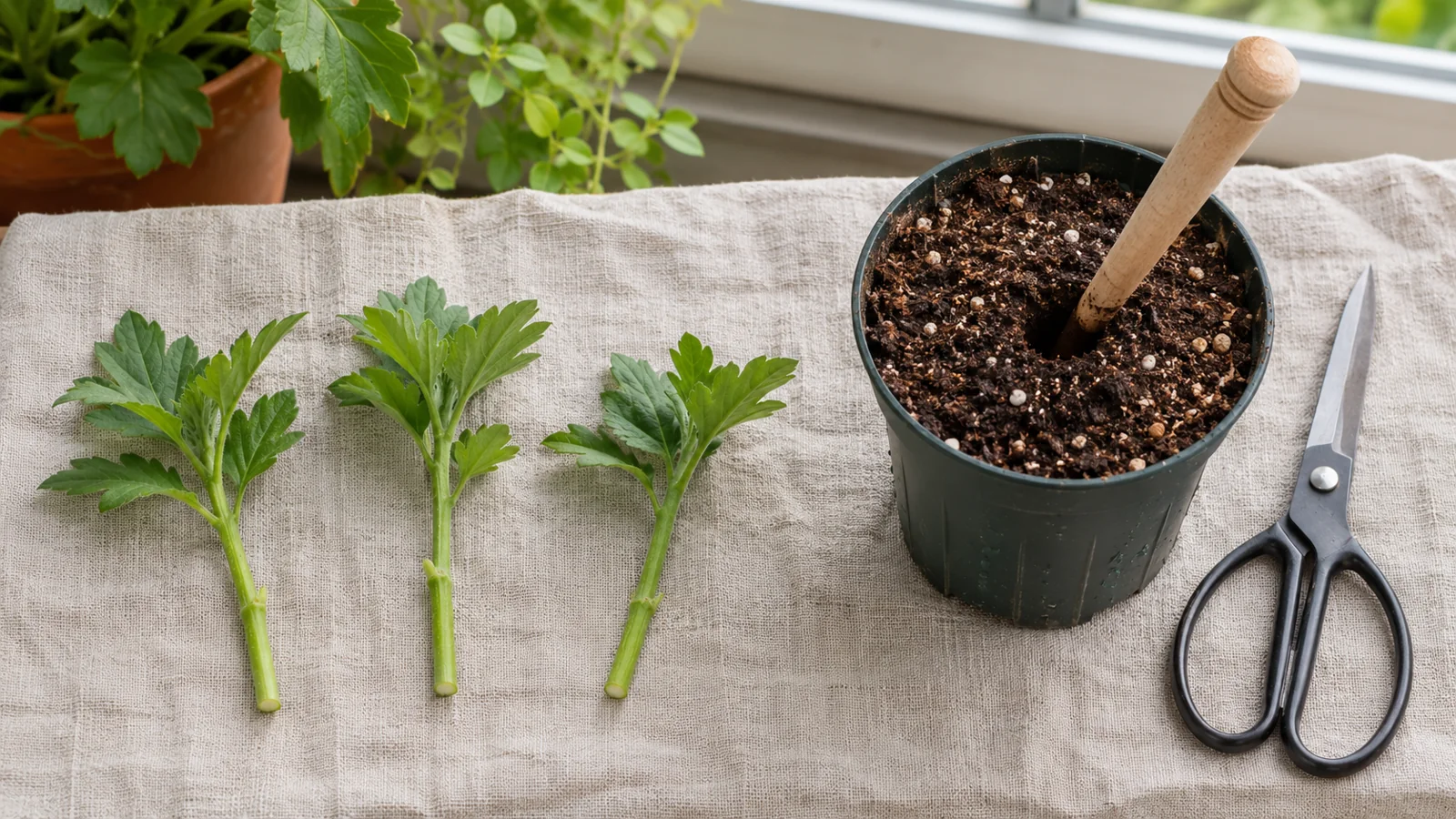
- Select a healthy non-flowering shoot. Trim it to about 5–7 cm, making the basal cut just below a leaf joint, or node.
- Remove lower leaves so they will not be buried. Keep upper foliage; do not use diseased or collapsing material.
- Moisten the propagation mix. Make a hole with a dibber, insert the bare lower stem and gently firm around it. Keep the remaining leaves above the surface.
- Place in bright indirect light, away from hot sun. Use a clear cover to retain humidity without letting it press onto leaves; check and ventilate it regularly.
- Keep the medium moist, not sodden. Move on when roots are established and the cutting is growing, rather than repotting simply because a set number of days has passed.
This nodal-cutting sequence follows RHS softwood-cutting guidance. ICAR reports rooting in around 2–3 weeks under its described conditions; a home windowsill may differ. Plan the next pot only after checking actual establishment.
When something changes, choose the next check
| You notice | Check before treating | First action and follow-up |
|---|---|---|
| Drooping leaves | Is the root ball dry, or wet and heavy? Is the pot standing in water? | Water a dry root ball thoroughly and drain it. For a wet one, stop adding water and investigate drainage. Persistent collapse needs closer root/stem assessment. |
| Plenty of leaves, few buds | Daylight, night lighting, late pinching and the variety’s season | Correct the limiting condition; leave tips intact. Track fresh buds over the coming weeks rather than adding repeated feeds. |
| Sticky or distorted tips | Look closely for colonies on tender shoots and leaf undersides | If aphids are confirmed, separate the pot and dislodge small colonies with water. Recheck new growth over the following days. |
| White coating or spreading spots | Examine both leaf surfaces and whether marks spread; note any sprays used | Separate affected plants, improve spacing and seek identification before choosing a treatment. Avoid taking cuttings from affected growth. |
Chrysanthemums can have several pest, disease and environmental problems; UC IPM lists the alternatives. Sticky growth alone is not an insect identification. Illinois Extension supports water removal for confirmed aphid colonies, while RHS mildew guidance explains why spreading white growth needs a different assessment. If damage advances, show a local horticultural adviser the whole plant, close details and its watering history.
A few questions before you choose its permanent spot
Can I keep chandramallika indoors all year?
A bright indoor display can suit a flowering florist mum temporarily. Raising strong growth for future flowers needs sufficient light, suitable temperatures and an appropriate night period. A dark decorative corner is a poor long-term choice. Check the actual plant type and growing conditions before deciding.
Will a plant bought in November flower immediately?
A budded plant may open its existing buds, but a small rooted cutting still needs development. The ICAR account describes common November–December flowering and some earlier types; it does not make every November purchase ready to bloom.
Can I grow the same colour from saved seed?
Not reliably. Seed-grown plants may differ from the parent; a healthy vegetative cutting is the more suitable route when you want to preserve an existing plant’s characteristics. Purdue discusses this distinction.
Is chrysanthemum safe around pets?
Keep it away from pets that chew plants. ASPCA lists chrysanthemums as toxic to cats and dogs. Contact your veterinarian if a pet eats the plant.
For a mixed seasonal balcony, give each pot its own care plan: our marigold guide and petunia guide explain two other flowering options. Start today with your chrysanthemum’s stage, its moisture and its light. Those observations tell you far more than another bottle of feed.