Calendula plant care in India works best when you grow it through a mild local season, give it good light, use a pot that drains freely and remove faded flowers regularly. Water according to the growing mix and avoid heavy feeding. If a healthy plant stops flowering during persistent heat, check the season before adding more fertiliser.
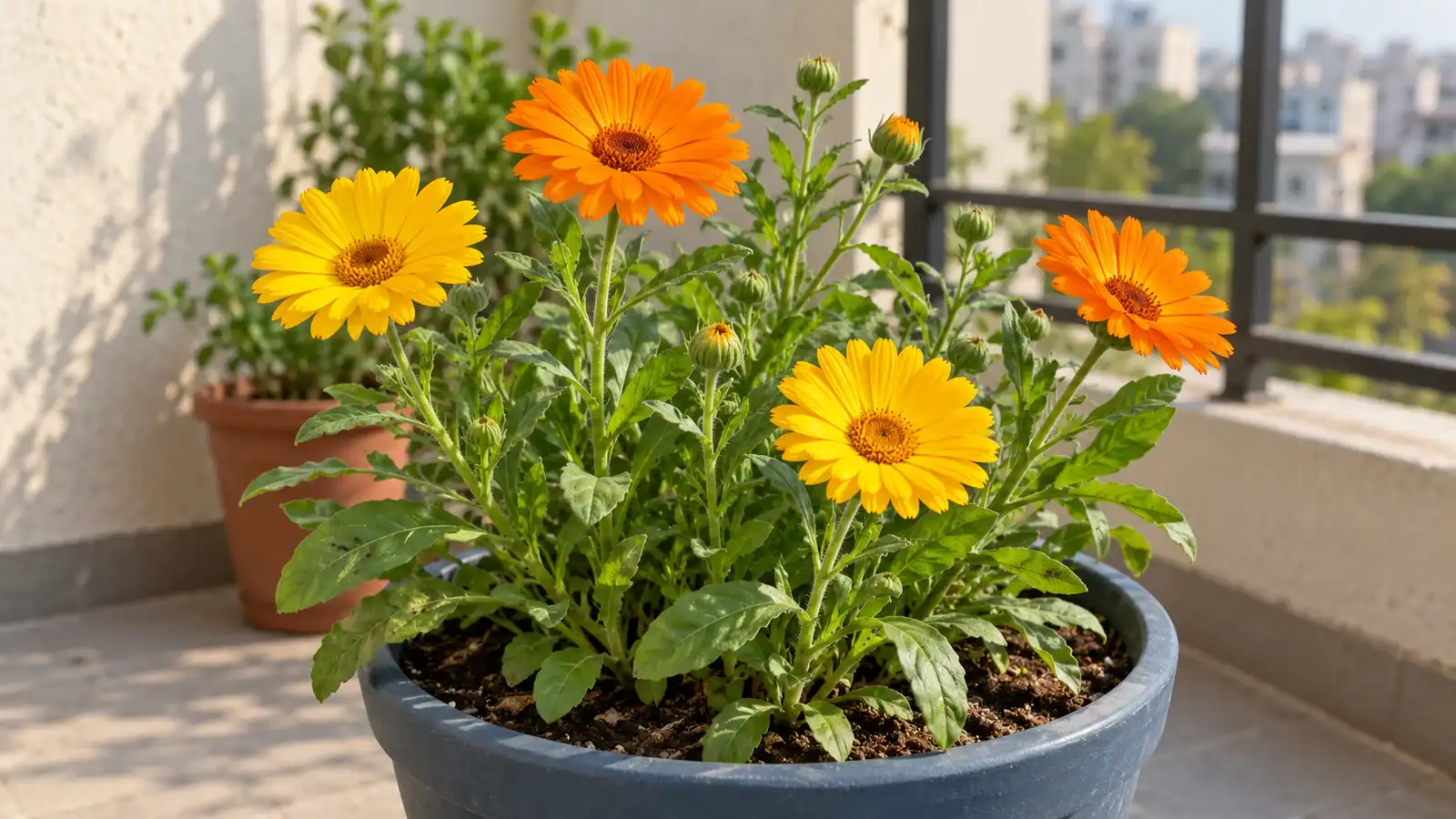
Calendula is often called pot marigold, but it is Calendula officinalis, a different plant from the Tagetes marigolds commonly sold as genda. Its daisy-like flowers and simple leaves help tell it apart. Wisconsin Extension explains the common-name confusion. For Tagetes specifically, use our separate genda growing guide.
When should you grow calendula in India?
Choose a period when the plant can establish and flower without prolonged severe heat. Utah State University Extension describes calendula as preferring temperatures below about 29°C and notes that extreme heat can stop flowering. That is a useful warning, not a precise cut-off that predicts every cultivar’s behaviour. Source: USU calendula guidance.
| Indian growing conditions | How to plan your pots |
|---|---|
| Northern and inland plains | Autumn cooling and the mild part of winter can provide an opportunity. Protect young plants from severe cold; do not assume every winter week is suitable. |
| Humid eastern gardens | Look for mild weather and a position with airflow. Keep pots out of standing runoff after rain. |
| Mild plateau and southern city gardens | Choose the gentlest local weather, considering the heat reflected from balcony walls as well as outdoor air temperature. |
| Hot coastal balconies | Use the coolest suitable local window. Brief afternoon shade can reduce exposure, but it cannot make a persistently hot season cool. |
| Cold hills and frost-prone locations | Follow the sowing and transplanting window recommended for your elevation. A plains autumn schedule may put seedlings into unsuitable cold. |
This is a climate-based planning framework, not a tested sowing calendar for every city. Foreign guides describe their own spring or summer flowering seasons; those month names should not be copied directly into an Indian calendar. Record your sowing date, local weather and first buds so next season’s plan is based on your own garden.
What pot, growing mix and sunlight does calendula need?
For an easy first setup, start with one compact plant in a pot around 25–30 cm wide and a similar usable depth, with drainage openings. This is a practical starting choice, not a universal minimum: check the variety’s mature spread and use a larger container when needed. A deep decorative sleeve without an outlet is not a draining planting pot.
Calendula suits container growing. The Royal Horticultural Society says it flowers best in full sun, tolerates light shade and dislikes very wet or overly fertile soil. Source: RHS calendula guide. Use a loose container growing mix and let excess water escape. Do not press heavy soil tightly around the roots.
North Carolina Extension lists full sun as six or more hours of direct light, while allowing partial shade for calendula. Too much shade can produce leggy growth. Source: NC Extension plant profile. Check the actual sun reaching your pot using our balcony sunlight guide; its method of observing light is useful for flower pots too.
How do you grow calendula from seeds?
- Check the seed label. Confirm Calendula officinalis, the expected plant size and any variety-specific sowing directions. Keep separate varieties in labelled pots.
- Prepare a clean pot or seed module. Use a fine, free-draining sowing mix and moisten it before sowing.
- Cover the seed lightly. About 6 mm deep is a useful general starting depth; follow your packet when it gives different instructions.
- Water gently. Keep the seed zone moist, with drainage, rather than repeatedly flooding the container.
- Give seedlings space. Thin crowded growth and retain your planned number of plants. Do not keep an entire clump simply because the seeds germinated well.
USU recommends sowing about a quarter-inch deep, reports germination in roughly one to two weeks under suitable conditions and gives about 20–30 cm spacing after thinning. Those are general growing references, not a germination percentage or deadline for an individual packet. USU seed and spacing guidance.
If using tray-grown seedlings, move a sturdy plant with its root plug intact rather than pulling it by the stem. Plant at the plug’s existing level, water in and adjust exposure gradually. See our hardening-off guide for a staged move from shelter into outdoor conditions. Keep this transition gentle when a balcony is windy or heats up rapidly.
How often should you water and fertilise calendula?
Use the pot’s condition, not a fixed timetable. Check the mix beneath the surface and learn how the container feels as it dries. Water the root zone when needed, thoroughly enough to moisten the mix, and allow runoff to drain. A sunny terracotta pot and a sheltered plastic pot will not dry at the same speed.
Do not leave the pot standing in a full saucer. Equally, do not repeatedly let a small flowering pot dry until it wilts. Recheck after hot wind or unexpected rain instead of automatically repeating yesterday’s watering.
Avoid feeding as the first answer to every problem. Check whether the growing mix already contains fertiliser. If additional feeding is needed, follow the container feed’s label and account for nutrients already present. Wisconsin Extension notes that calendula flowers best without heavy fertilisation and prefers moderate watering. Source: Wisconsin calendula care. Do not translate a field fertiliser dose into spoonfuls for a small pot.
How should you deadhead calendula?
Deadheading means removing a flower after it fades. It keeps the display tidy and helps direct growth away from unwanted seed production. The RHS recommends regular deadheading for calendula. Source: RHS species profile.
- Identify a genuinely spent flower, with ageing petals, rather than a firm green bud that has not opened.
- Follow its stalk down to the next suitable healthy leaf or bud.
- Use clean scissors to snip just above that point without cutting the neighbouring new growth.
- Remove the spent material from the pot and inspect the plant for more developing buds.
This follows the RHS’s general method of cutting a faded flower stalk above the next leaf or bud. RHS deadheading advice. A closed flower head alone does not prove it is finished: USU notes that calendula flowers open and close with the sun. Check its condition before snipping. USU plant description.
Why is calendula not flowering or looking unhealthy?
| What you see | What to check first | Useful response |
|---|---|---|
| Lots of foliage, few flowers | Plant age, direct sunlight, recent feeding and heat | Review the season and position before adding more feed. Check the packet’s expected growth stage. |
| Flowering slows during a hot spell | Afternoon exposure, reflected heat and how fast the pot dries | Reduce avoidable stress and reconsider seasonal timing. Deadheading cannot overcome every heat-related pause. |
| Wilting while the mix stays wet | Blocked drainage, standing runoff and root condition | Inspect the container before watering again. Persistent wetness needs investigation. |
| White patches or curled young leaves | Both leaf surfaces, airflow, visible insects and spread of symptoms | Identify the cause rather than treating every white mark or curl with the same spray. |
Powdery mildew, aphids and whiteflies are among the problems reported for calendula. Give plants air space and inspect new growth and leaf undersides. Remove affected material selectively where appropriate, and obtain a clear diagnosis before using a treatment. NC Extension lists relevant pests and diseases.
Frequently asked questions
Is pot marigold the same as genda?
Check the botanical name. Calendula officinalis and Tagetes are different plants despite the shared common name. A packet labelled simply “marigold” needs closer inspection before you follow either guide.
Can calendula grow indoors?
A room that looks bright may still give the plant little direct sunlight. Choose a suitable sunny outdoor position where possible, or measure the light reaching the intended spot. Deep shade is a poor choice for flowering.
Should you save seeds or remove every faded flower?
For a tidy flower display, deadhead regularly. If you want to collect seed, leave a few suitable heads to mature and dry instead. Calendula can self-seed when heads are left in place. Source: Wisconsin Extension. Seed collected from a mixed pack may not reproduce an identical display.
Will the plant flower all year in India?
Do not expect that from a seasonal seed packet. Local heat, cold, rainfall, variety and plant age all affect the display. Plan the crop for your best local window and judge the growing conditions before trying to prolong a declining plant.
Start a small winter flower display
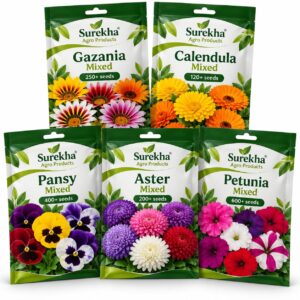
Surekha Agro Products’ Premium Winter Flower Seeds Combo lists calendula alongside gazania, pansy, aster and petunia. Sow the varieties separately so you can give each the depth, space and care its packet requires. The listing describes mixed calendula seed; choose your potting plan from the packet details rather than assuming a named dwarf cultivar or a guaranteed flower colour.