
Why is my Madhu Kamini not flowering? The usual causes are insufficient direct light, pruning away new flowering tips, constantly wet roots, a very small or stressed root system, excess leafy nitrogen feed, or a plant that is between its natural flowering flushes. Madhu Kamini ( Murraya paniculata), also called orange jasmine, is a shrub rather than a true jasmine. It can flower in seasonal flushes, and the timing varies by region and plant maturity.
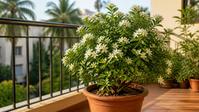
First, check whether the plant is in its flowering window
Flowering calendars differ across India. India Biodiversity records flowering mainly from March–May and August–September, while the University of Kerala lists March–September. Herbarium records from Karnataka describe an early-summer flush and another around September–November. These differences reflect climate, cultivar, pruning and local weather. A healthy plant that is between flushes may simply need time.
Look for healthy new shoots, firm green leaves and flower buds at branch tips. If the plant is declining, solve the stress first; adding more fertilizer rarely makes a stressed shrub flower.
7 reasons Madhu Kamini is not flowering
1. Too little direct light
Madhu Kamini grows in sun or light shade, but a dim indoor corner often produces leaves without many buds. Move it toward bright morning or gentle afternoon sun gradually. A south- or east-facing balcony may work well; in very hot cities, protect the pot from harsh afternoon heat while keeping strong light for several hours.
The University of North Florida describes orange jasmine as suited to sun or part shade and well-drained soil. Avoid moving a shade-grown plant into all-day sun in one step, because scorch can add another stress.
2. Pruning removed the flowering tips
Flowers are borne near branch tips. Repeated hedge clipping or a hard prune just before a flush can remove the shoots that would have carried buds. Use light shaping after a flowering flush, then leave new tips to mature. Remove dead, crossing or weak stems first.
3. The pot stays wet
Waterlogged mix reduces healthy root function and can lead to root damage. Use a container with drainage holes and a free-draining mix. Water thoroughly, then wait until the upper layer begins to dry before watering again. During monsoon weeks, move the pot under cover and empty any saucer.
4. The plant dries out repeatedly
Severe wilting, a very light pot and crispy new growth can also stop a flowering cycle. Check moisture 3–5 cm below the surface rather than watering by the calendar. In hot, windy weather, a wider pot or a light mulch layer can reduce rapid drying without keeping the roots saturated.
5. Too much nitrogen, not enough balanced nutrition
High-nitrogen feeding can encourage soft leafy growth. Pause strong nitrogen products and use a balanced, label-directed feed only when the plant is actively growing. Do not fertilize a wilted, recently repotted or waterlogged plant. A soil refresh with mature compost is safer than repeated high-dose feeding.
6. Root restriction or recent transplant shock
A newly shipped plant or recently repotted shrub may spend weeks rebuilding roots before it produces flowers. Give it stable light, careful moisture and time. If roots circle densely or emerge from drainage holes, shift to a pot only one size larger with fresh, airy mix; a huge pot can remain wet around a small root ball.
7. Pests or a hidden stress
Inspect leaf undersides and tender shoots for scale, mealybugs, mites, sticky residue or distorted growth. Isolate a pest-affected plant and follow the label of any horticultural soap or treatment. Also check for sudden temperature changes, salt crust on the soil, damaged roots and blocked drainage.
A simple 14-day flowering reset
- Day 1: Check the light, drainage holes, soil moisture and leaf undersides. Photograph the plant.
- Days 2–4: Move it to brighter light gradually and stop hard pruning.
- Days 5–7: Water only when the root zone begins to dry; remove standing water.
- Days 8–10: If growth is healthy, apply a mild balanced feed according to its label. Skip feeding if the mix is wet or roots are damaged.
- Days 11–14: Look for firm new tips or buds. Keep conditions stable instead of changing several products at once.
Care guide by Indian climate
| Climate | Light approach | Watering adjustment | Pruning note |
|---|---|---|---|
| Hot plains | Morning sun; shade harsh afternoon heat | Check more often, but let excess drain | Shape after a flowering flush |
| Humid or coastal | Bright light with airflow | Protect from repeated monsoon rain | Avoid dense, wet interiors |
| Cool hills | Bright sheltered position | Water less while growth slows | Do not prune before a likely flush |
Frequently asked questions
Does Madhu Kamini need full sun to flower?
It needs strong light, but the ideal amount depends on heat and cultivar. Start with several hours of gentle direct sun and protect the pot from scorching afternoon conditions.
Should I prune a non-flowering Madhu Kamini?
Only prune dead, damaged or badly crossing growth first. Avoid hard pruning while you are waiting for buds because flowers form near branch tips.
How often should I water it?
Check the root zone. Water thoroughly when the upper mix starts to dry, then allow drainage. Frequency changes with pot size, rain, wind and temperature.
Can a small nursery plant flower?
It can, but a young or recently transported plant may need time to establish. Stable care and adequate light matter more than forcing flowers with extra fertilizer.
Choose a healthy plant and container
If you are replacing a weak plant, see the Surekha Agro Madhu Kamini live plant listing. For a mixed flowering display, compare the tropical flowering plant combo. Choose a pot with drainage and use the container size guide for general sizing principles.