You bring home a gorgeous indoor plant, find it the perfect spot, water it with love — and two weeks later, it’s a drooping, yellowing mess. Sound familiar?
You’re not alone. Many people love lush indoor plants, but then they die. The good news? These are usually just a few fixable mistakes. Whether your plants are for décor, in your living room, or on your office desk, this guide is your complete diagnostic manual.
Before diving in, let’s explore what your plant may be trying to tell you.
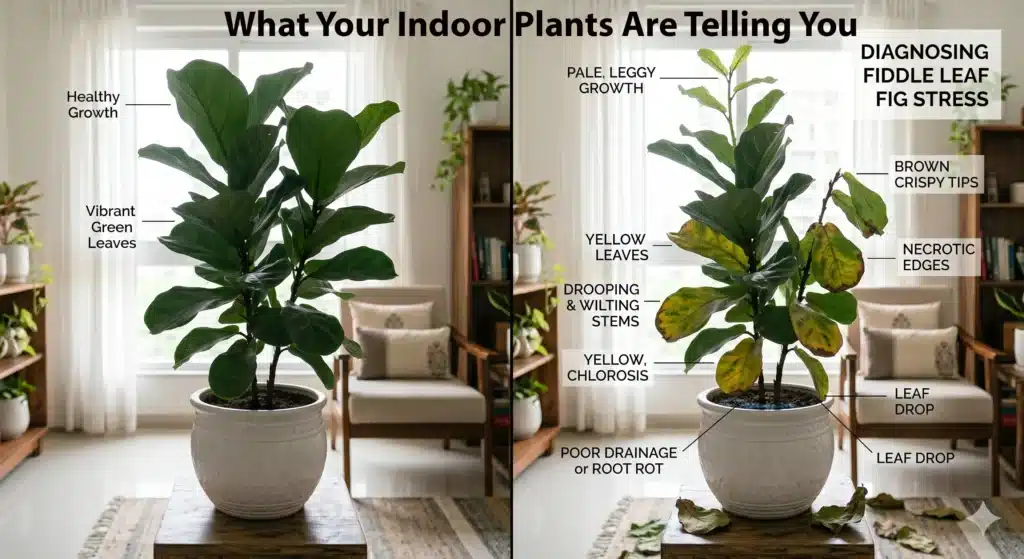
Symptoms — Your Plant Is Trying to Tell You Something
To fix a problem, recognise it first. Indoor plants are expressive. Every yellow leaf, crispy edge, and drooping stem sends a message. Watch for these signs:
- Yellow leaves — usually a sign of overwatering, poor drainage, or nutrient imbalance
- Brown, crispy leaf tips — low humidity or inconsistent watering
- Wilting despite regular watering — root rot or compacted soil blocking water absorption
- Leggy, pale growth — the plant is stretching toward the light, but it isn’t getting enough of it
- Mushy stems or a foul smell from the soil — classic overwatering and root rot
- Sudden, dramatic leaf drop — temperature shock, cold drafts, or extreme stress
Think of your indoor plant like a patient. The symptoms are clues — not random misfortune. Once you know what to look for, diagnosing the cause becomes much easier.
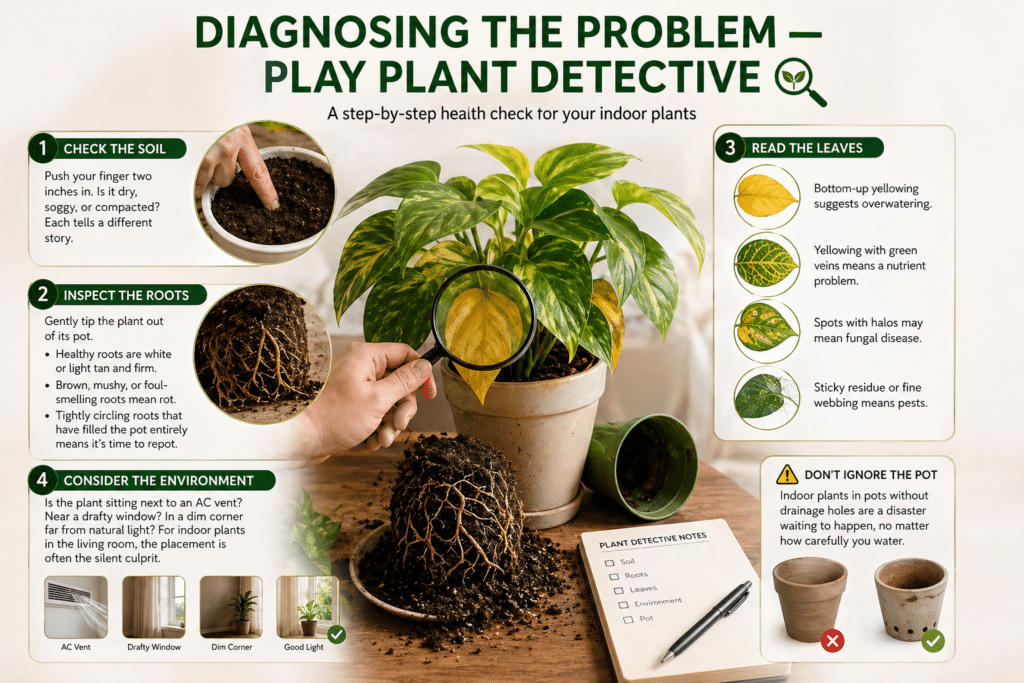
Diagnosing the Problem — Play Plant Detective
When indoor plants decline, don’t water, move, or fertilise them all at once. That makes it hard to know what helps. Instead, do a health check:
1. Check the soil. Push your finger two inches in. Is it dry, soggy, or compacted? Each tells a different story.
2. Inspect the roots. Gently tip the plant out of its pot. Healthy roots are white or light tan and firm. Brown, mushy, or foul-smelling roots mean rot. Tightly circling roots that have filled the pot entirely means it’s time to repot.
3. Read the leaves. Bottom-up yellowing suggests overwatering. Yellowing with green veins means a nutrient problem. Spots with halos may mean fungal disease. Sticky residue or fine webbing means pests.
4. Consider the environment. Is the plant sitting next to an AC vent? Near a drafty window? In a dim corner far from natural light? For indoor plants in the living room, the placement is often the silent culprit.
Also, take note of the pot itself — indoor plants in pots without drainage holes are a disaster waiting to happen, no matter how carefully you water.
The Usual Suspects — Why They’re Fading Fast
Now let’s get into the actual reasons your indoor plants are struggling. Most cases trace back to one (or more) of these seven causes.
💧 Water — The #1 Killer Nobody Talks About
Overwatering kills most indoor plants. Roots need water and oxygen. Wet soil suffocates them.
Signs of overwatering: yellowing leaves, mushy stems, mould on soil, and gnats flying around the pot.
Signs of underwatering: dry, pulling-away-from-pot soil, drooping leaves that perk back up after a drink, crispy brown edges.
Your finger is the simplest tool. Before watering, stick it in two inches. If it feels damp, wait. If it feels dry, water thoroughly until water drains from the bottom. Do not let indoor plants sit in standing water for more than 30 minutes.
☀️ Light — Right Plant, Wrong Spot
Light is essential. No fertilizer, pot, or soil will save a sun-loving plant in darkness.
Most popular indoor plants for homes, like pothos or snake plants, tolerate low to medium indirect light. Succulents, cacti, and citrus need several hours of direct or bright indirect sunlight each day.
For indoor plants in the living room, east or west-facing windows offer the most balanced light — bright in the morning or afternoon without the harsh midday intensity that scorches leaves. For indoor plants in the office, where natural light is often limited, go with low-light champions like ZZ plants, cast iron plants, or Chinese evergreens.
🌡️ Hot and Cold Drafts — The Invisible Stressor
Your plant may have enough light and water, but still struggle from temperature drafts.
Most popular indoor plants come from the tropics. They thrive at 18–27°C (65–80°F) and hate sudden temperature changes. Placing them near vents or drafty windows stresses them, causing leaf drop and browning edges.
Keep plants at least one metre from AC units, heaters, and doors. Consistent temperature matters more than you think.
💦 Humidity — The Problem You Can’t See
Closely related to temperature is humidity, and this is where many plant owners go wrong without ever knowing it.
The majority of popular indoor plants originate from humid tropical environments. The average home, especially in air-conditioned spaces or during winter, has humidity far below what these plants prefer. The result: crispy brown leaf tips, curling leaves, and a dry, papery texture.
Easy fixes include grouping indoor plants together (they create a shared microclimate of humidity), placing pots on a tray of pebbles filled with water (the evaporation helps), or using a small room humidifier nearby. Misting can help, too, though it’s a short-term fix that needs to be done consistently.
⛰️ Soil — Not Just Dirt
Generic all-purpose potting soil seems reasonable, but it’s usually wrong. Each indoor plant type needs a different type of soil. Succulents and cacti need fast-draining, gritty mixes. Tropical plants like monstera and philodendron need moisture-retentive, well-draining, airy soil. Orchids need a bark-based medium.
Compacted soil is a problem. Over time, potting mix compresses and blocks airflow. Water pools instead of draining. Refresh soil every one to two years and repot when roots outgrow containers to keep plants healthy.
Terracotta pots dry out quickly (good for succulents). Plastic and glazed pots retain moisture. Match your pot to your plant.
🧪 Nutrients & Overfertilising — Less Is Always More
Nutrient deficiencies cause pale or yellow leaves, stunted new growth, and a dull appearance. Overfertilising, a mistake beginners often make, is just as harmful. Excess fertiliser forms soil salts, burns roots, and turns leaf tips brown and dry.
Fertilise lightly during spring and summer, once or twice monthly, with diluted fertiliser. Stop feeding in autumn and winter. When unsure, use less.
🐛 Pests — The Hidden Invaders
Any indoor plant can develop pests. Check for gnats, spider mites, mealybugs, or scale insects as soon as you notice issues.
Catch infestations early. Check leaves, especially underneath. Treat with neem oil or soap spray fast. Use pesticides only if necessary.
Always quarantine new plants for two weeks before adding them to your collection. Many pest outbreaks start with new arrivals.
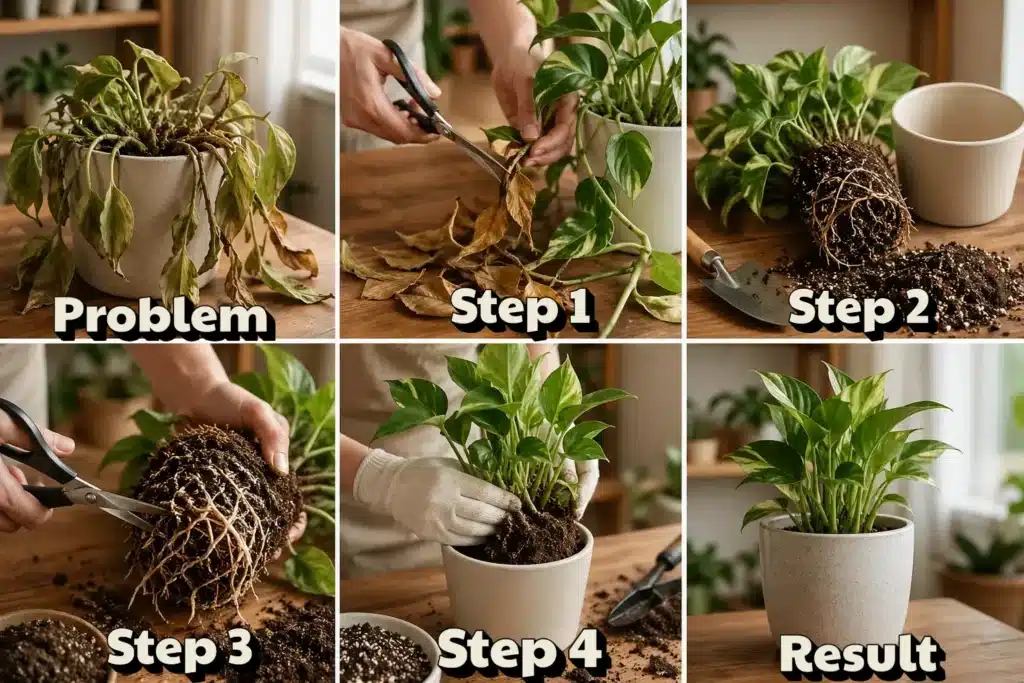
Revival Tactics — What To Do When Plants Start to Wither
Caught things early? Here’s your step-by-step rescue plan:
- Prune dead or damaged leaves and stems. This helps the plant focus on healthy growth.
- Unpot the plant and inspect the roots. Trim all brown or mushy parts. Let the roots air out for an hour.
- Repot with proper soil and drainage for your plant type.
- Move your plant to a better light spot if needed, but avoid sudden changes.
- Restart your watering routine. Use the finger test. Don’t overwater to make up for past neglect.
- Be patient. Recovery takes weeks. New growth means your plant is recovering.
Let go when the stem is fully mushy, and no roots are healthy. That plant can’t be revived.
What Vastu Says About Dying Plants
For those who incorporate Vastu Shastra into their home design, the health of their indoor plants becomes even more significant. According to Vastu principles, withering or dead plants are considered inauspicious — they are believed to absorb and emit negative energy rather than the positive, life-affirming energy that healthy plants generate.
Vastu recommends placing indoor plants for home in the north, east, or northeast directions to attract positive energy and prosperity. The living room is considered one of the best spaces for plants, especially near windows that receive morning sunlight. Avoid placing indoor plants with thorns — such as cacti — in bedrooms or the main entrance, as these are thought to create friction and unrest.
Most importantly: replace a dead or dying plant promptly. Keeping a wilted, lifeless plant in the home serves no aesthetic or energetic purpose — and according to Vastu, it actively detracts from the harmony of your living space.
Choosing the Right Plant for the Right Place
Half the battle with keeping indoor plants alive is simply choosing varieties that suit your environment — not just what looks beautiful at the nursery.
For indoor plants in the living room: bright, indirect light makes this the most versatile spot. Monstera, pothos, rubber plants, and fiddle leaf figs all thrive here with the right care.
For indoor plants in the office: low-light conditions call for low-maintenance varieties. Snake plants, ZZ plants, and peace lilies are near-indestructible and also help purify the air — a bonus in enclosed office spaces.
For humid spots like bathrooms: ferns, peace lilies, and spider plants love the extra moisture.
Matching plant to environment — not just aesthetic preference — dramatically increases your chances of success.
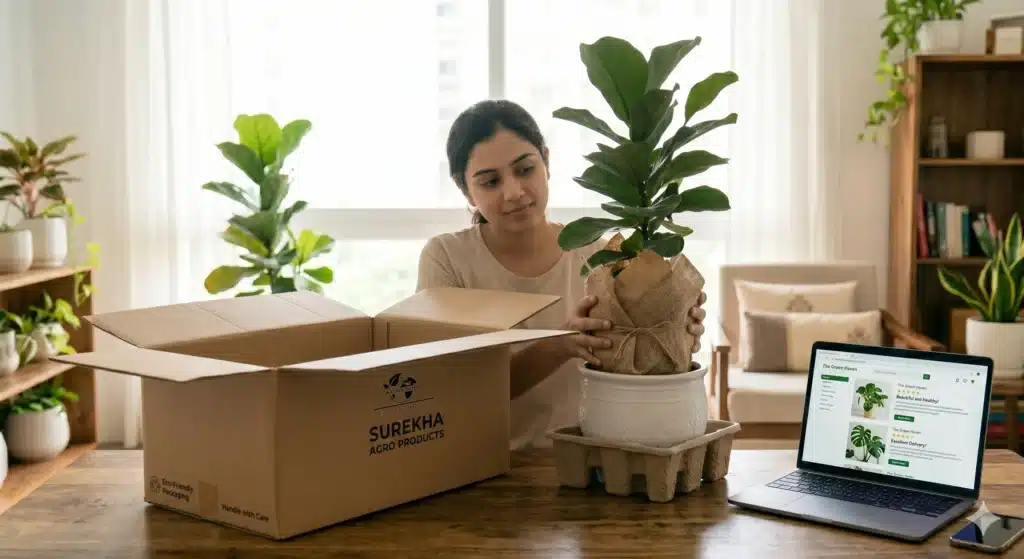
Smart Shopping — What to Know Before Buying Indoor Plants Online
Buying indoor plants online has become increasingly popular, and for good reason — the variety is far greater than most local nurseries offer. However, there are a few things to keep in mind before clicking “buy.”
Always check seller ratings and reviews, focusing specifically on plant health and packaging quality. Look for sellers who photograph their actual stock, not just stock images. When your plant arrives, expect a brief acclimatisation period — leaves may yellow slightly as the plant adjusts from shipping stress to your home environment. Don’t panic and over-water.
Most importantly, before buying any plant online, check its care requirements against your actual home conditions. A stunning plant that needs six hours of bright light won’t survive in a dark apartment, no matter how much you want it to.
Building a Routine That Works
Consistency is the secret ingredient that separates thriving indoor plant collections from graveyards of good intentions. Once a week, walk through your plants with a simple checklist: check the soil moisture, look under the leaves for pests, remove any dead foliage, and assess whether anything needs to be moved or repotted.
Adjust your routine seasonally — indoor plants need less water in winter when growth slows, and may benefit from higher humidity in summer if you run air conditioning heavily. Keeping a basic notes log (even just your phone’s notes app) helps you spot patterns and avoid repeating the same mistakes.
Conclusion
Every plant you’ve accidentally killed was, in a way, a lesson. The most experienced plant lovers in the world have a graveyard of past failures — they just learned from each one. Now that you know what the symptoms mean, how to diagnose the cause, and exactly which mistakes to avoid, you have everything you need to keep your indoor plants not just alive, but genuinely thriving.
Start with forgiving varieties — snake plants, pothos, and ZZ plants are nearly indestructible and excellent for building confidence. Then, as your skills grow, so can your collection. Whether you’re styling indoor plants in your living room, freshening up your office desk, or building a lush green corner in your bedroom, the right knowledge makes all the difference.
Your plants want to live. Give them the right conditions, and they will absolutely do so.
FAQs — Why Your Indoor Plants Keep Dying
Q1. How do I know if my plant is dying or just dormant?
Do the scratch test on a stem near the base — green underneath means alive. Also, check the roots: firm, white roots indicate a living plant in dormancy. A truly dead plant will have dry, brittle stems and brown, mushy, or non-existent roots.
Q2. What are the first signs a plant is dying?
The earliest signs are usually subtle: wilting that doesn’t improve after watering, lower leaves yellowing, soil that either stays wet too long or dries too fast, and stunted or no new growth. Catching these early gives you the best chance of recovery.
Q3. Can yellow leaves turn green again?
It depends on the cause. If yellowing is due to magnesium deficiency, an Epsom salt treatment can help new leaves emerge green, and existing pale leaves may improve. If the yellowing is due to overwatering, those leaves typically won’t recover—but the plant can if you fix the root issue.
Q4. How often should I use Epsom salt on my plants?
For most houseplants, once a month during the growing season (spring and summer) is sufficient. Mix 1 teaspoon of Epsom salt into 1 litre of water, and apply as a soil drench or foliar spray. Always use on moist soil to avoid any risk of concentration.
Q5. What does potash fertilizer do for plants?
Potassium (the “K” in N-P-K) is essential for overall plant health. It regulates water movement in plant cells, strengthens stems, supports flowering and fruiting, improves disease resistance, and helps plants cope with stress. It’s especially valuable during
the flowering stage and for plants with browning leaf edges.
Q6. Why do my flower buds fall off before opening?
Bud drop is almost always caused by one of these: sudden temperature changes, low humidity, inconsistent watering during the bud stage, or potassium deficiency. Stabilise the plant’s environment and consider a potash fertilizer application during the next bud development cycle.
Q7. Are black dots on plant leaves dangerous?
They can be. Black dots may indicate fungal spores, scale insects, or bacterial infection — all of which spread to other plants if left unchecked. Isolate the affected plant immediately, remove heavily infected leaves, and improve airflow around the plant.
Q8. How do I know if my plant needs repotting?
Key signs include: roots circling the surface or emerging from drainage holes, soil drying out unusually fast, slowed or stopped growth despite good care, and the plant becoming top-heavy and unstable. When in doubt, repot in spring when the plant is entering its active growth phase.
Ready for a Fresh Start? Choose Indoor Plants That Actually Thrive
Recommended products
-
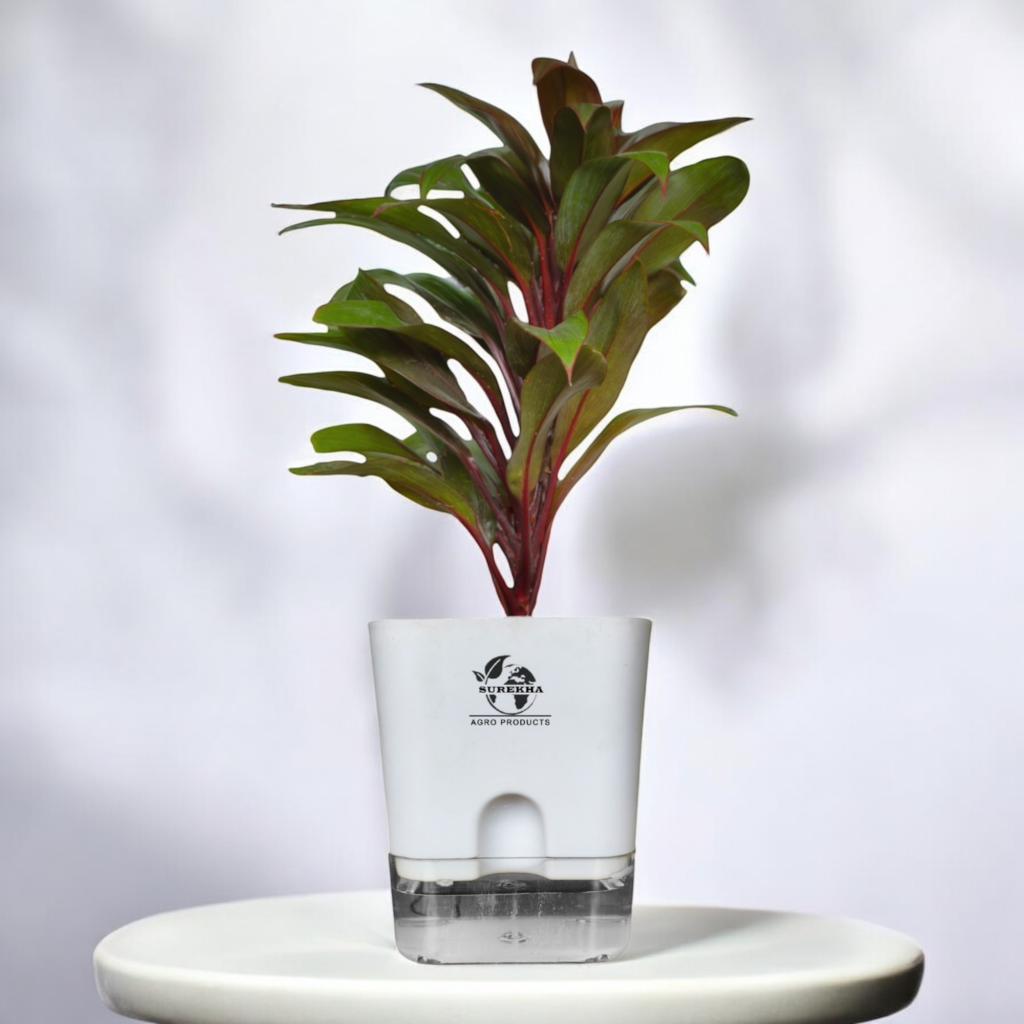
Surekha Cordyline Fruticosa Croton Plant
Price range: ₹299.00 through ₹399.00 -
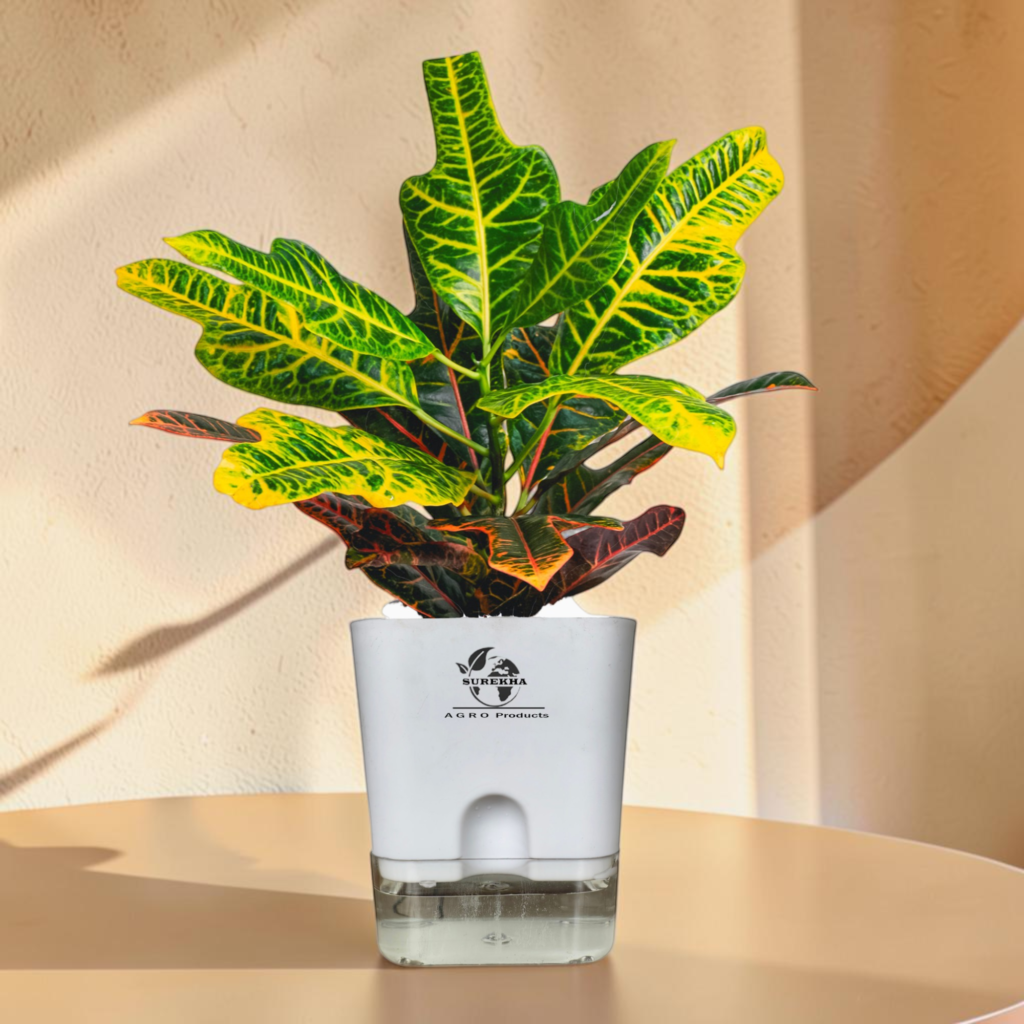
Surekha Croton Duck Foot Live Plant
Price range: ₹299.00 through ₹399.00 -
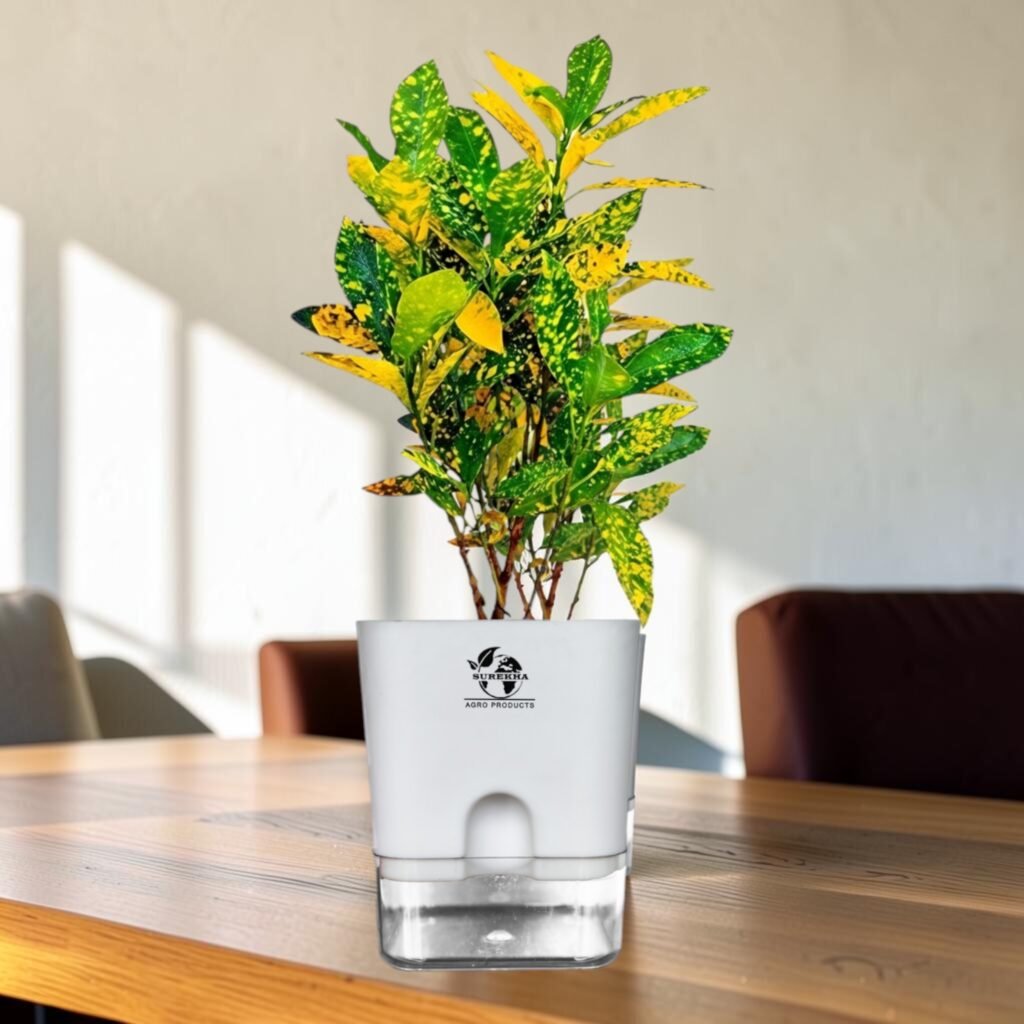
Surekha Croton Golden Dust Live Plant
Price range: ₹299.00 through ₹399.00 -
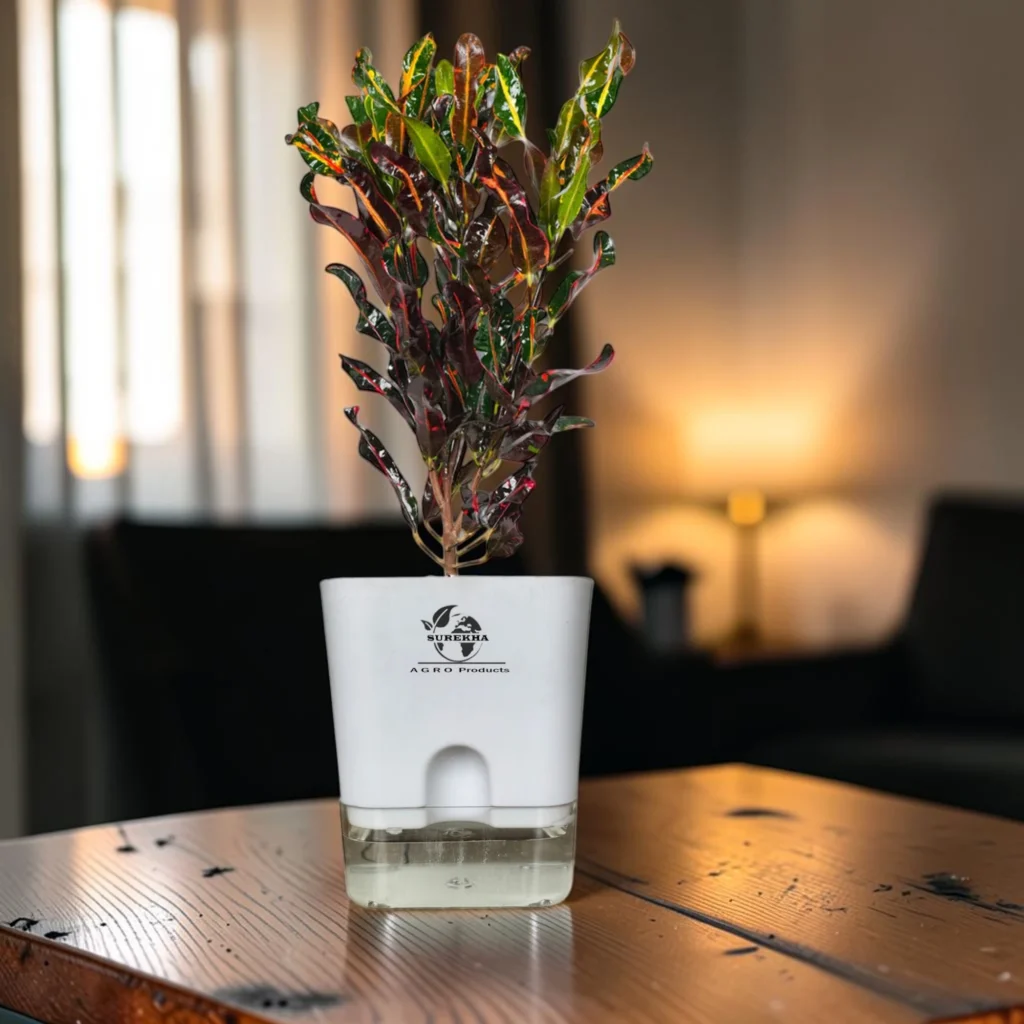
Surekha Croton Plant Mammy
Original price was: ₹999.00.₹399.00Current price is: ₹399.00. -
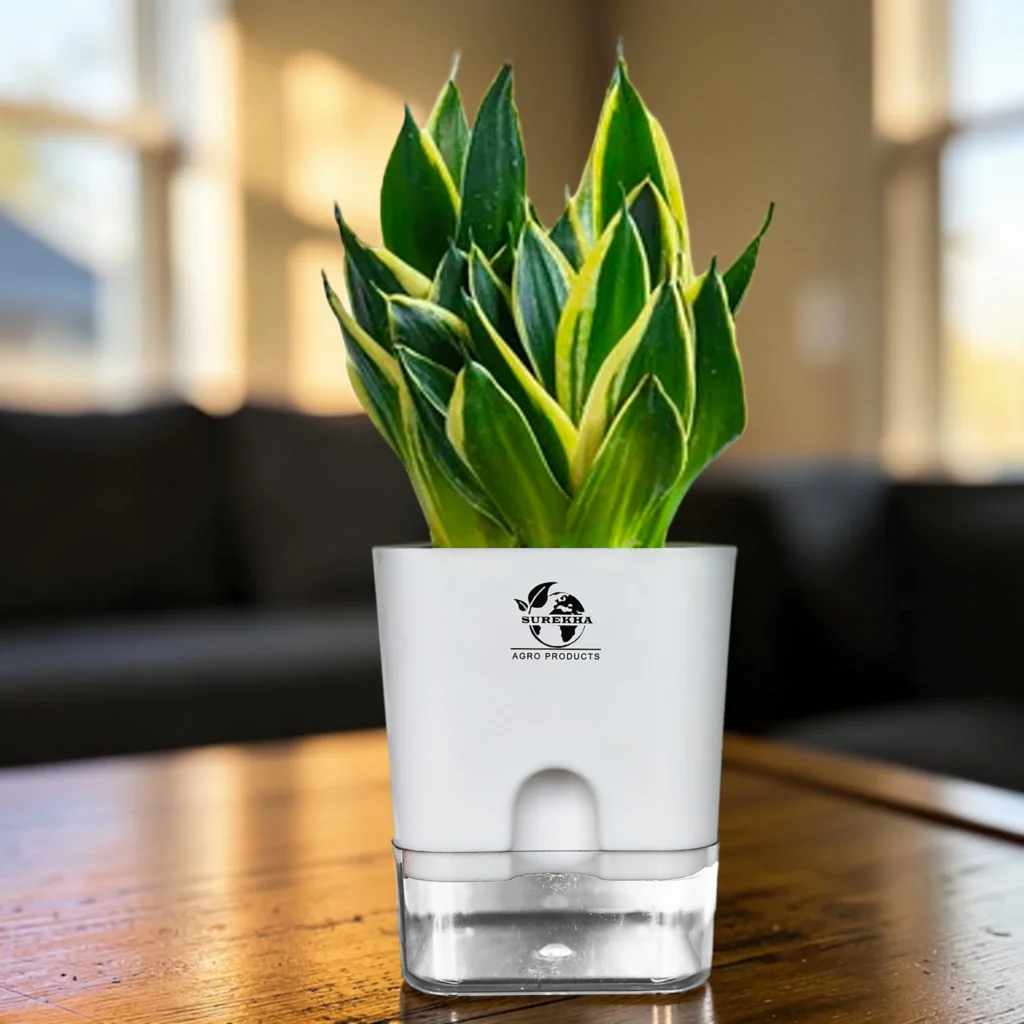
Surekha Golden Hahnii Snake Plant
Price range: ₹249.00 through ₹399.00 -
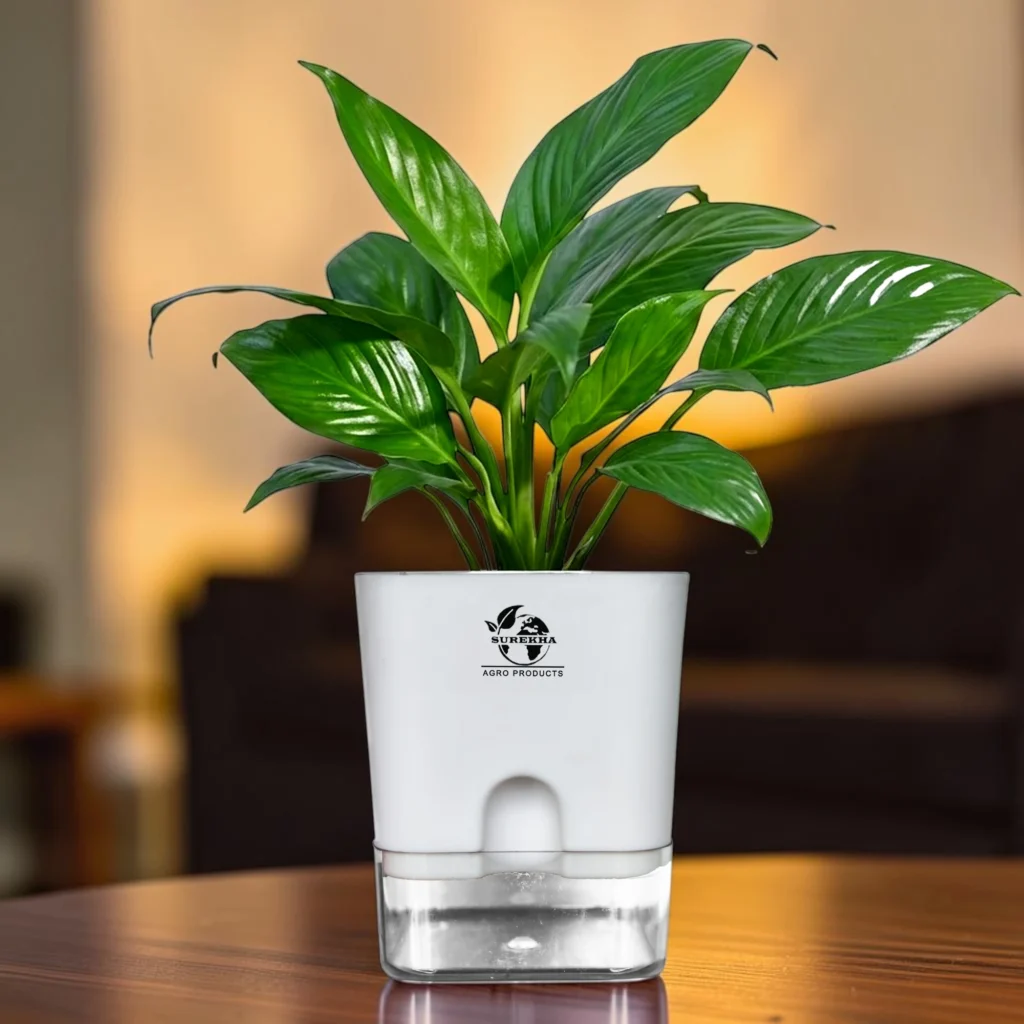
Surekha Peace Lily Live Indoor Plant
Price range: ₹189.00 through ₹399.00 -
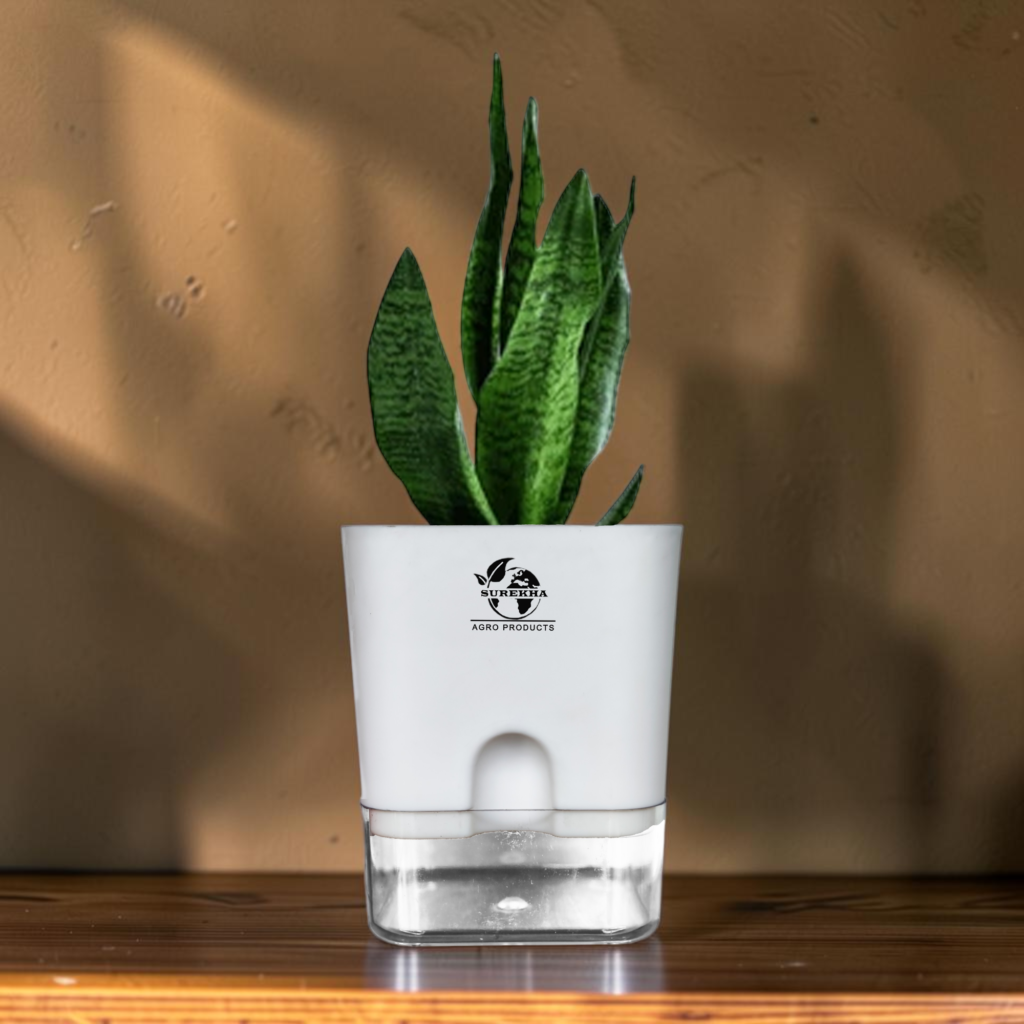
Surekha Sansevieria Superba Snake Plant
Price range: ₹269.00 through ₹399.00 -
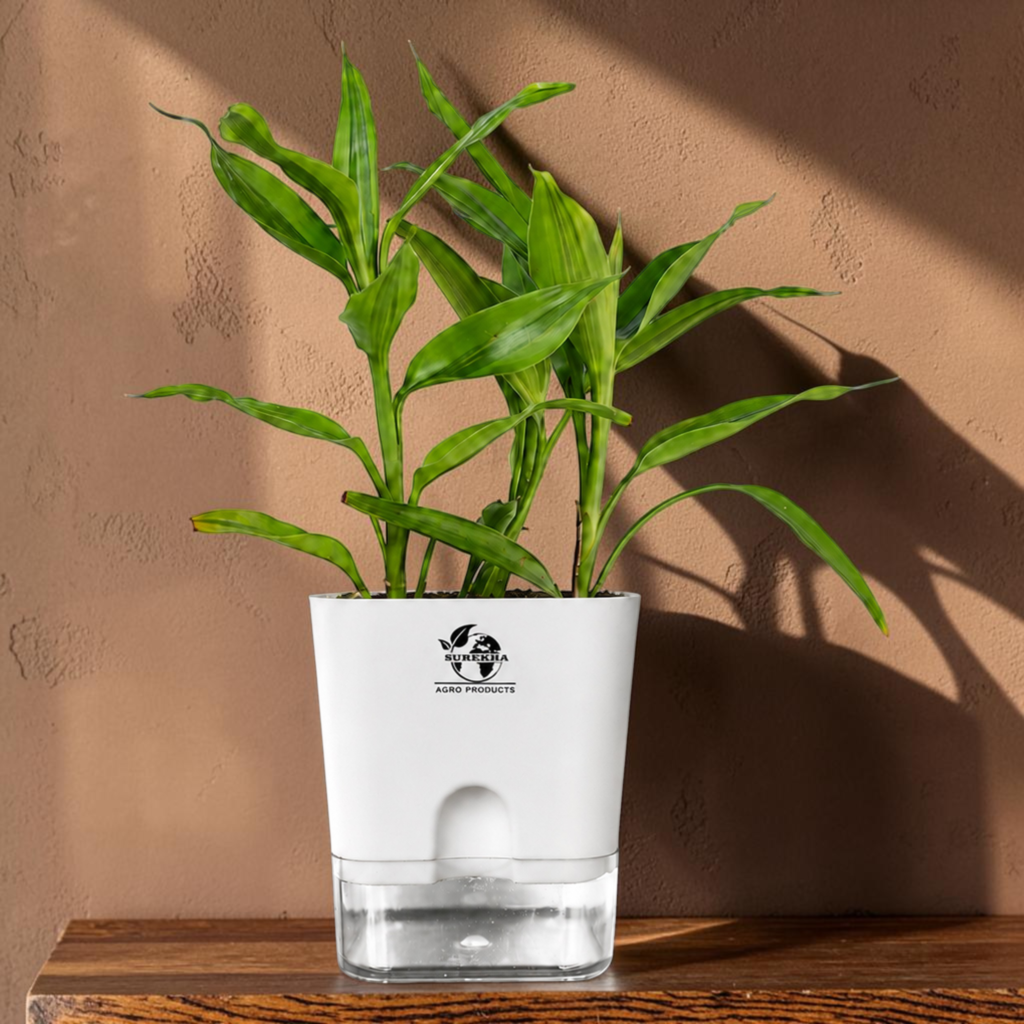
Surekha Yellow Lucky Bamboo Plant in Self-Watering Pot
Price range: ₹249.00 through ₹399.00 -
Surekha Sansevieria Laurentii Snake Plant
Price range: ₹249.00 through ₹399.00