
Knowing how to water indoor plants correctly is the single skill that separates thriving green homes from a graveyard of dried-up pots. You bought the plant. You gave it sunlight. You even talked to it. And yet — it died. Sound familiar?
Here’s the reality: Most indoor plants in India die not from neglect, but from too much attention—usually because of overwatering.
India’s unique climate — blazing summers, monsoon humidity, and dry winters — makes indoor plant watering a constantly moving target. Because the rules that work in June will kill your plant in August, seasonal adjustments are crucial. To guide you, this resource breaks it all down, season by season and plant by plant, so your green friends thrive year-round.
🌿 Not sure if your plant is already in trouble? Before you read further, check — Your Plant Looks Fine… But Is It? 10 Signs Your Plant Is Dying or Thriving — a must-read for every Indian plant parent.
🚨 The #1 Reason Your Indoor Plants Keep Dying
Let’s address this straightforwardly.
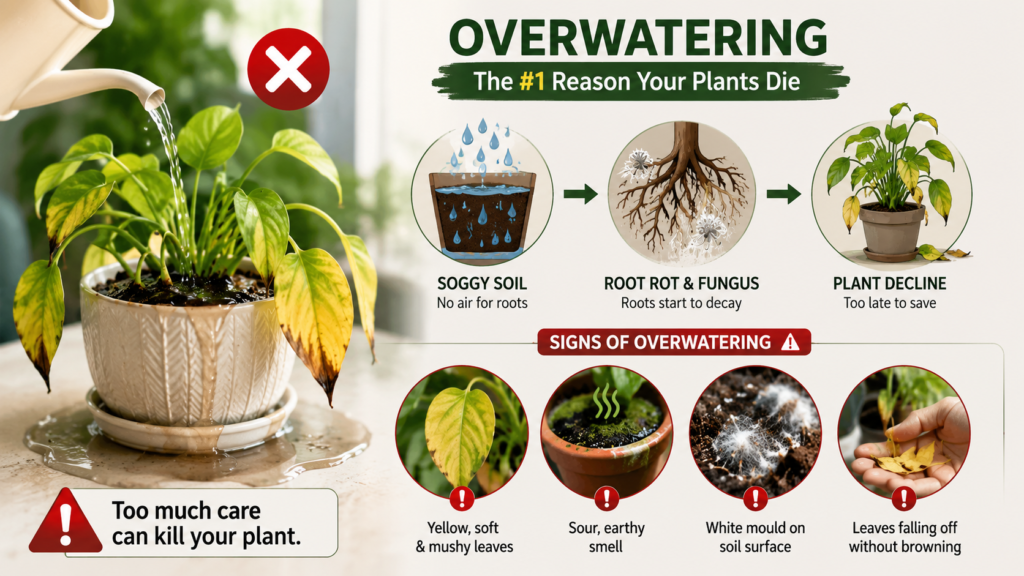
Overwatering is the most common cause of houseplant death. When you water too much, the soil remains soggy, cutting off oxygen to the roots. This leads to root rot and encourages fungal growth, and the problem is often only noticed when it’s too late.
In India, this problem is amplified. Our high humidity during the monsoon means the soil already retains moisture longer. Add daily watering on top of that, and you have a recipe for root rot.
Signs you may already be overwatering:
- Yellowing leaves that feel soft and mushy
- A sour, earthy smell is coming from the pot
- White mould is growing on top of the soil
- Leaves falling off without turning brown first
The fix isn’t complicated — but to get results, you’ll need to shift from routine-based watering to paying attention to your plant and soil. Let’s look at how unlocking this skill helps every plant thrive.
🌱 Every Plant Has Its Own Thirst — Learn Yours
Before anything else, you need to understand that different plants have completely different water personalities.
A succulent and a fern sitting side by side on your windowsill need opposite care. Water them the same way, and you will kill one of them — guaranteed.
Here’s a quick breakdown of India’s most popular indoor plants and their general water needs. Understanding this sets the stage for matching care to each plant—an essential skill we’ll organize by season.
| Plant | Water Personality | Frequency (Indian Summer) |
| Money Plant / Pothos | Moderate drinker | Every 5–7 days |
| Snake Plant | Drought-lover | Every 10–14 days |
| Peace Lily | Self-reporter (droops when thirsty) | Every 5–7 days |
| Succulents & Cacti | Minimal water | Every 14–21 days |
| Ferns & Areca Palm | Moisture-loving | Every 3–4 days |
| Aloe Vera | Deep but rare drinks | Every 10–14 days |
| ZZ Plant | Almost no water needed | Every 2–3 weeks |
Are you new to plants? If you’re still deciding which plant suits your home and lifestyle, consider reading: How to Choose Your First Indoor Plant (Simple Guide).
🌦️ India’s Weather Is Playing Games With Your Watering Schedule
Here is what no generic plant guide will tell you: your watering schedule must change with India’s seasons. A fixed “water every 5 days” routine is the fastest way to kill your plant.
☀️ Summer (March – June): Water More, But Watch the Soil
- Temperatures above 35°C cause soil to dry out rapidly
- Water frequency increases for most plants
- Water early in the morning before 9 AM — afternoon watering evaporates before roots can absorb it
- Clay pots dry out faster than plastic — check them more often
🌧️ Monsoon (July – September): The Danger Zone
- This is when most Indian plant parents accidentally kill their plants
- High humidity means the soil retains moisture much longer
- Outdoor and balcony plants may be getting natural rain — do not add more water on top
- Reduce watering frequency by 50–60% compared to summer
- Ensure pots have drainage holes — waterlogged soil during monsoon = instant root rot
❄️ Winter (November – February): The Rest Season
- Most indoor plants slow down or go semi-dormant
- Metabolism drops, so water needs drop significantly
- Water roughly half as often as you do in summer
- Avoid watering in the evening — cold nights + wet soil = fungal issues
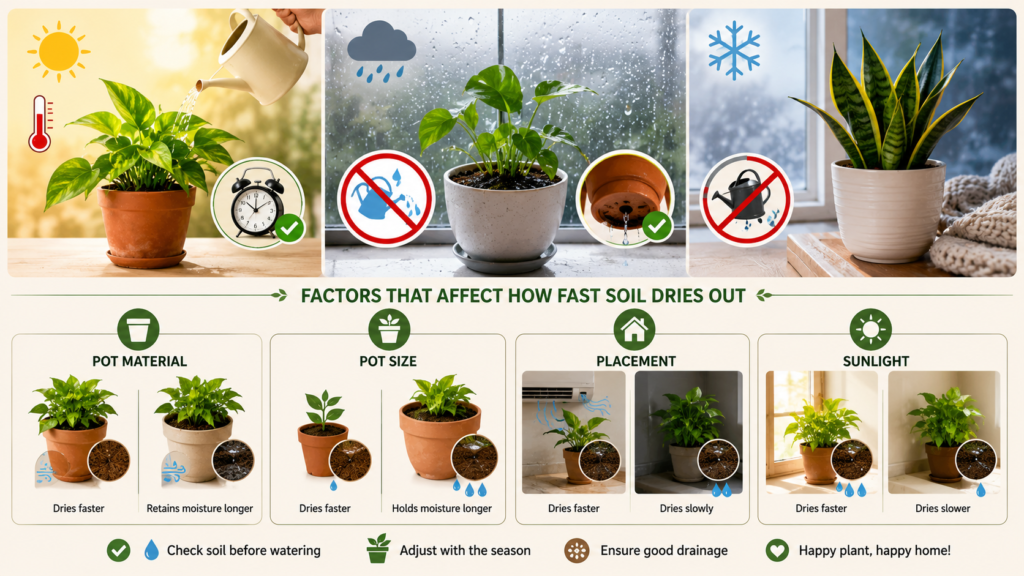
Other factors that affect how quickly your soil dries out:
- Pot material: Clay/terracotta pots breathe and dry faster. Plastic pots retain moisture longer.
- Pot size: Small pots dry out faster. Large pots hold moisture longer, increasing the risk of overwatering.
- Placement: Plants near AC vents or fans dry out faster. Plants in dark corners dry out slowly.
- Sunlight: More sunlight = faster evaporation = more frequent watering needed.
🔍 Stop Guessing — Here’s How to Know When Your Plant Is Actually Thirsty
This is the most important skill you will develop as a plant parent: reading the soil before you water.
Method 1: The Finger-Dip Test (Best for Indian Homes)
Push your index finger 1–2 inches into the soil. If it feels:
- Moist and cool → Do not water yet
- Slightly damp → Could wait one more day
- Dry and crumbly → Time to water
Method 2: The Wooden Skewer / Chopstick Method
Insert a wooden skewer into the soil and pull it out after 30 seconds. If it comes out with soil clinging to it, there’s still moisture. If it comes out clean and dry, it’s time to water.
Method 3: Lift the Pot
A well-watered pot feels significantly heavier than a dry one. Once you water your plant, lift it and feel the weight. Over time, you’ll instinctively know when it’s time to water just by lifting it.
What Your Plant Is Telling You:
| Plant Signal | Likely Cause |
| Drooping + dry soil | Underwatered — water immediately |
| Drooping + wet soil | Overwatered — stop watering, check roots |
| Yellow leaves (soft) | Overwatering |
| Brown crispy tips | Underwatering or low humidity |
| Leaves curling inward | Needs water |
| Mold on soil surface | Overwatered + poor air circulation |
💡 Confused about whether it’s overwatering or underwatering? This detailed guide covers 10 visual signs to help you tell the difference — Your Plant Looks Fine… But Is It? 10 Signs Your Plant Is Dying or Thriving
🚿 Right Time, Right Way: Watering Like a Pro
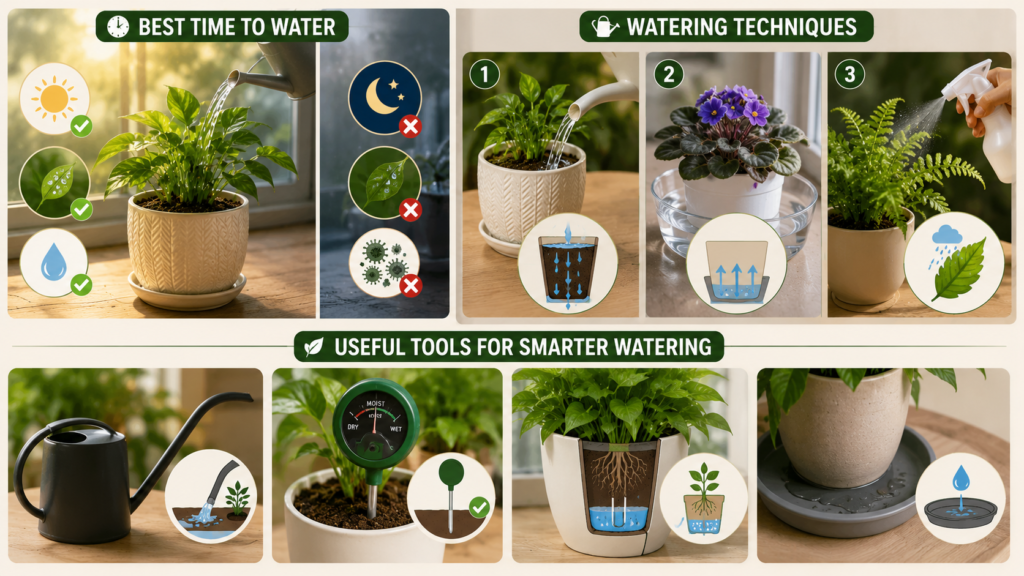
⏰ Best Time to Water Indoor Plants in India
Early morning (before 9 AM) is ideal. Here’s why:
- Water has time to soak into the roots before the heat evaporates it
- Leaves that get wet during the morning have time to dry, preventing fungal growth
- Mimics natural dew — plants are biologically primed to absorb at this time
Avoid evening watering in India’s humid climate. Wet soil overnight + warm, humid conditions = a welcome mat for fungal infections.
🪣 Watering Techniques That Actually Work
Top Watering — the standard method. Pour slowly at the base of the plant (not over the leaves) until water drains from the bottom. This ensures deep roots get moisture.
Bottom Watering — place the pot in a tray of water for 20–30 minutes and let the soil absorb from below. Excellent for plants that hate wet leaves (African violets, succulents).
Misting — a light spray of water on the leaves. Not a substitute for watering the soil, but great for humidity-loving plants like ferns during dry Delhi winters.
🛠️ Useful Tools for Smarter Watering
- Long-spout watering can — precise, reaches the base without splashing leaves
- Moisture meter — a ₹300–₹500 investment that removes all guesswork from soil checking
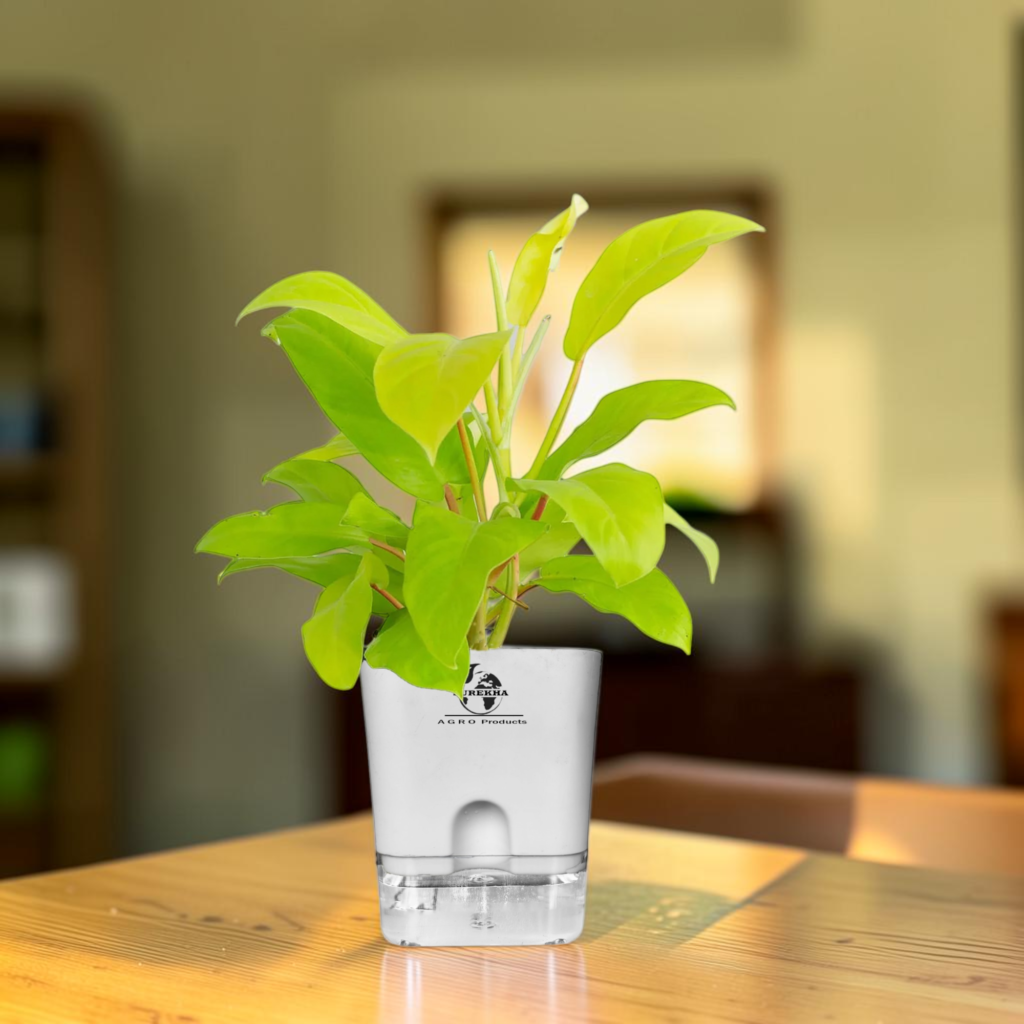
- Self-watering pots — great for frequent travellers or busy professionals
- Drip trays — catch excess water, prevent floor damage, allow bottom-watering
🪴 Your Watering Cheat Sheet for India’s Most Popular Plants
🟢 Money Plant / Pothos
Water when the top 1 inch of soil is dry. These are forgiving — they droop visibly when thirsty. Easy to recover from both under and overwatering.
🐍 Snake Plant (Sansevieria)
One of the most drought-tolerant plants. In Indian summers, water every 10–14 days. During monsoon and winter, once every 3 weeks is enough. Overwatering is the only way you’ll kill this one.
☮️ Peace Lily
The perfect self-reporting plant — it droops dramatically when it needs water and perks back up within hours of watering. Keep soil lightly moist, never soggy.
🌵 Succulents & Cacti
For these, use the “soak and dry” method: water thoroughly until it drains out, then wait until the soil is completely dry before watering again. During the monsoon, water is very scarce.
🌿 Ferns & Areca Palm
These plants like humidity and moisture. Keep the soil consistently moist, not wet, and mist the leaves regularly during dry months. In the monsoon, reduce watering—humidity will provide what they need.
🌵 Aloe Vera
Water deeply but infrequently. Let the soil dry out completely between waterings. In the monsoon, skip watering almost entirely.
💡 Water is only part of the equation. Healthy plants also need the right nutrients.
- Our Premium Professional Grade Potash Fertilizer strengthens root systems and improves how efficiently plants absorb water — making your watering efforts actually count.
- If you notice yellowing leaves even after correcting your watering, your plant may be low on magnesium. Epsom Salt for Plants is an affordable and effective way to restore it.
🆘 When Watering Goes Wrong — And How to Fix It Fast
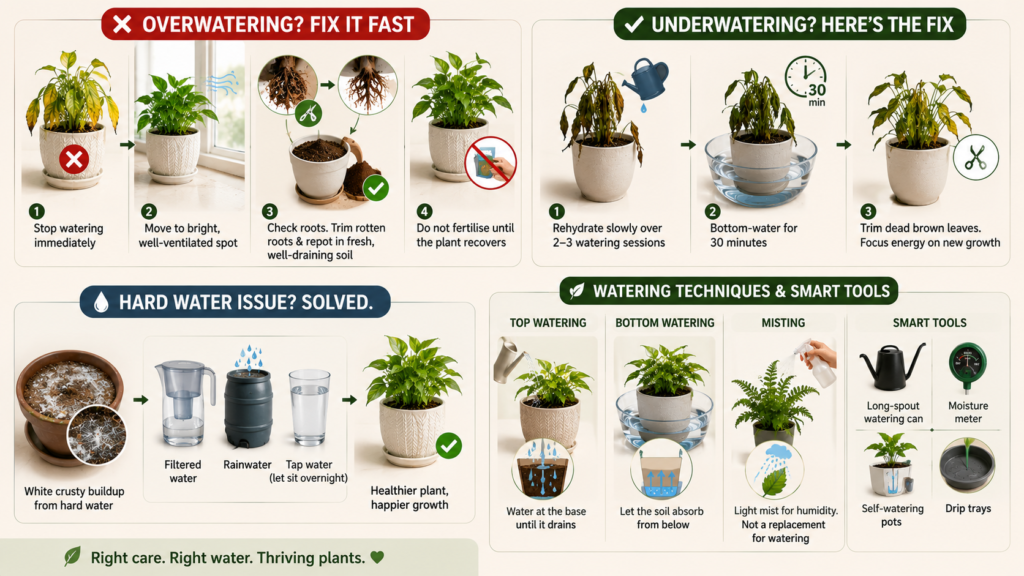
Overwatering Recovery Plan
- Stop watering immediately
- Move the plant to a brighter, well-ventilated spot
- If the soil smells sour or the roots look dark and mushy, unpot the plant, trim rotten roots, let them air dry for a few hours, and repot in fresh, well-draining soil
- Do not fertilise until the plant shows signs of recovery
Underwatering Recovery Plan
- Don’t soak the plant all at once — rehydrate slowly over 2–3 watering sessions
- Bottom-water for 30 minutes for severely dry plants
- Trim dead brown leaves — they won’t recover, and the plant needs its energy elsewhere
Hard Water Issue (Very Common in Indian Cities)
Tap water in many Indian cities (Delhi, Mumbai, Bangalore) contains high mineral content. Over time, this causes a white crusty buildup on the soil surface and can affect plant health.
Fix: Use filtered water, rainwater (collected during monsoon), or let tap water sit overnight before using — this allows some chlorine to evaporate.
🌧️ Monsoon-Specific Rules Most Indians Ignore
The monsoon season (July–September) is when the most indoor plant deaths happen in India — and ironically, it’s because of too much water, not too little.
Common mistakes during monsoon:
- Watering balcony plants that are already getting rain
- Not adjusting for the 80–90% indoor humidity
- Keeping plants near open windows where rain splashes in
- Ignoring poor drainage in pots that worked fine in summer
Monsoon survival checklist:
- ✅ Reduce watering frequency by half
- ✅ Move outdoor pots inside during heavy rain
- ✅ Ensure every pot has a functioning drainage hole
- ✅ Increase air circulation (open windows, use fans) to prevent fungal growth
- ✅ Check soil moisture with the finger test before every single watering
✅ Quick Summary: Water Smarter, Not More
Mastering the art of how to water indoor plants in India is really about three habits:
- Know your plant — different plants need completely different amounts of water
- Read the soil, not the calendar — check before you water, every single time
- Adjust with the seasons — what works in May will harm your plant in August
It takes just 2–3 weeks of observation to get into your own rhythm. Once you do, your plants will reward you visibly — deeper green leaves, new growth, and roots that actually thrive.
🪴 Still deciding on your first plant? → How to Choose Your First Indoor Plant (Simple Guide)
🔍 Want to go deeper on plant health? → 10 Signs Your Plant Is Dying or Thriving
🛒 All our plant care essentials — including Potash Fertilizer and Epsom Salt — are also available on our Amazon India Store. Trusted by thousands of Indian plant parents across the country, with verified reviews you can count on.
❓ FAQs: How to Water Indoor Plants (Indian Edition)
Q1. How often should I water indoor plants in India?
There is no single answer — it depends on the plant, season, pot type, and your home’s humidity. As a general rule, most tropical indoor plants need watering every 5–7 days in summer, every 10–14 days in winter, and every 7–10 days during monsoon (less if your home is humid). Always do the finger-dip test before watering.
Q2. Should I water my plants every day in Indian summer?
Not unless you have ferns, peace lilies, or other moisture-loving tropical plants. For the most common houseplants, such as pothos, snake plants, and aloe vera, daily watering can cause root rot. Check the soil first — if the top inch is still moist, skip watering for that day.
Q3. What is the best time of day to water indoor plants in India?
Early morning, before 9 AM, is ideal. Plants absorb water most efficiently at this time, and any moisture on the leaves has time to dry before evening — reducing the risk of fungal infections, which are common in India’s humid climate.
Q4. Is tap water okay for watering indoor plants in India?
Generally, yes, but hard tap water (common in Delhi, Pune, and other metro cities) can leave mineral deposits over time. To minimise this, let tap water sit in an open container overnight before using it, or collect and use rainwater during the monsoon season.
Q5. How do I know if I am overwatering my indoor plant?
The most common signs of overwatering are: yellowing, soft leaves; mushy or dark stems near the base; a sour smell from the soil; mould on the surface; and a plant that droops despite wet soil. If you spot these signs, stop watering immediately and let the soil dry out completely.
Q6. Can I use Epsom salt for indoor plants in India?
Yes! Epsom salt is a natural source of magnesium and sulphur — two nutrients that many Indian soils and potting mixes become depleted of over time, especially after overwatering. Dissolve 1 teaspoon in 1 litre of water and use as a monthly drench. Our Epsom Salt for Plants is specially sourced for plant use and widely trusted by Indian gardeners.
Q7. Do indoor plants need less water during the monsoon even if it’s not raining inside?
Yes — absolutely. Even if you’re not opening windows, indoor humidity levels rise significantly during the monsoon in most Indian cities. High humidity slows evaporation from the soil, keeping it moist for much longer than usual. Reduce your watering frequency accordingly.
Q8. Why are my plant’s leaves turning yellow even though I water it regularly?
Paradoxically, yellowing leaves are more often a sign of overwatering than underwatering. Waterlogged roots cannot absorb nutrients even when plenty are available in the soil. If the soil is consistently moist and leaves are turning yellow, cut back on water and check for root rot.
Happy growing—and remember, healthy plants start with smart watering, not more. 🌿
[…] gardening, remember that watering should respond to the soil rather than a fixed calendar. Our watering guide for Indian weather explains the same moisture-checking principle in […]
[…] general home-gardening context, see our watering guide for Indian weather. Apply its observation habit to your coriander pot rather than treating houseplant watering […]