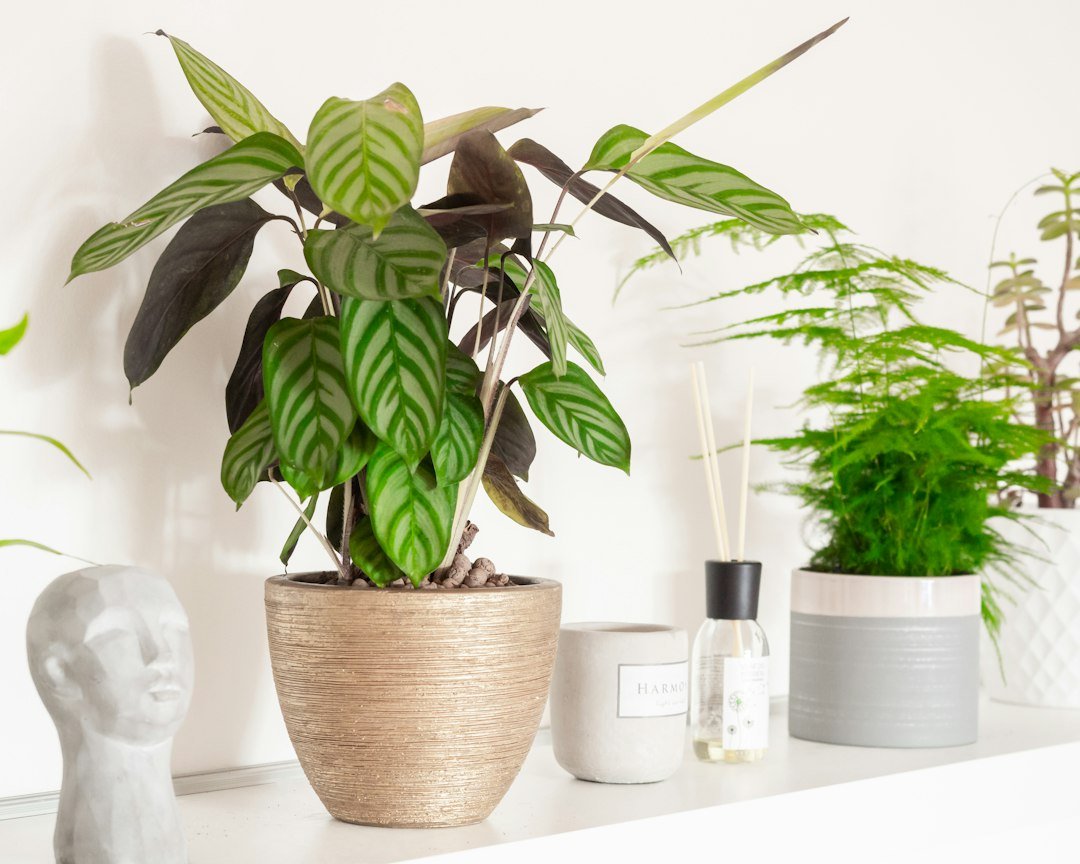
Calatheas are bought for their leaves: pinstripes, feather patterns, purple undersides and the way the foliage folds up every evening. They are also the plants most likely to come home looking perfect and, three weeks later, show crispy edges. Good calathea plant care in India is less about doing more and more about keeping a few conditions steady: soft light, evenly moist soil, decent humidity and water that does not burn the leaf tips. This guide walks through each one for Indian homes, season by season, and explains what curled, brown or faded leaves are telling you.
Quick answer: Keep a calathea in bright but indirect light (no direct afternoon sun), in an airy, peat- or cocopeat-based mix that stays lightly moist but never soggy. Water with filtered, RO or collected rainwater rather than hard tap water, aim for humid air (a pebble tray or grouping plants helps), keep it between roughly 18 and 24°C, away from AC and heater vents, and feed lightly once a month only in the warm growing months. Curling leaves usually mean the plant is too dry or the air is too dry; brown edges usually point to dry air, cold draughts, harsh sun or salty water.
Calathea care at a glance
| Need | What works in Indian homes |
|---|---|
| Light | Bright, indirect light or partial shade; a metre or two back from an east or north window, or behind a sheer curtain |
| Water | Water when the top 2 cm feels just dry; never let the pot dry out fully, never let it stand in water |
| Water quality | RO/filtered, boiled-and-cooled or clean rainwater; avoid hard borewell water and RO reject water |
| Humidity | Around 60% is ideal; pebble tray, grouping or a humidifier in dry months |
| Temperature | About 18–24°C (65–75°F); protect from cold draughts and direct AC blasts |
| Potting mix | Rich, airy mix: cocopeat or peat, compost or leaf mould, plus perlite for drainage |
| Feeding | Balanced liquid fertiliser at half strength every 4 weeks in spring–summer–monsoon; stop in winter |
| Repotting / dividing | Every 1–2 years, in late spring or early monsoon, by splitting the clump |
| Pets | ASPCA lists Calathea species as non-toxic to dogs, cats and horses |
What exactly is a calathea?
Calatheas belong to the prayer plant family, Marantaceae. Botanists have moved most of the plants once called Calathea into the genus Goeppertia, so you may see names like Goeppertia ornata on plant labels; NC State Extension notes that nurseries and books still widely use “Calathea”, and so do we here. They are understorey plants of tropical American rainforests, which explains almost every care rule: they grow in shade under taller trees, in warm, humid air and in loose, moist forest soil.
The leaf movement is normal. The leaves rise and fold at night and open again in the morning in response to changing light and temperature. Folded leaves at 8 PM are not a sign of thirst.
Common types you will find in India
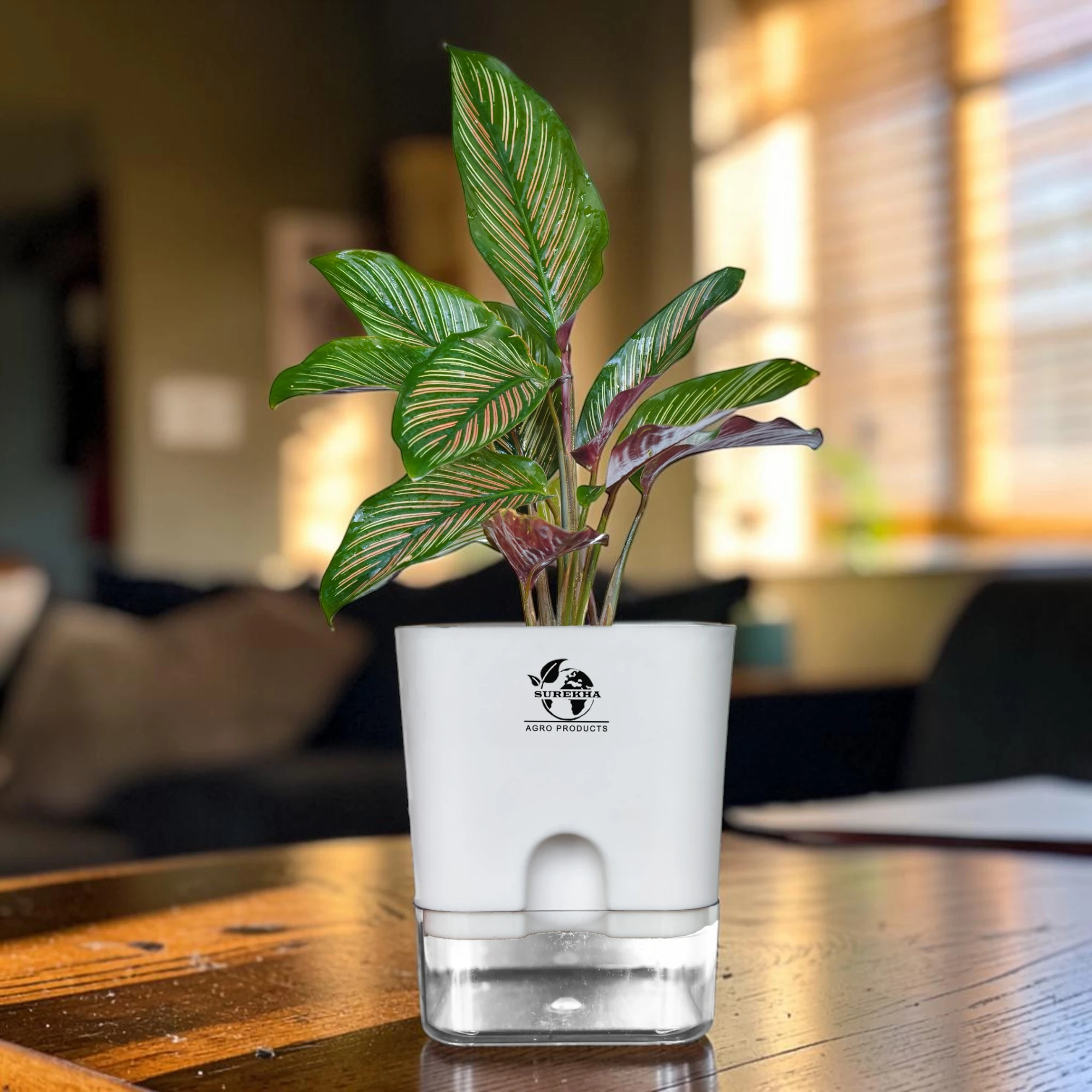
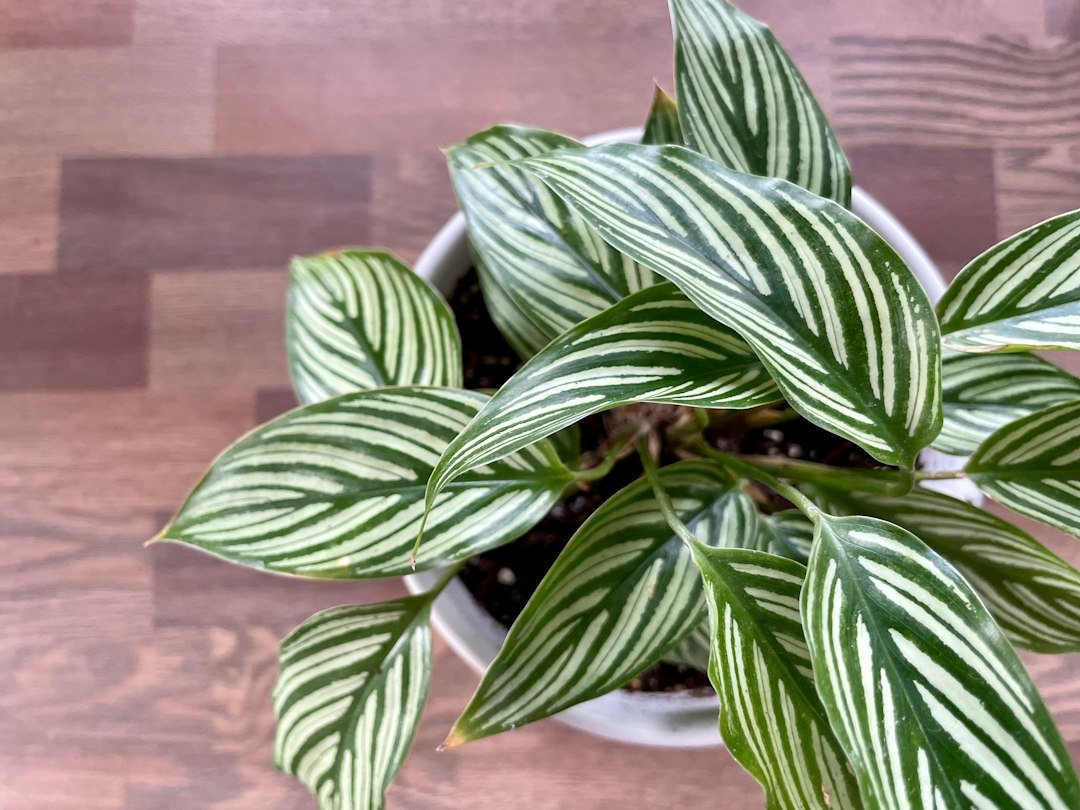
- Pinstripe (Calathea ornata): dark green leaves with thin pinkish-white stripes and purple undersides. Young leaves are brighter; stripes stay sharpest in good indirect light.
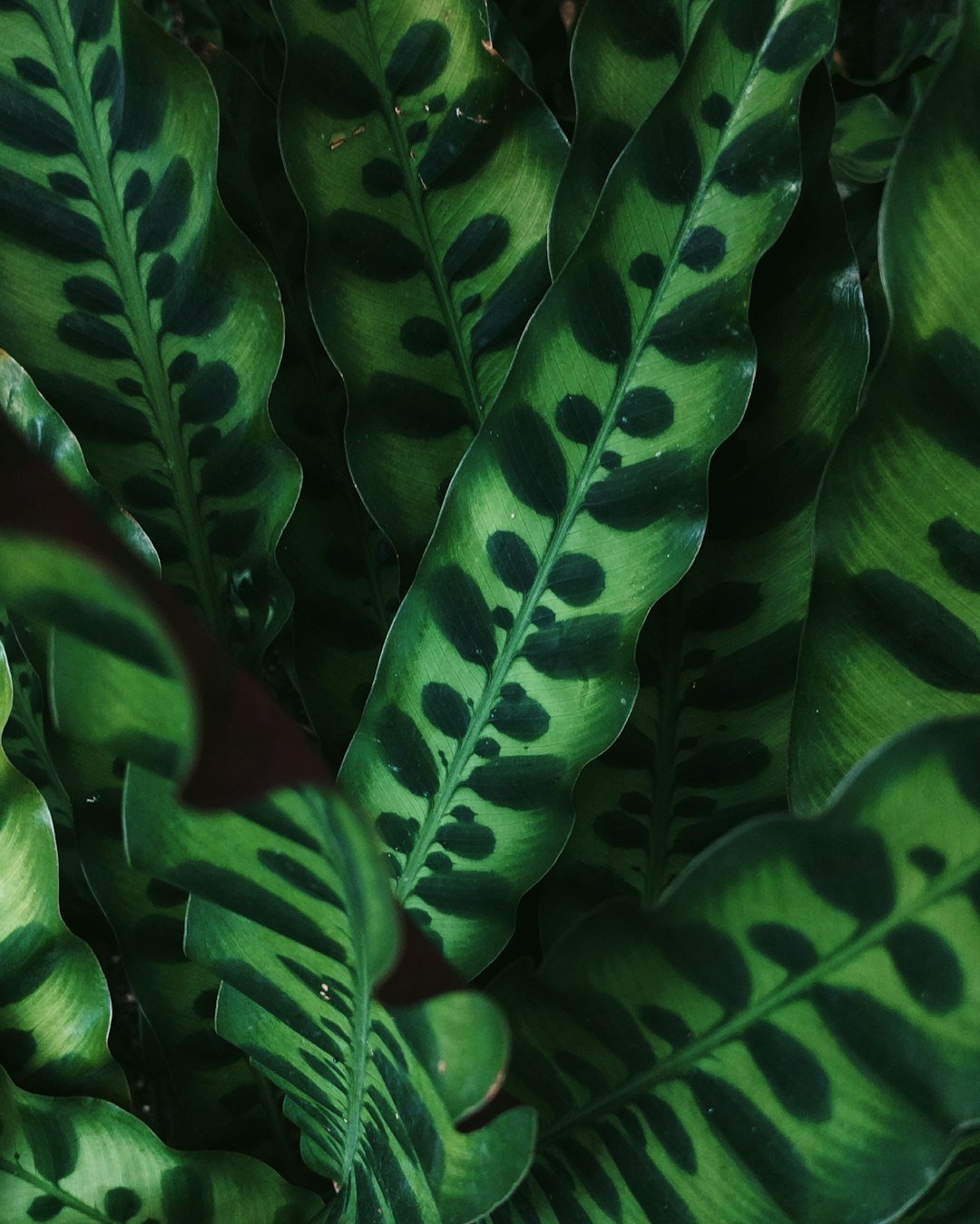
- Rattlesnake (C. insignis / lancifolia): long, wavy-edged leaves with dark spots. It needs the same steady moisture and humidity as the others.
- Peacock (C. makoyana): thin, papery leaves with a feather pattern; one of the fussier types about humidity.
- Zebra (C. zebrina) and rose-painted (C. roseopicta) types: velvety or glossy leaves with bold midrib markings.
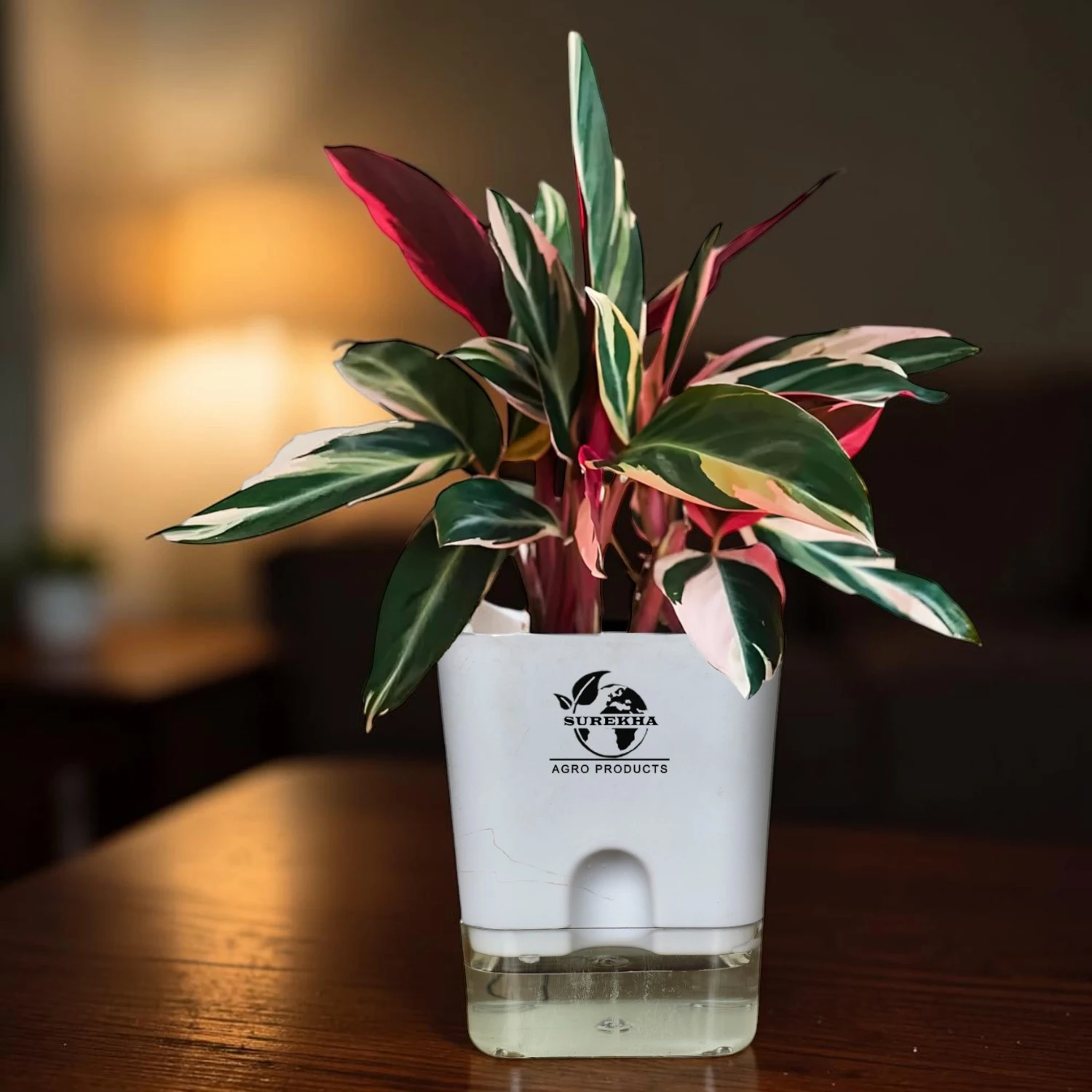
- “Calathea Triostar”: sold under this name almost everywhere, but botanically it is Stromanthe sanguinea ‘Triostar’, a close cousin in the same family. Its care is very similar, though it handles a little more light.
If you are choosing your first one, the Calathea Ornata live plant is a classic pinstripe, and it arrives in a self-watering pot that makes steady moisture easier to manage.
Light: bright, but never harsh
Calatheas want bright, indirect light or partial shade. Direct sun, especially the hot afternoon sun from a south- or west-facing window, scorches the thin leaves and bleaches the pattern. Too little light causes the opposite problem: the colours fade, the stripes blur and new growth gets slow and leggy.
- Best spots: a metre or two back from an east-facing window, beside a north-facing window, or behind a sheer curtain in a south or west room.
- Balconies: a covered, shaded balcony can work in the humid months, but bring the plant inside before winter nights drop below about 15°C and during the dry, hot pre-monsoon weeks in North and Central India.
- Quick test: if the plant casts a soft, blurry shadow at midday, the light is about right. A sharp, dark shadow means the light is too strong.
If your home is quite dim, a calathea is not the easiest choice; our list of low-light indoor plants for Indian homes covers tougher options for darker corners.
Watering a calathea without over- or under-doing it
This is where most calatheas are lost. They dislike drying out completely, and they also rot if the roots sit in wet, airless mix. The aim is a pot that feels like a wrung-out sponge.
How to water, step by step
- Push a finger 2 cm into the mix. Water only when that top layer feels just dry, not when the whole pot is dry.
- Use room-temperature water. Cold water straight from an overhead tank in a North Indian winter can shock the roots.
- Water slowly around the base until a little drains from the bottom hole.
- After 15 minutes, empty the saucer. A calathea standing in water is the fastest route to root rot.
- Lift the pot now and then. Learning how a freshly watered pot feels compared with a nearly dry one is more reliable than any fixed schedule.
As a rough guide, many homes in India end up watering every 3–5 days in hot, dry weeks, about weekly in the humid monsoon, and every 7–12 days in winter. Your room, pot size and mix decide the real number, which is why the finger test matters. For a broader routine across all your houseplants, see how to water indoor plants in India.
Why water quality matters so much
Calathea leaves are sensitive to salts and fluoride. NC State Extension notes that fluoride in tap water can brown the leaves and recommends distilled or rainwater. In many Indian cities, tap and borewell water are also hard, and the minerals build up in the pot over months. Practical options:
- Water from a home RO or filter unit (the drinking-water outlet, not the salty reject line).
- Rainwater collected in a clean container during the monsoon and stored covered.
- Boiled and cooled water, which settles out some (temporary) hardness, though not fluoride.
Letting tap water stand overnight lets chlorine escape, but it does not remove fluoride or dissolved salts. Every couple of months, flush the pot with a generous amount of clean water to wash out built-up salts.
Self-watering pots and calatheas
Because calatheas like even moisture, a self-watering pot suits them well, as long as the mix does not stay soaked. Refill the reservoir when it is empty rather than keeping it topped up all the time, and in winter let it stay empty for a day or two before refilling. Our guide to using self-watering pots in Indian homes explains the wick and reservoir in more detail.
Humidity: the part most people miss
Calatheas grow best at around 60% relative humidity. Many Indian homes reach that easily in the monsoon and in coastal cities, but indoor air can drop far lower in a Delhi or Jaipur winter with heaters running, in the hot pre-monsoon months across the north and centre, and in any room with the AC on for long hours. Low humidity shows up as leaves that roll inwards and edges that turn brown and papery.
- Pebble tray: set the pot on a tray of pebbles with water just below the top of the pebbles, so the pot never sits in water.
- Group plants together: several leafy plants side by side create a slightly more humid pocket of air.
- Choose the room: a bright bathroom or kitchen is often more humid than a living room.
- Humidifier: the most reliable fix in very dry regions or AC rooms.
- Go easy on misting: a light mist feels helpful, but the effect lasts minutes, and leaves that stay wet in still air can develop leaf spot. Good airflow and a pebble tray do more.
Temperature and seasonal care across India
Calatheas are comfortable at about 18–24°C (65–75°F) and dislike sudden swings and cold draughts. Here is how that plays out through the Indian year.
| Season | What changes | What to do |
|---|---|---|
| Winter (Nov–Feb) | Cold nights in the north; heaters dry the air; slow growth everywhere | Move away from cold glass and doors; keep off heater and AC vents; water less often; stop feeding |
| Spring (Mar) | New growth starts; light gets stronger | Resume light feeding; check the window spot is not getting direct sun yet |
| Pre-monsoon summer (Apr–Jun) | Hot, very dry air in North and Central India; strong sun | Pull back from windows; pebble tray or humidifier; check moisture more often |
| Monsoon (Jul–Sep) | Humid, often dim; soil dries slowly | Water less than in summer; improve airflow; watch for leaf spot and fungus gnats; a good time to divide |
| Post-monsoon (Oct) | Pleasant and stable | Last feed of the year; repot if roots are crowded before winter sets in |
In South India and coastal cities such as Chennai, Mumbai, Kochi and Kolkata, humidity is on your side for much of the year, and the main risks are overwatering and harsh direct sun. In North India and the Deccan plateau, dry air and winter cold are the bigger challenges.
Potting mix, pots and repotting
Calatheas need a mix that holds moisture yet lets air reach the roots. NC State Extension describes a moist, well-drained mix rich in organic matter, with perlite to improve drainage; a peat-based or African violet type mix works well. A simple home version for Indian conditions:
- 2 parts cocopeat (rinsed, low-salt)
- 1 part well-rotted compost or leaf mould
- 1 part perlite or fine pumice
- Optional: a handful of fine bark or charcoal pieces for extra air
Avoid heavy garden soil on its own; it packs down and stays wet. Always use a pot with a drainage hole.
Repotting and dividing, step by step
- Repot when roots circle the pot or poke out of the drainage hole, usually every one to two years, in late spring or early monsoon.
- Water the day before so the root ball slides out easily.
- Choose a pot only about 2–4 cm wider than the old one. A much bigger pot holds extra wet mix around the roots.
- To make new plants, gently pull or cut the clump into sections, each with several leaves and its own piece of rhizome and roots. Division is the main way calatheas are propagated; they do not root from a single leaf.
- Pot each section at the same depth it grew before, firm the mix lightly and water well.
- Keep the plant in shade, with high humidity, for two to three weeks while it settles. Some drooping during this time is normal.
If you have never repotted a houseplant before, our step-by-step guide on how to repot your first indoor plant covers handling the root ball.
Feeding a calathea
Calatheas are light feeders. Use a balanced liquid fertiliser at half the label strength about once every four weeks from March to October, and stop feeding in winter when growth slows. Too much fertiliser adds salts, which shows up as brown leaf edges, the same symptom as hard water. If you see a white crust on the mix surface or pot rim, flush the pot with clean water and skip the next feed. Our article on fertiliser for indoor plants explains how to read N-P-K labels.
Calathea problems and what they mean
| What you see | Likely cause | What to do |
|---|---|---|
| Leaves curling or rolling inwards in daytime | Mix too dry, or very dry air | Check the soil; water if dry; add a pebble tray or humidifier |
| Brown, crispy leaf edges and tips | Low humidity, cold draughts, hard or fluoridated water, excess fertiliser | Switch to filtered or rainwater; flush the pot; raise humidity; move away from vents |
| Scorched pale or brown patches | Direct sun | Move further from the window or add a sheer curtain |
| Faded pattern, slow growth | Too little light | Move to a brighter spot with indirect light |
| Yellow lower leaves, drooping stems, sour-smelling mix | Overwatering, root rot, cold | Let the top layer dry; check roots; trim mushy roots and repot in fresh mix |
| Spots with yellow halos on leaves | Leaf spot from wet leaves and still air | Remove badly marked leaves; stop heavy misting; improve airflow |
| Fine webbing, dull speckled leaves | Spider mites (common in dry air) | Wipe or rinse the undersides; raise humidity; use insecticidal soap if it persists |
| White cottony clumps or small brown bumps | Mealybugs or scale | Dab off with cotton and rubbing alcohol; repeat weekly |
Old leaves dying back one at a time is normal; it becomes a problem only when several leaves decline together. Trim any fully brown leaf at the base of its stem. You can trim just the brown edge with clean scissors, following the leaf’s natural shape, but the brown part will not turn green again. Dust also blocks light on these broad leaves, so wipe them gently with a soft damp cloth every few weeks; our guide to cleaning indoor plant leaves shows a gentle routine.
Is calathea safe for cats and dogs?
The ASPCA lists Calathea species as non-toxic to dogs, cats and horses, which makes calatheas a popular choice for homes with pets. Non-toxic does not mean the plant is meant to be eaten; a pet that chews a lot of any foliage may still get a mild stomach upset, and the plant will suffer too. “Calathea Triostar” is botanically a Stromanthe, a separate plant, so as a sensible precaution keep it out of reach of pets that like to chew leaves. If your pet seems unwell after chewing any plant, contact your vet.
Calathea Triostar: a slightly different routine
The Triostar has olive-green leaves splashed with cream and pink, with red-purple undersides. NC State Extension describes Stromanthe sanguinea as preferring partial or dappled shade and moist, well-drained soil, noting that direct sun can scorch the leaves and that it does not tolerate dry soil. In practice, treat it like a calathea that enjoys a little more brightness: a very bright spot with filtered light keeps the pink tones strong. The Calathea Triostar live plant also comes in a self-watering pot, and the Decorative Plant Duo pairs it with a rubber plant, which suits a similar bright, indirect spot (see our rubber plant care guide).
Prefer silvery foliage? The Calathea Amagris has pale silver-green leaves and follows the same care routine described above.
Frequently asked questions
Why do calathea leaves curl?
Daytime curling usually means the plant is thirsty or the air is too dry. Check the mix first; if it is dry, water thoroughly. If the soil is moist, raise the humidity. Leaves that fold upwards at night are normal prayer-plant behaviour.
How often should I water a calathea in India?
There is no fixed schedule. Water when the top 2 cm of mix feels just dry, which in many homes means every few days in hot, dry weeks, about once a week in the monsoon and less often in winter. Never let the pot dry out completely or stand in water.
Can I use tap water for calathea?
Soft tap water is usually fine, but hard or fluoridated water often causes brown leaf tips over time. Filtered or RO drinking water, or clean rainwater, is safer. Flush the pot with clean water every couple of months to remove salt build-up.
Can calathea grow on a balcony?
Only on a covered, shaded balcony and mainly in the humid months. Direct sun, hot dry winds and cold winter nights all damage the leaves, so most people in India keep calatheas indoors.
Should I cut off brown calathea leaves?
Remove leaves that are mostly brown at the base of the stem. For leaves with only brown tips or edges, you can trim the dead part with clean scissors, but fix the cause (dry air, hard water or excess fertiliser) or the browning will return on new leaves.
Is calathea a good beginner plant?
It is moderately demanding. NC State Extension rates the group as high maintenance because of its humidity and water needs. If you can give it filtered light, steady moisture and good water, it is very rewarding; otherwise, start with something tougher and add a calathea later.
How do I propagate a calathea?
By division. In late spring or early monsoon, split the clump into sections that each have leaves, rhizome and roots, pot them up, and keep them shaded and humid while they establish. Cuttings and single leaves do not root reliably.
Conclusion
A calathea rewards consistency more than effort. Give it soft, indirect light, a moist but airy mix, clean water and humid air, keep it away from cold draughts and hot vents, and feed lightly only while it is actively growing. Most problems announce themselves clearly in the leaves, so a quick look each time you water will tell you what to adjust. With those basics in place, those striped and painted leaves will keep opening every morning in an Indian home just as they do in a rainforest understorey. If your plant is already struggling, our checklist for a dying plant is a good place to start.
Sources: NC State Extension Gardener Plant Toolbox: Goeppertia, Goeppertia ornata, Goeppertia makoyana and Stromanthe sanguinea; ASPCA Toxic and Non-Toxic Plants: Calathea.